
BuddhistCatholicContemplativeEvangelicalGeneral ChristianHinduJewishLatter-day SaintMuslimNew VisionsProgressive Christian
Beliefs
- Buddhist
- Catholic
- Contemplative
- Evangelical
- General Christian
- Hindu
- Jewish
- Latter-day Saint
- More Voices
- Muslim
- New Visions
- Pagan
- Progressive Christian
Topics
- Religion News
- Food and Religion
- Sports and Religion
- Religious Art
- Religious Music and Entertainment
- Religious Events
- History and Religion
- Style and Religion
- Politics and Religion
- Women in Religion
- Recreation Outdoors and Religion
- Business Finance and Religion
- Careers Workplace and Religion
- Education and Religion
- Family Parenting and Religion
- Health Fitness and Religion
- Home and Religion
- Relationships and Religion
- Technology and Religion
- Travel and Religion
Columnists
- Buddhist Columnists
- Business Finance and Religion Columnists
- Careers Workplace and Religion Columnists
- Catholic Columnists
- Contemplative Columnists
- Education and Religion Columnists
- Evangelists Columnists
- Family Parenting and Religion Columnists
- General Christian Columnists
- Health Fitness and Religion Columnists
- Hindu Columnists
- History and Religion Columnists
- Home and Religion Columnists
- Jewish Columnists
- More Voices Columnists
- Latter Day Columnists
- Muslim Columnists
- New Visions Columnists
- Nonreligious Columnists
- Pagan Columnists
- Politics and Religion Columnists
- Progressive Columnists
- Recreation Outdoors and Religion Columnists
- Relationships and Religion Columnists
- Religion News Columnists
- Religious Art Columnists
- Religious Events Columnists
- Religious Music and Entertainment Columnists
- Sports and Religion Columnists
- Style and Religion Columnists
- Technology and Religion Columnists
- Travel and Religion Columnists
- Women in Religion Columnists
Resource Library
- 2026 Calendar
- Library of World Religions
- The 100 Most Holy Places on Earth
- Patheos Answers
- Podcasts
- Videos
- Faith Leaders Database
- Anglican Episcopalian
- Bahai
- Baptist
- Buddhism
- Christianity
- Confucianism
- Eastern Orthodoxy
- Hinduism
- Holiness and Pentecostal
- ISKCON
- Islam
- Judaism
- Lutheran
- Methodist
- The Church of Jesus Christ of Latter-day Saints
- New Age
- Paganism
- Presbytarian and Reformed
- Protestantism
- Religion Behind the Scenes
- Roman Catholic
- Scientology
- Shia Islam
- Sikhism
- Sufism
- Sunni Islam
- Taoism
- Zen
- See all religions
Research Tools
 Ad-Free & Subscriber Log-In Subscription Support
Ad-Free & Subscriber Log-In Subscription Support
Follow Patheos 

- Trending:
- Forgiveness
- |
- Marriage
- |
- Consciousness
- |
- Death Penalty
- |
- Election
- |
- Halloween

- Home
- Pagan
- Pan-Celtic Hoofbeats: Polytheism is About Choice
Pan-Celtic Hoofbeats: Polytheism is About Choice
Last updated on: March 15, 2019 at 10:28 pm by Kris Hughes
Pan-Celtic Hoofbeats: Polytheism is About Choice 2019-03-15T22:28:44+00:00 Kris Hughes
Patheos Explore the world's faith through different perspectives on religion and spirituality! Patheos has the views of the prevalent religions and spiritualities of the world.
You can be sceptical about religion.
The past few decades of both religion and politics have been truly awful, and I know that having any religion forced down your throat is a form of abuse. I totally understand why people would have a reaction against all that.
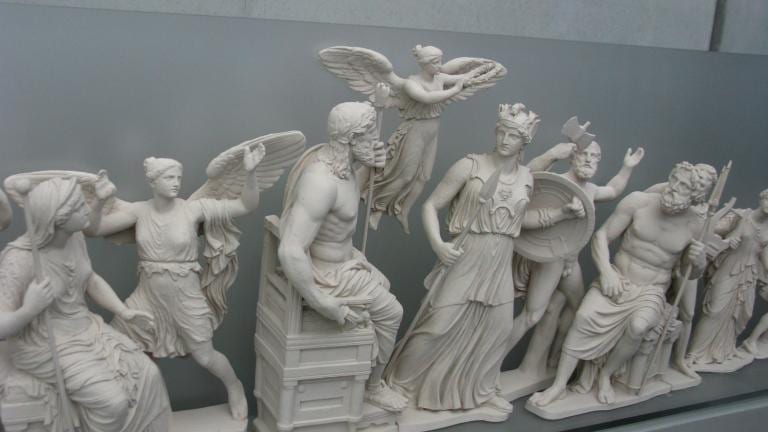
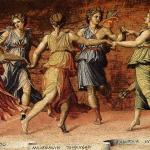
Roman Deities, Photo by Tilemahos Efthimiadis via Wikipedia CC 2.0

Many Pagans have had a bad time with religion, or more specifically with some brand of Christianity. They want Paganism to be an antidote to that. Modern polytheists don’t want to force their beliefs on others or get into fights about which of us is following the one true goddess, and that’s because we know that there are many deities, and each person will resonate with different ones.
Our deities don’t say “All other gods are false gods.” We know that they are not all-powerful or all-seeing. Modern polytheism offers a great breadth of choice. (The depth is up to you.)
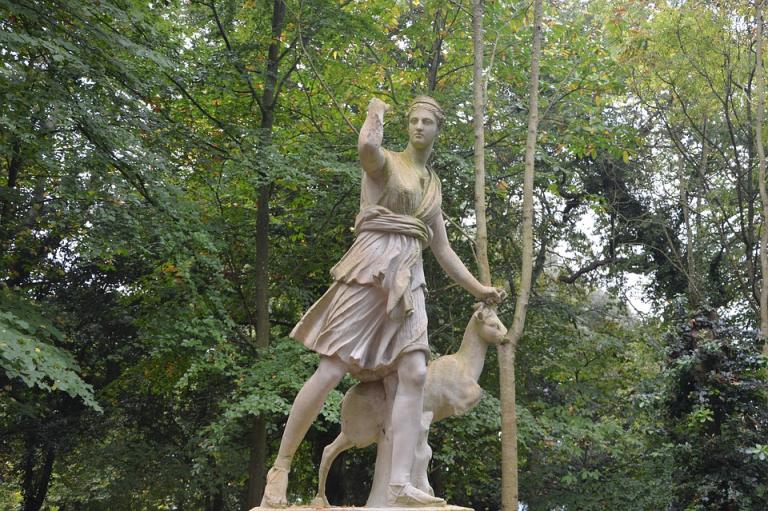
The Goddess Diana, photo by JACLOU-DL via Pixabay
Nature is still tops.
Nature is central to my path, and honouring deities makes it more important, not less. The gods are immanent in nature, and I believe that they arise/arose from nature, rather than that they created it. Defending the natural world is the top priority for many goddesses and having them as allies increases our chance of success in that fight. I love trees and herbs and grass. I’m passionate about animal rights. My gods constantly remind me that enjoying nature is not enough. The natural world is under threat and I must do what I can to counter that threat.
No groveling required.
I hear people say “I wouldn’t bend my knee” or “I wouldn’t bow down for anyone.” To my knowledge most goddesses don’t ask for that. Some people like to offer it, and some deities may like it if you do. I could also imagine that some gods might find it a bit icky if you grovel. One time a guy I was on a second date with went down on one knee in a diner where we were having lunch and tried to propose to me. This was not romantic! It was inappropriate and manipulative. On a couple of occasions in my life I have felt moved by a combination of emotion and pretentiousness to try to prostrate myself before a goddess. My sense is that it was received with a bit of a smirk, and I got up sheepishly.
That said, I believe that deities want and deserve respect and honour. What does that look like? Well, you probably stand for the national anthem. You might sing Happy Birthday to friends, take your mother out for dinner on Mothers’ Day, or put flowers on family graves. If you go to court, you are expected to rise when the judge comes in. Your job may require you to call certain people by a title, or you may like to show respect and politeness by calling people “sir” or “ma’am”. These are normal marks of honour or respect. If we are willing to offer this to people, then the gods surely deserve it.
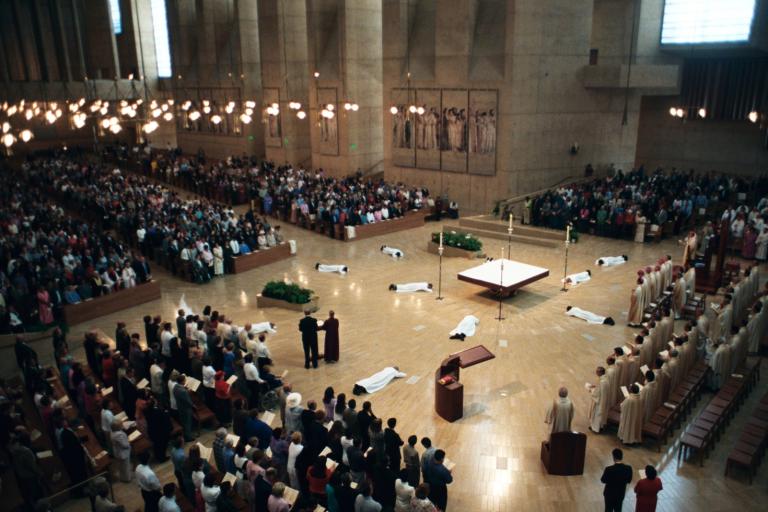
Religious prostration, photo by Eric Stoltz via Wikipedia CC 2.5

You don’t have to know your ancestry.
I’m not convinced that the goddesses are all that interested in my genetics, and anyone who says they are is going to get some serious side-eye from me. Individual deities are often seeking allies or devotees, from the general population – often among some special-interest group. Poets, farmers, witches, people who like the sea – each will appeal to certain gods regardless of race or culture.
If you’re attracted to a particular pantheon (family of gods), then I think it is a mark of respect and a way to deepen your relationship to try to understand the land and culture that pantheon belongs to. Chances are, if you have that attraction you are also drawn to the culture, climate and landscape that goes with it.
Even if you may have a high proportion of a certain ethnic group in your family tree, that doesn’t mean you belong to that group culturally – not the modern culture, nor the Iron Age version! Does this mean that the goddesses won’t accept you? Honestly, I can’t say for sure, but I think there’s a good chance that they will if you show respect. And one of the most disrespectful things you can do is to assume a false identity. I’m not just talking about pretending to have a certain ancestry, I’m talking about the sort of posturing and putting on fake accents, etc. that people sometimes engage in. LARPing isn’t reconstructionism, it’s just dressing up. Trying to be something you’re not is exhausting for you, and tiresome for those around you – including the gods.
It’s okay not to feel chosen by a god.
Most people honour a deity because they feel drawn to that deity. That’s certainly how I started, and it was years before I felt that Epona was choosing me (although I may have been a bit thick!). Some people get interested in a particular goddess, and a relationship develops over time. Some people are unmistakably called in some dramatic vision or something. Even then, it’s generally a call, not an ultimatum. (And I do respect that some people say they’ve had ultimatums, but it’s never happened to me.) In the meantime, it’s fine to do the calling. To respectfully try to initiate a relationship with whatever gods you choose.

Modern Woman with Bike, photo by R. Kurtz via Flickr CC 2.0
You can be firmly rooted in the modern world.
There are plenty of ways to be a polytheist. Many like the reconstructionist approach, of trying to figure out how people conducted their religion at some point in the past, and more or less following it. However, as polytheism has matured I notice a softening around this, and an acknowledgement that it’s only one approach out of many. I have deep respect for the hard work and study that reconstructionists do, as it benefits many other polytheists, but I am thankful that there are plenty of other legitimate routes to knowing the gods.
You don’t have to study endlessly.
I’ll admit that modern polytheists put a lot of emphasis on study. Not only do they study the mythology of their gods, they like to delve into other old texts, learn obscure languages, and read up on history and archaeology. If that appeals to your inner nerd then that’s great, but there are other ways to approach polytheism. Simple, short books, videos and workshops are becoming more available, and their quality is improving. If you want some basic knowledge without feeling like you’re studying for a degree, it’s available if you ask around.
There is also the more direct route of approaching a deity you are interested in, or who might be calling you. A bit of study is still going to help, but many people have deep and meaningful experiences with deities while meditating or journeying.

Books by MaxPixel, public domain usage.
Slavery has been abolished.
There have been a few mentions recently that the gods are not vending machines. They are not our servants. You can’t expect that every time you light a candle or pour out some mead a god or goddess is going to come running and give you stuff.
Equally, I don’t see the deities I honor as my masters, unless I go to one of them and negotiate some sort of agreement (something which I wouldn’t do lightly). In that case, it’s more like going for a job interview. Do I want to work for this deity? Do they want my efforts? Will we agree to each others’ terms? So if I occasionally say “I work for the horse goddesses” that’s what I mean. I’m not their slave.
You can follow Kris at her blog Go Deeper and support her work on Patreon.
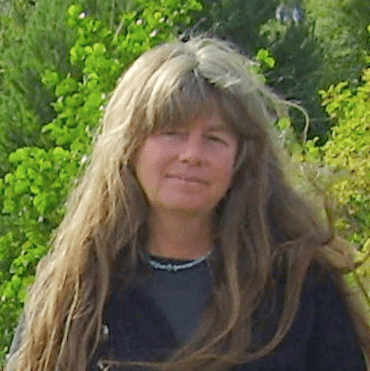
About Kris Hughes
Kris Hughes is a nice, older Pagan woman who loves the gods of the Celts. She doesn't claim to be anything in particular, but she might possibly be described as a hedge teacher, a writer, a part time Druid, an exiled Scot, a poet, cartomancer, ritualist, storyteller, or just someone with a lot to say about a lot of things. In the past she has been a professional musician, a farmer, and a horsewoman. She is currently writing a book, working title The Celtic Horse Goddesses: Myth, History and Personal Reflection. Her interests include herbalism, mythology, and British native ponies. She also blogs at her own website Go Deeper. You can read more about the author here.
Previous Post
March 15, 2019
Phoenix Rising: EnCHANTment -- Sacred Sound as an Offering
Next Post

March 15, 2019 Omens & Oracles: Self Care, Also Known As Witchcraft
Browse Our Archives
Select a Category A Lakeside Hearth Adventures in Wortcunning Alone In Her Presence Arts, Crafts & Cooking Birthing Hereditary Witchcraft Book of Blackbirds Book Reviews Born-Again Witch Cauldron, Sword, Spear, & Stone Cermony and Liturgy Columns Community Dandelion Seeds Dear Jasmine Druid Thoughts Editor's Picks Everyday Pagan Family & Household Practice Family Traditions Full Frontal Magic Gateway Goddess Guest Articles Happily Heathen Health and Wellness Hearth of Hellenism Heathen Woman Hills of the Horizon History Holidays Horse Goddesses Interfaith Interviews Irish-American Witchcraft Jewish Witch Lamp & Labyrinth Letters from Midgard Literature, Media, Film, Music Loop of Brighid Love, Sex & Relationships Magic or Magick Making Light Naturalistic Traditions Nature News Outside The Circle Pantheisticon Politics Prayers, Poems, Blessings & Stories Queer Femme Mystic Queer of Swords Recipes Ritual and Practice Science and Research Seekers and Guides Seeking the Grail Socially Responsible Magic Spear of Athena Star Made Witch Syncretic Electric Technology The Blooming Staff The Busy Witch The Cartomancer The Crow's Nest The Dance of Pagan Recovery The Hearth of Hellenism The Lady's Quill The Other Side of the Hedge The Path of She The Rantin' Raven The Witches Next Door The Zen Pagan Theology, Ethics, Philosophy Tree City Witch Urban Earthwitch Wayfaring Woman Witch on Fire Wyrd Words
Select a Month January 2026 March 2025 December 2024 June 2024 April 2024 March 2024 January 2024 December 2023 November 2023 October 2023 August 2023 July 2023 May 2023 April 2023 March 2023 February 2023 January 2023 December 2022 November 2022 October 2022 September 2022 August 2022 July 2022 June 2022 May 2022 March 2022 February 2022 January 2022 December 2021 November 2021 October 2021 September 2021 August 2021 July 2021 June 2021 May 2021 April 2021 March 2021 February 2021 January 2021 December 2020 November 2020 October 2020 September 2020 August 2020 July 2020 June 2020 May 2020 April 2020 March 2020 February 2020 January 2020 December 2019 November 2019 October 2019 September 2019 August 2019 July 2019 June 2019 May 2019 April 2019 March 2019 February 2019 January 2019 December 2018 November 2018 October 2018 September 2018 August 2018 July 2018 June 2018 May 2018 April 2018 March 2018 February 2018 January 2018 December 2017 November 2017 October 2017 September 2017 August 2017 July 2017 June 2017 May 2017 April 2017 March 2017 February 2017 January 2017 December 2016 November 2016 October 2016 September 2016 August 2016 July 2016 June 2016 May 2016 April 2016 March 2016 February 2016 January 2016 December 2015 November 2015 October 2015 September 2015 August 2015 July 2015 June 2015 May 2015 April 2015 March 2015 February 2015 January 2015 December 2014 November 2014 October 2014 September 2014 August 2014 July 2014 June 2014 May 2014 April 2014 March 2014 February 2014 January 2014 December 2013 November 2013 October 2013 September 2013 August 2013 July 2013 June 2013 May 2013 April 2013 March 2013 February 2013 January 2013 December 2012 November 2012 October 2012 September 2012 August 2012 July 2012 June 2012 May 2012 April 2012 March 2012 February 2012 January 2012
Follow Us!
TAKE THE
Religious Wisdom Quiz
What Christian tradition refers to its pastors as "elders"?
Select your answer to see how you score.
Presbyterian Anglican Orthodox Catholic
Related posts from Agora

Simple Witchery: To Keep Silent

Simple Witchery: Leaning On The Four Pillars

Pergamum Unfurled: Magic with the Greek Gods (Book...

Pergamum Unfurled: Cunning Words (Review)
TRENDING AT PATHEOS Pagan

I was recently chatting with someone on Instagram. She asked me what...

While there are many people who share their results, the end of...

On July 23, I saw Christopher Nolan's The Odyssey which is Homer’s...

As I write this two big events have just finished up. One...

Restoring the Watershed of Divine Love
Perhaps cooperation is not something we manufacture through legislation, ideology, or moral...

Many UUs don’t pray because of bad experiences in a previous religion,...
view all Pagan blogs
Ad-Free & Subscriber Log-In Subscription Support
- About Us
- 2026 Calendar
- Videos
- Podcasts
- Library of World Religions
- Faith In Media Tracker
- Advertise With Us
- Write for Us
- Privacy Policy
- Terms of Service
- Do Not Sell My Data
- Contact Us
- Radiant Digital
- Manage Newsletter Subscriptions
- Unsubscribe From Notifications
- Sitemap
Copyright 2008-2026, Patheos. All rights reserved.
Subscription Support Ad-Free & Subscriber Log-In
Follow Patheos