
BuddhistCatholicContemplativeEvangelicalGeneral ChristianHinduJewishLatter-day SaintMuslimNew VisionsProgressive Christian
Beliefs
- Buddhist
- Catholic
- Contemplative
- Evangelical
- General Christian
- Hindu
- Jewish
- Latter-day Saint
- More Voices
- Muslim
- New Visions
- Pagan
- Progressive Christian
Topics
- Religion News
- Food and Religion
- Sports and Religion
- Religious Art
- Religious Music and Entertainment
- Religious Events
- History and Religion
- Style and Religion
- Politics and Religion
- Women in Religion
- Recreation Outdoors and Religion
- Business Finance and Religion
- Careers Workplace and Religion
- Education and Religion
- Family Parenting and Religion
- Health Fitness and Religion
- Home and Religion
- Relationships and Religion
- Technology and Religion
- Travel and Religion
Columnists
- Buddhist Columnists
- Business Finance and Religion Columnists
- Careers Workplace and Religion Columnists
- Catholic Columnists
- Contemplative Columnists
- Education and Religion Columnists
- Evangelists Columnists
- Family Parenting and Religion Columnists
- General Christian Columnists
- Health Fitness and Religion Columnists
- Hindu Columnists
- History and Religion Columnists
- Home and Religion Columnists
- Jewish Columnists
- More Voices Columnists
- Latter Day Columnists
- Muslim Columnists
- New Visions Columnists
- Nonreligious Columnists
- Pagan Columnists
- Politics and Religion Columnists
- Progressive Columnists
- Recreation Outdoors and Religion Columnists
- Relationships and Religion Columnists
- Religion News Columnists
- Religious Art Columnists
- Religious Events Columnists
- Religious Music and Entertainment Columnists
- Sports and Religion Columnists
- Style and Religion Columnists
- Technology and Religion Columnists
- Travel and Religion Columnists
- Women in Religion Columnists
Resource Library
- 2026 Calendar
- Library of World Religions
- The 100 Most Holy Places on Earth
- Patheos Answers
- Podcasts
- Videos
- Faith Leaders Database
- Anglican Episcopalian
- Bahai
- Baptist
- Buddhism
- Christianity
- Confucianism
- Eastern Orthodoxy
- Hinduism
- Holiness and Pentecostal
- ISKCON
- Islam
- Judaism
- Lutheran
- Methodist
- The Church of Jesus Christ of Latter-day Saints
- New Age
- Paganism
- Presbytarian and Reformed
- Protestantism
- Religion Behind the Scenes
- Roman Catholic
- Scientology
- Shia Islam
- Sikhism
- Sufism
- Sunni Islam
- Taoism
- Zen
- See all religions
Research Tools
 Ad-Free & Subscriber Log-In Subscription Support
Ad-Free & Subscriber Log-In Subscription Support
Follow Patheos 

- Trending:
- Forgiveness
- |
- Marriage
- |
- Consciousness
- |
- Death Penalty
- |
- Election
- |
- Halloween

- Home
- Pagan
- Omens & Oracles: Human Sacrifice
Omens & Oracles: Human Sacrifice
Last updated on: November 17, 2018 at 9:39 pm by Kate Freuler
Omens & Oracles: Human Sacrifice 2018-11-17T21:39:14+00:00 Kate Freuler
Patheos Explore the world's faith through different perspectives on religion and spirituality! Patheos has the views of the prevalent religions and spiritualities of the world.
When I was about fourteen years old I developed an avid interest in horror films. The cheesier the better. Demonic possession? Nice! Hollywood versions of “satanic” rituals? Fascinating! Ghosts destroying entire suburban homes? Why not! The movies that genuinely made me feel scared, however, were the ones that combined blood and gore with religion. Specifically, the subject of making sacrifices to gods or spirits (what this says about me, I’m not sure). Later on this fear/fascination prompted me to learn more about the origins of human sacrifice, as macabre as that sounds. I found out some pretty creepy stuff.
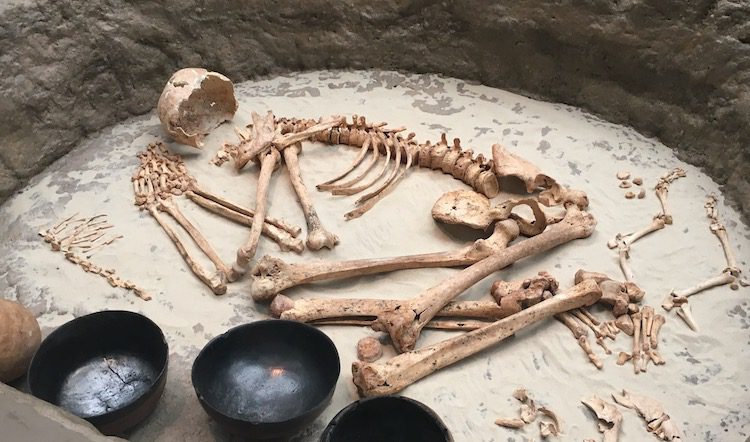
Looking back at human history, we’ve done weird and horrible things. Human sacrifice – that is, the act of ritually killing a person as an offering to a higher power – was practiced by many ancient civilizations. But why did they do it? Here’s a list.
1. They thought they had a good reason. Thousands of years ago humans were at the mercy of nature, which they thought was a sentient higher power with whom they could bargain. They didn’t understand science, so natural forces like tornadoes, hurricanes and drought were thought to be acts of vengeance or wrath from angry gods. The moods of their gods could cause destruction, starvation and disease. In an attempt to prevent these things, they tried to appease the omnipresent force with gifts. The more valuable the gift the better their chance of being heard, and what’s more valuable than a life?
2. Everyone was doing it. All over the world since the dawn of human history, people have willingly sacrificed themselves and their loved ones to deity. It’s strange that the act of sacrifice was worldwide, and people from all over the planet with no connection or communication with one another were all doing it as if on instinct. Does this mean sacrificing ourselves or others stemmed from some primal urge in our DNA?
3. Sacrifice ensured survival. The Aztecs believed offerings of blood and human organs were necessary to keep the sun in the sky. Since they would perish without the sun, each year an honored teenage boy was chosen to represent Tezcatlipoca, the god of creation. For one year prior to the festival, this boy would live a life of luxury and leisure. He was given the best clothing and jewels, learned to play the flute, and had attendants to wait on him. On the chosen day, the boy’s heart was ripped out, fresh and still beating, and ceremonially offered to the sun. Immediately afterwards a new young man was chosen for the following year’s festivities.
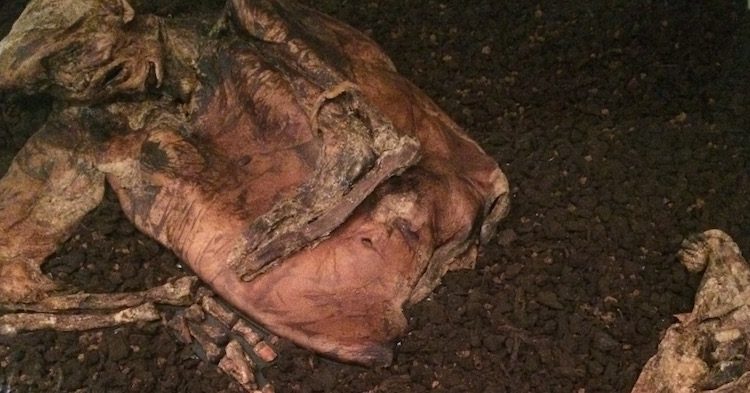
“LIndow Man” said to be a victim of human sacrifice.
4. Yes, virgins were a thing. During the Incan Empire, human sacrifice was considered necessary in times of famine, war and natural disaster. Usually the sacrifices were young virgin females. These virgin sacrifices had to be physically “perfect” with no marks, moles, freckles or scars on their entire bodies. Parents would offer their own children up for the role, as it was a noble act for the greater good. The children were treated well prior to their deaths, given the best of food and clothing. The virgins were led to the top of a mountain, where their throats were slit or their heads broken open. Their blood was then smeared on the faces of idols and the embalmed bodies of lords and kings.
5. Baby bones kept starvation away. In 1985 thousands of urns were discovered in the ancient city of Carthage, which contained the burned bones of babies. It was said that impoverished people sold their children for sacrifice, and wealthy people would buy slave children instead of killing their own offspring. The children were usually newborns but some were up to three years old. This burning of babies was performed in times of famine and need.
6. People craved victory. In Sweden, every 9 years a grand sacrifice of both humans and animals was made in exchange for victory in battle. It’s said that 9 carefully chosen creatures were beheaded, and the blood used to placate the gods. Then the bodies of humans, dogs and horses were hung from sacred trees near the temple.
7. The future could be told with blood. There are ancient documents that claim the Celts would fatally stab a person, and then examine the twitches and death throes of the victim to gain information about the future. Also the position of the fallen body, along with the patterns in the splattered blood, divined answers to questions, like the reading of tea leaves only a lot messier.
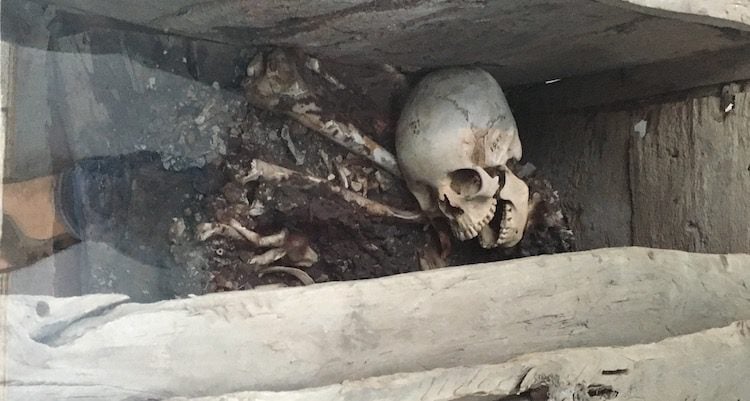
8. People wanted to give thanks. Archeological excavations in southern Britain revealed large scale burials of humans and animals in pits where grain was stored. It’s surmised these sacrifices were given as thanks to earth deities for the grain, and to ensure future farming success.
9. Blessing buildings. In China in the 16th century, live humans were trapped inside the foundations of new buildings and left to perish as part of consecration ceremonies.
10. Placating nature. In Oceania, volcanoes caused people to live in constant fear of natural disaster. Once a year a child would be taken from a neighboring village, dismembered by a priestess, and fed to the live volcano in a bid to keep it from erupting. In later years a wooden doll was cut apart instead of a child.
Christianity eventually overtook Rome and Greece, and with it, came the belief in Jesus Christ. It was believed that the Christian God chose to surrender his one and only son, and that nailing him to a cross was the grand finale for all the sins and wrongdoings of human kind. Christianity taught that there was no longer a need for human sacrifice, as God had gifted the blood of his own son in its place.
There have been documented cases of human sacrifice in modern days, but many of them have been left open ended and unproven. It can’t be said for certain if they were indeed religious acts or simply mad, bloodthirsty crimes. Some say that human sacrifice is alive and well in many parts of the world. I don’t know about you, but it wouldn’t surprise me considering our past behavior.
Sources:
Shreeve, Jimmy Lee. Human Sacrifice, A Shocking Expose of ritual Killings Worldwide. New York: Skyhorse Publishing, 2015

About Kate Freuler
Kate Freuler is a Canadian writer and artist, and the owner of www.whitemoonwitchcraft.com, an online occult shop. You can read more about the author here.
Previous Post
November 15, 2018
Of Light & Shadow: Anubis, God of the Modern Age
Next Post

November 18, 2018 Between Two Worlds: Transgender Day of Remembrance
Browse Our Archives
Select a Category A Lakeside Hearth Adventures in Wortcunning Alone In Her Presence Arts, Crafts & Cooking Birthing Hereditary Witchcraft Book of Blackbirds Book Reviews Born-Again Witch Cauldron, Sword, Spear, & Stone Cermony and Liturgy Columns Community Dandelion Seeds Dear Jasmine Druid Thoughts Editor's Picks Everyday Pagan Family & Household Practice Family Traditions Full Frontal Magic Gateway Goddess Guest Articles Happily Heathen Health and Wellness Hearth of Hellenism Heathen Woman Hills of the Horizon History Holidays Horse Goddesses Interfaith Interviews Irish-American Witchcraft Jewish Witch Lamp & Labyrinth Letters from Midgard Literature, Media, Film, Music Loop of Brighid Love, Sex & Relationships Magic or Magick Making Light Naturalistic Traditions Nature News Outside The Circle Pantheisticon Politics Prayers, Poems, Blessings & Stories Queer Femme Mystic Queer of Swords Recipes Ritual and Practice Science and Research Seekers and Guides Seeking the Grail Socially Responsible Magic Spear of Athena Star Made Witch Syncretic Electric Technology The Blooming Staff The Busy Witch The Cartomancer The Crow's Nest The Dance of Pagan Recovery The Hearth of Hellenism The Lady's Quill The Other Side of the Hedge The Path of She The Rantin' Raven The Witches Next Door The Zen Pagan Theology, Ethics, Philosophy Tree City Witch Urban Earthwitch Wayfaring Woman Witch on Fire Wyrd Words
Select a Month January 2026 March 2025 December 2024 June 2024 April 2024 March 2024 January 2024 December 2023 November 2023 October 2023 August 2023 July 2023 May 2023 April 2023 March 2023 February 2023 January 2023 December 2022 November 2022 October 2022 September 2022 August 2022 July 2022 June 2022 May 2022 March 2022 February 2022 January 2022 December 2021 November 2021 October 2021 September 2021 August 2021 July 2021 June 2021 May 2021 April 2021 March 2021 February 2021 January 2021 December 2020 November 2020 October 2020 September 2020 August 2020 July 2020 June 2020 May 2020 April 2020 March 2020 February 2020 January 2020 December 2019 November 2019 October 2019 September 2019 August 2019 July 2019 June 2019 May 2019 April 2019 March 2019 February 2019 January 2019 December 2018 November 2018 October 2018 September 2018 August 2018 July 2018 June 2018 May 2018 April 2018 March 2018 February 2018 January 2018 December 2017 November 2017 October 2017 September 2017 August 2017 July 2017 June 2017 May 2017 April 2017 March 2017 February 2017 January 2017 December 2016 November 2016 October 2016 September 2016 August 2016 July 2016 June 2016 May 2016 April 2016 March 2016 February 2016 January 2016 December 2015 November 2015 October 2015 September 2015 August 2015 July 2015 June 2015 May 2015 April 2015 March 2015 February 2015 January 2015 December 2014 November 2014 October 2014 September 2014 August 2014 July 2014 June 2014 May 2014 April 2014 March 2014 February 2014 January 2014 December 2013 November 2013 October 2013 September 2013 August 2013 July 2013 June 2013 May 2013 April 2013 March 2013 February 2013 January 2013 December 2012 November 2012 October 2012 September 2012 August 2012 July 2012 June 2012 May 2012 April 2012 March 2012 February 2012 January 2012
Follow Us!
TAKE THE
Religious Wisdom Quiz
What were the Ten Commandments written down on?
Select your answer to see how you score.
Stone tablets Papyrus Scrolls The Ark of the Covenant
Related posts from Agora

Simple Witchery: To Keep Silent

Simple Witchery: Leaning On The Four Pillars

Pergamum Unfurled: Magic with the Greek Gods (Book...

Pergamum Unfurled: Cunning Words (Review)
TRENDING AT PATHEOS Pagan

I was recently chatting with someone on Instagram. She asked me what...

While there are many people who share their results, the end of...

On July 23, I saw Christopher Nolan's The Odyssey which is Homer’s...

As I write this two big events have just finished up. One...

Restoring the Watershed of Divine Love
Perhaps cooperation is not something we manufacture through legislation, ideology, or moral...

Many UUs don’t pray because of bad experiences in a previous religion,...
view all Pagan blogs
Ad-Free & Subscriber Log-In Subscription Support
- About Us
- 2026 Calendar
- Videos
- Podcasts
- Library of World Religions
- Faith In Media Tracker
- Advertise With Us
- Write for Us
- Privacy Policy
- Terms of Service
- Do Not Sell My Data
- Contact Us
- Radiant Digital
- Manage Newsletter Subscriptions
- Unsubscribe From Notifications
- Sitemap
Copyright 2008-2026, Patheos. All rights reserved.
Subscription Support Ad-Free & Subscriber Log-In
Follow Patheos