
BuddhistCatholicContemplativeEvangelicalGeneral ChristianHinduJewishLatter-day SaintMuslimNew VisionsProgressive Christian
Beliefs
- Buddhist
- Catholic
- Contemplative
- Evangelical
- General Christian
- Hindu
- Jewish
- Latter-day Saint
- More Voices
- Muslim
- New Visions
- Pagan
- Progressive Christian
Topics
- Religion News
- Food and Religion
- Sports and Religion
- Religious Art
- Religious Music and Entertainment
- Religious Events
- History and Religion
- Style and Religion
- Politics and Religion
- Women in Religion
- Recreation Outdoors and Religion
- Business Finance and Religion
- Careers Workplace and Religion
- Education and Religion
- Family Parenting and Religion
- Health Fitness and Religion
- Home and Religion
- Relationships and Religion
- Technology and Religion
- Travel and Religion
Columnists
- Buddhist Columnists
- Business Finance and Religion Columnists
- Careers Workplace and Religion Columnists
- Catholic Columnists
- Contemplative Columnists
- Education and Religion Columnists
- Evangelists Columnists
- Family Parenting and Religion Columnists
- General Christian Columnists
- Health Fitness and Religion Columnists
- Hindu Columnists
- History and Religion Columnists
- Home and Religion Columnists
- Jewish Columnists
- More Voices Columnists
- Latter Day Columnists
- Muslim Columnists
- New Visions Columnists
- Nonreligious Columnists
- Pagan Columnists
- Politics and Religion Columnists
- Progressive Columnists
- Recreation Outdoors and Religion Columnists
- Relationships and Religion Columnists
- Religion News Columnists
- Religious Art Columnists
- Religious Events Columnists
- Religious Music and Entertainment Columnists
- Sports and Religion Columnists
- Style and Religion Columnists
- Technology and Religion Columnists
- Travel and Religion Columnists
- Women in Religion Columnists
Resource Library
- 2026 Calendar
- Library of World Religions
- The 100 Most Holy Places on Earth
- Patheos Answers
- Podcasts
- Videos
- Faith Leaders Database
- Anglican Episcopalian
- Bahai
- Baptist
- Buddhism
- Christianity
- Confucianism
- Eastern Orthodoxy
- Hinduism
- Holiness and Pentecostal
- ISKCON
- Islam
- Judaism
- Lutheran
- Methodist
- The Church of Jesus Christ of Latter-day Saints
- New Age
- Paganism
- Presbytarian and Reformed
- Protestantism
- Religion Behind the Scenes
- Roman Catholic
- Scientology
- Shia Islam
- Sikhism
- Sufism
- Sunni Islam
- Taoism
- Zen
- See all religions
Research Tools
 Ad-Free & Subscriber Log-In Subscription Support
Ad-Free & Subscriber Log-In Subscription Support
Follow Patheos 

- Trending:
- Forgiveness
- |
- Marriage
- |
- Consciousness
- |
- Death Penalty
- |
- Election
- |
- Halloween

- Home
- Pagan
- Hail From the Hearth: Faith Bashing, Legitimizing by Victimizing
Hail From the Hearth: Faith Bashing, Legitimizing by Victimizing
Last updated on: October 4, 2018 at 4:24 pm by Ethan Stark
Hail From the Hearth: Faith Bashing, Legitimizing by Victimizing 2018-10-04T16:24:11+00:00 Ethan Stark
Patheos Explore the world's faith through different perspectives on religion and spirituality! Patheos has the views of the prevalent religions and spiritualities of the world.
We are often focused on the ignorance and misunderstandings that we receive as pagans that come in the form of questions ranging from queries regarding jewelry and attire to inquiries about our beliefs (in the case of Heathens: “wait…you worship a Marvel character?”).
It can be quite frustrating answering these questions on a near regular basis and we may feel vulnerable when our beliefs are questioned or challenged, which we may tend to immediately (and possibly naturally) have us go on the defensive when that occurs. Such defensiveness may stem not only from vulnerability but from one’s sense of pride as well. We found a faith that makes us whole, that gladdens our spirit, and nourishes a sense of community; so of course we would stand tall and rise to its defense by rallying with our proverbial shields and spears against the onslaught of queries and possible insults! We spend so much time and effort explaining and defending our newfound faith that we sometimes forget our former in the fray, and it is here that we sometimes start bashing.

Depiction of Olaf Tryggvason by Peter Nicolai Arbo (1860) From WikiMedia.
Former faith bashing, or as I like to calling it “FoFaBing”, seems to be most apparent when one embraces their new faith and attempts to supplant the old one by focusing on the negative aspects or characteristics that were the impetus of leaving that faith, and may range from its doctrine to distrust. In Neo-Pagan and reconstruction faiths this is very prevalent.
Our reconstructionist beliefs have laid dormant for the most part due to mass religious conversion through sometimes violent means; and so some residual resentment may resurface.
This is especially true of Christianity and its bloody conversions around the world. Among and within neo-pagan circles we constantly hear about how: “Christianity took this from us” or “Christians destroyed/murdered…” and while it is true that Christianity has had some bloodsoaked history with the pagan faiths and others around the world, the focus toward forced religious conversion such as this gives rise toward intolerance that many pagans fail to take notice of. So what began as research into the origins of pre-Christian religion has now devolved into unhealthy criticism of the Christian past; then that slippery-slope fallacy slopes downward toward cringing at the very thought of anything remotely Christian or even outward mockery of practicing Christians.
When researching the Heathen past for example, we often come across the religious tension in Iceland during medieval times where the two factions of the “White Christ” and the “Red Thor” divided the population. Today we mimic this with online memes on how Thor or Odin are superior to Christ because they were banishing giants instead of turning the other cheek, and while it was probably created in jest, it does speak to an often ignored trend of intolerance.
Though one has every right to criticize religion, one must also have a logical argument and ask the proper questions. One must also be reminded that the Inquisition, the murderous sweeps of Charlemagne, violent conversions of Olaf Tryggvasson in Norway, and the American Puritan witch trials do not represent good Christian values.
These terrible times in the Christian past often overshadow the valuable lessons, teachings, and rich traditions that Christianity contains; the important and somewhat inspiring poetry of the Sermon on the Mount, the in-depth allegories of the Last Supper, and the fortitude of a small-yet-powerful minority lead by a charismatic Jewish rabbi during Roman persecution. The reality is that no Christian alive has existed during the time of these persecutions and the myriad of Christian sects do not make every Christian alike. If anything I think a person should only have a problem with Christians that make really weak (Lutherans) or others (Latter-Day Saints) completely prohibit coffee!
While Christianity seems to be the largest religious denomination from which pagans convert from, there are those who used to belong to faiths. In Judaism the concept of God (Yahweh or the Hebrew god of the Old Testament) is where one finds the “fire and brimstone” spoken so often by Judeo-Christian sects. The Hebrew god is vengeful and is not afraid to kick some serious butt of and for the Israelites; as opposed to the god of the New Testament (Christianity) that through his only son, Jesus Christ he is merciful and loving. Though both analogies might be simplified redundancies, the concept of a singular omnipotent/omnipresent deity may have rubbed pagans the wrong way. Those who left the Jewish faith may have felt (as this author has) that such a perception of the divine took away a sense of autonomy and individuality from them. Pagans may have found that the ability to directly choose their pantheon personage granted them a sense of individuality while the ability to steer clear of others provided a sense of spiritual autonomy.
Furthermore, as orthodoxic as Judaism is it does criticize itself from within just as some pagans (and especially in Heathenry) question our own faith while reconstructing it. The whole purpose of the Talmud (Instructional guide on Judaic rabbinic theology) and the Midrash (rabbinic interpretation of the bible) is to read and interpret the bible and theorize its content (from miracles to personages); something we as pagans sometimes do as we read, dissect, and theorize upon our own sources such as anthropological finds associated with our Hearth culture and Neo-Pagan tradition.

What Should We Do?
Nearly every religion on the planet has practiced religious intolerance at one point or another; even faiths who we associate with tolerance and peace such as Buddhism. This is true of our pagan faiths as well, and what needs to be understood is that just as we feel strongly about the negative impact that religious supplanting had on the ancient roots of our faith, former faith bashing negatively impacts our effort to reconstruct and practice our faith in the present.
If we tell ourselves that we believe in equality, that we stand against religious intolerance, and condemn the actions made in the ancient past (and some in the present) then we ourselves must show our temperance and understanding with other faiths – especially the ones we grew up knowing. Speaking from a Heathen perspective, we learn to honor the ancestors and our families, and thus must accept the fact that we will be honoring a heritage that is not rooted in Heathen antiquity. That is to say that we will be honoring ancestors who may have been Christian, Jewish, Muslim, Sikh, or Buddhist; faiths that may not have been pagan at all.
We want to be understood as pagans and seek to legitimize our newfound faith in the eyes of the greater stage of world religion, and but we must ask ourselves what would we like others to see.
Wrathful witches, displeased druids, and hateful heathens?
Or welcoming witches, discerning druids, and hospitable heathens?
We might not necessarily want to always “turn the other cheek”; however there are times when we should treat others as we would like to be treated. Christian proverb or not, there is a lesson to be learned from that axiom. And if we can take a lesson from our previous faiths, perhaps it will give those who still adhere to them a chance to learn more about ours.

About Ethan Stark
Ethan has been a dedicant of the Ásatrú Tradition of Heathenry for close to 10 years. He is a founding member and goði (priest) of the North River Kindred in New York City. Co-founder of “NYC Heathens”; hosting educational “loremoots” and other social events. Additionally, he is a member of The Troth where he serves as the Public Relations officer and administrator of “Heathens Against Hate” - an independent branch and advocacy group for inclusive Heathenry. You can read more about the author here.
Previous Post

September 20, 2018
Pan-Celtic Hoofbeats: Mabon is a God
Next Post

October 1, 2018 Irish-American Witchcraft: Adventures with the Hiddenfolk in Iceland
Browse Our Archives
Select a Category A Lakeside Hearth Adventures in Wortcunning Alone In Her Presence Arts, Crafts & Cooking Birthing Hereditary Witchcraft Book of Blackbirds Book Reviews Born-Again Witch Cauldron, Sword, Spear, & Stone Cermony and Liturgy Columns Community Dandelion Seeds Dear Jasmine Druid Thoughts Editor's Picks Everyday Pagan Family & Household Practice Family Traditions Full Frontal Magic Gateway Goddess Guest Articles Happily Heathen Health and Wellness Hearth of Hellenism Heathen Woman Hills of the Horizon History Holidays Horse Goddesses Interfaith Interviews Irish-American Witchcraft Jewish Witch Lamp & Labyrinth Letters from Midgard Literature, Media, Film, Music Loop of Brighid Love, Sex & Relationships Magic or Magick Making Light Naturalistic Traditions Nature News Outside The Circle Pantheisticon Politics Prayers, Poems, Blessings & Stories Queer Femme Mystic Queer of Swords Recipes Ritual and Practice Science and Research Seekers and Guides Seeking the Grail Socially Responsible Magic Spear of Athena Star Made Witch Syncretic Electric Technology The Blooming Staff The Busy Witch The Cartomancer The Crow's Nest The Dance of Pagan Recovery The Hearth of Hellenism The Lady's Quill The Other Side of the Hedge The Path of She The Rantin' Raven The Witches Next Door The Zen Pagan Theology, Ethics, Philosophy Tree City Witch Urban Earthwitch Wayfaring Woman Witch on Fire Wyrd Words
Select a Month January 2026 March 2025 December 2024 June 2024 April 2024 March 2024 January 2024 December 2023 November 2023 October 2023 August 2023 July 2023 May 2023 April 2023 March 2023 February 2023 January 2023 December 2022 November 2022 October 2022 September 2022 August 2022 July 2022 June 2022 May 2022 March 2022 February 2022 January 2022 December 2021 November 2021 October 2021 September 2021 August 2021 July 2021 June 2021 May 2021 April 2021 March 2021 February 2021 January 2021 December 2020 November 2020 October 2020 September 2020 August 2020 July 2020 June 2020 May 2020 April 2020 March 2020 February 2020 January 2020 December 2019 November 2019 October 2019 September 2019 August 2019 July 2019 June 2019 May 2019 April 2019 March 2019 February 2019 January 2019 December 2018 November 2018 October 2018 September 2018 August 2018 July 2018 June 2018 May 2018 April 2018 March 2018 February 2018 January 2018 December 2017 November 2017 October 2017 September 2017 August 2017 July 2017 June 2017 May 2017 April 2017 March 2017 February 2017 January 2017 December 2016 November 2016 October 2016 September 2016 August 2016 July 2016 June 2016 May 2016 April 2016 March 2016 February 2016 January 2016 December 2015 November 2015 October 2015 September 2015 August 2015 July 2015 June 2015 May 2015 April 2015 March 2015 February 2015 January 2015 December 2014 November 2014 October 2014 September 2014 August 2014 July 2014 June 2014 May 2014 April 2014 March 2014 February 2014 January 2014 December 2013 November 2013 October 2013 September 2013 August 2013 July 2013 June 2013 May 2013 April 2013 March 2013 February 2013 January 2013 December 2012 November 2012 October 2012 September 2012 August 2012 July 2012 June 2012 May 2012 April 2012 March 2012 February 2012 January 2012
Follow Us!
TAKE THE
Religious Wisdom Quiz
What does "Jireh" mean in Hebrew?
Select your answer to see how you score.
Provider Savior Redeemer Protector
Related posts from Agora

Salt City Pagan: How Pagans Celebrate the Summer...

Hail From the Hearth: My Heathen-Christian Interfaith Wedding
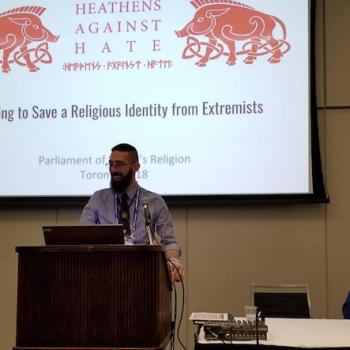
Hail From the Hearth: Parliament of World's Religion...

Hail From the Hearth: An Evening for Dying...
TRENDING AT PATHEOS Pagan

I was recently chatting with someone on Instagram. She asked me what...

While there are many people who share their results, the end of...

On July 23, I saw Christopher Nolan's The Odyssey which is Homer’s...

As I write this two big events have just finished up. One...

Restoring the Watershed of Divine Love
Perhaps cooperation is not something we manufacture through legislation, ideology, or moral...

Many UUs don’t pray because of bad experiences in a previous religion,...
view all Pagan blogs
Ad-Free & Subscriber Log-In Subscription Support
- About Us
- 2026 Calendar
- Videos
- Podcasts
- Library of World Religions
- Faith In Media Tracker
- Advertise With Us
- Write for Us
- Privacy Policy
- Terms of Service
- Do Not Sell My Data
- Contact Us
- Radiant Digital
- Manage Newsletter Subscriptions
- Unsubscribe From Notifications
- Sitemap
Copyright 2008-2026, Patheos. All rights reserved.
Subscription Support Ad-Free & Subscriber Log-In
Follow Patheos