
BuddhistCatholicContemplativeEvangelicalGeneral ChristianHinduJewishLatter-day SaintMuslimNew VisionsProgressive Christian
Beliefs
- Buddhist
- Catholic
- Contemplative
- Evangelical
- General Christian
- Hindu
- Jewish
- Latter-day Saint
- More Voices
- Muslim
- New Visions
- Pagan
- Progressive Christian
Topics
- Religion News
- Food and Religion
- Sports and Religion
- Religious Art
- Religious Music and Entertainment
- Religious Events
- History and Religion
- Style and Religion
- Politics and Religion
- Women in Religion
- Recreation Outdoors and Religion
- Business Finance and Religion
- Careers Workplace and Religion
- Education and Religion
- Family Parenting and Religion
- Health Fitness and Religion
- Home and Religion
- Relationships and Religion
- Technology and Religion
- Travel and Religion
Columnists
- Buddhist Columnists
- Business Finance and Religion Columnists
- Careers Workplace and Religion Columnists
- Catholic Columnists
- Contemplative Columnists
- Education and Religion Columnists
- Evangelists Columnists
- Family Parenting and Religion Columnists
- General Christian Columnists
- Health Fitness and Religion Columnists
- Hindu Columnists
- History and Religion Columnists
- Home and Religion Columnists
- Jewish Columnists
- More Voices Columnists
- Latter Day Columnists
- Muslim Columnists
- New Visions Columnists
- Nonreligious Columnists
- Pagan Columnists
- Politics and Religion Columnists
- Progressive Columnists
- Recreation Outdoors and Religion Columnists
- Relationships and Religion Columnists
- Religion News Columnists
- Religious Art Columnists
- Religious Events Columnists
- Religious Music and Entertainment Columnists
- Sports and Religion Columnists
- Style and Religion Columnists
- Technology and Religion Columnists
- Travel and Religion Columnists
- Women in Religion Columnists
Resource Library
- 2026 Calendar
- Library of World Religions
- The 100 Most Holy Places on Earth
- Patheos Answers
- Podcasts
- Videos
- Faith Leaders Database
- Anglican Episcopalian
- Bahai
- Baptist
- Buddhism
- Christianity
- Confucianism
- Eastern Orthodoxy
- Hinduism
- Holiness and Pentecostal
- ISKCON
- Islam
- Judaism
- Lutheran
- Methodist
- The Church of Jesus Christ of Latter-day Saints
- New Age
- Paganism
- Presbytarian and Reformed
- Protestantism
- Religion Behind the Scenes
- Roman Catholic
- Scientology
- Shia Islam
- Sikhism
- Sufism
- Sunni Islam
- Taoism
- Zen
- See all religions
Research Tools
 Ad-Free & Subscriber Log-In Subscription Support
Follow Patheos 

- Trending:
- Advent
- |
- Forgiveness
- |
- Thanksgiving
- |
- Election
- |
- Seasonal Holidays
- |
- Marriage

- Home
- Pagan
- Pan-Celtic Hoofbeats: Mabon is a God
Pan-Celtic Hoofbeats: Mabon is a God
Last updated on: September 26, 2018 at 9:23 pm by Kris Hughes
Pan-Celtic Hoofbeats: Mabon is a God 2018-09-26T21:23:40+00:00 Kris Hughes
Patheos Explore the world's faith through different perspectives on religion and spirituality! Patheos has the views of the prevalent religions and spiritualities of the world.
I thought I had said enough about the whole Mabon thing years ago, but John Beckett’s recent post got me riled. Although he did a great job of covering how we got into this mess in the first place, his tone — specifically labelling any complaints about the use of “Mabon” for the Autumn Equinox as “hate” — felt like an attempt to trivialize objections and quash further debate. I agree that such debates should remain friendly, but the quotes John Beckett included in his post sounded calm and reasonable. I couldn’t detect any hate in them at all. The whole thing read as if he was saying “Yeah, ten years ago you could show you were cool by saying we shouldn’t call it Mabon. Now, you can be cool like me by saying it doesn’t matter.”

Corbridge Roman Ruins by Glen Bowman, from WikiMedia. CC 2.0 License.
As you probably guessed, I think it does matter, and here’s why:
Mabon is a deity.
His one surviving myth is in the Welsh tale Culhwch and Olwen. In this story, our hero, Culhwch must accomplish several seemingly impossible tasks in order to win the hand of Olwen, a giant’s daughter. Among these tasks is the killing of an enormous boar. However, he learns that he has no hope of killing this boar without the help of Mabon. Unfortunately, Mabon has been missing from his mother, Modron, since he was three days old, and is very hard to find. There is a long and involved search. Finally, with the help of Culhwch’s cousin, King Arthur, Mabon is found in an underwater prison, is freed, and is able to help Culhwch hunt the boar, and eventually win his bride. (This is just a quick sketch of the whole story, which is particularly long winded.)
There is also evidence that Mabon, or Maponus (sometimes spelled Maponos) was an important deity to Celts on the continent and in Britain. There are two inscriptions to Him in Gaul (modern France), both associated with healing springs, which may imply that he has an association with water or healing. Of course, where we find inscriptions we always find Romans, because the Celts, themselves, didn’t leave inscriptions, or at least not unless they were influenced to do so by Romans.
There are eight more inscriptions in Britain, all associated with Roman camps in the north, mostly near Hadrian’s wall. At one of these sites, a Roman camp near Corbridge, a beautiful head carved in Celtic, rather than Roman, style was found, and is believed to depict Maponos. Corbridge must have been a centre for the worship of Maponus, as there were four separate inscribed altars there.
The Romans had a habit of adopting indigenous deities wherever they went, and they usually combined or conflated them with whichever of their own gods they considered similar. However, they weren’t too particular about getting a close match. So, when I tell you that they paired Maponos with Apollo, I would urge you not to jump to the conclusion that the two gods have all the same attributes, and certainly not that they are the same deity.

The Lochmaben Stone
cc-by-sa/2.0 – © Walter Baxter – geograph.org.uk/p/1055490
There is also evidence of Maponus as Mabon in a non-Roman context not far from these Romano-British sites, just over the border into southwestern Scotland. The Clachmaben Stone is a megalith near Gretna, which was once part of a stone circle. About twenty miles to the northwest is the small town of Lochmaben, which is bordered on three sides by lochs. Mabon’s name is recorded as being localised to this area by the 7th century, but it is reasonable to think that it was used there earlier. The area in which most of the British sites occur is firmly within the ancient kingdoms of Rheged and Stratclyde, which, for many centuries, shared a common Brythonic language and culture with what we now call Wales. This makes it logical to think that all these different pieces of evidence: the myth, the inscriptions and the place names can be traced to one deity.
Mabon/Maponos is a deity. In my book that makes Him both important and worthy of a certain reverence or respect. Aiden Kelly, the chap who decided to call this holiday Mabon in the 1970s, had his own rationale for choosing Mabon. He was looking for a “northern European” deity who fit the idea of a divine prisoner, similar to Persephone. Kelly goes on to say, “It would have been aesthetically better to have found a Saxon name, but [there wasn’t one] so I picked ‘Mabon’.”
That approach doesn’t seem particularly respectful to me, but two things would have improved the situation. First, Kelly and his cohorts, and the Pagan community in general, could have chosen to honour the god Mabon at the Autumnal Equinox, rather than just turn it into Pagan Thanksgiving. Instead, they changed the name of a god into an offhand label for a spoke in our modern Wheel of the Year, and buried Mabon Himself under a pile of late wheat and early pumpkins.
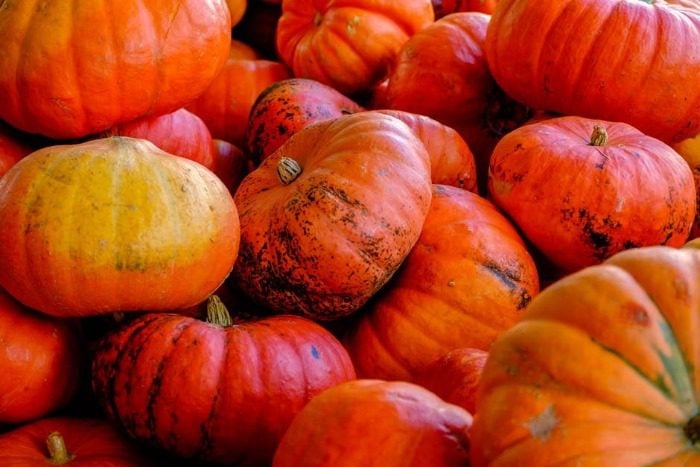
Photo by
Umberto Cancedda via Pexels. CC0 License.
This taking of the personal name of a deity and applying it to a day doesn’t even make logical grammatical sense here, and that’s the second thing that bothers me. The feast of the god Saturn is called Saturnalia. The day named after Woden is called Wodensday/Wednesday. The big holiday of you-know-who is called Christmas. The clue that we are honoring a god on these days is in the word. Would it not have been more respectful to call it Maponalia or Mabon’s Day or something like that? I guess that didn’t have the same slick ring to it, but people are willing to struggle through Samhain and Lughnasadh, so these should have been a walk in the park. That type of name would have led people to ask, “Who’s Mabon?” It would have left an opening to teach new Pagans about the god Mabon, and why He got picked for these new duties. He probably wouldn’t have minded. In my experience, the gods appreciate our attention.
I don’t hate Aiden Kelly, or any of the people who call the upcoming holiday Mabon without knowing why. After all, they are just following a custom they learned from someone else. Neo paganismis still a very young set of religions. We still have time to correct some of our sillier mistakes, rather than turning them into a legacy. I’m not speaking from a place of hate, here, I’m speaking from a place of loving my gods. (Something John Beckett talks about all the time.) I’m speaking from a place of respecting my fellow Pagans enough to want them to have an accurate map to work with. Most Pagans I meet want an accurate map, because it’s much easier to make sense of your journey that way.

About Kris Hughes
Kris Hughes is a nice, older Pagan woman who loves the gods of the Celts. She doesn't claim to be anything in particular, but she might possibly be described as a hedge teacher, a writer, a part time Druid, an exiled Scot, a poet, cartomancer, ritualist, storyteller, or just someone with a lot to say about a lot of things. In the past she has been a professional musician, a farmer, and a horsewoman. She is currently writing a book, working title The Celtic Horse Goddesses: Myth, History and Personal Reflection. Her interests include herbalism, mythology, and British native ponies. She also blogs at her own website Go Deeper. You can read more about the author here.
Previous Post

September 19, 2018
Pan-Celtic Hoofbeats: By Way of an Introduction
Next Post
October 1, 2018 Hail From the Hearth: Faith Bashing, Legitimizing by Victimizing
Browse Our Archives
Select a Category A Lakeside Hearth Adventures in Wortcunning Alone In Her Presence Arts, Crafts & Cooking Birthing Hereditary Witchcraft Book of Blackbirds Book Reviews Born-Again Witch Cauldron, Sword, Spear, & Stone Cermony and Liturgy Columns Community Dandelion Seeds Dear Jasmine Druid Thoughts Editor's Picks Everyday Pagan Family & Household Practice Family Traditions Full Frontal Magic Gateway Goddess Guest Articles Happily Heathen Health and Wellness Hearth of Hellenism Heathen Woman Hills of the Horizon History Holidays Horse Goddesses Interfaith Interviews Irish-American Witchcraft Jewish Witch Lamp & Labyrinth Letters from Midgard Literature, Media, Film, Music Loop of Brighid Love, Sex & Relationships Magic or Magick Making Light Naturalistic Traditions Nature News Outside The Circle Pantheisticon Politics Prayers, Poems, Blessings & Stories Queer Femme Mystic Queer of Swords Recipes Ritual and Practice Science and Research Seekers and Guides Seeking the Grail Socially Responsible Magic Spear of Athena Star Made Witch Syncretic Electric Technology The Blooming Staff The Busy Witch The Cartomancer The Crow's Nest The Dance of Pagan Recovery The Hearth of Hellenism The Lady's Quill The Other Side of the Hedge The Path of She The Rantin' Raven The Witches Next Door The Zen Pagan Theology, Ethics, Philosophy Tree City Witch Urban Earthwitch Wayfaring Woman Witch on Fire Wyrd Words
Select a Month January 2026 March 2025 December 2024 June 2024 April 2024 March 2024 January 2024 December 2023 November 2023 October 2023 August 2023 July 2023 May 2023 April 2023 March 2023 February 2023 January 2023 December 2022 November 2022 October 2022 September 2022 August 2022 July 2022 June 2022 May 2022 March 2022 February 2022 January 2022 December 2021 November 2021 October 2021 September 2021 August 2021 July 2021 June 2021 May 2021 April 2021 March 2021 February 2021 January 2021 December 2020 November 2020 October 2020 September 2020 August 2020 July 2020 June 2020 May 2020 April 2020 March 2020 February 2020 January 2020 December 2019 November 2019 October 2019 September 2019 August 2019 July 2019 June 2019 May 2019 April 2019 March 2019 February 2019 January 2019 December 2018 November 2018 October 2018 September 2018 August 2018 July 2018 June 2018 May 2018 April 2018 March 2018 February 2018 January 2018 December 2017 November 2017 October 2017 September 2017 August 2017 July 2017 June 2017 May 2017 April 2017 March 2017 February 2017 January 2017 December 2016 November 2016 October 2016 September 2016 August 2016 July 2016 June 2016 May 2016 April 2016 March 2016 February 2016 January 2016 December 2015 November 2015 October 2015 September 2015 August 2015 July 2015 June 2015 May 2015 April 2015 March 2015 February 2015 January 2015 December 2014 November 2014 October 2014 September 2014 August 2014 July 2014 June 2014 May 2014 April 2014 March 2014 February 2014 January 2014 December 2013 November 2013 October 2013 September 2013 August 2013 July 2013 June 2013 May 2013 April 2013 March 2013 February 2013 January 2013 December 2012 November 2012 October 2012 September 2012 August 2012 July 2012 June 2012 May 2012 April 2012 March 2012 February 2012 January 2012
Follow Us!
TAKE THE
Religious Wisdom Quiz
Which Christian denomination is most common in Russia?
Select your answer to see how you score.
Methodist Baptist Catholic Eastern Orthodox
Related posts from Agora

Between Two Worlds: Remembering Mabons Past and Looking...

Between Two Worlds: Mabon in a Time of...
Magick IRL: Practice Patience, Find the Balance

The Corner Crone: Rebalancing at Mabon
TRENDING AT PATHEOS Pagan

10 years of the Power Sigil & Moving...
Last week while reorganizing my studio space, I found the sketchbook that...
Here comes a rant (and TLDR: if you're a US citizen eligible...

Why are younger seekers drawn to Paganism and...
One of the things I've noticed the most is that I'm far...

When we talk about Greek religion, we often begin with the dodekatheion—the...

I was recently chatting with someone on Instagram. She asked me what...

On July 23, I saw Christopher Nolan's The Odyssey which is Homer’s...
view all Pagan blogs
Ad-Free & Subscriber Log-In Subscription Support
- About Us
- 2026 Calendar
- Videos
- Podcasts
- Library of World Religions
- Faith In Media Tracker
- Advertise With Us
- Write for Us
- Privacy Policy
- Terms of Service
- Do Not Sell My Data
- Contact Us
- Radiant Digital
- Manage Newsletter Subscriptions
- Unsubscribe From Notifications
- Sitemap
Copyright 2008-2026, Patheos. All rights reserved.
Subscription Support Ad-Free & Subscriber Log-In
Follow Patheos