
BuddhistCatholicContemplativeEvangelicalGeneral ChristianHinduJewishLatter-day SaintMuslimNew VisionsProgressive Christian
Beliefs
- Buddhist
- Catholic
- Contemplative
- Evangelical
- General Christian
- Hindu
- Jewish
- Latter-day Saint
- More Voices
- Muslim
- New Visions
- Pagan
- Progressive Christian
Topics
- Religion News
- Food and Religion
- Sports and Religion
- Religious Art
- Religious Music and Entertainment
- Religious Events
- History and Religion
- Style and Religion
- Politics and Religion
- Women in Religion
- Recreation Outdoors and Religion
- Business Finance and Religion
- Careers Workplace and Religion
- Education and Religion
- Family Parenting and Religion
- Health Fitness and Religion
- Home and Religion
- Relationships and Religion
- Technology and Religion
- Travel and Religion
Columnists
- Buddhist Columnists
- Business Finance and Religion Columnists
- Careers Workplace and Religion Columnists
- Catholic Columnists
- Contemplative Columnists
- Education and Religion Columnists
- Evangelists Columnists
- Family Parenting and Religion Columnists
- General Christian Columnists
- Health Fitness and Religion Columnists
- Hindu Columnists
- History and Religion Columnists
- Home and Religion Columnists
- Jewish Columnists
- More Voices Columnists
- Latter Day Columnists
- Muslim Columnists
- New Visions Columnists
- Nonreligious Columnists
- Pagan Columnists
- Politics and Religion Columnists
- Progressive Columnists
- Recreation Outdoors and Religion Columnists
- Relationships and Religion Columnists
- Religion News Columnists
- Religious Art Columnists
- Religious Events Columnists
- Religious Music and Entertainment Columnists
- Sports and Religion Columnists
- Style and Religion Columnists
- Technology and Religion Columnists
- Travel and Religion Columnists
- Women in Religion Columnists
Resource Library
- 2026 Calendar
- Library of World Religions
- The 100 Most Holy Places on Earth
- Patheos Answers
- Podcasts
- Videos
- Faith Leaders Database
- Anglican Episcopalian
- Bahai
- Baptist
- Buddhism
- Christianity
- Confucianism
- Eastern Orthodoxy
- Hinduism
- Holiness and Pentecostal
- ISKCON
- Islam
- Judaism
- Lutheran
- Methodist
- The Church of Jesus Christ of Latter-day Saints
- New Age
- Paganism
- Presbytarian and Reformed
- Protestantism
- Religion Behind the Scenes
- Roman Catholic
- Scientology
- Shia Islam
- Sikhism
- Sufism
- Sunni Islam
- Taoism
- Zen
- See all religions
Research Tools
 Ad-Free & Subscriber Log-In Subscription Support
Ad-Free & Subscriber Log-In Subscription Support
Follow Patheos 

- Trending:
- Forgiveness
- |
- Marriage
- |
- Consciousness
- |
- Death Penalty
- |
- Election
- |
- Halloween
 The Other Side of the Hedge
- Home
- Pagan
- The Other Side of the Hedge: Street Magic and Magic Theory
The Other Side of the Hedge: Street Magic and Magic Theory
Last updated on: January 4, 2018 at 10:52 pm by Christopher Drysdale
The Other Side of the Hedge: Street Magic and Magic Theory 2018-01-04T22:52:38-08:00 Christopher Drysdale
Patheos Explore the world's faith through different perspectives on religion and spirituality! Patheos has the views of the prevalent religions and spiritualities of the world.
I was talking with a friend the other day (he’s a wizard, mind you), and he told me a story about when he was much younger. One time when he was getting sick with a cold, he did a spell to boost his immune system. The next day, his cold worsened. His symptoms became terrible. He thought the spell had backfired.
My friend wondered what had happened. And then he did some research into the immune system and discovered that the spell had worked exactly as designed.
The problem wasn’t his magic; the man is a fine magician. The problem was that he didn’t have sufficient medical knowledge. Boosting someone’s immune responses won’t make them feel better. It will actually make their cold symptoms worse.

Image by darksouls at Pixabay. CC0 License.
When we recite the old saw “knowledge is power” we sometimes forget the less-well-known-but-equally-important old saw, “Expertise does not cross fields. Experts often do.”
The cure to the problem of expertise isn’t actually being an expert in everything. It’s long, hard, practical experience – the kind of experience that no one gets until they start trying to make things happen.
“Street magic” is practical magic. It’s the kind of magic that allows us to solve everyday problems. From sensing danger before it happens, to finding your missing car keys, to navigating traffic, it’s magic that makes life better. It’s the practical side of being a practitioner.
But street magic isn’t just about the immediate end. If we do it right, every time we use a bit of magic to function in the world, we integrate ourselves – mind, body, and spirit – just a little bit more. Practical experience (both successes and failures) chips away at every assumption we carry with us. In time, a deeper truth is revealed.
In this blog, I’ve talked before about the importance of daily practice but maybe not as much as I should about daily application.
Street magic is the field of training. We do magic, see the results, adjust what we’re doing, try it again. We get an intuition and neither believe nor disbelieve, but instead check the data. It’s not enough to believe. We must know. To train ourselves, we must steal a line from Ronald Regan: “Trust, but verify.”
The Pitfalls of Theory
In recent years in magical circles, there’s been a false dichotomy growing up between the theoretical and the practical. The trend has been against magic theory – but most proponents on both sides of the debate don’t actually understand what theory is. Each side sneers at the other, but neither knows that they’ve lost the plot.
Odd as it might sound from the inside, there’s a seed (and sometimes a tree!) of anti-intellectualism to be found in magical circles. This is a reflection of growing sentiment found throughout Western culture.(1)
“Practical” magicians generally absorb the meaning of “practical” from culture – robbing magic from having any deeper meaning or spurring a wider view of the world. When we limit the purpose of magic to getting us what we want, we tie ourselves to a model of the self, and magic, that limits growth and change.
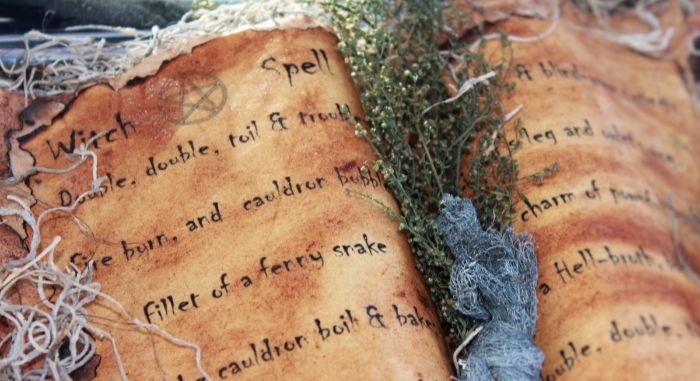
Photo from pxhere, public domain image, CC0 License.
On the other side of this debate is the straw man of the armchair theorist. Oh, armchair magicians exist, but they’re not the real theorists.
I’ll say it again: the “armchair” magician is not a theorist – the armchair magician is a consumer. Talking about theory is what people do at cocktail parties, and is often more about measuring intellectual phalluses (or is it phalli? – let’s measure and find out).
Being a theorist means finding theories, building models, testing them, applying the results, and revising the models against feedback. “Theory” is careful experimentation, “science” in the original sense. Only after all that is done should we have any interest in whipping them out at parties. As long as theory is a measuring of opinions and egos, magical debate is just office politics in a job that pays poorly and doesn’t come with dental.
At the heart of it, the practical magician isn’t against “theory” – just against replacing training with debate. And as it turns out, I’m against that, too. So how do we dig ourselves out of this hole?
Magical Research and “The Freud Mistake”
A lot of the magic theory floating around, from theology to ritual to spellwork, suffers from “The Freud Mistake.” I’m not referring to a preoccupation with sex, cigars, or traumas from childhood. I’m talking about a problem with how we apply the scientific method to “soft” topics.
When we think of Dr. Sigmund Freud at all, we think of maybe a few basic ideas, like the subconscious, the Id, Ego, and Super-Ego, or his stages of development. Further, we realize that mostly people would rather be talking about sex. And when they don’t think they’re talking about sex, they’re still talking about it.
I want to take a deeper dive for a minute, but not on anything that Freud said that was right or wrong. I want to look at a common research flaw that I call “The Freud Mistake.” It isn’t just his – it’s a mistake that we all make in everyday life.
You see, Dr. Freud came up with a long, complex explanation of the nature of the self, and then (based upon that model) a long explanation of why talk therapy works. And then, when talk therapy turned out to work, this became “proof” of the theory underlying it. It wasn’t genius; it was bad science.
Most people already know that when someone’s upset, talking about whatever’s bothering them helps them feel better. Middle-class Victorians forced by society to act terribly reserved felt better when they could express themselves in strict and protected confidence once in a while. Good job, Freud.

“An Alchemist in His Laboratory” by David Teniers the Younger. F rom WikiMedia.
Reconciling Freud’s Mistake
The “Freud Mistake” isn’t about making poor connections when we think things through. It’s about making the right connections, but misunderstanding cause and effect.
We all create models that explain our data. Our models are based on what we already know – our assumptions about how everything works. Just because the data is a good fit, that doesn’t mean that our underlying assumptions are correct. It would often be better to refer to our theories as “reconciliations.” That is, our “theories” are simply ways that we reconcile what we think about the world with the evidence out there.
A lot of theories are, in the end, reconciliations between what we think we know and the data out there. This is nowhere more true than in the realm of spiritual exploration. Mostly, our theories of the universe, and of cause and effect, don’t so much explain the data as realign the data with what we think already know.
As far as they go, such practices are useful. Such reconciliation is important. It is a necessary part of study. It is not, however, breaking new ground. Breaking new ground means not just knowing things, but knowing what we know. Further, it means knowing and being able to articulate how we know.
Street Magic
It has long (a century or so) been a tradition in Western Esoteric Traditions that the “goal” of magical training is self-development on a spiritual level. Such practices are a simple growing of the self.
The tendency of these practices toward navel gazing and ways to bolster the ego is clear. But the solution is not to throw out theory.
Practical magic can be about more than just getting what we want. Practical magic as part of a regimen of study is a path to a deeper self.
ProTip: Learning magic isn’t hard, it’s just hard work. There are four components to learning a new magical skill: Research, Study, Training, and Rest. We need to learn how to do something, practice doing it, apply it, and then let it go.
If we’re not applying our magical skills to daily life, then magic will never be anything more than a (probably not-so-cool) hobby. That being said, I always recommend starting small and sussing out the pitfalls when your neck isn’t on the line.
While it may or may not be readily apparent to the practitioner, from a spiritual perspective much of magical training focuses on communicating with, developing control of, and strengthening your own spirit. It is only through this special kind of self-development and self-control that we can rise to become more than people with a few magic tricks, but rather step into a new world. I’ll see you there.
—-
(1) While many New Age beliefs are easy targets for such critiques, it’s a problem that’s rampant in large swathes of Western culture. From anti-vaxxers to atheistic (rather than agnostic) scientists, there’s a failure to understand the limits of knowledge. I suppose that’s a blog for another day.
Next Post

January 16, 2018 The Other Side of the Hedge: The First Disciplined Step
Browse Our Archives
Select a Category Columns History Holidays Politics Ritual and Practice The Other Side of the Hedge Theology, Ethics, Philosophy
Select a Month June 2019 May 2019 April 2019 March 2019 February 2019 January 2019 December 2018 November 2018 October 2018 September 2018 August 2018 July 2018 June 2018 May 2018 April 2018 March 2018 February 2018 January 2018 November 2017 October 2017 September 2017 August 2017 July 2017 June 2017 May 2017 April 2017 March 2017 February 2017 January 2016 December 2015 November 2015 October 2015 September 2015
TAKE THE
Religious Wisdom Quiz
What miraculous catch did Peter witness after obeying Jesus?
Select your answer to see how you score.
A boat sinking A net full of fish A sea turning red A gold coin
Related posts from The Other Side of the Hedge




TRENDING AT PATHEOS Pagan

I was recently chatting with someone on Instagram. She asked me what...

While there are many people who share their results, the end of...

On July 23, I saw Christopher Nolan's The Odyssey which is Homer’s...

As I write this two big events have just finished up. One...

Restoring the Watershed of Divine Love
Perhaps cooperation is not something we manufacture through legislation, ideology, or moral...

Many UUs don’t pray because of bad experiences in a previous religion,...
view all Pagan blogs
Ad-Free & Subscriber Log-In Subscription Support
- About Us
- 2026 Calendar
- Videos
- Podcasts
- Library of World Religions
- Faith In Media Tracker
- Advertise With Us
- Write for Us
- Privacy Policy
- Terms of Service
- Do Not Sell My Data
- Contact Us
- Radiant Digital
- Manage Newsletter Subscriptions
- Unsubscribe From Notifications
- Sitemap
Copyright 2008-2026, Patheos. All rights reserved.
Subscription Support Ad-Free & Subscriber Log-In
Follow Patheos