
BuddhistCatholicContemplativeEvangelicalGeneral ChristianHinduJewishLatter-day SaintMuslimNew VisionsProgressive Christian
Beliefs
- Buddhist
- Catholic
- Contemplative
- Evangelical
- General Christian
- Hindu
- Jewish
- Latter-day Saint
- More Voices
- Muslim
- New Visions
- Pagan
- Progressive Christian
Topics
- Religion News
- Food and Religion
- Sports and Religion
- Religious Art
- Religious Music and Entertainment
- Religious Events
- History and Religion
- Style and Religion
- Politics and Religion
- Women in Religion
- Recreation Outdoors and Religion
- Business Finance and Religion
- Careers Workplace and Religion
- Education and Religion
- Family Parenting and Religion
- Health Fitness and Religion
- Home and Religion
- Relationships and Religion
- Technology and Religion
- Travel and Religion
Columnists
- Buddhist Columnists
- Business Finance and Religion Columnists
- Careers Workplace and Religion Columnists
- Catholic Columnists
- Contemplative Columnists
- Education and Religion Columnists
- Evangelists Columnists
- Family Parenting and Religion Columnists
- General Christian Columnists
- Health Fitness and Religion Columnists
- Hindu Columnists
- History and Religion Columnists
- Home and Religion Columnists
- Jewish Columnists
- More Voices Columnists
- Latter Day Columnists
- Muslim Columnists
- New Visions Columnists
- Nonreligious Columnists
- Pagan Columnists
- Politics and Religion Columnists
- Progressive Columnists
- Recreation Outdoors and Religion Columnists
- Relationships and Religion Columnists
- Religion News Columnists
- Religious Art Columnists
- Religious Events Columnists
- Religious Music and Entertainment Columnists
- Sports and Religion Columnists
- Style and Religion Columnists
- Technology and Religion Columnists
- Travel and Religion Columnists
- Women in Religion Columnists
Resource Library
- 2026 Calendar
- Library of World Religions
- The 100 Most Holy Places on Earth
- Patheos Answers
- Podcasts
- Videos
- Faith Leaders Database
- Anglican Episcopalian
- Bahai
- Baptist
- Buddhism
- Christianity
- Confucianism
- Eastern Orthodoxy
- Hinduism
- Holiness and Pentecostal
- ISKCON
- Islam
- Judaism
- Lutheran
- Methodist
- The Church of Jesus Christ of Latter-day Saints
- New Age
- Paganism
- Presbytarian and Reformed
- Protestantism
- Religion Behind the Scenes
- Roman Catholic
- Scientology
- Shia Islam
- Sikhism
- Sufism
- Sunni Islam
- Taoism
- Zen
- See all religions
Research Tools
 Ad-Free & Subscriber Log-In Subscription Support
Ad-Free & Subscriber Log-In Subscription Support
Follow Patheos 

- Trending:
- Forgiveness
- |
- Marriage
- |
- Consciousness
- |
- Death Penalty
- |
- Election
- |
- Halloween
 The Other Side of the Hedge
- Home
- Pagan
- The Other Side of the Hedge: Paganism, the New Frontier
The Other Side of the Hedge: Paganism, the New Frontier
Last updated on: July 11, 2017 at 3:14 pm by Christopher Drysdale
The Other Side of the Hedge: Paganism, the New Frontier 2017-07-11T15:14:11-07:00 Christopher Drysdale
Patheos Explore the world's faith through different perspectives on religion and spirituality! Patheos has the views of the prevalent religions and spiritualities of the world.
The universe is a dangerous and predatory place, and we’re not at the top of the food chain. Religions are like spiritual fortress-cities, and mostly we people live inside them and hope our chosen gods protect us. There are few who wander outside those walls, and fewer still who return.
If the great religions are like fortresses, then each fortress has its own leadership, organization, and rules. Ruled by a god-king, a council, or a family, each is distinct from the others; it looks different, feels different, and has different people living in it.
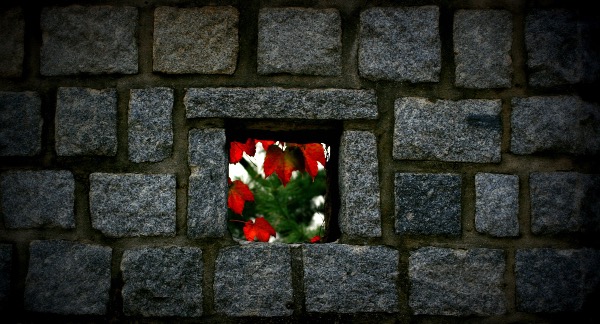
“Wall Detail, Hwaseong Fortress, Suwon” ©2008 – Polly Peterson. Used with permission.
The fortresses are places of power, and they are places where great powers rule. Those who live there live by their rules, or fail to do so and suffer the consequences.
But one rule that all the “fortresses” share is the belief that everyone needs to live in one fortress or another. The idea that we could live without one is considered madness.
Yet there are those of us who travel “outside the walls.” We might be born there, driven there, or called there by some force outside of ourselves. Perhaps we seek it out in a lust for something more. Whatever it is, we leave relative safety (for the fortresses have their own dangers) and make our way into a land that is wild and untamed, beautiful and yet too often monstrous.
For those who make the journey, there’s a discovery to be made. Outside the familiar walls of the world religions, it’s not all untamed wilderness.
Welcome to Pagan Town
Paganism is too young and diverse to be much of a spiritual fortress. It is much closer to being a spiritual frontier town. Instead of an impenetrable wall, it has the makings of a wood palisade or maybe a big hedge around it. The barrier doesn’t stand out, and it’s sculpted to fit into the landscape.
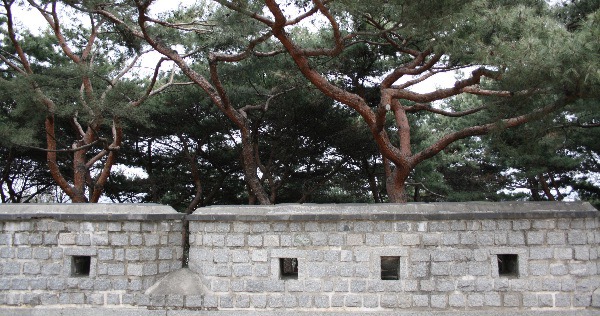
“Seonamgangnu, Hwaseong Fortress, Suwon” ©2008 – Polly Peterson. Used with permission.
This metaphorical town of Paganism is filled with real people of all kinds and from all walks of life. It is made up of those who were too restless in the “fortresses” of religion and felt the need for a change. It’s a place with a sense of adventure in the air, as if anything could happen. But it’s so new, it’s not sure who it is.
It’s my kind of place.
And as for the people who live there, you can imagine that each tradition has its own street or neighborhood, lined with their own more-or-less defensible, independent compounds and houses. Some are led by gods, some by councils of gods, some by traditions.
Some of the neighborhoods have shared temples or shrines, some have groves, and some just have open-air parks or markets. Many of the houses are made in the styles of ancient architectures.
There is diversity in this town. People don’t live without rules; they just live by their own rules. And they stick together by getting along with their neighbors, not by keeping up with them.
While some who live in this Pagan “town” stay inside, there are others who make their way outside into the true wilderness. And though it’s a town I love, I know it in my bones that my path is to walk outside the boundaries.
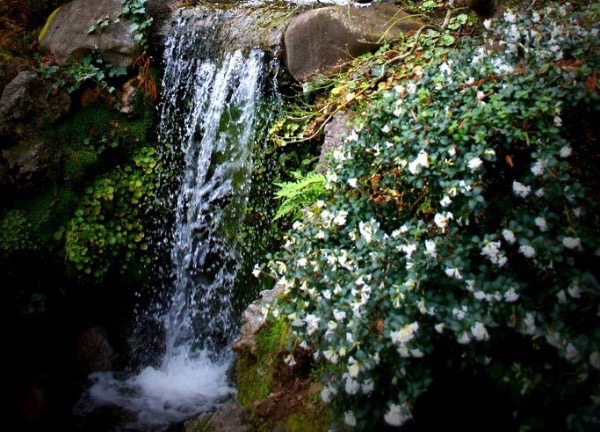
“Hakone” ©2012 – Polly Peterson. Used with permission.
The Other Side of the Hedge
The larger world that exists past the “walls” is not some soft-colored fantasy painting of magic and manifest destiny, but a place as dangerous and inhuman as bear, a spider, or a hurricane. For those willing to explore, there is real knowledge. But the risk is real, as well.
Some of us were simply born to live beyond the gates. We need to know what’s “out there.”
There’s a spiritual equivalent of standing alone in a forest. It’s a place where there is no sign of anyone else. You can drink from whatever running stream is nearby and hunt or forage whatever is needed. That is my religious home.
I have never found a place in the homes of the gods, though I have been a welcome guest and (I hope) suitably thankful for their hospitality. And in turn, when travelers come to my fire, I offer them hospitality and any help they need on their journey.
There are no gods out here where I tread, just immense, unimaginable spirits. There’s this one spirit that guides me, and it may simply be by own.
In the whole world, there are gods I respect and there are gods I love, but I can swear fealty to none. In the wilderness that is my home, there are no higher powers, simply greater ones.
Previous Post

July 3, 2017
The Other Side of the Hedge: Daily Practice Saves Lives
Next Post
July 25, 2017 The Other Side of the Hedge: Why I Am a Warrior
Browse Our Archives
Select a Category Columns History Holidays Politics Ritual and Practice The Other Side of the Hedge Theology, Ethics, Philosophy
Select a Month June 2019 May 2019 April 2019 March 2019 February 2019 January 2019 December 2018 November 2018 October 2018 September 2018 August 2018 July 2018 June 2018 May 2018 April 2018 March 2018 February 2018 January 2018 November 2017 October 2017 September 2017 August 2017 July 2017 June 2017 May 2017 April 2017 March 2017 February 2017 January 2016 December 2015 November 2015 October 2015 September 2015
TAKE THE
Religious Wisdom Quiz
Who said, "What must I do to be saved?" to Paul and Silas?
Select your answer to see how you score.
Cornelius Lydia The Philippian jailer The Ethiopian eunuch
Related posts from The Other Side of the Hedge




TRENDING AT PATHEOS Pagan

I was recently chatting with someone on Instagram. She asked me what...

While there are many people who share their results, the end of...

On July 23, I saw Christopher Nolan's The Odyssey which is Homer’s...

As I write this two big events have just finished up. One...

Restoring the Watershed of Divine Love
Perhaps cooperation is not something we manufacture through legislation, ideology, or moral...

Many UUs don’t pray because of bad experiences in a previous religion,...
view all Pagan blogs
Ad-Free & Subscriber Log-In Subscription Support
- About Us
- 2026 Calendar
- Videos
- Podcasts
- Library of World Religions
- Faith In Media Tracker
- Advertise With Us
- Write for Us
- Privacy Policy
- Terms of Service
- Do Not Sell My Data
- Contact Us
- Radiant Digital
- Manage Newsletter Subscriptions
- Unsubscribe From Notifications
- Sitemap
Copyright 2008-2026, Patheos. All rights reserved.
Subscription Support Ad-Free & Subscriber Log-In
Follow Patheos