
BuddhistCatholicContemplativeEvangelicalGeneral ChristianHinduJewishLatter-day SaintMuslimNew VisionsProgressive Christian
Beliefs
- Buddhist
- Catholic
- Contemplative
- Evangelical
- General Christian
- Hindu
- Jewish
- Latter-day Saint
- More Voices
- Muslim
- New Visions
- Pagan
- Progressive Christian
Topics
- Religion News
- Food and Religion
- Sports and Religion
- Religious Art
- Religious Music and Entertainment
- Religious Events
- History and Religion
- Style and Religion
- Politics and Religion
- Women in Religion
- Recreation Outdoors and Religion
- Business Finance and Religion
- Careers Workplace and Religion
- Education and Religion
- Family Parenting and Religion
- Health Fitness and Religion
- Home and Religion
- Relationships and Religion
- Technology and Religion
- Travel and Religion
Columnists
- Buddhist Columnists
- Business Finance and Religion Columnists
- Careers Workplace and Religion Columnists
- Catholic Columnists
- Contemplative Columnists
- Education and Religion Columnists
- Evangelists Columnists
- Family Parenting and Religion Columnists
- General Christian Columnists
- Health Fitness and Religion Columnists
- Hindu Columnists
- History and Religion Columnists
- Home and Religion Columnists
- Jewish Columnists
- More Voices Columnists
- Latter Day Columnists
- Muslim Columnists
- New Visions Columnists
- Nonreligious Columnists
- Pagan Columnists
- Politics and Religion Columnists
- Progressive Columnists
- Recreation Outdoors and Religion Columnists
- Relationships and Religion Columnists
- Religion News Columnists
- Religious Art Columnists
- Religious Events Columnists
- Religious Music and Entertainment Columnists
- Sports and Religion Columnists
- Style and Religion Columnists
- Technology and Religion Columnists
- Travel and Religion Columnists
- Women in Religion Columnists
Resource Library
- 2026 Calendar
- Library of World Religions
- The 100 Most Holy Places on Earth
- Patheos Answers
- Podcasts
- Videos
- Faith Leaders Database
- Anglican Episcopalian
- Bahai
- Baptist
- Buddhism
- Christianity
- Confucianism
- Eastern Orthodoxy
- Hinduism
- Holiness and Pentecostal
- ISKCON
- Islam
- Judaism
- Lutheran
- Methodist
- The Church of Jesus Christ of Latter-day Saints
- New Age
- Paganism
- Presbytarian and Reformed
- Protestantism
- Religion Behind the Scenes
- Roman Catholic
- Scientology
- Shia Islam
- Sikhism
- Sufism
- Sunni Islam
- Taoism
- Zen
- See all religions
Research Tools
 Ad-Free & Subscriber Log-In Subscription Support
Ad-Free & Subscriber Log-In Subscription Support
Follow Patheos 

- Trending:
- Forgiveness
- |
- Marriage
- |
- Consciousness
- |
- Death Penalty
- |
- Election
- |
- Halloween
 The Other Side of the Hedge
- Home
- Pagan
- The Other Side of the Hedge: We All Start as Fools
The Other Side of the Hedge: We All Start as Fools
Last updated on: April 16, 2017 at 6:38 am by Christopher Drysdale
The Other Side of the Hedge: We All Start as Fools 2017-04-16T06:38:44-07:00 Christopher Drysdale
Patheos Explore the world's faith through different perspectives on religion and spirituality! Patheos has the views of the prevalent religions and spiritualities of the world.
Sometimes it seems, out here in the Pagan blogosphere, that people spring from nowhere fully formed, armed and armored, like Athena from Zeus’s head. We speak of our traditions as we wish they would be, shaving down our experience to what we think is critical, what seems to make the most progress, and what is (to be honest) coolest.
Wouldn’t it be nice if we didn’t spend years and decades as naïve beginners? But of course, we did. Years of self-doubt and struggle aren’t a cruel joke played by the universe. They’re the necessary price we pay for anything worthwhile. Those faltering first steps that we so casually downplay or ignore are sometimes the most important steps of all.
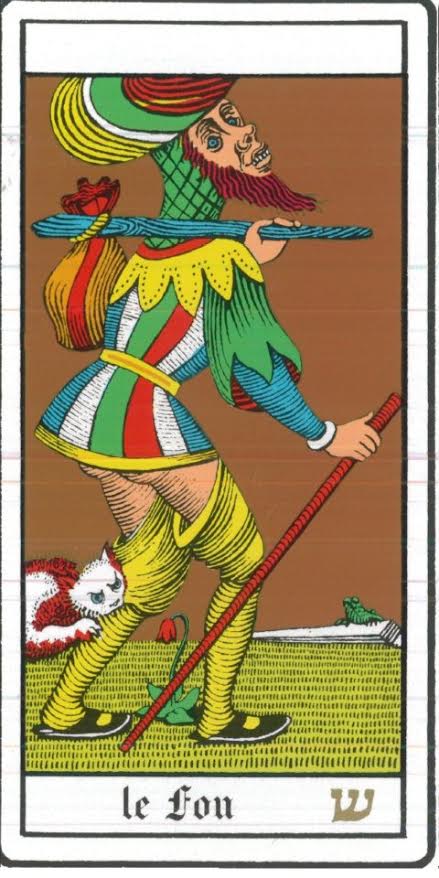
By Oswald Wirth – Le Tarot, Public Domain,
When we tell our stories, it’s easy to only tell the good parts. Sometimes, it’s like our lives have been forced through some Hollywood filter.
Yes, there’s value to a soaring narrative about how the World of the Spirit guided me to a teacher who saved me from madness and taught me to go deeper than I imagined possible. And how, upon mastering his teachings, I dove back into the madness to go deeper once more. And how those practices saved me from death.
There’s also value to the story of the spiritual struggles of the dozen years before that, of my trying to grow and falling flat, flailing blindly in the world in search of something larger. Of the many smaller victories, and of greater ones I couldn’t understand at the time.
The occult community is fringe now. When I was a kid, that was even more true. Finding a path, and finding our place in the world, is hard for anyone. How much harder is it when we’re never told that path exists?
THE CALL
When I was a teenager, I felt a spiritual calling I couldn’t understand, didn’t have words for, and had never seen. I imagine that in lots of cultures, people would have taken one look at me and sent me for spiritual training. But growing up back then in American suburbia, that wasn’t really an option.
It was the 80s. I’m sure there were cool places where you could send your kid for training. But those places might as well have been on the moon, for all I had access to them.
My family’s church was less than helpful. When I asked about the nature of the Holy Spirit, I got blown off by the minister. It was probably because I was a cocky teenage know-it-all. That moment drove a wedge between me and organized religion, though I couldn’t have articulated it at the time.
The world I was raised in was unable to help me. I couldn’t even explain the problem, and I probably sounded like a crazy person for trying. But fiction is a way of telling the truth through a lie. And it was through fiction that I found a path to my salvation.
TRUTH IS STRANGER THAN FICTION (BUT LESS ACCESSIBLE)
When I read Ursula K. Le Guin’s A Wizard of Earthsea, all of my being went into becoming that: a wizard who could wield power, not to break the rules of the world, but to understand the deeper world I could feel, but not express.
I couldn’t articulate what I wanted, or why I wanted it, but there it was. Imagine seeing a painting of a place your soul thirsts to go, and being told by everyone that it’s just a painting. I didn’t want magic superpowers to fix all my problems. I just wanted to know that magic was real.
There was more going on in the world than anyone was telling; I just wanted to learn the words for what I was experiencing.
At fourteen years, I read Clan of the Cave Bear for summer reading for school. It’s about a Cro-Magnon girl growing up among Neanderthals 25,000 years ago in the Middle East – which is about the most unexciting description one could give the book.
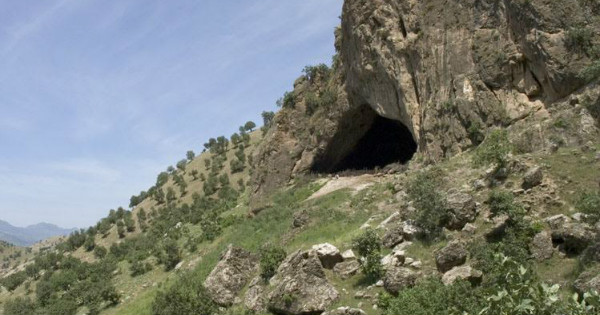
Shanidar Cave, home of the Clan of the Cave Bear. Photo by JosephV via WikiMedia CC-BY-SA-3.0
Jean M. Auel’s book is a coming-of-age story with cavemen. The setting is all about survival and growth in a harsh ice age world. The religion in the book, such as it was, is pretty much what Westerners thought shamanism was in 1980.
I read that description of shamanism, and it just clicked. There was no Internet. I only knew what I saw on TV and read in school. Everything I knew about anthropology was being a Raiders of the Lost Ark fan.
I did what people always do. I acted as if the animistic thinking in Clan of the Cave Bear were true. I didn’t know what a shaman was. I didn’t know about Mircea Eliade, anthropology, colonialism, or cultural appropriation.
It didn’t matter. What I knew was that these fictional people lived in a world that was seamlessly integrated between the spiritual and the physical. Maybe there weren’t answers in these books, but there were implications of answers, and that was more than anyone else was offering.
WE CAN ONLY START WHERE WE ARE
As much as we might shake our heads at such behavior, holding onto a piece of fiction isn’t that different from taking to heart the idea that the world is about 7,000 years old. Or that Wicca comes from an unbroken tradition descended from Iron Age practices. We take the myths we have and we pore over them, sift through them, search them for meaning and for the words to articulate the truths we need.
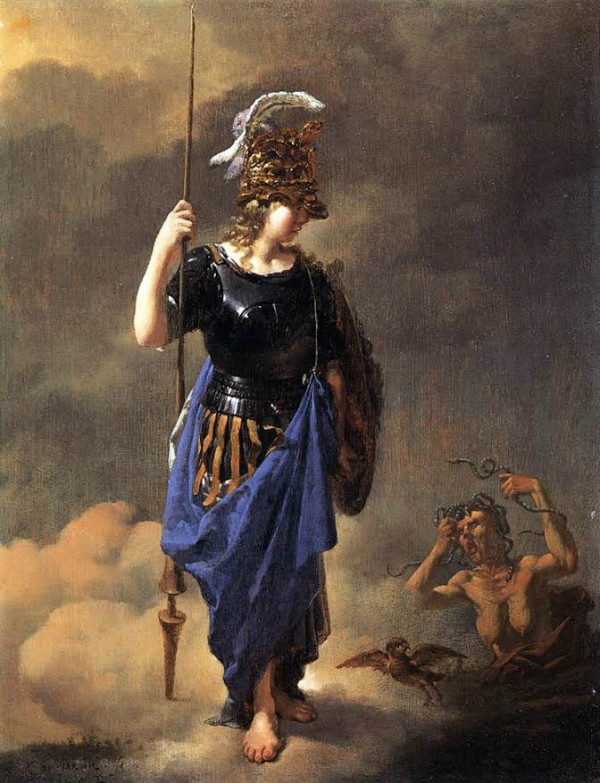
“Pallas Athene Visits Invidia” by Karel Dujardin. From WikiMedia.
Which is all a roundabout way of saying, we all start somewhere. And that somewhere is probably embarrassing.
So much of our posturing in life is just denial of the truly foolish things we really did to get here. In my late teens and twenties, I “found my path.” But realistically, I never would have made it there without being the headstrong fool I always was. I can’t honestly say that falling on my face a million times wasn’t more important to my spiritual development than the years I spent in formal training.
Previous Post

April 9, 2017
The Other Side of the Hedge: Don’t Trust Your Spirit, Train It
Next Post
April 23, 2017 The Other Side of the Hedge: Screw Dying, Live with Your Boots On
Browse Our Archives
Select a Category Columns History Holidays Politics Ritual and Practice The Other Side of the Hedge Theology, Ethics, Philosophy
Select a Month June 2019 May 2019 April 2019 March 2019 February 2019 January 2019 December 2018 November 2018 October 2018 September 2018 August 2018 July 2018 June 2018 May 2018 April 2018 March 2018 February 2018 January 2018 November 2017 October 2017 September 2017 August 2017 July 2017 June 2017 May 2017 April 2017 March 2017 February 2017 January 2016 December 2015 November 2015 October 2015 September 2015
TAKE THE
Religious Wisdom Quiz
Which parable shows a king forgiving a huge debt?
Select your answer to see how you score.
The Good Samaritan The Prodigal Son The Sower The Unforgiving Servant
Related posts from The Other Side of the Hedge




TRENDING AT PATHEOS Pagan

I was recently chatting with someone on Instagram. She asked me what...

While there are many people who share their results, the end of...

On July 23, I saw Christopher Nolan's The Odyssey which is Homer’s...

As I write this two big events have just finished up. One...

Restoring the Watershed of Divine Love
Perhaps cooperation is not something we manufacture through legislation, ideology, or moral...

Many UUs don’t pray because of bad experiences in a previous religion,...
view all Pagan blogs
Ad-Free & Subscriber Log-In Subscription Support
- About Us
- 2026 Calendar
- Videos
- Podcasts
- Library of World Religions
- Faith In Media Tracker
- Advertise With Us
- Write for Us
- Privacy Policy
- Terms of Service
- Do Not Sell My Data
- Contact Us
- Radiant Digital
- Manage Newsletter Subscriptions
- Unsubscribe From Notifications
- Sitemap
Copyright 2008-2026, Patheos. All rights reserved.
Subscription Support Ad-Free & Subscriber Log-In
Follow Patheos