
BuddhistCatholicContemplativeEvangelicalGeneral ChristianHinduJewishLatter-day SaintMuslimNew VisionsProgressive Christian
Beliefs
- Buddhist
- Catholic
- Contemplative
- Evangelical
- General Christian
- Hindu
- Jewish
- Latter-day Saint
- More Voices
- Muslim
- New Visions
- Pagan
- Progressive Christian
Topics
- Religion News
- Food and Religion
- Sports and Religion
- Religious Art
- Religious Music and Entertainment
- Religious Events
- History and Religion
- Style and Religion
- Politics and Religion
- Women in Religion
- Recreation Outdoors and Religion
- Business Finance and Religion
- Careers Workplace and Religion
- Education and Religion
- Family Parenting and Religion
- Health Fitness and Religion
- Home and Religion
- Relationships and Religion
- Technology and Religion
- Travel and Religion
Columnists
- Buddhist Columnists
- Business Finance and Religion Columnists
- Careers Workplace and Religion Columnists
- Catholic Columnists
- Contemplative Columnists
- Education and Religion Columnists
- Evangelists Columnists
- Family Parenting and Religion Columnists
- General Christian Columnists
- Health Fitness and Religion Columnists
- Hindu Columnists
- History and Religion Columnists
- Home and Religion Columnists
- Jewish Columnists
- More Voices Columnists
- Latter Day Columnists
- Muslim Columnists
- New Visions Columnists
- Nonreligious Columnists
- Pagan Columnists
- Politics and Religion Columnists
- Progressive Columnists
- Recreation Outdoors and Religion Columnists
- Relationships and Religion Columnists
- Religion News Columnists
- Religious Art Columnists
- Religious Events Columnists
- Religious Music and Entertainment Columnists
- Sports and Religion Columnists
- Style and Religion Columnists
- Technology and Religion Columnists
- Travel and Religion Columnists
- Women in Religion Columnists
Resource Library
- 2026 Calendar
- Library of World Religions
- The 100 Most Holy Places on Earth
- Patheos Answers
- Podcasts
- Videos
- Faith Leaders Database
- Anglican Episcopalian
- Bahai
- Baptist
- Buddhism
- Christianity
- Confucianism
- Eastern Orthodoxy
- Hinduism
- Holiness and Pentecostal
- ISKCON
- Islam
- Judaism
- Lutheran
- Methodist
- The Church of Jesus Christ of Latter-day Saints
- New Age
- Paganism
- Presbytarian and Reformed
- Protestantism
- Religion Behind the Scenes
- Roman Catholic
- Scientology
- Shia Islam
- Sikhism
- Sufism
- Sunni Islam
- Taoism
- Zen
- See all religions
Research Tools
 Ad-Free & Subscriber Log-In Subscription Support
Ad-Free & Subscriber Log-In Subscription Support
Follow Patheos 

- Trending:
- Forgiveness
- |
- Marriage
- |
- Consciousness
- |
- Death Penalty
- |
- Election
- |
- Halloween
 The Other Side of the Hedge
- Home
- Pagan
- The Other Side of the Hedge: Hidden Knowledge
The Other Side of the Hedge: Hidden Knowledge
Last updated on: March 25, 2017 at 7:21 pm by Christopher Drysdale
The Other Side of the Hedge: Hidden Knowledge 2017-03-25T19:21:38-07:00 Christopher Drysdale
Patheos Explore the world's faith through different perspectives on religion and spirituality! Patheos has the views of the prevalent religions and spiritualities of the world.
The occult isn’t inherently evil. It is powerful, and often opaque. That can be scary all on its own. So why do we let it remain a mystery? Do we even have a choice?
HIDDEN KNOWLEDGE
The term “occult” has become something of a slur in Western culture. It is the kind of word that irresponsible media use to grab headlines, especially during and after the “Satanic panic” of the 1980s and 1990s. It implies, correctly or incorrectly, a use of hidden powers to get one’s own way.

A Labyrinth, No Bull – Polly Peterson (2011) . Used by permission of the author.
Here is an imaginary meta-dialogue about the “Occult” in Western thought:
“Hi. We’re magicians and witches. Occultists, if you will.”
“Oh, hi. So you’re evil.”
“No. We aren’t evil.”
“But you kill babies.”
“No. We don’t kill babies.”
“Oh. So you’re evil and squeamish.”
“No, that is not the point of magic.”
“So you’re weak, evil, and squeamish. And making excuses.”
“…”
This conversation is obviously imaginary, but it illustrates an important point. The words that we use in the occult –witch, wizard, sorcerer— already have meanings attributed by heavy “power players” in Western culture. In attempting to redefine these words, we run the risk of metaphorically butting our heads against a very large brick wall.
STUDYING THE OCCULT
Training in magic has strong parallels with training in martial arts. Just as the martial arts strengthen the body, magical training promotes spiritual strength and health, increases overall confidence, and deepens self-awareness. Just as with martial arts, these benefits are not primary goals. Rather, they accrue as a side effect of training.
Magic has often been referred to as the “occult.” At its root, the word means hidden, as in “hidden knowledge.”
And it is true that this knowledge has sometimes been hidden by people who either do not want to be labeled as odd or who wish to maintain a mysterious aura about themselves, and thus gain power.
More often, in my experience, this information is “occult” because the books disappear off library shelves and are “lost” or simply never returned or replaced. In the past, such topics remained “occult” for three pragmatic reasons, listed from least likely to most likely:
♣ Practitioners at times found it necessary to avoid persecution for heresy or witchcraft.
♣ The books were not written in the vernacular, and translations were often incomplete or incorrect.
♣ Publishers have generally preferred to publish books that will sell well to the general populace.
Beyond the pragmatics of accessibility, the vagaries of rebellious young men and women who do not respect libraries, and a certain unpopularity of the subject matter in some circles, the “occult” generally remains hidden for two excellent reasons: the nature of people and the nature of the subject matter.
Learning takes work, and most people do not want to, or do not have time to, put in the effort. In this sense, much knowledge is “occult.” Now that many classic works of occult literature have been translated, scanned, and placed in the public domain, we are not held back by a lack of opportunity.
New editions of the ancient musty tomes are available at the nearest bookstore or by online order. They can be downloaded onto computers and book readers and taken wherever we go.
Let’s assume, then, that the reasons the occult remains hidden are personal. Now that we can talk instantly with others the world over, the reasons for not pursuing such knowledge are often found within.
HIDDEN BY NATURE
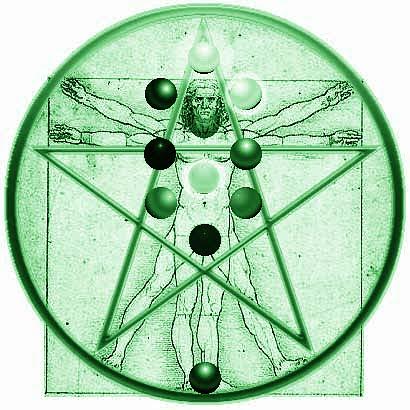
Image by Juppi66. From WikiMedia, Public Domain Image.
The other reason that the occult remains hidden is that spiritual knowledge is always occult in the old scientific meaning: the knowledge is hidden, but can be discovered through experience and experimentation. In modern terms, it is experiential knowledge, necessarily on-the-job training.
Understanding anything’s spirit requires understanding it with your own spirit. Until a practitioner’s mind and spirit begin to come together, the underlying connections will always remain opaque, or if you prefer, occult. We may memorize and recite the correct words, claim the correct truths, and even own the right books and wear the right clothes, but deeper spiritual understanding of the world comes with spiritual effort.
A final word of caution: without an instructor guiding training, and sometimes even with an instructor, there is always the danger of either pushing oneself too hard or not pushing hard enough. Over the course of training, it is likely that an unguided student will make both of these mistakes at various times.
ProTip: I cannot urge strongly enough that you, the reader, be careful and take responsibility for your own physical, mental, and spiritual health. No matter what I, or any other writer, teacher, guru, or sponsor suggests, it is you, the practitioner, who must take responsibility.
Just as with learning a sport, taking on a hobby, joining a group, or studying a discipline, a level of self-honesty is necessary in determining if you are properly prepared and capable of meeting the challenges.
Previous Post

March 19, 2017
The Other Side of the Hedge: To Keep Silence
Next Post
April 2, 2017 The Other Side of the Hedge: What is Magic For?
Browse Our Archives
Select a Category Columns History Holidays Politics Ritual and Practice The Other Side of the Hedge Theology, Ethics, Philosophy
Select a Month June 2019 May 2019 April 2019 March 2019 February 2019 January 2019 December 2018 November 2018 October 2018 September 2018 August 2018 July 2018 June 2018 May 2018 April 2018 March 2018 February 2018 January 2018 November 2017 October 2017 September 2017 August 2017 July 2017 June 2017 May 2017 April 2017 March 2017 February 2017 January 2016 December 2015 November 2015 October 2015 September 2015
TAKE THE
Religious Wisdom Quiz
What Christian group is known for using incense during worship?
Select your answer to see how you score.
Pentecostals Jehovah’s Witnesses Baptists Orthodox Christians
Related posts from The Other Side of the Hedge




TRENDING AT PATHEOS Pagan

I was recently chatting with someone on Instagram. She asked me what...

While there are many people who share their results, the end of...

On July 23, I saw Christopher Nolan's The Odyssey which is Homer’s...

As I write this two big events have just finished up. One...

Restoring the Watershed of Divine Love
Perhaps cooperation is not something we manufacture through legislation, ideology, or moral...

Many UUs don’t pray because of bad experiences in a previous religion,...
view all Pagan blogs
Ad-Free & Subscriber Log-In Subscription Support
- About Us
- 2026 Calendar
- Videos
- Podcasts
- Library of World Religions
- Faith In Media Tracker
- Advertise With Us
- Write for Us
- Privacy Policy
- Terms of Service
- Do Not Sell My Data
- Contact Us
- Radiant Digital
- Manage Newsletter Subscriptions
- Unsubscribe From Notifications
- Sitemap
Copyright 2008-2026, Patheos. All rights reserved.
Subscription Support Ad-Free & Subscriber Log-In
Follow Patheos