
BuddhistCatholicContemplativeEvangelicalGeneral ChristianHinduJewishLatter-day SaintMuslimNew VisionsProgressive Christian
Beliefs
- Buddhist
- Catholic
- Contemplative
- Evangelical
- General Christian
- Hindu
- Jewish
- Latter-day Saint
- More Voices
- Muslim
- New Visions
- Pagan
- Progressive Christian
Topics
- Religion News
- Food and Religion
- Sports and Religion
- Religious Art
- Religious Music and Entertainment
- Religious Events
- History and Religion
- Style and Religion
- Politics and Religion
- Women in Religion
- Recreation Outdoors and Religion
- Business Finance and Religion
- Careers Workplace and Religion
- Education and Religion
- Family Parenting and Religion
- Health Fitness and Religion
- Home and Religion
- Relationships and Religion
- Technology and Religion
- Travel and Religion
Columnists
- Buddhist Columnists
- Business Finance and Religion Columnists
- Careers Workplace and Religion Columnists
- Catholic Columnists
- Contemplative Columnists
- Education and Religion Columnists
- Evangelists Columnists
- Family Parenting and Religion Columnists
- General Christian Columnists
- Health Fitness and Religion Columnists
- Hindu Columnists
- History and Religion Columnists
- Home and Religion Columnists
- Jewish Columnists
- More Voices Columnists
- Latter Day Columnists
- Muslim Columnists
- New Visions Columnists
- Nonreligious Columnists
- Pagan Columnists
- Politics and Religion Columnists
- Progressive Columnists
- Recreation Outdoors and Religion Columnists
- Relationships and Religion Columnists
- Religion News Columnists
- Religious Art Columnists
- Religious Events Columnists
- Religious Music and Entertainment Columnists
- Sports and Religion Columnists
- Style and Religion Columnists
- Technology and Religion Columnists
- Travel and Religion Columnists
- Women in Religion Columnists
Resource Library
- 2026 Calendar
- Library of World Religions
- The 100 Most Holy Places on Earth
- Patheos Answers
- Podcasts
- Videos
- Faith Leaders Database
- Anglican Episcopalian
- Bahai
- Baptist
- Buddhism
- Christianity
- Confucianism
- Eastern Orthodoxy
- Hinduism
- Holiness and Pentecostal
- ISKCON
- Islam
- Judaism
- Lutheran
- Methodist
- The Church of Jesus Christ of Latter-day Saints
- New Age
- Paganism
- Presbytarian and Reformed
- Protestantism
- Religion Behind the Scenes
- Roman Catholic
- Scientology
- Shia Islam
- Sikhism
- Sufism
- Sunni Islam
- Taoism
- Zen
- See all religions
Research Tools
 Ad-Free & Subscriber Log-In Subscription Support
Ad-Free & Subscriber Log-In Subscription Support
Follow Patheos 

- Trending:
- Forgiveness
- |
- Marriage
- |
- Consciousness
- |
- Death Penalty
- |
- Election
- |
- Halloween

- Home
- Pagan
- Hills of the Horizon: Green Man Mysteries
Hills of the Horizon: Green Man Mysteries
Last updated on: November 29, 2016 at 2:17 pm by Kiya Nicoll
Hills of the Horizon: Green Man Mysteries 2016-11-29T14:17:54+00:00 Kiya Nicoll
Patheos Explore the world's faith through different perspectives on religion and spirituality! Patheos has the views of the prevalent religions and spiritualities of the world.
In the end of November, more or less, depending on how one tinkers with the calculators, Kemetics celebrate the Mysteries of Osiris. This multi-day festival is, in effect, the funeral rituals for Wesir, and thus serve as the template for all funerals, as all of the dead become Osiris on their route to the West. That is, however, not all it is.
The thing that a lot of people miss in Wesir (Osiris) as God Of The Dead ™ is, of course, that he is a green man. This greenness is fairly literal, as he is often portrayed with green skin, which indicates growth and regeneration, a near-cognate with the color black in Egyptian art, which is the color both of the fertile soil deposited by the Flood and mummified flesh.
A temperate-climate understanding of the calendar makes this easy to miss. This time of the year, things here are getting dark and cold, and it is the fallow time in which very little can be grown.
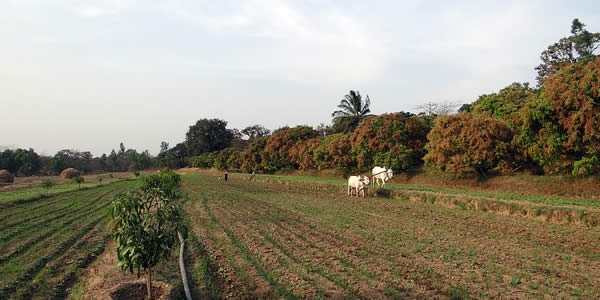
In ancient Egypt, however, the Mysteries mark the end of the season of Akhet – the flood. The featureless horizon of the river-washed floodplain changes at last, revealing arable land, ready to be tilled and planted. This is not the harvest season, not a festival of the dead like Samhain that comes with the winter slaughter and the last harvests.
This is the season of planting seeds. The dead are interred in the furrows, in order to be concealed for a time, and then sprout like grain, to a new life that offers sustenance to those who remain in the realm of the living.
This is not a poetic riff, some sort of modern interpretation; it is very much how the Egyptians saw Wesir themselves. These reliefs at Philae show grain sprouting from the mummified form of the god; there are other representations of the same thing that have everything sprouting as grain except – in the correct location – an erect penis standing in for one of those stalks. In case the connections were not clear enough for the casual observer.
(The earthiness of much of Egyptian thought is something that I think a lot of people manage not to notice.)
The fourth month of the year, the last month of Akhet, is a month of purification. The Mysteries must, above all things, be protected, because they are the turning point of the regeneration cycle. Without Wesir safely established in the Duat, the sun cannot undergo the midnight union with him to emerge anew, and the cycles of regeneration and restoration will inevitably fail. It is appropriate to speak in veiled terms and allusions to the Weary of Heart, to circumscribe his delicate condition with safe language and hem out dangers.
The surviving festival calendar at Medinet Habu has the Mysteries as an eleven-day festival of Sokar-Wesir, with each of those days having a specific name to address the rituals of that moment. Day three? Hoeing the earth. Karnak’s calendar has this as “hacking up earth”. The intent is clear, though: to dig a grave is to prepare to plant a seed. In some versions of the story fragments we have, the act of hacking up the earth – khebes-ta in the Middle Egyptian language – came about because of the struggles between the Rivals, Heru and Set, whose feet ripped up the ground as they wrestled, leaving sacred pools and furrows in their wake.
It is here that I find a thing that lets me keep to this schedule, despite its obvious inappropriateness with my northern-hemisphere temperate climate.
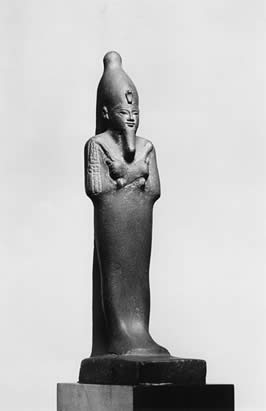
A Statue of Osiris located in the Walters Art Museum – Public Domain / Wikimedia Commons
I once had a mystical experience with Wesir, and he gave me this thought:
The seed waits in the dark
Until its time of emergence.
(“Emergence”, here, is a bit of word play, for Peret, the growing season that stretches through what I would call winter, literally means “emergence” or “appearance”.)
I am entering the dark time of the year, the part in which the seeds incubate in the dark, in the secret places where none can see. This is the season for planting seeds, not knowing how well they will grow. Their time of emergence will come, but now they must be planted, and they must be protected – Wesir in his vulnerability requires all the powers to come together to shield him from those who would make his death permanent and stop the sprouting of the seed, which goes into the ground as inert and unassuming as a corpse.
Some versions of the celebrations tie this together very explicitly, mixing grain and Nile silt in a container shaped like a mummy, and producing corn dollies which would, of course, in the proper conditions, sprout. (I have heard of people taking divination from the results of such constructions, I think, but of course it was years ago and I have lost the footnote.)
The Mysteries flow into two festivals, depending on time period and space, to open the season of Peret. The earlier one of these, the Nehebkau festival, speaks of the Binder of Kas, whose duty was to link together the souls even after death, and establish right relationship between them. The other, the Installation of the Sacred Falcon, or the Coronation of Heru, involves the selection of a bird to be installed upon the throne of Heru (Horus), to reign as his manifestation for a year. This was a festival which may have originated later in Egyptian history, when the native priests might have been feeling a bit snarky about the Greek monarchs who were, after all, officially manifestations of Heru.
Either way, the liminal time of the Mysteries is settled with an act of binding – souls into a proper constellation of relationship, or a king-symbol to his throne and status, ending the disruption of the existence of a dead king by establishing a living one.
This is the season we can plant mysterious seeds, and protect them in the dark and the cold, and bring them forth in their time of emergence.

Click here to like
Patheos Pagan on Facebook.

Click here to like
the Agora on Facebook
Hills of the Horizon is published monthly on the 29th here on the Agora. You can subscribe by RSS or via e-mail.
Please use the links to the right to keep on top of activities here on the Agora as well as across the entire Patheos Pagan channel.
Previous Post
November 28, 2016
Star Made Witch: Guide to Traditional Witchcraft Daily Practices
Next Post

December 1, 2016 Wyrd Words: Challenging The Rhetoric
Browse Our Archives
Select a Category A Lakeside Hearth Adventures in Wortcunning Alone In Her Presence Arts, Crafts & Cooking Birthing Hereditary Witchcraft Book of Blackbirds Book Reviews Born-Again Witch Cauldron, Sword, Spear, & Stone Cermony and Liturgy Columns Community Dandelion Seeds Dear Jasmine Druid Thoughts Editor's Picks Everyday Pagan Family & Household Practice Family Traditions Full Frontal Magic Gateway Goddess Guest Articles Happily Heathen Health and Wellness Hearth of Hellenism Heathen Woman Hills of the Horizon History Holidays Horse Goddesses Interfaith Interviews Irish-American Witchcraft Jewish Witch Lamp & Labyrinth Letters from Midgard Literature, Media, Film, Music Loop of Brighid Love, Sex & Relationships Magic or Magick Making Light Naturalistic Traditions Nature News Outside The Circle Pantheisticon Politics Prayers, Poems, Blessings & Stories Queer Femme Mystic Queer of Swords Recipes Ritual and Practice Science and Research Seekers and Guides Seeking the Grail Socially Responsible Magic Spear of Athena Star Made Witch Syncretic Electric Technology The Blooming Staff The Busy Witch The Cartomancer The Crow's Nest The Dance of Pagan Recovery The Hearth of Hellenism The Lady's Quill The Other Side of the Hedge The Path of She The Rantin' Raven The Witches Next Door The Zen Pagan Theology, Ethics, Philosophy Tree City Witch Urban Earthwitch Wayfaring Woman Witch on Fire Wyrd Words
Select a Month January 2026 March 2025 December 2024 June 2024 April 2024 March 2024 January 2024 December 2023 November 2023 October 2023 August 2023 July 2023 May 2023 April 2023 March 2023 February 2023 January 2023 December 2022 November 2022 October 2022 September 2022 August 2022 July 2022 June 2022 May 2022 March 2022 February 2022 January 2022 December 2021 November 2021 October 2021 September 2021 August 2021 July 2021 June 2021 May 2021 April 2021 March 2021 February 2021 January 2021 December 2020 November 2020 October 2020 September 2020 August 2020 July 2020 June 2020 May 2020 April 2020 March 2020 February 2020 January 2020 December 2019 November 2019 October 2019 September 2019 August 2019 July 2019 June 2019 May 2019 April 2019 March 2019 February 2019 January 2019 December 2018 November 2018 October 2018 September 2018 August 2018 July 2018 June 2018 May 2018 April 2018 March 2018 February 2018 January 2018 December 2017 November 2017 October 2017 September 2017 August 2017 July 2017 June 2017 May 2017 April 2017 March 2017 February 2017 January 2017 December 2016 November 2016 October 2016 September 2016 August 2016 July 2016 June 2016 May 2016 April 2016 March 2016 February 2016 January 2016 December 2015 November 2015 October 2015 September 2015 August 2015 July 2015 June 2015 May 2015 April 2015 March 2015 February 2015 January 2015 December 2014 November 2014 October 2014 September 2014 August 2014 July 2014 June 2014 May 2014 April 2014 March 2014 February 2014 January 2014 December 2013 November 2013 October 2013 September 2013 August 2013 July 2013 June 2013 May 2013 April 2013 March 2013 February 2013 January 2013 December 2012 November 2012 October 2012 September 2012 August 2012 July 2012 June 2012 May 2012 April 2012 March 2012 February 2012 January 2012
Follow Us!
TAKE THE
Religious Wisdom Quiz
What did the high priest wear on his chest as a symbol of the twelve tribes?
Select your answer to see how you score.
Breastplate Headband Cloak Ring
Related posts from Agora

Simple Witchery: To Keep Silent

Simple Witchery: Leaning On The Four Pillars

Pergamum Unfurled: Magic with the Greek Gods (Book...

Pergamum Unfurled: Cunning Words (Review)
TRENDING AT PATHEOS Pagan

I was recently chatting with someone on Instagram. She asked me what...

While there are many people who share their results, the end of...

On July 23, I saw Christopher Nolan's The Odyssey which is Homer’s...

As I write this two big events have just finished up. One...

Restoring the Watershed of Divine Love
Perhaps cooperation is not something we manufacture through legislation, ideology, or moral...

Many UUs don’t pray because of bad experiences in a previous religion,...
view all Pagan blogs
Ad-Free & Subscriber Log-In Subscription Support
- About Us
- 2026 Calendar
- Videos
- Podcasts
- Library of World Religions
- Faith In Media Tracker
- Advertise With Us
- Write for Us
- Privacy Policy
- Terms of Service
- Do Not Sell My Data
- Contact Us
- Radiant Digital
- Manage Newsletter Subscriptions
- Unsubscribe From Notifications
- Sitemap
Copyright 2008-2026, Patheos. All rights reserved.
Subscription Support Ad-Free & Subscriber Log-In
Follow Patheos