
BuddhistCatholicContemplativeEvangelicalGeneral ChristianHinduJewishLatter-day SaintMuslimNew VisionsProgressive Christian
Beliefs
- Buddhist
- Catholic
- Contemplative
- Evangelical
- General Christian
- Hindu
- Jewish
- Latter-day Saint
- More Voices
- Muslim
- New Visions
- Pagan
- Progressive Christian
Topics
- Religion News
- Food and Religion
- Sports and Religion
- Religious Art
- Religious Music and Entertainment
- Religious Events
- History and Religion
- Style and Religion
- Politics and Religion
- Women in Religion
- Recreation Outdoors and Religion
- Business Finance and Religion
- Careers Workplace and Religion
- Education and Religion
- Family Parenting and Religion
- Health Fitness and Religion
- Home and Religion
- Relationships and Religion
- Technology and Religion
- Travel and Religion
Columnists
- Buddhist Columnists
- Business Finance and Religion Columnists
- Careers Workplace and Religion Columnists
- Catholic Columnists
- Contemplative Columnists
- Education and Religion Columnists
- Evangelists Columnists
- Family Parenting and Religion Columnists
- General Christian Columnists
- Health Fitness and Religion Columnists
- Hindu Columnists
- History and Religion Columnists
- Home and Religion Columnists
- Jewish Columnists
- More Voices Columnists
- Latter Day Columnists
- Muslim Columnists
- New Visions Columnists
- Nonreligious Columnists
- Pagan Columnists
- Politics and Religion Columnists
- Progressive Columnists
- Recreation Outdoors and Religion Columnists
- Relationships and Religion Columnists
- Religion News Columnists
- Religious Art Columnists
- Religious Events Columnists
- Religious Music and Entertainment Columnists
- Sports and Religion Columnists
- Style and Religion Columnists
- Technology and Religion Columnists
- Travel and Religion Columnists
- Women in Religion Columnists
Resource Library
- 2026 Calendar
- Library of World Religions
- The 100 Most Holy Places on Earth
- Patheos Answers
- Podcasts
- Videos
- Faith Leaders Database
- Anglican Episcopalian
- Bahai
- Baptist
- Buddhism
- Christianity
- Confucianism
- Eastern Orthodoxy
- Hinduism
- Holiness and Pentecostal
- ISKCON
- Islam
- Judaism
- Lutheran
- Methodist
- The Church of Jesus Christ of Latter-day Saints
- New Age
- Paganism
- Presbytarian and Reformed
- Protestantism
- Religion Behind the Scenes
- Roman Catholic
- Scientology
- Shia Islam
- Sikhism
- Sufism
- Sunni Islam
- Taoism
- Zen
- See all religions
Research Tools
 Ad-Free & Subscriber Log-In Subscription Support
Ad-Free & Subscriber Log-In Subscription Support
Follow Patheos 

- Trending:
- Forgiveness
- |
- Marriage
- |
- Consciousness
- |
- Death Penalty
- |
- Election
- |
- Halloween

- Home
- Pagan
- Irish-American Witchcraft: The Morrigan and Samhain
Irish-American Witchcraft: The Morrigan and Samhain
Last updated on: October 18, 2016 at 2:09 pm by Morgan Daimler
Irish-American Witchcraft: The Morrigan and Samhain 2016-10-18T14:09:33+00:00 Morgan Daimler
Patheos Explore the world's faith through different perspectives on religion and spirituality! Patheos has the views of the prevalent religions and spiritualities of the world.
One question I get asked fairly often is whether or not the Morrigan had a day associated with her historically¹ and if so what would it be? The answer from a straight academic perspective is no, we don’t have any surviving evidence of a feast day or holiday associated explicitly with the Morrigan. The more nuanced answer is that the Morrigan has connections to several different holidays, but probably the most mythic connections to Samhain.
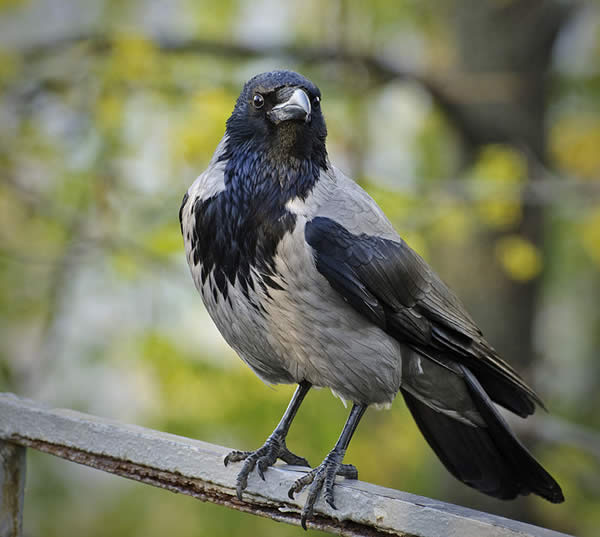
ponafotkas / CC BY-SA 2.0 / flickr
One of the most important myths of the Tuatha Dé Danann occurs around Samhain: the Cath Maige Tuired or Battle of the Plain of Pillars, an epic battle between the Tuatha Dé Danann and the Fomorians. Technically this is the second battle to occur at this location with the Cét-Chath Maige Tuired [first battle of Maige Tuired] against the Fir Bolg having happened previously. The Cath Maige Tuired is the story of how the Tuatha Dé Danann came to be oppressed by the half-Dé Danann/half Fomorian king Bres and his Fomorian relations, and in seeking to overthrow him the Tuatha Dé Danann ended up in a war against the Fomorians. The Morrigan plays a vital role throughout the story, beginning with her early appearance to incite the god Lugh to rise up and fight. Around the time of Samhain she meets with the Dagda, who she is said in other sources to be married to, and the two lie together, after which she advises him to gather the Aes Dana [people of skill] together while she goes to work destruction against one of the Fomorian kings. The army gathers on the eve of Samhain and the battle is engaged on Samhain itself. During the fight the Morrigan appears at a pivotal time to encourage her people to fight and they win, driving the Fomorians into defeat. After the battle the Morrigan gives two great prophecies, one of peace and one of doom.
This story itself takes place over an extended period of time, but the key action at the end all occurs around Samhain. We see the Morrigan acting as a force of incitement, helping to give her people victory, joining with the Dagda², and prophesying. From a modern perspective then we have several themes here relating to both the Morrigan and the holiday which someone looking to celebrate a feast day for the Morrigan could work with, and retelling the story or sections of it every year on Samhain in her honor might also be a good idea (this is something we do in my family). I have always had a special fondness for the Cath Maige Tuired, but I also love the Morrigan’s role in it and the way it, to my mind, showcases her powers as a deity of war, magic, victory, and prophecy. The fact that so much of this occurs on Samhain seems aligned with both the themes of Samhain and the Morrigan’s energy, so that there is a beautiful synchronicity to it all.
Another very well known and important story which the Morrigan has a role in and which begins around Samhain is the Táin Bó Cuiligne, the Cattle Raid of Cooley. Although she is not as primary a character in this story she remains a force of incitement and transformation who motivates change, urges warriors to fight, and is a force of victory or defeat. As the raid is beginning, around the time of Samhain, the Morrigan appears to the Donn Cuiligne, one of the bulls³ which is the point of contention causing the raid, and warns him to flee. In many ways her actions in this myth echo her role in the Cath Maige Tuired, although now we see her in a different context as an outsider rather than a being helping her own people overcome oppression.
In a more general sense the Morrigan is strongly associated with Cruachan and the cave of Cruachan specifically, where in turn several important things happen on Samhain. The Metrical Dindshenchas poem ‘Odras’ refers to Cruachan as one of the sí or fairy hills and tells us that the cave of Cruchan is the Morrigan’s home; this cave today is called Oweynagat from the Irish Uiamh na gCat or “cave of cats.”
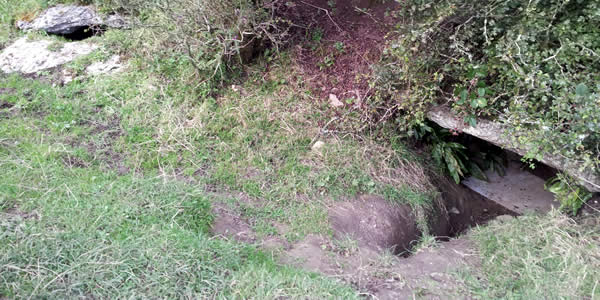
Oweynagat / Ed Hannon / Visions of the Past
It’s not known exactly why the cave is named this, but many people attribute it to a story called the Fled Bricrenn – Feast of Bricriu – which mentions three monstrous cats that came from the cave at night. The Morrigan herself is said to emerge from the cave as well as go into it in stories and the cave had such an intense reputation for Otherworldly matters that it has been called by some “Ireland’s Hellmouth⁴.” The Echtra Nerai [Adventure of Nera] is another story which takes place at Samhain at Cruachan, and while it doesn’t feature the Morrigan explicitly she does have a later connection to Nera, or more to the point his cow, and the story does prominently involve the sí of Cruachan.
So we can see that while there is no single historic thing which says that Samhain is the Morrigan’s feast day there is a good amount of mythic connection between her and the holiday as well as between her (in my opinion) most sacred site and the holiday. Certainly people could choose another day and there are other times that have mythic associations as well, but for me there has always been something special connecting Samhain and the Morrigan. Its in her stories, for certain, but its also the deeper connection between the main things I see in her nature, her purviews as a deity of war, battle, death, magic, prophecy, and change and the same things I see in this holiday, themes of death, magic, prophecy, and the turning of the year from one season to another. Just as the Cath Maige Tuired was in some ways about a group standing up and making the changes they needed to improve their situation I see Samhain as I time to decide what to keep and what to let go of, to make the changes in my own life that I need to in order to remove that which may be holding me back or harming me, and the Morrigan will always be a force of necessary change in my eyes.
End-notes
- There may be modern dates associated with her by different people however, but these as far as I’m aware cannot be pinned down in mythology or folklore. For example I have heard that December 12th is associated with Badb, and although I can’t source that to anything I celebrate it that way myself because I like it. I also recently had a friend on social media mention January 7th as a date associated with the Morrigan. (back)
- I’m not going to tell anyone how to interpret the incident where the Morrigan and Dagda meet up and hook up, however I will say that I feel that in modern paganism it is probably one of the most misunderstood incidents in mythology. If you’re curious about my thoughts on it I discuss them in depth in a blog I wrote called “The Morrigan, The Dagda, and Unions” which looks at the actual story in the Cath Maige Tuired and my thoughts on what that tells us. (back)
- In fairness and to clarify he isn’t really a bull but a man of the sí shapechanged who has struggled over many lifetimes with his rival. Their story up to the point of the Táin is told in the De Chophur in Da Muccida. (back)
- As a Buffy the Vampire Slayer fan I personally find this name amusing but of course it reflects a Christian view and fear of the destructive beings that were said in myth to come from the cave, including not only the aforementioned cats but also birds and pigs which laid waste to the land. (back)

Click here to like
Patheos Pagan on Facebook.

Click here to like
the Agora on Facebook
Irish-American Witchcraft is published bi-monthly on Tuesdays here on the Agora. Subscribe via RSS or e-mail!
Please use the links to the right to keep on top of activities here on the Agora as well as across the entire Patheos Pagan channel.
Previous Post
October 17, 2016
The Rantin' Raven: Who’s Superstitious?
Next Post

October 19, 2016 Lamp & Labyrinth: A Vision of An Cailleach
Browse Our Archives
Select a Category A Lakeside Hearth Adventures in Wortcunning Alone In Her Presence Arts, Crafts & Cooking Birthing Hereditary Witchcraft Book of Blackbirds Book Reviews Born-Again Witch Cauldron, Sword, Spear, & Stone Cermony and Liturgy Columns Community Dandelion Seeds Dear Jasmine Druid Thoughts Editor's Picks Everyday Pagan Family & Household Practice Family Traditions Full Frontal Magic Gateway Goddess Guest Articles Happily Heathen Health and Wellness Hearth of Hellenism Heathen Woman Hills of the Horizon History Holidays Horse Goddesses Interfaith Interviews Irish-American Witchcraft Jewish Witch Lamp & Labyrinth Letters from Midgard Literature, Media, Film, Music Loop of Brighid Love, Sex & Relationships Magic or Magick Making Light Naturalistic Traditions Nature News Outside The Circle Pantheisticon Politics Prayers, Poems, Blessings & Stories Queer Femme Mystic Queer of Swords Recipes Ritual and Practice Science and Research Seekers and Guides Seeking the Grail Socially Responsible Magic Spear of Athena Star Made Witch Syncretic Electric Technology The Blooming Staff The Busy Witch The Cartomancer The Crow's Nest The Dance of Pagan Recovery The Hearth of Hellenism The Lady's Quill The Other Side of the Hedge The Path of She The Rantin' Raven The Witches Next Door The Zen Pagan Theology, Ethics, Philosophy Tree City Witch Urban Earthwitch Wayfaring Woman Witch on Fire Wyrd Words
Select a Month January 2026 March 2025 December 2024 June 2024 April 2024 March 2024 January 2024 December 2023 November 2023 October 2023 August 2023 July 2023 May 2023 April 2023 March 2023 February 2023 January 2023 December 2022 November 2022 October 2022 September 2022 August 2022 July 2022 June 2022 May 2022 March 2022 February 2022 January 2022 December 2021 November 2021 October 2021 September 2021 August 2021 July 2021 June 2021 May 2021 April 2021 March 2021 February 2021 January 2021 December 2020 November 2020 October 2020 September 2020 August 2020 July 2020 June 2020 May 2020 April 2020 March 2020 February 2020 January 2020 December 2019 November 2019 October 2019 September 2019 August 2019 July 2019 June 2019 May 2019 April 2019 March 2019 February 2019 January 2019 December 2018 November 2018 October 2018 September 2018 August 2018 July 2018 June 2018 May 2018 April 2018 March 2018 February 2018 January 2018 December 2017 November 2017 October 2017 September 2017 August 2017 July 2017 June 2017 May 2017 April 2017 March 2017 February 2017 January 2017 December 2016 November 2016 October 2016 September 2016 August 2016 July 2016 June 2016 May 2016 April 2016 March 2016 February 2016 January 2016 December 2015 November 2015 October 2015 September 2015 August 2015 July 2015 June 2015 May 2015 April 2015 March 2015 February 2015 January 2015 December 2014 November 2014 October 2014 September 2014 August 2014 July 2014 June 2014 May 2014 April 2014 March 2014 February 2014 January 2014 December 2013 November 2013 October 2013 September 2013 August 2013 July 2013 June 2013 May 2013 April 2013 March 2013 February 2013 January 2013 December 2012 November 2012 October 2012 September 2012 August 2012 July 2012 June 2012 May 2012 April 2012 March 2012 February 2012 January 2012
Follow Us!
TAKE THE
Religious Wisdom Quiz
Who was the younger brother of Moses?
Select your answer to see how you score.
Solomon Joshua Aaron David
Related posts from Agora

Simple Witchery: To Keep Silent

Simple Witchery: Leaning On The Four Pillars

Pergamum Unfurled: Magic with the Greek Gods (Book...

Pergamum Unfurled: Cunning Words (Review)
TRENDING AT PATHEOS Pagan

I was recently chatting with someone on Instagram. She asked me what...

While there are many people who share their results, the end of...

On July 23, I saw Christopher Nolan's The Odyssey which is Homer’s...

As I write this two big events have just finished up. One...

Restoring the Watershed of Divine Love
Perhaps cooperation is not something we manufacture through legislation, ideology, or moral...

Many UUs don’t pray because of bad experiences in a previous religion,...
view all Pagan blogs
Ad-Free & Subscriber Log-In Subscription Support
- About Us
- 2026 Calendar
- Videos
- Podcasts
- Library of World Religions
- Faith In Media Tracker
- Advertise With Us
- Write for Us
- Privacy Policy
- Terms of Service
- Do Not Sell My Data
- Contact Us
- Radiant Digital
- Manage Newsletter Subscriptions
- Unsubscribe From Notifications
- Sitemap
Copyright 2008-2026, Patheos. All rights reserved.
Subscription Support Ad-Free & Subscriber Log-In
Follow Patheos