
BuddhistCatholicContemplativeEvangelicalGeneral ChristianHinduJewishLatter-day SaintMuslimNew VisionsProgressive Christian
Beliefs
- Buddhist
- Catholic
- Contemplative
- Evangelical
- General Christian
- Hindu
- Jewish
- Latter-day Saint
- More Voices
- Muslim
- New Visions
- Pagan
- Progressive Christian
Topics
- Religion News
- Food and Religion
- Sports and Religion
- Religious Art
- Religious Music and Entertainment
- Religious Events
- History and Religion
- Style and Religion
- Politics and Religion
- Women in Religion
- Recreation Outdoors and Religion
- Business Finance and Religion
- Careers Workplace and Religion
- Education and Religion
- Family Parenting and Religion
- Health Fitness and Religion
- Home and Religion
- Relationships and Religion
- Technology and Religion
- Travel and Religion
Columnists
- Buddhist Columnists
- Business Finance and Religion Columnists
- Careers Workplace and Religion Columnists
- Catholic Columnists
- Contemplative Columnists
- Education and Religion Columnists
- Evangelists Columnists
- Family Parenting and Religion Columnists
- General Christian Columnists
- Health Fitness and Religion Columnists
- Hindu Columnists
- History and Religion Columnists
- Home and Religion Columnists
- Jewish Columnists
- More Voices Columnists
- Latter Day Columnists
- Muslim Columnists
- New Visions Columnists
- Nonreligious Columnists
- Pagan Columnists
- Politics and Religion Columnists
- Progressive Columnists
- Recreation Outdoors and Religion Columnists
- Relationships and Religion Columnists
- Religion News Columnists
- Religious Art Columnists
- Religious Events Columnists
- Religious Music and Entertainment Columnists
- Sports and Religion Columnists
- Style and Religion Columnists
- Technology and Religion Columnists
- Travel and Religion Columnists
- Women in Religion Columnists
Resource Library
- 2026 Calendar
- Library of World Religions
- The 100 Most Holy Places on Earth
- Patheos Answers
- Podcasts
- Videos
- Faith Leaders Database
- Anglican Episcopalian
- Bahai
- Baptist
- Buddhism
- Christianity
- Confucianism
- Eastern Orthodoxy
- Hinduism
- Holiness and Pentecostal
- ISKCON
- Islam
- Judaism
- Lutheran
- Methodist
- The Church of Jesus Christ of Latter-day Saints
- New Age
- Paganism
- Presbytarian and Reformed
- Protestantism
- Religion Behind the Scenes
- Roman Catholic
- Scientology
- Shia Islam
- Sikhism
- Sufism
- Sunni Islam
- Taoism
- Zen
- See all religions
Research Tools
 Ad-Free & Subscriber Log-In Subscription Support
Ad-Free & Subscriber Log-In Subscription Support
Follow Patheos 

- Trending:
- Forgiveness
- |
- Marriage
- |
- Consciousness
- |
- Death Penalty
- |
- Election
- |
- Halloween

- Home
- Pagan
- Happily Heathen: Know Your Lore – Deconstructing the Brisingamen Myth
Happily Heathen: Know Your Lore – Deconstructing the Brisingamen Myth
Last updated on: July 8, 2016 at 5:21 pm by Cara Freyasdaughter
Happily Heathen: Know Your Lore – Deconstructing the Brisingamen Myth 2016-07-08T17:21:12+00:00 Cara Freyasdaughter
Patheos Explore the world's faith through different perspectives on religion and spirituality! Patheos has the views of the prevalent religions and spiritualities of the world.
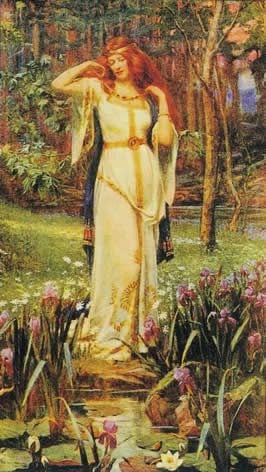
Freya with Brisingamen / J. Penrose, 1890 / Public Domain via Wikimedia Commons
To many modern Heathens, Brisingamen is Freya’s beautiful necklace, made of gold or amber or gemstones. Gifted to her by four crafty dwarves, who were paid as only Freya could pay them. Her necklace is as much of a distinctive symbol of the Lady as Thor’s Hammer is of the Thunderer. Every Heathen knows what happens in the myth of Brisingamen, right?
It turns out maybe not so much. This is one of the reasons that, in my opinion, it is very important for us to go as far back into the Lore as we can, and find out what is actually said (or not said) about any myth or God. From there, we certainly have a lot of freedom to interpret the Lore as we wish; but we first need to know the Lore, as it were, before we can break it.
What does the word “Brisingamen” mean?
The word “brísinga-men” is an Old Norse compound word. The “brising” part is unclear; it could either be translated as “fire” or “amber”, or it could mean “of the Brising tribe”. “Men” in this case means necklace, neck-ring, or girdle, but for the most part nowadays it is translated as “necklace”. So Brisingamen could either be the “fiery necklace” or the “girdle made by the Brisings”. In many past years’ discussion with the Vanic Conspiracy folks in California, we came to the interpretation that the four dwarves in the story were members of the Brising tribe of dwarves. (We also had any number of long discussions debating whether it was made of gold and/or amber and/or other jewels. The jury is still out on that one.)
How Freya Acquired the Brisingamen: What the Lore Actually Says
We don’t have that much in the Lore about the story of how Freya acquired Brisingamen. Given that we’re reconstructing the religious beliefs of a 1000+ year old culture that didn’t have a tradition of writing most things down, this isn’t too surprising. What is surprising is that the version preserved in the Lore is very different from how most modern storytellers present it.
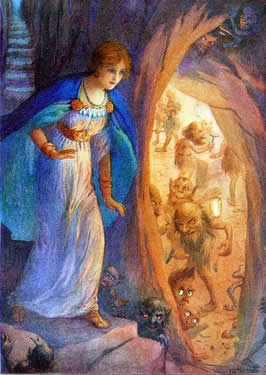
Freya and the Dwarves / Harry George Theaker / Public Domain via Wikimedia Commons
The most detailed version of the story can be found in the “Saga of Olaf Tryggvason” in the Flateyjarbok, a stand-alone manuscript that was transcribed by two Christian monks in the 1300s, and as such, it was heavily Christianized. Here’s a translation:
Freyja was a human in Asia and was the favorite concubine of Odin, King of Asialand. When this woman wanted to buy a golden necklace [no name given] forged by four dwarves (named Dvalinn, Alfrik, Berling, and Grer), she offered them gold and silver but they replied that they would only sell it to her if she would lie a night by each of them. She came home afterward with the necklace and kept silent as if nothing happened. But a man called Loki somehow knew it, and came to tell Odin. King Odin commanded Loki to steal the necklace, so Loki turned into a fly to sneak into Freyja’s bower and stole it.
When Freyja found her necklace missing, she came to ask king Odin. In exchange for it, Odin ordered her to make two kings, each served by twenty kings, fight forever unless some christened men so brave would dare to enter the battle and slay them. She said yes, and got that necklace back. Under the spell, king Högni and king Heðinn battled for one hundred and forty-three years, as soon as they fell down they had to stand up again and fight on. But in the end, the Christian lord Olaf Tryggvason, who has a great fate and luck, arrived with his christened men, and whoever slain by a Christian would stay dead. Thus the pagan curse was finally dissolved by the arrival of Christianity. After that, the noble man, king Olaf, went back to his realm.
Brodeur, Arthur Gilchrist. (Trans.)
The Prose Edda of Snorri Sturluson (1916).
Online at Google Books.
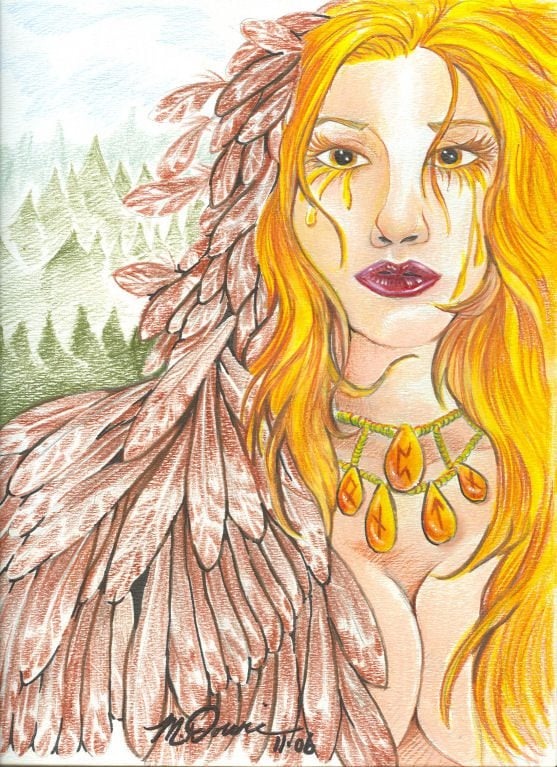
Freya by Monelun / Deviantart / CC BY-NC-ND 3.0
Olaf Tryggvason was likely a historical figure who, as far as we can tell, ruled Norway between 995 and 1000. He is credited with converting the Norse peoples to Christianity (often forcibly) and is credited with building the first Christian church in Norway in 995. The kings Högni and Heðinn also appear in a number of other sagas and medieval sources, so it was likely that when this story was copied down, it was meant to be a work of history, not of mythology. This, plus the fact that the sagas were transcribed by a pair of monks who revered King Olaf, probably explains why the myth reads the way it does: the Gods are human beings living in Asia, and they fell only after a Christian king came in and who had the power to kill the other kings and their soldiers.
The Brisingamen is also mentioned in a few other places in the Lore: in Húsdrápa, a poem from the Prose Edda, Loki steals Freya’s necklace, and Heimdal retrieves it for her; and in Þrymskviða in the Poetic Edda, when Thor and Loki attempt to trade Freya to a jotun in return for Thor’s Hammer, she becomes so enraged that her throat swells and the necklace bursts from her neck. (Later on, Thor wears that same necklace himself as he attempts to pass himself off as Freya.)
Cutting through the Christian Overlay
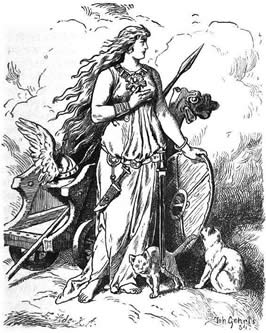
“Freya” (1901) by Johannes Gehrts / Public Domain via Wikimedia Commons
Since Freya, Loki, and Odin are mentioned in many other myths, and none of those myths indicate in any way that these Gods were actually human beings who lived in Asia, I think we can weed out that particular interpretation. That said, where does this myth take place? Asgard (home of Odin and the Aesir)? Vanaheim (home of the Vanir, and the original home of Freya)? Svartalfheim (home of the Dwarves)? Does it matter…? Also, we can probably cut out the section about Olaf and the other Christian kings. To me, that reads just like propaganda. History as written by the victors: “Thus the pagan curse was finally dissolved by the arrival of Christianity.” (And that is why we are here, 1000 years later, attempting to put this religion back together again. Thanks, Olaf.)
As for Odin asking Freya to start a war between kings, I think that section might actually deserve come consideration. Odin is a war god, after all, and we know that he meddled quite a bit in human politics. He’s also a god of sacrifice who once turned one of his human king’s “fake” sacrifices into an actual reenactment of Odin’s experience hanging on the World Tree; in other words, he killed him.) So is this something Odin would do? I’d say maybe. Freya, as well, is a war goddess. She takes half of those heroes slain in battle, so she has some interest in seeing battles continue. She is also called the “strife stirrer” (as opposed to Frigga’s title as “frithweaver”), because–let’s admit it–how many wars have been fought over beautiful women? Freya is the most beautiful goddess in Norse mythology, after all, and the jotnar are constantly trying to find a way to claim her. She’s also associated with gold and sex and fertility, all of which would make any king fight to have her, I’d say.
Just the Facts, Ma’am
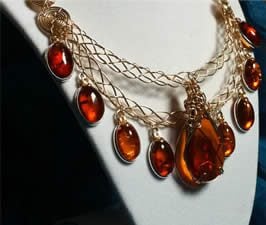
A modern Brisingamen / Belethil / Etsy
All this extra stuff weeded out, I think that the bare bones of the story are pretty straightforward: Freya wanted to buy a necklace. The dwarves would only sell it to her if she spent a night with each of them. She does so; she gets the necklace; and she leaves. Loki somehow finds out about this and tells Odin. Odin tells him to steal the necklace, so he turns himself into a fly and goes into her bedroom and steals it. Freya wakes up, realizes her necklace is gone, and asks Odin where it went. Odin tells her he’ll give it back to her if she makes two kings war against each other, which she does; and she gets the necklace back.
That’s it. The rest of the details are left for us to fill in.
Why did he/she/they….?
In my opinion, many questions are left unanswered:
- How did Freya find out about the necklace? Why did she desire it so much? What does it symbolize, to her or to us? What powers does it have?
- Why did the dwarves ask for one night each in payment? What specifically happened during those nights? (Don’t just assume the obvious; give it some thought.) Why did she keep this transaction secret?
- How did Loki find out about this transaction? Why did he tell Odin? Why did Odin care either way what Freya did, or with whom?
- And, How did Freya know to confront Odin about it? What did Odin and Freya say to each other at that confrontation? Why did Odin demand that Freya start wars between human kings in return for the necklace?
There’s not necessarily a “right” answer to any of these questions. (In any event, finding the “right” answer in mythology is not the point.) It is, however, important to dig into the foundations of the myths and to base our individual interpretations on those, and not base our understanding of a myth on someone else’s interpretation of an interpretation of some random blogger’s interpretation. Read it yourself, and make up your own mind. It’s the Heathen thing to do.

Click here to like
Patheos Pagan on Facebook.

Click here to like
the Agora on Facebook
Happily Heathen is posted on alternate Fridays here at the Agora. Subscribe by RSS or e-mail!
Please use the links to the right to keep on top of activities here on the Agora as well as across the entire Patheos Pagan channel.
Previous Post

July 6, 2016
Dandelion Seeds: When You Get Your Ass Kicked for Being a Priest
Next Post

July 9, 2016 The Path of She: To Wake, Perchance to Dream -- Communing With Your Dreambody
Browse Our Archives
Select a Category A Lakeside Hearth Adventures in Wortcunning Alone In Her Presence Arts, Crafts & Cooking Birthing Hereditary Witchcraft Book of Blackbirds Book Reviews Born-Again Witch Cauldron, Sword, Spear, & Stone Cermony and Liturgy Columns Community Dandelion Seeds Dear Jasmine Druid Thoughts Editor's Picks Everyday Pagan Family & Household Practice Family Traditions Full Frontal Magic Gateway Goddess Guest Articles Happily Heathen Health and Wellness Hearth of Hellenism Heathen Woman Hills of the Horizon History Holidays Horse Goddesses Interfaith Interviews Irish-American Witchcraft Jewish Witch Lamp & Labyrinth Letters from Midgard Literature, Media, Film, Music Loop of Brighid Love, Sex & Relationships Magic or Magick Making Light Naturalistic Traditions Nature News Outside The Circle Pantheisticon Politics Prayers, Poems, Blessings & Stories Queer Femme Mystic Queer of Swords Recipes Ritual and Practice Science and Research Seekers and Guides Seeking the Grail Socially Responsible Magic Spear of Athena Star Made Witch Syncretic Electric Technology The Blooming Staff The Busy Witch The Cartomancer The Crow's Nest The Dance of Pagan Recovery The Hearth of Hellenism The Lady's Quill The Other Side of the Hedge The Path of She The Rantin' Raven The Witches Next Door The Zen Pagan Theology, Ethics, Philosophy Tree City Witch Urban Earthwitch Wayfaring Woman Witch on Fire Wyrd Words
Select a Month January 2026 March 2025 December 2024 June 2024 April 2024 March 2024 January 2024 December 2023 November 2023 October 2023 August 2023 July 2023 May 2023 April 2023 March 2023 February 2023 January 2023 December 2022 November 2022 October 2022 September 2022 August 2022 July 2022 June 2022 May 2022 March 2022 February 2022 January 2022 December 2021 November 2021 October 2021 September 2021 August 2021 July 2021 June 2021 May 2021 April 2021 March 2021 February 2021 January 2021 December 2020 November 2020 October 2020 September 2020 August 2020 July 2020 June 2020 May 2020 April 2020 March 2020 February 2020 January 2020 December 2019 November 2019 October 2019 September 2019 August 2019 July 2019 June 2019 May 2019 April 2019 March 2019 February 2019 January 2019 December 2018 November 2018 October 2018 September 2018 August 2018 July 2018 June 2018 May 2018 April 2018 March 2018 February 2018 January 2018 December 2017 November 2017 October 2017 September 2017 August 2017 July 2017 June 2017 May 2017 April 2017 March 2017 February 2017 January 2017 December 2016 November 2016 October 2016 September 2016 August 2016 July 2016 June 2016 May 2016 April 2016 March 2016 February 2016 January 2016 December 2015 November 2015 October 2015 September 2015 August 2015 July 2015 June 2015 May 2015 April 2015 March 2015 February 2015 January 2015 December 2014 November 2014 October 2014 September 2014 August 2014 July 2014 June 2014 May 2014 April 2014 March 2014 February 2014 January 2014 December 2013 November 2013 October 2013 September 2013 August 2013 July 2013 June 2013 May 2013 April 2013 March 2013 February 2013 January 2013 December 2012 November 2012 October 2012 September 2012 August 2012 July 2012 June 2012 May 2012 April 2012 March 2012 February 2012 January 2012
Follow Us!
TAKE THE
Religious Wisdom Quiz
Who was Jacob’s only daughter?
Select your answer to see how you score.
Tamar Leah Rachel Dinah
Related posts from Agora

Simple Witchery: To Keep Silent

Simple Witchery: Leaning On The Four Pillars

Pergamum Unfurled: Magic with the Greek Gods (Book...

Pergamum Unfurled: Cunning Words (Review)
TRENDING AT PATHEOS Pagan

I was recently chatting with someone on Instagram. She asked me what...

While there are many people who share their results, the end of...

On July 23, I saw Christopher Nolan's The Odyssey which is Homer’s...

As I write this two big events have just finished up. One...

Restoring the Watershed of Divine Love
Perhaps cooperation is not something we manufacture through legislation, ideology, or moral...

Many UUs don’t pray because of bad experiences in a previous religion,...
view all Pagan blogs
Ad-Free & Subscriber Log-In Subscription Support
- About Us
- 2026 Calendar
- Videos
- Podcasts
- Library of World Religions
- Faith In Media Tracker
- Advertise With Us
- Write for Us
- Privacy Policy
- Terms of Service
- Do Not Sell My Data
- Contact Us
- Radiant Digital
- Manage Newsletter Subscriptions
- Unsubscribe From Notifications
- Sitemap
Copyright 2008-2026, Patheos. All rights reserved.
Subscription Support Ad-Free & Subscriber Log-In
Follow Patheos