
BuddhistCatholicContemplativeEvangelicalGeneral ChristianHinduJewishLatter-day SaintMuslimNew VisionsProgressive Christian
Beliefs
- Buddhist
- Catholic
- Contemplative
- Evangelical
- General Christian
- Hindu
- Jewish
- Latter-day Saint
- More Voices
- Muslim
- New Visions
- Pagan
- Progressive Christian
Topics
- Religion News
- Food and Religion
- Sports and Religion
- Religious Art
- Religious Music and Entertainment
- Religious Events
- History and Religion
- Style and Religion
- Politics and Religion
- Women in Religion
- Recreation Outdoors and Religion
- Business Finance and Religion
- Careers Workplace and Religion
- Education and Religion
- Family Parenting and Religion
- Health Fitness and Religion
- Home and Religion
- Relationships and Religion
- Technology and Religion
- Travel and Religion
Columnists
- Buddhist Columnists
- Business Finance and Religion Columnists
- Careers Workplace and Religion Columnists
- Catholic Columnists
- Contemplative Columnists
- Education and Religion Columnists
- Evangelists Columnists
- Family Parenting and Religion Columnists
- General Christian Columnists
- Health Fitness and Religion Columnists
- Hindu Columnists
- History and Religion Columnists
- Home and Religion Columnists
- Jewish Columnists
- More Voices Columnists
- Latter Day Columnists
- Muslim Columnists
- New Visions Columnists
- Nonreligious Columnists
- Pagan Columnists
- Politics and Religion Columnists
- Progressive Columnists
- Recreation Outdoors and Religion Columnists
- Relationships and Religion Columnists
- Religion News Columnists
- Religious Art Columnists
- Religious Events Columnists
- Religious Music and Entertainment Columnists
- Sports and Religion Columnists
- Style and Religion Columnists
- Technology and Religion Columnists
- Travel and Religion Columnists
- Women in Religion Columnists
Resource Library
- 2026 Calendar
- Library of World Religions
- The 100 Most Holy Places on Earth
- Patheos Answers
- Podcasts
- Videos
- Faith Leaders Database
- Anglican Episcopalian
- Bahai
- Baptist
- Buddhism
- Christianity
- Confucianism
- Eastern Orthodoxy
- Hinduism
- Holiness and Pentecostal
- ISKCON
- Islam
- Judaism
- Lutheran
- Methodist
- The Church of Jesus Christ of Latter-day Saints
- New Age
- Paganism
- Presbytarian and Reformed
- Protestantism
- Religion Behind the Scenes
- Roman Catholic
- Scientology
- Shia Islam
- Sikhism
- Sufism
- Sunni Islam
- Taoism
- Zen
- See all religions
Research Tools
 Ad-Free & Subscriber Log-In Subscription Support
Ad-Free & Subscriber Log-In Subscription Support
Follow Patheos 

- Trending:
- Forgiveness
- |
- Marriage
- |
- Consciousness
- |
- Death Penalty
- |
- Election
- |
- Halloween

- Home
- Pagan
- Aphrodite’s Thealogy of Perfection
Aphrodite’s Thealogy of Perfection
Last updated on: September 25, 2026 at 3:06 pm by Heron Michelle
Aphrodite’s Thealogy of Perfection 2026-09-25T15:06:30-04:00 Heron Michelle
Patheos Explore the world's faith through different perspectives on religion and spirituality! Patheos has the views of the prevalent religions and spiritualities of the world.
In Wiccan rites, when we approach the sacred circle, we may be challenged at the gates:
HOW DO YOU ENTER?
The traditional keys to gain entry are “In Perfect Love and Perfect Trust.”
Over the years, I have come to appreciate this concept as one of the most valuable contributions Wicca has made to Witchdom as a whole. Sadly, I have also found it widely misunderstood and undervalued.
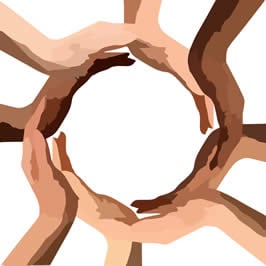
ClkerFreeVectorImages / pixabay.com
As a new witchling, I struggled mightily with what was meant by perfect. When I was taught that it meant unconditional, my teachers’ answers only brought up more questions. I really didn’t understand, and some of my early attempts to apply this idea to my life opened me up to more than a few broken hearts.
Several leaders whose rituals I attended suggested that if I didn’t feel comfortable pledging to love and trust strangers at an open festival, I could simply answer that I entered “with an open heart and an open mind” instead. I even repeated that advice to newcomers at my own circles for years.
I now believe that advice arose from a crucial misunderstanding of what Perfect Love and Perfect Trust actually require of us.
“Bide the Wiccan laws ye must, in perfect Love and perfect Trust.”
As I taught these basic principles, new students asked the same questions and raised the same red flags time and again. Eventually, I stopped avoiding the problem and began seeking a better answer.
When the books and my mentors’ answers failed me, I went directly to the Source.
For my Great Work exploration of 2014, I devoted myself to discovering what the Goddesses of Love could teach me about unconditional love and trust within the panentheistic paradigm through which I understand the Divine. It was the hardest year of my witching life thus far, and when I emerged, I possessed an entirely different pair of “rose-colored glasses” through which to view this seminal piece of Wiccan wisdom.
With the aid of Aphrodite, I developed what I now call the Thealogy of Perfection, including nine conditions through which Divine Love can be experienced and expressed in relationship. From this thealogy eventually developed a practical ethical framework I call the Four Rules of Witchcraft for Personal Sovereignty.
Aphrodite’s Thealogy of Perfection
Thealogy combines the Greek thea, “Goddess,” with logos, “study” or “discourse.” In contemporary Pagan usage, thealogy generally refers to theological inquiry that centers Goddess or the feminine Divine. My use of the term here is particularly concerned with what the nature of Divine Love can teach us about human relationships, ethics, and sovereignty.
What Do We Mean by “Perfection”?
If the world is a Divine tapestry woven through the Goddess and God, then Love begins to take on a different definition.
If Divine Love encompasses EVERYTHING, then it is also whole and complete: no essential part of existence is excluded. Consider the relationship between the words whole, wholeness, and wholesome. Perfection, in this theological sense, does not mean flawlessness according to some external standard. It means completeness.
The Hermetic Principle of Rhythm expresses a related mystery:
“Everything flows, out and in; everything has its tides; all things rise and fall; the pendulum-swing manifests in everything….”
—The Kybalion
Divine Love would therefore encompass both sides of every polarity: every atom, all states of matter, every form of energy, every phase of every cycle, all forms of life, all expressions of gender and sexuality, every dimension of consciousness, crests and troughs, good hair days and bad hair days, sinners and saints, et cetera and so on.
Think of a “perfect” circle. Nothing required to make the circle whole is missing from it.
It is all God/dess.
What Is the Polar Opposite of Love?
In order to reveal this mystery to me, Aphrodite dragged me through the thorns of her rose garden.
She illustrated the nature of Love by confronting me with the circumstances in which I felt its absence. It hurt like hell, but through running that gauntlet, I began to recognize nine conditions that consistently shaped whether Love could be experienced, trusted, and reciprocated within human relationships.
I came to call these the Nine Divine Love Conditions.
Eventually, I arranged them into a mnemonic that makes them considerably easier to remember:
REAL STAAR.
As you read through them, consider the times in your own life when one or more of these conditions were absent. How did that deprivation feel? What happened within your relationships? How did you respond when you attempted to restore what was missing?
REAL STAAR: The Nine Divine Love Conditions
When Divine Love is able to flourish in human relationship, these nine conditions support its expression:
R — Resources: I have access to what I need to survive and thrive: nourishing food, clean water and air, safe shelter, clothing, healthcare, useful information, and sufficient stability to sustain my life.
E — Expression: I have a voice and a place from which to use it. I am free to speak, create, communicate my ideas, and participate with the reasonable expectation of being heard and treated as a valuable contributor.
A — Affection: I have access to chosen bonds of care, friendship, nurturing, intimacy, and sexual expression according to my own preferences and consent, with the same respect extended to the consent of others.
L — Liberty: I possess sovereignty over my own life, body, identity, and future. I have the freedom to pursue happiness according to my own True Will, provided that I extend that same dignity and freedom to others.
S — Security: I am reasonably protected from violence, neglect, exploitation, coercion, and deprivation. My physical boundaries and privacy are respected.
T — Trustworthiness: I can reasonably trust the people with whom I enter relationship because their actions demonstrate integrity and reliability. Likewise, I behave in ways that make me worthy of their trust.
A — Acceptance: I am permitted to belong as my whole self without fear of rejection or ostracism merely for being authentically who I am.
A — Authenticity: What is represented outwardly corresponds honestly with what is true. I am neither deceived nor exploited through deliberate falsehood, and I accept responsibility for offering that same honesty in return.
R — Reciprocity: The respect, consideration, care, and accountability expected from me are also extended to me. Relationships remain mutual rather than exploitative; giving and receiving are held in equitable balance.
These are not commandments requiring other people to satisfy our every desire. They are conditions within the social ecology of relationship that allow Divine Love to circulate in healthy ways. This is a very important distinction.
The Void of Love
If these conditions describe some of the ways Divine Love becomes perceptible here on Earth, what lies on the other side of that polarity?
If Love is everything, then perhaps its opposite is not hatred at all.
Perhaps its opposite is nothing. The Void of Love.
The first thing that emerges from that void, I think, is fear: the fear of a lack of Love.
Perfect Love, then, is whole Divine Love. It recognizes you as a sovereign being possessing inherent dignity and worth, encompassing the entirety of yourself—light and shadow alike.
Fear enters when we believe the conditions necessary for Love are being denied or threatened: when there will not be enough resources; when our expression is silenced; when affection is withheld or coerced; when liberty is constrained; when security disappears; when trust is betrayed; when acceptance becomes conditional; when authenticity gives way to deception; or when reciprocity collapses into exploitation.
Human beings respond powerfully to these wounds.
When essential needs remain unmet for too long, we suffer. Fear, anger, grief, anxiety, and resentment can accumulate around the wound. Left unexamined, that pain can distort our choices until we begin inflicting upon others the very injuries we fear ourselves.
The person terrified of rejection may reject first. The person whose autonomy was violated may attempt to control someone else. The person who has been deceived may become suspicious of everyone. The person convinced that there will never be enough may begin hoarding what others need.
Our wounds can become weapons when we refuse to heal them.
This is one way I understand the shadow: pain we have not fully integrated becomes something we project outward, and we may find ourselves fighting in others what we most fear within ourselves.
Perfect Love Does Not Mean Unconditional Relationships
In You Can Lead a Witch to Circle, but You Can’t Make Them Coven, I wrote:
Perfect, or unconditional, Divine Love doesn’t mean unconditional relationships. It means I acknowledge your sovereign right to pursue happiness as you see fit, and I treat you with the equal dignity all incarnate spirits deserve, even when you are acting like a loathsome jerk. Perfect, or unconditional, Trust means that I will be a trustworthy person toward you, even when I see you breaking that trust. Neither of these things means I am obligated to be your friend. What it does mean is that I will not become your enemy.
That distinction remains essential.
To recognize another being as an expression of Divine Love does not require us to surrender discernment, boundaries, or sovereignty. I can acknowledge your inherent dignity without granting you unrestricted access to my life.
I can love you and still tell you NO.
I can wish healing for you from a very considerable distance.

RedHeadsRule / pixabay.com
Perfect Trust
Perfect Love becomes dangerous sentimentalism unless it is accompanied by the equally important principle of Perfect Trust.
Perfect Trust establishes the boundaries that make a safe environment for all that Divine Love.
To say that you enter the circle with Perfect Trust does not require you to declare that every stranger standing there has already earned your personal confidence. Rather, it is first a declaration about your own trustworthiness.
I enter this circle intending to be worthy of your trust.
That should be something we can promise to anyone, but most especially to the Witches who join us upon sacred ground.
Trust becomes a social contract among the members of the circle: the care you extend will be met with care, to the best of everyone’s ability. We agree to deal honestly and authentically with one another. We agree to respect boundaries and sovereignty. We agree to practice reciprocity.
In that sense, Perfect Love and Perfect Trust become the Witchcraft version of the Golden Rule.
This social contract is a two-way street. It means that everyone involved is sincerely attempting to live according to shared ideals. When one of us misses the mark—as humans inevitably do—we work respectfully toward repair rather than immediately launching a Witch War, sending hate mail, mounting a social-media smear campaign, or cursing somebody into a toad.
That last one is especially messy. However, Perfect Trust does not require us to ignore repeated evidence.
If someone consistently breaks the social contract, refuses to acknowledge the harm their actions cause, will not make amends, and demonstrates no willingness to change their behavior, then we have difficult choices to make.
We cannot control other people. We have considerable control over our own affiliations.
Sometimes the most loving response available is to peacefully sever the connection and remove someone’s access to continue causing harm.
Namaste Away!
Why would you continually pour your energy into relationships that have repeatedly demonstrated themselves to be untrustworthy? Why would you deliberately step into a magickal circle—an energetic amplifier—and call upon the Powers alongside someone whose actions have made mutual trust impossible?
Perfect Love may be unconditional on the Divine level.
Human relationships are conditional because participation requires consent, boundaries, responsibility, and reciprocity. That distinction transformed my understanding of Wiccan ethics.
It also led directly to another question:
If we enter the circle promising Perfect Love and Perfect Trust, what principles help us actually live that promise?
My answer became four deliberately irreverent, hopefully thought-provoking, and extremely memorable rules:
Don’t Burn the Witch.
Don’t Be the Asshole.
Don’t Be the Weak Link.
Must Be Present to Win.
Continue with Four Rules of Witchcraft for Personal Sovereignty.
Blessings,
~Heron

About Heron Michelle
Heron Michelle is a Witch, author, artist, shopkeeper, and priestess whose work explores the intersection of Modern Witchcraft, Hermetic philosophy, devotional practice, and personal sovereignty. She is the author of Elemental Witchcraft: A Guide to Living a Magickal Life Through the Elements (Llewellyn, 2021) and the forthcoming Lunar Witchcraft (Llewellyn, 2027). She is the owner of The Sojourner Whole Earth Provisions, a metaphysical shop in Greenville, North Carolina, in 2009. Contact her through HeronMichelle.com, and subscribe to her continuing work at HeronMichelle.Substack.com. You can read more about the author here.
Previous Post
March 9, 2016
You Can Lead a Witch to Circle, But You Can't Make Them Coven
Next Post

April 12, 2016 HB2 - There's a Safe Pot to Piss in at the End of the Rainbow
Browse Our Archives
Select a Category Arts, Crafts & Cooking Business Cermony and Liturgy Columns Comedy Community Death Elemental Witchcraft Health and Wellness Holidays Interfaith Life Love, Sex & Relationships Magic or Magick Nature Politics Prayers, Poems, Blessings & Stories Recipes Rites of Passage Ritual and Practice Science and Research Shopkeeper Saga Technology Theology, Ethics, Philosophy Uncategorized Witch on Fire
Select a Month October 2026 September 2026 July 2026 June 2026 May 2026 March 2026 February 2026 January 2026 November 2025 September 2025 August 2025 May 2025 November 2024 September 2024 August 2024 March 2024 February 2024 December 2023 September 2023 August 2023 May 2023 February 2023 October 2022 September 2022 August 2022 April 2022 March 2022 December 2021 November 2021 September 2021 August 2021 July 2021 May 2021 April 2021 March 2021 February 2021 December 2020 October 2020 September 2020 August 2020 July 2020 May 2020 April 2020 March 2020 February 2020 January 2020 December 2019 November 2019 October 2019 September 2019 August 2019 July 2019 June 2019 May 2019 April 2019 March 2019 February 2019 January 2019 December 2018 November 2018 October 2018 September 2018 August 2018 July 2018 June 2018 May 2018 April 2018 March 2018 February 2018 January 2018 December 2017 November 2017 October 2017 September 2017 August 2017 July 2017 June 2017 May 2017 April 2017 March 2017 February 2017 January 2017 December 2016 November 2016 October 2016 September 2016 August 2016 July 2016 June 2016 May 2016 April 2016 March 2016 February 2016 January 2016 December 2015 November 2015 October 2015 August 2015 July 2015
Follow Us!
TAKE THE
Religious Wisdom Quiz
Which disciple walked on water toward Jesus?
Select your answer to see how you score.
Matthew Andrew Peter James
Related posts from Witch on Fire
Medusa Magick for Sexual Sovereignty

A Witch Honors Dolly Parton among the Mighty...
2027 Witch's Wheel of the Year Calendar
Restoring the Watershed of Divine Love
TRENDING AT PATHEOS Pagan

Pope Leo Celebrates Mass for Nurses & Docs...
I don't have any idea how he did it, but Pope Leo...

The Sermon on the Mount, Part I: Matthew...
The Sermon on the Mount, Part I (Matthew 4:12-5:12) St. Matthew moves...

What's up from Crossway: Reviewing some of their latest A few weeks...

Janie Learns the Way of the Cross: A...
Teaching children about Jesus' Passion can be challenging. Many parents and educators...

Looking For Good Catholic Writing - October 2026
He alone extends the heavens, and he walks upon the waves of...

In "Irreplaceable," our book on vocation and technology, Trevor Sutton and I...
view all Pagan blogs
Ad-Free & Subscriber Log-In Subscription Support
- About Us
- 2026 Calendar
- Videos
- Podcasts
- Library of World Religions
- Faith In Media Tracker
- Advertise With Us
- Write for Us
- Privacy Policy
- Terms of Service
- Do Not Sell My Data
- Contact Us
- Radiant Digital
- Manage Newsletter Subscriptions
- Unsubscribe From Notifications
- Sitemap
Copyright 2008-2026, Patheos. All rights reserved.
Subscription Support Ad-Free & Subscriber Log-In
Follow Patheos