
BuddhistCatholicContemplativeEvangelicalGeneral ChristianHinduJewishLatter-day SaintMuslimNew VisionsProgressive Christian
Beliefs
- Buddhist
- Catholic
- Contemplative
- Evangelical
- General Christian
- Hindu
- Jewish
- Latter-day Saint
- More Voices
- Muslim
- New Visions
- Pagan
- Progressive Christian
Topics
- Religion News
- Food and Religion
- Sports and Religion
- Religious Art
- Religious Music and Entertainment
- Religious Events
- History and Religion
- Style and Religion
- Politics and Religion
- Women in Religion
- Recreation Outdoors and Religion
- Business Finance and Religion
- Careers Workplace and Religion
- Education and Religion
- Family Parenting and Religion
- Health Fitness and Religion
- Home and Religion
- Relationships and Religion
- Technology and Religion
- Travel and Religion
Columnists
- Buddhist Columnists
- Business Finance and Religion Columnists
- Careers Workplace and Religion Columnists
- Catholic Columnists
- Contemplative Columnists
- Education and Religion Columnists
- Evangelists Columnists
- Family Parenting and Religion Columnists
- General Christian Columnists
- Health Fitness and Religion Columnists
- Hindu Columnists
- History and Religion Columnists
- Home and Religion Columnists
- Jewish Columnists
- More Voices Columnists
- Latter Day Columnists
- Muslim Columnists
- New Visions Columnists
- Nonreligious Columnists
- Pagan Columnists
- Politics and Religion Columnists
- Progressive Columnists
- Recreation Outdoors and Religion Columnists
- Relationships and Religion Columnists
- Religion News Columnists
- Religious Art Columnists
- Religious Events Columnists
- Religious Music and Entertainment Columnists
- Sports and Religion Columnists
- Style and Religion Columnists
- Technology and Religion Columnists
- Travel and Religion Columnists
- Women in Religion Columnists
Resource Library
- 2026 Calendar
- Library of World Religions
- The 100 Most Holy Places on Earth
- Patheos Answers
- Podcasts
- Videos
- Faith Leaders Database
- Anglican Episcopalian
- Bahai
- Baptist
- Buddhism
- Christianity
- Confucianism
- Eastern Orthodoxy
- Hinduism
- Holiness and Pentecostal
- ISKCON
- Islam
- Judaism
- Lutheran
- Methodist
- The Church of Jesus Christ of Latter-day Saints
- New Age
- Paganism
- Presbytarian and Reformed
- Protestantism
- Religion Behind the Scenes
- Roman Catholic
- Scientology
- Shia Islam
- Sikhism
- Sufism
- Sunni Islam
- Taoism
- Zen
- See all religions
Research Tools
 Ad-Free & Subscriber Log-In Subscription Support
Ad-Free & Subscriber Log-In Subscription Support
Follow Patheos 

- Trending:
- Forgiveness
- |
- Marriage
- |
- Consciousness
- |
- Death Penalty
- |
- Election
- |
- Halloween

- Home
- Pagan
- The Lady’s Quill: Religious Virtues and Gods
The Lady’s Quill: Religious Virtues and Gods
Last updated on: March 10, 2016 at 6:42 pm by Laine Mardollsdottir
The Lady’s Quill: Religious Virtues and Gods 2016-03-10T18:42:30+00:00 Laine Mardollsdottir
Patheos Explore the world's faith through different perspectives on religion and spirituality! Patheos has the views of the prevalent religions and spiritualities of the world.
Religions are often associated with moral values, so much so that in the modern day it seems that most people assume that morality is the entire purpose of religion. Others may disagree, but personally I find more value in religion as a codified method of interacting with and understanding spiritual experiences, one that a social network tends to form around as people who use similar spiritual technology tend to want to communicate with one another regarding it.

Nevertheless, the big monotheistic faiths of the last couple of millennia and their many, many offshoots seem very concerned with how individuals behave. People coming to a modern Pagan practice from those religions seem to have a desperate need to codify rules of proper behavior for themselves and others. While examination of the texts that we use to guide our spiritual lives and the conclusions that we draw from our experiences may engender values in us, that is a far cry from creating rules of conduct that we and others who follow our paths must follow.
Constructs like the Asatru Nine Noble Virtues and ADF’s Nine Virtues have always seemed rather arbitrary to me. There’s a quality to them that makes me wonder if those that created them wanted to say, “See, we’re a real religion too! We have morals (™)!” There have been a lot of actions and trends in modern Pagan movements (and for the sake of this discussion I’m including Heathenry and other Recon paths) that seemed to have occurred in a struggle for religious legitimacy as we try to squeeze our paths into molds that fit commonly-accepted concepts of what a religion is. For some reason the artificial codification of morality is one of those trends that bothers me deeply.
I will admit, one of the things that bothers me about it is that the Gods themselves don’t hew perfectly to the moral codes supposedly inspired by their tales. In Norse mythology, the Gods break hospitality, deceive one another and humans, shatter one another’s trust, trick others into doing work for them – the list goes on, and for every example I can find that fits one of the NNV I can find another couple where one of the Gods (and no, not always or even mostly Loki) does something that flies in the face of them. Including Odin Allfather, whose words are recorded in Havamal, one of the major inspirations for them. I don’t expect our Gods to be perfect by our standards, or even have comprehensible motives, but I am surprised at using their words to derive codes of morality that they themselves do not seem to adhere to.
My morality is personal; I don’t expect other people to follow it. I might not want to associate with someone with significantly different values than I have, and I might stand up to try and prevent them from doing something that I consider harmful, but by and large I’m not going to try and tell them how to live. My values are generally inspired by people (and, given that I’m an animist and polytheist, I’m going to include non-corporeal beings under that heading) who I admire. When someone’s behavior strikes a chord in me I try to take note and compare it against my own life and how I feel about it, and if it’s an example that I consider worthy I’ll attempt to follow it.

This does tie into my religion, however, from the long way around. The Gods that I honor most are the ones whose actions I most admire. So while I don’t believe in codifying them for other people, as my Pagan practice has evolved and changed over time, I’ve learned to look to my Gods for inspiration in ways to behave.
Many polytheist-type people will remind each other that our Gods aren’t (by and large, depending on the tradition) considered perfect. In my own Heathen tradition there are no Gods who I view as absolute moral guides; nearly all of them that are portrayed with any complexity are portrayed with weaknesses or behavior that not everyone will agree with. That does not mean that their examples cannot be learned from. In my case, and in the case of others who feel the draw to a particular deity or group of deities, it is possible to construct examine their behavior and find qualities that you may consider worthy of emulation.
I’m a Freyjaswoman. I have a personal oath of devotion to Her. There is no Power out there who I admire as much as I do Her. Being devoted to Her, I find the values in Her that I consider worthy and seek to emulate them; I would not honor Her with such singular devotion if I did not think that She was worthy of respect, and many of the reasons that I respect Her revolve around Her deeds.

Sias van Schalkwyk / Freeimages.com
So, in meditating on Freyja I’ve come to personally codify the Virtues that I see in the Lore about Her and Her actions:
Integrity: Freyja is honest and keeps Her word. In the Lay of Hyndla, She goes out of Her way to help a follower of Hers because he has given Her much and served Her well. She does not shrink from Loki’s accusations of having slept with all the Gods in the hall. In modern times, She is well-known for challenging devotees of Hers who are lying to themselves or hiding from themselves.
Self-Determination, Personal Sovereignty: While Her brother and father were taken as part of the hostage exchange in the Aesir/Vanir war, I have yet to find a reference to the same happening to Her. It seems that She comes to Asgard of Her own accord and will. When the Gods promise Her hand in marriage to a giant (this happens twice, you’d think that they’d have learned the first time) She refuses with such vehemence that in both cases they decide to trick the giants rather than risk Her wrath. Modern gnosis is full of tales of Her encouraging people to own their decisions and take responsability for their own lives.
Passion: Freyja saw Brisingamen, and She wanted it. The dwarves who crafted it wanted to be intimate with Her, and She paid their price for what She wanted. As mentioned above, She had slept with every God at the feast in Aegir’s hall and likely others aside. When the Lady truly wants to do or have something She will find a way and none can gainsay Her in the end. Her passion fuels Her will and drive. Those who feel close to Her often experience hidden desires becoming manifest, and as a result find new fuel for the fires of their own wills to achieve what they truly want.
Love and Devotion: Freyja’s devotion to Her lost husband Odr has Her flying from one end of the worlds to the other searching for him, weeping tears of amber and gold. The Lady knows love, knows how to love truly and deeply, as an action as well as a devotion. Many pray to Her in matters of love, and She is well known for her spectacular responses to these entreaties.
Beauty: Many epithets and tales about Her speak of Her beauty. Beauty is a thing that can be cultivated, and is not limited to physical beauty (although that is a component about it). Beauty as a virtue includes finding value in things and bringing that value to light and empowering it. It can also refer to living in such a way that your life is a thing of beauty, creating a divine aesthetic through your deeds that any who look at the tapestry of your experiences will be in awe of their richness, symmetry, consistency and experience admiration for them.
Because I love, respect, and admire Her, these are qualities that I try to emulate in my own life. I think that meditation on the actions of the deities that we are most drawn to can help us to understand not only the Gods better but why we are drawn to them and what sort of moral qualities we admire and value. I know that I’m not the only polytheist or Pagan type person to feel uncomfortable with the sets of rules laid down by others based on their own interpretations of our lore. I encourage everyone to find examples among the Gods, Ancestors, spirits, animals, manifest nature, and other living human beings to inspire their behavior and morality.

Click here to like
Patheos Pagan on Facebook.

Click here to like
the Agora on Facebook
The Lady’s Quill is published on the second and fourth Thursday of every month. You can subscribe by RSS and e-mail.
Please use the links to the right to keep on top of activities here on the Agora as well as across the entire Patheos Pagan channel.
Previous Post
March 9, 2016
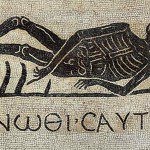
The Cartomancer: "Know Thyself," but what does it really mean?
Next Post

March 11, 2016 Happily Heathen: Heathen Polytheism - A Deity Dedication Contract
Browse Our Archives
Select a Category A Lakeside Hearth Adventures in Wortcunning Alone In Her Presence Arts, Crafts & Cooking Birthing Hereditary Witchcraft Book of Blackbirds Book Reviews Born-Again Witch Cauldron, Sword, Spear, & Stone Cermony and Liturgy Columns Community Dandelion Seeds Dear Jasmine Druid Thoughts Editor's Picks Everyday Pagan Family & Household Practice Family Traditions Full Frontal Magic Gateway Goddess Guest Articles Happily Heathen Health and Wellness Hearth of Hellenism Heathen Woman Hills of the Horizon History Holidays Horse Goddesses Interfaith Interviews Irish-American Witchcraft Jewish Witch Lamp & Labyrinth Letters from Midgard Literature, Media, Film, Music Loop of Brighid Love, Sex & Relationships Magic or Magick Making Light Naturalistic Traditions Nature News Outside The Circle Pantheisticon Politics Prayers, Poems, Blessings & Stories Queer Femme Mystic Queer of Swords Recipes Ritual and Practice Science and Research Seekers and Guides Seeking the Grail Socially Responsible Magic Spear of Athena Star Made Witch Syncretic Electric Technology The Blooming Staff The Busy Witch The Cartomancer The Crow's Nest The Dance of Pagan Recovery The Hearth of Hellenism The Lady's Quill The Other Side of the Hedge The Path of She The Rantin' Raven The Witches Next Door The Zen Pagan Theology, Ethics, Philosophy Tree City Witch Urban Earthwitch Wayfaring Woman Witch on Fire Wyrd Words
Select a Month January 2026 March 2025 December 2024 June 2024 April 2024 March 2024 January 2024 December 2023 November 2023 October 2023 August 2023 July 2023 May 2023 April 2023 March 2023 February 2023 January 2023 December 2022 November 2022 October 2022 September 2022 August 2022 July 2022 June 2022 May 2022 March 2022 February 2022 January 2022 December 2021 November 2021 October 2021 September 2021 August 2021 July 2021 June 2021 May 2021 April 2021 March 2021 February 2021 January 2021 December 2020 November 2020 October 2020 September 2020 August 2020 July 2020 June 2020 May 2020 April 2020 March 2020 February 2020 January 2020 December 2019 November 2019 October 2019 September 2019 August 2019 July 2019 June 2019 May 2019 April 2019 March 2019 February 2019 January 2019 December 2018 November 2018 October 2018 September 2018 August 2018 July 2018 June 2018 May 2018 April 2018 March 2018 February 2018 January 2018 December 2017 November 2017 October 2017 September 2017 August 2017 July 2017 June 2017 May 2017 April 2017 March 2017 February 2017 January 2017 December 2016 November 2016 October 2016 September 2016 August 2016 July 2016 June 2016 May 2016 April 2016 March 2016 February 2016 January 2016 December 2015 November 2015 October 2015 September 2015 August 2015 July 2015 June 2015 May 2015 April 2015 March 2015 February 2015 January 2015 December 2014 November 2014 October 2014 September 2014 August 2014 July 2014 June 2014 May 2014 April 2014 March 2014 February 2014 January 2014 December 2013 November 2013 October 2013 September 2013 August 2013 July 2013 June 2013 May 2013 April 2013 March 2013 February 2013 January 2013 December 2012 November 2012 October 2012 September 2012 August 2012 July 2012 June 2012 May 2012 April 2012 March 2012 February 2012 January 2012
Follow Us!
TAKE THE
Religious Wisdom Quiz
Which city did David conquer and make his capital?
Select your answer to see how you score.
Gibeon Bethel Hebron Jerusalem
Related posts from Agora

Simple Witchery: To Keep Silent

Simple Witchery: Leaning On The Four Pillars

Pergamum Unfurled: Magic with the Greek Gods (Book...

Pergamum Unfurled: Cunning Words (Review)
TRENDING AT PATHEOS Pagan

I was recently chatting with someone on Instagram. She asked me what...

While there are many people who share their results, the end of...

On July 23, I saw Christopher Nolan's The Odyssey which is Homer’s...

As I write this two big events have just finished up. One...

Restoring the Watershed of Divine Love
Perhaps cooperation is not something we manufacture through legislation, ideology, or moral...

Many UUs don’t pray because of bad experiences in a previous religion,...
view all Pagan blogs
Ad-Free & Subscriber Log-In Subscription Support
- About Us
- 2026 Calendar
- Videos
- Podcasts
- Library of World Religions
- Faith In Media Tracker
- Advertise With Us
- Write for Us
- Privacy Policy
- Terms of Service
- Do Not Sell My Data
- Contact Us
- Radiant Digital
- Manage Newsletter Subscriptions
- Unsubscribe From Notifications
- Sitemap
Copyright 2008-2026, Patheos. All rights reserved.
Subscription Support Ad-Free & Subscriber Log-In
Follow Patheos