
BuddhistCatholicContemplativeEvangelicalGeneral ChristianHinduJewishLatter-day SaintMuslimNew VisionsProgressive Christian
Beliefs
- Buddhist
- Catholic
- Contemplative
- Evangelical
- General Christian
- Hindu
- Jewish
- Latter-day Saint
- More Voices
- Muslim
- New Visions
- Pagan
- Progressive Christian
Topics
- Religion News
- Food and Religion
- Sports and Religion
- Religious Art
- Religious Music and Entertainment
- Religious Events
- History and Religion
- Style and Religion
- Politics and Religion
- Women in Religion
- Recreation Outdoors and Religion
- Business Finance and Religion
- Careers Workplace and Religion
- Education and Religion
- Family Parenting and Religion
- Health Fitness and Religion
- Home and Religion
- Relationships and Religion
- Technology and Religion
- Travel and Religion
Columnists
- Buddhist Columnists
- Business Finance and Religion Columnists
- Careers Workplace and Religion Columnists
- Catholic Columnists
- Contemplative Columnists
- Education and Religion Columnists
- Evangelists Columnists
- Family Parenting and Religion Columnists
- General Christian Columnists
- Health Fitness and Religion Columnists
- Hindu Columnists
- History and Religion Columnists
- Home and Religion Columnists
- Jewish Columnists
- More Voices Columnists
- Latter Day Columnists
- Muslim Columnists
- New Visions Columnists
- Nonreligious Columnists
- Pagan Columnists
- Politics and Religion Columnists
- Progressive Columnists
- Recreation Outdoors and Religion Columnists
- Relationships and Religion Columnists
- Religion News Columnists
- Religious Art Columnists
- Religious Events Columnists
- Religious Music and Entertainment Columnists
- Sports and Religion Columnists
- Style and Religion Columnists
- Technology and Religion Columnists
- Travel and Religion Columnists
- Women in Religion Columnists
Resource Library
- 2026 Calendar
- Library of World Religions
- The 100 Most Holy Places on Earth
- Patheos Answers
- Podcasts
- Videos
- Faith Leaders Database
- Anglican Episcopalian
- Bahai
- Baptist
- Buddhism
- Christianity
- Confucianism
- Eastern Orthodoxy
- Hinduism
- Holiness and Pentecostal
- ISKCON
- Islam
- Judaism
- Lutheran
- Methodist
- The Church of Jesus Christ of Latter-day Saints
- New Age
- Paganism
- Presbytarian and Reformed
- Protestantism
- Religion Behind the Scenes
- Roman Catholic
- Scientology
- Shia Islam
- Sikhism
- Sufism
- Sunni Islam
- Taoism
- Zen
- See all religions
Research Tools
 Ad-Free & Subscriber Log-In Subscription Support
Ad-Free & Subscriber Log-In Subscription Support
Follow Patheos 

- Trending:
- Forgiveness
- |
- Marriage
- |
- Consciousness
- |
- Death Penalty
- |
- Election
- |
- Halloween

- Home
- Pagan
- Irish-American Witchcraft: The Value of Our Shadow
Irish-American Witchcraft: The Value of Our Shadow
Last updated on: February 2, 2016 at 5:00 pm by Morgan Daimler
Irish-American Witchcraft: The Value of Our Shadow 2016-02-02T14:27:26+00:00 Morgan Daimler
Patheos Explore the world's faith through different perspectives on religion and spirituality! Patheos has the views of the prevalent religions and spiritualities of the world.
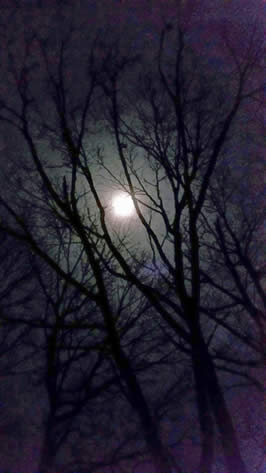
Full Moon / M. Daimler
I recently read a wonderful blog by Asa West called Priestessing Depression and it started a discussion among a group of my friends on social media. The question was raised by a couple people of why, exactly, we would want to give attention to negative emotions and that ended up inspiring this blog.
People who know me know that I often express concern about the imbalance I perceive in modern spiritual paths that put all their focus and emphasis on the positive and the light, to the exclusion or vilification of the negative and the dark. I’ve written a bit on my own personal blog about the value of the darkness and of my own path as a witch who doesn’t shy away from darker things. This has spurred several jokes, very tongue in cheek, including the parting blessing of ‘darkness and courage’ instead of love and light. Don’t get me wrong I’m not saying that the light is bad, or that darkness is better, but rather that any extreme can be unhealthy particularly when the other end of the spectrum is turned into an irredeemable negative. There is always both negative and positive in all parts of the spectrum of witchcraft. I’m all in favor of people choosing what works for them, light, gray, or dark. What worries me is people who try to totally ignore the other end of the spectrum in favor of their own.
In many forms of witchcraft there is an acknowledgment of what is called the Shadow or the shadow self, that part of ourself that holds the things we fear and the aspects of ourself that we have rejected. Our anger, our jealousy, our bitterness, our misery, our terror, our insecurities, these are all the bones of our Shadow. Our Shadow is, in short, everything that most of us like to pretend we aren’t. We create our Shadow out of the bits of ourself that we are taught are ugly and unacceptable; we build our Shadow piece by piece out of our own pain. It is as much a part of us, and as intrinsically a part of us, as our positive feelings. We are too often taught to reject our Shadow, to disown it – don’t be angry, don’t envy, don’t hate – but we don’t do it in a healthy way. We don’t move through those feelings, embrace them, understand them and let them go, no we simply try to shove them away.

Ritual Fire at Harvest Gathering 2015 / M. Daimler
In my experience, many pagans seem to think that positive emotions = success and negative emotions = failure in a spiritual sense. I disagree. Both are part of the human experience. You can’t idolize one while demonizing the other or you have created an impossible imbalance, because for the vast majority of us experiencing both types of emotions is a daily inevitability. We will be happy and we will be sad, and when we judge one as success and one as failure then we are adding to our own sadness by telling ourself that feeling it is a failure, when it is simply being human. Everyone is sad sometimes. Everyone is angry. Everyone has moments of envy or jealousy (okay maybe not the Dalai Lama, but almost everyone anyway). Being human isn’t failing at spirituality – if anything I’d say understanding what it means to be human is part of the point. And there is a real risk with this mindset that we are creating an idea that if being sad or depressed is failing spiritually people will be even less likely to seek help when they need it for clinical depression and that really worries me; we as a community should be a support for people who need help, not an additional barrier creating unrealistic expectations of perfect happiness 24/7. Spirituality should make your life better, ultimately, not worse.
Sometimes the healthiest thing for us is to let ourselves acknowledge that we are sad, angry, or jealous. Depression doesn’t go away if we just ignore it hard enough. I actually find it concerning that I see so much emphasis on only appreciating the positive among many modern pagans. Its great to be happy and its great to forgive, but its also alright to be angry when you are hurt, or sad when life is hard. Its even alright to be sad when life isn’t hard. And I think we need to say that more often to each other, that its alright to celebrate the good things but its also alright to express the bad. You aren’t a failure spiritually just because you are jealous or angry, although certainly what you do with those emotions matters – talking about them is healthy, acknowledging them is healthy, but acting them out usually isn’t (although I find people act on negative emotions most often when they are trying not to admit they have them). Although I will say some well placed righteous rage can be a thing of beauty and can move mountains when mountains need moving. From a spiritual perspective, in my opinion, understanding these negative emotions, the things that cause us shame and pain, allows us to be more empathetic and understanding of others because it lets us see the ways that we all share those same feelings at some point in our lives. We are all afraid, we are all angry, we all wish we had something someone else has, we all worry about losing what we do have, we are all sad sometimes, these are normal feelings.

Two Beeches, dark and light / M. Daimler
I like being happy and joyful and all of that positive emotional stuff but I also understand that feeling sad and angry is human. I worry about the message that we shouldn’t feel those things or that feeling them is somehow bad or wrong, because like repression denial of what we feeling only creates a bigger problem in the long run. How often do I see people being told not to complain because someone, somewhere has it worse? How often do I see people being told not to dwell on the negative but to focus on the positive? Too often, I think. And being told not to express those emotions doesn’t make them go away, it just makes us hide them and feel worse about ourselves for feeling them in the first place. Just because someone else has a harder life doesn’t mean that I may not really be feeling bad myself, and there is value in acknowledging and expressing that. We can’t work through and let go of the negative emotions that otherwise can poison us if we bury those emotions and pretend they aren’t there. Certainly we shouldn’t dwell too obsessively on only the negative, because that’s a rabbit hole of its own, but ignoring our negative emotions doesn’t make them disappear, and ignore our Shadow doesn’t overcome it. Only acknowledging it and accepting it for what it is – admitting that we do have those feelings and that its okay to have them, that it makes us just like everyone else – can free us from it. Repressing our shadow side only empowers it and makes it dangerous to us because it takes control away from us. If we don’t own it, it will most certainly own us.
I believe that there is value in our Shadow because it is often where our most primal feelings are. Our instinct to fight or flight, our primal urges, our deep down gut feelings, live in our Shadow. It is not rational, only emotional, but that is its power. In magic your Shadow can be very powerful indeed if you understand its motivations. In life your Shadow ultimately is the key to your happiness, if you can integrate it and make peace with it. We have to stop trying to shove our Shadow away and instead embrace it and let it be part of us again.
In the end there is nothing to fear within our own darkness if we just turn and face it.

Click here to like
Patheos Pagan on Facebook.

Click here to like
the Agora on Facebook
Irish-American Witchcraft is published bi-monthly on Tuesdays here on the Agora. Subscribe via RSS or e-mail!
Please use the links to the right to keep on top of activities here on the Agora as well as across the entire Patheos Pagan channel.
Previous Post
February 1, 2016
Seeking the Grail: Creativity, Inspiration, and Obsession
Next Post
February 3, 2016 Dandelion Seeds: Devotional Techniques from the Heartbreak Trenches
Browse Our Archives
Select a Category A Lakeside Hearth Adventures in Wortcunning Alone In Her Presence Arts, Crafts & Cooking Birthing Hereditary Witchcraft Book of Blackbirds Book Reviews Born-Again Witch Cauldron, Sword, Spear, & Stone Cermony and Liturgy Columns Community Dandelion Seeds Dear Jasmine Druid Thoughts Editor's Picks Everyday Pagan Family & Household Practice Family Traditions Full Frontal Magic Gateway Goddess Guest Articles Happily Heathen Health and Wellness Hearth of Hellenism Heathen Woman Hills of the Horizon History Holidays Horse Goddesses Interfaith Interviews Irish-American Witchcraft Jewish Witch Lamp & Labyrinth Letters from Midgard Literature, Media, Film, Music Loop of Brighid Love, Sex & Relationships Magic or Magick Making Light Naturalistic Traditions Nature News Outside The Circle Pantheisticon Politics Prayers, Poems, Blessings & Stories Queer Femme Mystic Queer of Swords Recipes Ritual and Practice Science and Research Seekers and Guides Seeking the Grail Socially Responsible Magic Spear of Athena Star Made Witch Syncretic Electric Technology The Blooming Staff The Busy Witch The Cartomancer The Crow's Nest The Dance of Pagan Recovery The Hearth of Hellenism The Lady's Quill The Other Side of the Hedge The Path of She The Rantin' Raven The Witches Next Door The Zen Pagan Theology, Ethics, Philosophy Tree City Witch Urban Earthwitch Wayfaring Woman Witch on Fire Wyrd Words
Select a Month January 2026 March 2025 December 2024 June 2024 April 2024 March 2024 January 2024 December 2023 November 2023 October 2023 August 2023 July 2023 May 2023 April 2023 March 2023 February 2023 January 2023 December 2022 November 2022 October 2022 September 2022 August 2022 July 2022 June 2022 May 2022 March 2022 February 2022 January 2022 December 2021 November 2021 October 2021 September 2021 August 2021 July 2021 June 2021 May 2021 April 2021 March 2021 February 2021 January 2021 December 2020 November 2020 October 2020 September 2020 August 2020 July 2020 June 2020 May 2020 April 2020 March 2020 February 2020 January 2020 December 2019 November 2019 October 2019 September 2019 August 2019 July 2019 June 2019 May 2019 April 2019 March 2019 February 2019 January 2019 December 2018 November 2018 October 2018 September 2018 August 2018 July 2018 June 2018 May 2018 April 2018 March 2018 February 2018 January 2018 December 2017 November 2017 October 2017 September 2017 August 2017 July 2017 June 2017 May 2017 April 2017 March 2017 February 2017 January 2017 December 2016 November 2016 October 2016 September 2016 August 2016 July 2016 June 2016 May 2016 April 2016 March 2016 February 2016 January 2016 December 2015 November 2015 October 2015 September 2015 August 2015 July 2015 June 2015 May 2015 April 2015 March 2015 February 2015 January 2015 December 2014 November 2014 October 2014 September 2014 August 2014 July 2014 June 2014 May 2014 April 2014 March 2014 February 2014 January 2014 December 2013 November 2013 October 2013 September 2013 August 2013 July 2013 June 2013 May 2013 April 2013 March 2013 February 2013 January 2013 December 2012 November 2012 October 2012 September 2012 August 2012 July 2012 June 2012 May 2012 April 2012 March 2012 February 2012 January 2012
Follow Us!
TAKE THE
Religious Wisdom Quiz
Jesus drove the merchants and money-changers out of the temple with this.
Select your answer to see how you score.
Sword Stool Stick Scourge
Related posts from Agora

Simple Witchery: To Keep Silent

Simple Witchery: Leaning On The Four Pillars


Simple Witchery: Resistance and Resilience in Hard Times
TRENDING AT PATHEOS Pagan

I was recently chatting with someone on Instagram. She asked me what...

While there are many people who share their results, the end of...

On July 23, I saw Christopher Nolan's The Odyssey which is Homer’s...

As I write this two big events have just finished up. One...

Restoring the Watershed of Divine Love
Perhaps cooperation is not something we manufacture through legislation, ideology, or moral...

Many UUs don’t pray because of bad experiences in a previous religion,...
view all Pagan blogs
Ad-Free & Subscriber Log-In Subscription Support
- About Us
- 2026 Calendar
- Videos
- Podcasts
- Library of World Religions
- Faith In Media Tracker
- Advertise With Us
- Write for Us
- Privacy Policy
- Terms of Service
- Do Not Sell My Data
- Contact Us
- Radiant Digital
- Manage Newsletter Subscriptions
- Unsubscribe From Notifications
- Sitemap
Copyright 2008-2026, Patheos. All rights reserved.
Subscription Support Ad-Free & Subscriber Log-In
Follow Patheos