
BuddhistCatholicContemplativeEvangelicalGeneral ChristianHinduJewishLatter-day SaintMuslimNew VisionsProgressive Christian
Beliefs
- Buddhist
- Catholic
- Contemplative
- Evangelical
- General Christian
- Hindu
- Jewish
- Latter-day Saint
- More Voices
- Muslim
- New Visions
- Pagan
- Progressive Christian
Topics
- Religion News
- Food and Religion
- Sports and Religion
- Religious Art
- Religious Music and Entertainment
- Religious Events
- History and Religion
- Style and Religion
- Politics and Religion
- Women in Religion
- Recreation Outdoors and Religion
- Business Finance and Religion
- Careers Workplace and Religion
- Education and Religion
- Family Parenting and Religion
- Health Fitness and Religion
- Home and Religion
- Relationships and Religion
- Technology and Religion
- Travel and Religion
Columnists
- Buddhist Columnists
- Business Finance and Religion Columnists
- Careers Workplace and Religion Columnists
- Catholic Columnists
- Contemplative Columnists
- Education and Religion Columnists
- Evangelists Columnists
- Family Parenting and Religion Columnists
- General Christian Columnists
- Health Fitness and Religion Columnists
- Hindu Columnists
- History and Religion Columnists
- Home and Religion Columnists
- Jewish Columnists
- More Voices Columnists
- Latter Day Columnists
- Muslim Columnists
- New Visions Columnists
- Nonreligious Columnists
- Pagan Columnists
- Politics and Religion Columnists
- Progressive Columnists
- Recreation Outdoors and Religion Columnists
- Relationships and Religion Columnists
- Religion News Columnists
- Religious Art Columnists
- Religious Events Columnists
- Religious Music and Entertainment Columnists
- Sports and Religion Columnists
- Style and Religion Columnists
- Technology and Religion Columnists
- Travel and Religion Columnists
- Women in Religion Columnists
Resource Library
- 2026 Calendar
- Library of World Religions
- The 100 Most Holy Places on Earth
- Patheos Answers
- Podcasts
- Videos
- Faith Leaders Database
- Anglican Episcopalian
- Bahai
- Baptist
- Buddhism
- Christianity
- Confucianism
- Eastern Orthodoxy
- Hinduism
- Holiness and Pentecostal
- ISKCON
- Islam
- Judaism
- Lutheran
- Methodist
- The Church of Jesus Christ of Latter-day Saints
- New Age
- Paganism
- Presbytarian and Reformed
- Protestantism
- Religion Behind the Scenes
- Roman Catholic
- Scientology
- Shia Islam
- Sikhism
- Sufism
- Sunni Islam
- Taoism
- Zen
- See all religions
Research Tools
 Ad-Free & Subscriber Log-In Subscription Support
Ad-Free & Subscriber Log-In Subscription Support
Follow Patheos 

- Trending:
- Forgiveness
- |
- Marriage
- |
- Consciousness
- |
- Death Penalty
- |
- Election
- |
- Halloween

- Home
- Pagan
- The Rantin’ Raven: Celebrations of Fire and Ice
The Rantin’ Raven: Celebrations of Fire and Ice
Last updated on: January 31, 2017 at 7:27 pm by Dana Corby
The Rantin’ Raven: Celebrations of Fire and Ice 2017-01-31T19:27:26+00:00 Dana Corby
Patheos Explore the world's faith through different perspectives on religion and spirituality! Patheos has the views of the prevalent religions and spiritualities of the world.
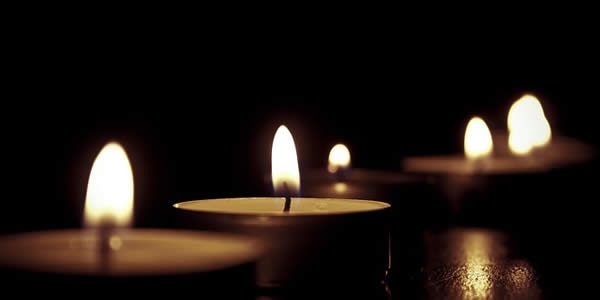
Of all the festivals of the Pagan year, Imbolc, February 2, is the most complex, the most mystical. Like the other three “Cross Quarter” days (Beltain, Lammas and Samhain), Imbolc is a festival of fire, but the fires it kindles are not quite of this world.
The Lady is invoked at Imbolc as Brigid, or Bride (pronounced “Breed” in the Irish). She has always been a most beloved figure of Celtic paganism. During the long conversion to Christianity, it was said that, having Brigid, the Irish did not need Mary. Brigid was held by most Irish to have been the foster-mother of Christ. Unable to extirpate the worship of Brigid, the medieval churchmen canonized an abbess of the same name and made Imbolc her name-day. She was renowned for piety (of course), but also for learning, for healing, and for taking no nonsense from men. Folk tales of St. Brigid include her outwitting a king who tried to cheat her out of land he’d promised for the building of an abbey, and out-debating St. Patrick himself when he tried to tell her what she could and could not do. Legends also say she could turn her bath-water into beer! Like her namesake, St. Brigid is associated with fire, with holy healing wells, and with the symbol of the equal-armed Celtic cross.

“Saint Brigid’s cross” by Culnacreann – Own work. Licensed under CC BY 3.0 via Commons.

There are three aspects to Brigid, who was herself one of three Personalities of the Goddess in Irish myth: Brigid, Dana and Morrigu. There is Brigid of the Smiths, Brigid of the Healers, and Brigid of the Poets. Smithcraft, healing and poetry were all considered manifestations of fire by the Celts, and of the three, poetry was the most powerful, being highest on the ascending levels of material, mental, and spiritual.
Brigid of the Smiths was patroness of those who crafted the star-metal, iron. The transmutation of raw ore into iron and iron into artifacts was an alchemy of the deepest and most secret sort for many centuries, and its practitioners were mighty magicians. Their power also expressed itself as extreme sexual vigor, and many bawdy British folk songs, like “The Coal-Black Smith” and “The Two Magicians” can be traced back at least as far as the Saxon Smith-God, Wayland. Shape-changing also figures in smith-lore, as is appropriate to those who create in the material realm, and to Brigid, the Lady of many transformations. By extension, Brigid’s patronage of smiths extends to other artificers, especially those who make useful rather than purely artistic things.
Brigid of the Healers is still quite well known, not only in literature but in the lives of generations of Irish countryfolk. According to Stewart and Janet Farrar, who lived in Ireland, the country people still leave rags and ribbons tied to the bushes around Brigid’s holy wells as an offering for healing. That a goddess of fire should also be associated with water (specifically wells) seems strange until we recall that for millennia most medicines were home-brewed herbal concoctions. Fire and water married in their making, but it was intelligence ¾ mental fire ¾ which made the difference between a healer and an accidental poisoner.
Brigid of the Healers is also called Bride, as such She is invoked on Imbolc to bring fertility to the slowly awakening earth. The transformation from Healer to Bride comes through the process of logical extension: healing = life = fertility (more life).
All over the world, Bride images were (and are still) made of grain in the stalk, or of reeds, and are dressed as for a wedding and “put to bed.” A male image such as a club or sword may be put to bed with the Bride, or a door may be left ajar so that the Bridegroom may come to Her. According to the Farrars, quoting still other writers, this rite is still considered indispensable in isolated parts of Ireland and Scotland.
Bride seems almost to form a fourth aspect to the traditional Triple Goddess: She starts the Rite as the Maiden but at its end She is still not quite the Mother. She is the Bride, a state which is caught out of time during the process of transformation, which partakes of both Maiden and Mother but is neither. Like Her own fire (a hearthfire this time), Her power is real and tangible, but She Herself, ever changing, cannot be touched.
Brigid of the Poets is the most untouchable of all. In Her the fire burns with the cold ferocity of dry ice, the chill radiance of the stars. This is Robert Graves’s “Leprous White Lady,” beautiful, willful, demanding, yet rewarding to the poet whose verses do Her honor. She is the nine muses rolled into one Muse, the Triple Goddess in one Person, showing now this aspect, now that, at Her own choosing. Her fire enflames the soul, Her image is that deepest ideal which alternately lures us and drives us onward to our artistic and spiritual goals. She rewards us with incredible sweetness when we meet Her expectations, yet She demands our very best, always, and greets our failures with icy scorn and the expectation that we get up and try again. But even She does not demand the impossible. She demands each person’s best, but understands that that “best” can never be as perfect as She is. It is the striving that makes one worthy of Her, not necessarily the reaching of the goal. Read W.B. Yeats’s “Song of the Wandering Aengus” to understand the power of Brigid the Muse. “I went out into the wood”, he writes, “because a fire was in my head…” A perfect description of a poet, a crafter of spiritual fire, with writer’s block.
Imbolc has other facets, and other names, besides Brigid. The names “Lady Day” and “Candlemas” have been adopted by Pagans from the Christianized versions of the Sabbat. They sound pretty and convey a fine sense of what the holiday is all about. As Candlemas, however, the ritual centers on the growing light, and features the beautiful “Lucia Crown.” Candlemas is custom-made for family Paganism.
St. Lucy’s Day is primarily celebrated in Scandinavia. It was originally held at about February 1, but has been moved closer to Christmas, possibly because Christmas, too, is a festival of light, and possibly because of all the strange changes the calendar went through during the Middle Ages and Renaissance. On St. Lucy’s Day the youngest girl in the family (i.e. the “maiden of the house”) rises before dawn and, wearing a long white gown and a coronet of lighted candles, takes breakfast in to her parents in bed. There is a hokum legend to explain the custom, about a maiden named Lucy or Lucia who was canonized for her filial piety, but almost everyone recognizes that Lucia is far older than Christ .
The name Lucia is a feminine form of the Latin word for light, lux. We can see, then, that the festival of St. Lucia is all that remains of an ancient mystery play. The virgin maiden plays the personification of the principle of light which, while growing, is still very young at this time of year. She brings food to her parents to show that the new grows out of and honors the old, and she brings specifically breakfast (break-fast) to show that the winter famine will soon be over. And she comes gowned in white for purity and crowned in living flame, to show that all things have been renewed, all souls reborn from the winter’s dark womb to the light of the sun and stars.
Imbolc, like most things in Pagan theology, is part of a pair of opposites. Imbolc is the opposite, the “anti-twin”, of Lammas. They imply each other as surely as “heads” implies “tails.” For a moment, let’s consider Lammas.
Lammas, occurring on August eve, is the first of three great harvest festivals, as Imbolc is the first of three fertility rites. In most areas, though, about the only things being harvested yet are table vegetables and hay. The grain crops, about which so much harvest lore is entwined, are still green. Yet here we have songs and rituals insisting that “John Barleycorn must die”, and myths of the death of Liew Llaw Gyffs, and some pretty graphically bloody tales to back it all up. Why?
Because each pole of a dyad contains the germ of its opposite.
Our Lady is not just the Goddess of life and death, but of “Life-in-Death and Death-in-Life”. In the midst of seemingly inexhaustible life and boundless plenty, at Lammas, we are reminded that death is. It keeps us humble before the miracle.
So it is with Imbolc. February is just about the coldest, windiest, rottenest time of the year. Yet in the midst of ice and seeming death, we are reminded that life is. Tentatively, delicately, the crocuses push their pale-green spears through the ice and frozen earth; tentatively, inexorably, the dawn comes earlier and earlier. It keeps us joyful before the miracle.
Celebrating Imbolc is an act of faith. It is a saying to the Lady, and to ourselves, “I believe in Spring; I believe in the Light; I believe that the good times will come once more.” Celebrating Imbolc is a promise to yourself and to the Goddess to manifest Life and Light , whether by the arts of the Smith, the Healer, or the Poet.
And by our will, SO MOTE IT BE.
Lucia Crown
To make a Lucia Crown, lay a strip of masking tape face up on a table. You might want to pin it down every so often to keep it from wiggling while you work with it. Now take from five to thirteen birthday candles (one for each year of the girl’s age is nice) and stick them to the tape with the bottom of each candle even with one edge of the tape and the rest of the candle laying across the tape and over the other side.
Now take more tape ¾ several short lengths will work better than one long one ¾ and cover the candles and all the exposed sticky tape. You now have a candle and tape “sandwich” that can be trimmed to the size of the little girl’s head and secured at the back with more tape. Cover her head with plastic wrap to keep the wax out of her hair, and be sure to secure everything with lots of bobby pins.
Irish Soda Bread
Irish soda bread, a delicious scone-like loaf, is traditionally baked in the shape of the Celtic Cross, sacred to Brigid.
2 C. unsifted flour (all white or half whole wheat)
3 T. sugar
½ tsp. salt
2 tsp. baking powder
1 tsp. baking soda
3 T. butter, softened
1 C. buttermilk Optional Ingredients
Currants; or
raisins; or
chopped dried fruit; or
caraway seeds
- Preheat the oven to 375°; grease a small baking sheet.
- Combine all dry ingredients, tossing with a fork to blend.
- Cut in the butter until the whole thing looks sort of like cracker crumbs; add any optional ingredients now, to taste.
- Add the buttermilk and mix with a fork just until blended.
- Turn out onto a lightly floured board. Knead gently just until smooth and elastic; this will only take a minute or two.
- Form the dough into a disk about 1½” thick and transfer gently to the baking sheet.
- Flour a large knife. Press it into the dough about halfway through; repeat, at right angles to the first cut.
- Bake for 30 to 40 minutes, or until the crust is golden brown and the loaf sounds hollow when thumped.
- Remove to a wire rack, lightly butter the top while still quite warm, and serve either slightly warm or at room temperature. With hot, strong tea, of course.
References
- The White Goddess by Robert Graves
- Dea Nymphae Brigantiae byColin Murray
- Eight Sabbat for Witches by Stewart & Janet Farrar
- The Feast of Brighid by The Fellowship of the Four Jewels (Aodh Ruad & Meadhbh)
- The Celtic Twilight by W.B. Yeats
- Hy Breasel Coven

Click here to like
Patheos Pagan on Facebook.

Click here to like
the Agora on Facebook
The Rantin’ Raven is published on alternate Saturdays here on the Agora. Subscribe via RSS or e-mail!
Please use the links to the right to keep on top of activities here on the Agora as well as across the entire Patheos Pagan channel.
Previous Post

January 15, 2016
Adventures in Wortcunning: A Writer’s Rendezvous
Next Post

January 18, 2016 Seeking the Grail: Anxiety and Body Image
Browse Our Archives
Select a Category A Lakeside Hearth Adventures in Wortcunning Alone In Her Presence Arts, Crafts & Cooking Birthing Hereditary Witchcraft Book of Blackbirds Book Reviews Born-Again Witch Cauldron, Sword, Spear, & Stone Cermony and Liturgy Columns Community Dandelion Seeds Dear Jasmine Druid Thoughts Editor's Picks Everyday Pagan Family & Household Practice Family Traditions Full Frontal Magic Gateway Goddess Guest Articles Happily Heathen Health and Wellness Hearth of Hellenism Heathen Woman Hills of the Horizon History Holidays Horse Goddesses Interfaith Interviews Irish-American Witchcraft Jewish Witch Lamp & Labyrinth Letters from Midgard Literature, Media, Film, Music Loop of Brighid Love, Sex & Relationships Magic or Magick Making Light Naturalistic Traditions Nature News Outside The Circle Pantheisticon Politics Prayers, Poems, Blessings & Stories Queer Femme Mystic Queer of Swords Recipes Ritual and Practice Science and Research Seekers and Guides Seeking the Grail Socially Responsible Magic Spear of Athena Star Made Witch Syncretic Electric Technology The Blooming Staff The Busy Witch The Cartomancer The Crow's Nest The Dance of Pagan Recovery The Hearth of Hellenism The Lady's Quill The Other Side of the Hedge The Path of She The Rantin' Raven The Witches Next Door The Zen Pagan Theology, Ethics, Philosophy Tree City Witch Urban Earthwitch Wayfaring Woman Witch on Fire Wyrd Words
Select a Month January 2026 March 2025 December 2024 June 2024 April 2024 March 2024 January 2024 December 2023 November 2023 October 2023 August 2023 July 2023 May 2023 April 2023 March 2023 February 2023 January 2023 December 2022 November 2022 October 2022 September 2022 August 2022 July 2022 June 2022 May 2022 March 2022 February 2022 January 2022 December 2021 November 2021 October 2021 September 2021 August 2021 July 2021 June 2021 May 2021 April 2021 March 2021 February 2021 January 2021 December 2020 November 2020 October 2020 September 2020 August 2020 July 2020 June 2020 May 2020 April 2020 March 2020 February 2020 January 2020 December 2019 November 2019 October 2019 September 2019 August 2019 July 2019 June 2019 May 2019 April 2019 March 2019 February 2019 January 2019 December 2018 November 2018 October 2018 September 2018 August 2018 July 2018 June 2018 May 2018 April 2018 March 2018 February 2018 January 2018 December 2017 November 2017 October 2017 September 2017 August 2017 July 2017 June 2017 May 2017 April 2017 March 2017 February 2017 January 2017 December 2016 November 2016 October 2016 September 2016 August 2016 July 2016 June 2016 May 2016 April 2016 March 2016 February 2016 January 2016 December 2015 November 2015 October 2015 September 2015 August 2015 July 2015 June 2015 May 2015 April 2015 March 2015 February 2015 January 2015 December 2014 November 2014 October 2014 September 2014 August 2014 July 2014 June 2014 May 2014 April 2014 March 2014 February 2014 January 2014 December 2013 November 2013 October 2013 September 2013 August 2013 July 2013 June 2013 May 2013 April 2013 March 2013 February 2013 January 2013 December 2012 November 2012 October 2012 September 2012 August 2012 July 2012 June 2012 May 2012 April 2012 March 2012 February 2012 January 2012
Follow Us!
TAKE THE
Religious Wisdom Quiz
What did Nehemiah rebuild in Jerusalem amid much opposition?
Select your answer to see how you score.
The city wall The palace The tower of Siloam The Temple
Related posts from Agora

Simple Witchery: To Keep Silent

Simple Witchery: Leaning On The Four Pillars

Pergamum Unfurled: Magic with the Greek Gods (Book...

Pergamum Unfurled: Cunning Words (Review)
TRENDING AT PATHEOS Pagan

I was recently chatting with someone on Instagram. She asked me what...

While there are many people who share their results, the end of...

On July 23, I saw Christopher Nolan's The Odyssey which is Homer’s...

As I write this two big events have just finished up. One...

Restoring the Watershed of Divine Love
Perhaps cooperation is not something we manufacture through legislation, ideology, or moral...

Many UUs don’t pray because of bad experiences in a previous religion,...
view all Pagan blogs
Ad-Free & Subscriber Log-In Subscription Support
- About Us
- 2026 Calendar
- Videos
- Podcasts
- Library of World Religions
- Faith In Media Tracker
- Advertise With Us
- Write for Us
- Privacy Policy
- Terms of Service
- Do Not Sell My Data
- Contact Us
- Radiant Digital
- Manage Newsletter Subscriptions
- Unsubscribe From Notifications
- Sitemap
Copyright 2008-2026, Patheos. All rights reserved.
Subscription Support Ad-Free & Subscriber Log-In
Follow Patheos