
BuddhistCatholicContemplativeEvangelicalGeneral ChristianHinduJewishLatter-day SaintMuslimNew VisionsProgressive Christian
Beliefs
- Buddhist
- Catholic
- Contemplative
- Evangelical
- General Christian
- Hindu
- Jewish
- Latter-day Saint
- More Voices
- Muslim
- New Visions
- Pagan
- Progressive Christian
Topics
- Religion News
- Food and Religion
- Sports and Religion
- Religious Art
- Religious Music and Entertainment
- Religious Events
- History and Religion
- Style and Religion
- Politics and Religion
- Women in Religion
- Recreation Outdoors and Religion
- Business Finance and Religion
- Careers Workplace and Religion
- Education and Religion
- Family Parenting and Religion
- Health Fitness and Religion
- Home and Religion
- Relationships and Religion
- Technology and Religion
- Travel and Religion
Columnists
- Buddhist Columnists
- Business Finance and Religion Columnists
- Careers Workplace and Religion Columnists
- Catholic Columnists
- Contemplative Columnists
- Education and Religion Columnists
- Evangelists Columnists
- Family Parenting and Religion Columnists
- General Christian Columnists
- Health Fitness and Religion Columnists
- Hindu Columnists
- History and Religion Columnists
- Home and Religion Columnists
- Jewish Columnists
- More Voices Columnists
- Latter Day Columnists
- Muslim Columnists
- New Visions Columnists
- Nonreligious Columnists
- Pagan Columnists
- Politics and Religion Columnists
- Progressive Columnists
- Recreation Outdoors and Religion Columnists
- Relationships and Religion Columnists
- Religion News Columnists
- Religious Art Columnists
- Religious Events Columnists
- Religious Music and Entertainment Columnists
- Sports and Religion Columnists
- Style and Religion Columnists
- Technology and Religion Columnists
- Travel and Religion Columnists
- Women in Religion Columnists
Resource Library
- 2026 Calendar
- Library of World Religions
- The 100 Most Holy Places on Earth
- Patheos Answers
- Podcasts
- Videos
- Faith Leaders Database
- Anglican Episcopalian
- Bahai
- Baptist
- Buddhism
- Christianity
- Confucianism
- Eastern Orthodoxy
- Hinduism
- Holiness and Pentecostal
- ISKCON
- Islam
- Judaism
- Lutheran
- Methodist
- The Church of Jesus Christ of Latter-day Saints
- New Age
- Paganism
- Presbytarian and Reformed
- Protestantism
- Religion Behind the Scenes
- Roman Catholic
- Scientology
- Shia Islam
- Sikhism
- Sufism
- Sunni Islam
- Taoism
- Zen
- See all religions
Research Tools
 Ad-Free & Subscriber Log-In Subscription Support
Ad-Free & Subscriber Log-In Subscription Support
Follow Patheos 

- Trending:
- Forgiveness
- |
- Marriage
- |
- Consciousness
- |
- Death Penalty
- |
- Election
- |
- Halloween

- Home
- Pagan
- The Rantin’ Raven: Yule – The Turning of the Wheel
The Rantin’ Raven: Yule – The Turning of the Wheel
Last updated on: January 31, 2017 at 7:27 pm by Dana Corby
The Rantin’ Raven: Yule – The Turning of the Wheel 2017-01-31T19:27:28+00:00 Dana Corby
Patheos Explore the world's faith through different perspectives on religion and spirituality! Patheos has the views of the prevalent religions and spiritualities of the world.
[Author’s Note: Originally written for an Outer Court class, sometime in the late 80s or early 90s. Feel free to use it for your own classes, with attribution, of course.]
Though originally considered one of the less important Quarter Days, which in some of the older Traditions were not mentioned at all, Yule has become dearly beloved to modern Pagans. Its proximity and mythical similarity to the holidays celebrated at this time by our culture’s majority, Christians, give it a familiarity and comfort all out of proportion to its Wiccan significance.
Those of us who choose to follow that spiritual “different drummer” give up a lot. We set ourselves apart from most of the things by which most people define themselves. Our life’s rhythm alters, so that we no longer live Sunday-to-Sunday, like those around us, but Moon-to-Moon and Sabbat-to-Sabbat. Our sense of what is important changes even more drastically, with the coven and the community ― and the Gods ― becoming our primary focus.
Our families, if they don’t disown us or set the deprogrammers on our trail, view us with at most amused toleration, and at least total befuddlement. What we’re doing makes little sense to them. What they’re doing makes little sense to us. We’re never around when they want us to join family gatherings. And if we are we’re weird, not quite in sync with everyone else.
Except at Yule.
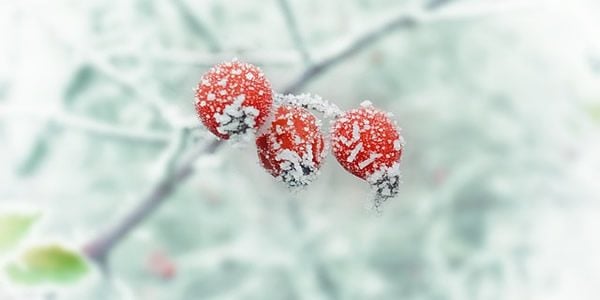
At Yule, we can step, however briefly, back into the mainstream, back into the fold. Best of all, we can do so in the slightly smug assurance that it is they who are being Pagan―however unwittingly ― not we who have lapsed.
Most of the customs of Christmas, and practically the entire myth, originated with Paganism. The Saxon/Norse name for the Winter Solstice, Yule, remained an alternative name for the festival well into the 19th century, and was not really abandoned until after WII. The word means “Wheel” and refers both to the turning of the year-wheel and the old custom of binding straw to wagon wheels (sans wagon), lighting them, and setting them rolling downhill in an ancient act of sympathetic magic to encourage the Sun’s return. In parts of Scandinavia, so I’m told, it is still an important part of the public Yule celebration.
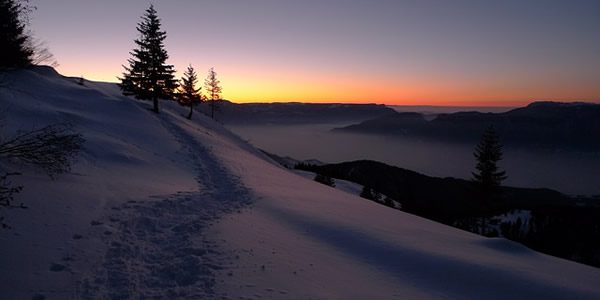
The relative un-importance of the Winter Solstice in the British Traditional stream of modern Wicca is puzzling. The return of the Sun, and with it life and light, was of the utmost importance in both herding and agrarian cultures. Especially in the North, where food supplies were usually both scarce and of poor quality in the winter, the return of the Sun marked the promise of a return of fertility not only for plants and animals but for humans.
As we are rediscovering in this era of the “lean & mean” look for women as well as men, malnourished women, especially when they continue to physically exert themselves, cease to menstruate. So it is not surprising that the Winter Solstice, with its magical rites to encourage the Sun’s return, began to be celebrated quite early in history, and has continued to be. We may not still lose our fertility in the winter, but the fear of it is in our genes. They call it “seasonal affective disorder”.
The Romans called the festival of the Sun’s return “Dies Natalis Sol Invictis” ― the birthday of the unconquered Sun. The newborn Sun was pictured as a radiant babe cradled in the arms of the ever-fertile, ever-virgin Magna Mater. By late Imperial times the imagery was almost entirely that of Isis and the child Horus, and remained so when the names of the mother and child changed to Mary and Jesus.
As they did with everything else that reminded them of home, the Roman legions carried their winter festival with them to their colonies. The myth of the new-born Sun Child made perfect sense to the sophisticated theologians we now call Druids, so they added it to their own myths. It’s said this is one of the reasons Christianity why did not need to be imposed in Ireland by the sword.
Another Yule myth popular with today’s Pagans is that of the Two Kings. As at Summer Solstice, Yule marks the supplanting of the King (or God) of half the year by his father/son/twin. Unlike the myth of Litha, though, at Yule it is not so much a battle as the willing sacrifice (or retirement, depending on whose version of the myth you have) of the Dark God, the Holly King, in favor of the Bright God or Young God, the Oak King.

“Goldcrest 1” by © Francis C. Franklin / CC-BY-SA-3.0. Licensed under CC BY-SA 3.0 via Commons.

In some areas, the Holly King was symbolized by the gold-cap wren, a bird of the winter forests, which was ritually hunted and shot. Originally, it was probably then eaten. In other areas, the most perfect evergreen tree in the nearby woods was cut down, re-erected in the village square and decked beautifully to represent the death and rebirth of the God. The ornaments were chosen to represent the Sun, Moon, and Stars; or light in general.
As the two myths, that of the Sun Child and that of the Two Kings, merged in the popular imagination, the resulting synthesis was much like the imagery which now surrounds New Year’s eve: the ancient, worn out Old Year (himself a survival of the Roman Saturn) shuffling off to oblivion, making room for the bouncing infant New Year. Though we may shudder at this descent into kitsch, it is a fairly good representation of what really happens.
The ancients had a much better grasp than we do of the fact that the world is finite. If that which has outlived its usefulness does not make way, nothing new can come into existence. If the stubble did not rot in the fields, there would be no room for the seed to take root; it would not grow, and we would starve. If the lead bull, the king stallion, the champion stag did not let himself be driven away by a young challenger when he was past his prime, the viability of the entire herd would suffer. Even among those predators which live in groups ― wolves and lions for instance ― the leader usually allows himself to be defeated and replaced when he grows old, rather than fight to the death (though that sometimes happens, too). There is a grace about it, a noble acceptance of the inevitability of change. Graceful or resisted, the change will happen.
Once more, we celebrate Death in the service of Life. But more than that, we celebrate the Life hidden within the appearance of death all around us. We feast, though we cannot be sure that our food will last until Spring. We exchange gifts, reaffirming the preciousness of our relationships, though we cannot know for certain who may survive the cold months to come. And we make fires and splendid lights of all kinds in celebration of the growing Light, as encouragement to the infant Sun. The changing -of-the-guard of Yule is a change within continuity, part of the cycle of waxing and waning, growth and decay, that goes on forever. And at no time is it more gracious, more joyful, than at Yule.

Click here to like
Patheos Pagan on Facebook.

Click here to like
the Agora on Facebook
The Rantin’ Raven is published on alternate Saturdays here on the Agora. Subscribe via RSS or e-mail!
Please use the links to the right to keep on top of activities here on the Agora as well as across the entire Patheos Pagan channel.
Previous Post

December 16, 2015
Dandelion Seeds: Leaning Into the Solstice Darkness
Next Post

December 20, 2015 The Other Side of the Hedge: Why Is Yule like The Force?
Browse Our Archives
Select a Category A Lakeside Hearth Adventures in Wortcunning Alone In Her Presence Arts, Crafts & Cooking Birthing Hereditary Witchcraft Book of Blackbirds Book Reviews Born-Again Witch Cauldron, Sword, Spear, & Stone Cermony and Liturgy Columns Community Dandelion Seeds Dear Jasmine Druid Thoughts Editor's Picks Everyday Pagan Family & Household Practice Family Traditions Full Frontal Magic Gateway Goddess Guest Articles Happily Heathen Health and Wellness Hearth of Hellenism Heathen Woman Hills of the Horizon History Holidays Horse Goddesses Interfaith Interviews Irish-American Witchcraft Jewish Witch Lamp & Labyrinth Letters from Midgard Literature, Media, Film, Music Loop of Brighid Love, Sex & Relationships Magic or Magick Making Light Naturalistic Traditions Nature News Outside The Circle Pantheisticon Politics Prayers, Poems, Blessings & Stories Queer Femme Mystic Queer of Swords Recipes Ritual and Practice Science and Research Seekers and Guides Seeking the Grail Socially Responsible Magic Spear of Athena Star Made Witch Syncretic Electric Technology The Blooming Staff The Busy Witch The Cartomancer The Crow's Nest The Dance of Pagan Recovery The Hearth of Hellenism The Lady's Quill The Other Side of the Hedge The Path of She The Rantin' Raven The Witches Next Door The Zen Pagan Theology, Ethics, Philosophy Tree City Witch Urban Earthwitch Wayfaring Woman Witch on Fire Wyrd Words
Select a Month January 2026 March 2025 December 2024 June 2024 April 2024 March 2024 January 2024 December 2023 November 2023 October 2023 August 2023 July 2023 May 2023 April 2023 March 2023 February 2023 January 2023 December 2022 November 2022 October 2022 September 2022 August 2022 July 2022 June 2022 May 2022 March 2022 February 2022 January 2022 December 2021 November 2021 October 2021 September 2021 August 2021 July 2021 June 2021 May 2021 April 2021 March 2021 February 2021 January 2021 December 2020 November 2020 October 2020 September 2020 August 2020 July 2020 June 2020 May 2020 April 2020 March 2020 February 2020 January 2020 December 2019 November 2019 October 2019 September 2019 August 2019 July 2019 June 2019 May 2019 April 2019 March 2019 February 2019 January 2019 December 2018 November 2018 October 2018 September 2018 August 2018 July 2018 June 2018 May 2018 April 2018 March 2018 February 2018 January 2018 December 2017 November 2017 October 2017 September 2017 August 2017 July 2017 June 2017 May 2017 April 2017 March 2017 February 2017 January 2017 December 2016 November 2016 October 2016 September 2016 August 2016 July 2016 June 2016 May 2016 April 2016 March 2016 February 2016 January 2016 December 2015 November 2015 October 2015 September 2015 August 2015 July 2015 June 2015 May 2015 April 2015 March 2015 February 2015 January 2015 December 2014 November 2014 October 2014 September 2014 August 2014 July 2014 June 2014 May 2014 April 2014 March 2014 February 2014 January 2014 December 2013 November 2013 October 2013 September 2013 August 2013 July 2013 June 2013 May 2013 April 2013 March 2013 February 2013 January 2013 December 2012 November 2012 October 2012 September 2012 August 2012 July 2012 June 2012 May 2012 April 2012 March 2012 February 2012 January 2012
Follow Us!
TAKE THE
Religious Wisdom Quiz
What does the name "Israel" mean?
Select your answer to see how you score.
The Lord Saves Chosen One Struggles with God God Provides
Related posts from Agora

Simple Witchery: To Keep Silent

Simple Witchery: Leaning On The Four Pillars

Pergamum Unfurled: Magic with the Greek Gods (Book...

Pergamum Unfurled: Cunning Words (Review)
TRENDING AT PATHEOS Pagan

When we talk about Greek religion, we often begin with the dodekatheion—the...

I was recently chatting with someone on Instagram. She asked me what...

While there are many people who share their results, the end of...

On July 23, I saw Christopher Nolan's The Odyssey which is Homer’s...

As I write this two big events have just finished up. One...

Restoring the Watershed of Divine Love
Perhaps cooperation is not something we manufacture through legislation, ideology, or moral...
view all Pagan blogs
Ad-Free & Subscriber Log-In Subscription Support
- About Us
- 2026 Calendar
- Videos
- Podcasts
- Library of World Religions
- Faith In Media Tracker
- Advertise With Us
- Write for Us
- Privacy Policy
- Terms of Service
- Do Not Sell My Data
- Contact Us
- Radiant Digital
- Manage Newsletter Subscriptions
- Unsubscribe From Notifications
- Sitemap
Copyright 2008-2026, Patheos. All rights reserved.
Subscription Support Ad-Free & Subscriber Log-In
Follow Patheos