
BuddhistCatholicContemplativeEvangelicalGeneral ChristianHinduJewishLatter-day SaintMuslimNew VisionsProgressive Christian
Beliefs
- Buddhist
- Catholic
- Contemplative
- Evangelical
- General Christian
- Hindu
- Jewish
- Latter-day Saint
- More Voices
- Muslim
- New Visions
- Pagan
- Progressive Christian
Topics
- Religion News
- Food and Religion
- Sports and Religion
- Religious Art
- Religious Music and Entertainment
- Religious Events
- History and Religion
- Style and Religion
- Politics and Religion
- Women in Religion
- Recreation Outdoors and Religion
- Business Finance and Religion
- Careers Workplace and Religion
- Education and Religion
- Family Parenting and Religion
- Health Fitness and Religion
- Home and Religion
- Relationships and Religion
- Technology and Religion
- Travel and Religion
Columnists
- Buddhist Columnists
- Business Finance and Religion Columnists
- Careers Workplace and Religion Columnists
- Catholic Columnists
- Contemplative Columnists
- Education and Religion Columnists
- Evangelists Columnists
- Family Parenting and Religion Columnists
- General Christian Columnists
- Health Fitness and Religion Columnists
- Hindu Columnists
- History and Religion Columnists
- Home and Religion Columnists
- Jewish Columnists
- More Voices Columnists
- Latter Day Columnists
- Muslim Columnists
- New Visions Columnists
- Nonreligious Columnists
- Pagan Columnists
- Politics and Religion Columnists
- Progressive Columnists
- Recreation Outdoors and Religion Columnists
- Relationships and Religion Columnists
- Religion News Columnists
- Religious Art Columnists
- Religious Events Columnists
- Religious Music and Entertainment Columnists
- Sports and Religion Columnists
- Style and Religion Columnists
- Technology and Religion Columnists
- Travel and Religion Columnists
- Women in Religion Columnists
Resource Library
- 2026 Calendar
- Library of World Religions
- The 100 Most Holy Places on Earth
- Patheos Answers
- Podcasts
- Videos
- Faith Leaders Database
- Anglican Episcopalian
- Bahai
- Baptist
- Buddhism
- Christianity
- Confucianism
- Eastern Orthodoxy
- Hinduism
- Holiness and Pentecostal
- ISKCON
- Islam
- Judaism
- Lutheran
- Methodist
- The Church of Jesus Christ of Latter-day Saints
- New Age
- Paganism
- Presbytarian and Reformed
- Protestantism
- Religion Behind the Scenes
- Roman Catholic
- Scientology
- Shia Islam
- Sikhism
- Sufism
- Sunni Islam
- Taoism
- Zen
- See all religions
Research Tools
 Ad-Free & Subscriber Log-In Subscription Support
Ad-Free & Subscriber Log-In Subscription Support
Follow Patheos 

- Trending:
- Forgiveness
- |
- Marriage
- |
- Consciousness
- |
- Death Penalty
- |
- Election
- |
- Halloween
 The Other Side of the Hedge
- Home
- Pagan
- The Other Side of the Hedge: The Magnum Opus
The Other Side of the Hedge: The Magnum Opus
Last updated on: November 1, 2015 at 5:45 pm by Christopher Drysdale
The Other Side of the Hedge: The Magnum Opus 2015-11-01T17:45:29-08:00 Christopher Drysdale
Patheos Explore the world's faith through different perspectives on religion and spirituality! Patheos has the views of the prevalent religions and spiritualities of the world.
Life is about more than just being terribly clever and easily dissatisfied primates who happen to have a penchant for television and microwaveable snacks. Our lives have purpose, and meaning. Part of being spiritually aware is coming to a deeper knowledge of ourselves.
In my last post, I talked about calling your spirit back to you. Here, I’d like you to join me in looking a little deeper. Much of spiritual training is concerned with finding and following our own sense of purpose.
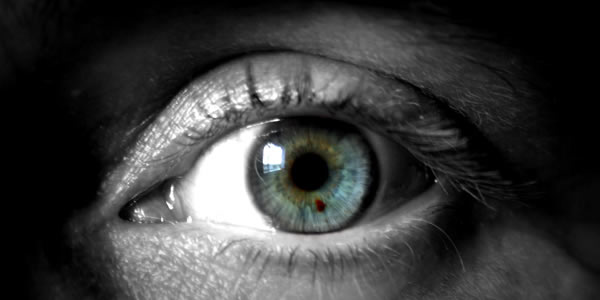
Eyes are the window to the soul / Polly Peterson (2009) / Flickr.com
Purpose isn’t something given to us; it isn’t something we find out there in the world. Instead, purpose is a matter of character; it’s a condition of our souls. What sets us apart isn’t some small choice we make to make our lives “matter” (though sometimes it can help). The work of the soul is what gives us purpose and meaning.
Perhaps one of the most important things I ever learned from the Western Occult Tradition is the “Magnum Opus” – the Great Work. This is an idea that doesn’t get nearly enough attention in Pagan circles; when we do talk about it, we treat it like a laudable mystery. We might sing the praises of the Great Work, but we never seem to discuss it in a way that is either terribly specific or useful.
Coming to know your Great Work is a matter of self-knowledge. Though it is rarely spoken of directly, it’s one of those things that we’re forever pretending we understand. And there’s this awkwardness around it, as if the Great Work was mentioned in a class we happened to skip to hang out with our friends.
It’s not easy to talk about. On the surface, your Great Work and mine are not the same. Yet they share something – a connection to the fundamental ground of reality. Bringing that fundamental power to our lives is the Great Work.
Alchemy
The Magnum Opus, or Great Work, has its roots in Western alchemy. Originally, the Great Work indicated the creation of the Philosopher’s Stone, purported to bring either eternal life or unending wealth. However, the Great Work I am referring to is the work of the soul.
The broader, more modern use of the term “Great Work” comes from the writings of Eliphas Levi (Alphonse Louis Constant, 1810 – 1875). Levi was one of the first of the modern ceremonial magicians. His writings strongly influenced the work of Theosophy, the Golden Dawn, and Thelema. Through all three of these strands, he also had considerable influence on Wicca and Neo paganismin general. In short, Eliphas Levi’s work was formative and important.

“Pentagram Levi black” by Nyo – Levi, Eliphas (1855) Dogme et Rituel de la Haute Magie.. Licensed under Public Domain via Wikimedia Commons.
Of all the ideas put forth in Levi’s work, I believe that the Great Work is one of the most important and most useful. For him, it was an awakening of the spiritual force within a person – a force that could shape the world. We might call it the awakening of the soul.
For Eliphas Levi and the magicians who have come after him, the Great Work has been the study of magic. There is no reason that studying magic shouldn’t be our Great Work, but there’s also no reason that it has to be.
Stepping back and looking at the larger phenomenon, the Great Work could refer to any work that reaches the fundamental ground of reality. That being said, how do we find it?
Finding a Calling
The Great Work isn’t some unknowable occult mystery. It’s a very knowable occult mystery. Here are a couple of ideas to help you find your own:
The Great Work comes from our own souls. It is an expression of something deeper than the everyday spirit. Admittedly, I’m not convinced about most of what Western Culture has to say about the soul. What I can say, from experience, is that there is something that shines a spiritual light out into the world. It is from this place that we can draw purpose and meaning.

Into the world / Polly Peterson (2011) / Flickr.com
We can, in time, and with discipline and effort, communicate with our souls. The study of the spiritual, including the study of magic, is about more than learning a few neat things about the universe. Finding purpose and meaning in our lives is both the first step and the last step in our Great Work. The Great Work turns magic from an odd hobby into something far greater.
We are here to accomplish great things. The focus of the Great Work encourages us to face challenges with dignity. When we’re moved by our deepest selves, there’s not a lot of room for pettiness.
And if that fails, there’s always television and microwaveable snacks.

Click here to like
Patheos Pagan on Facebook.
Click here to like
the Agora on Facebook
The Other Side of the Hedge is published on the first and third Sunday of the month. Subscribe via RSS or e-mail!
Please use the links to the right to keep on top of activities here on the Agora as well as across the entire Patheos Pagan channel.
Previous Post

October 18, 2015
The Other Side of the Hedge: The Thinning of the Veil
Next Post
November 15, 2015 The Other Side of the Hedge: Scrying Over You
Browse Our Archives
Select a Category Columns History Holidays Politics Ritual and Practice The Other Side of the Hedge Theology, Ethics, Philosophy
Select a Month June 2019 May 2019 April 2019 March 2019 February 2019 January 2019 December 2018 November 2018 October 2018 September 2018 August 2018 July 2018 June 2018 May 2018 April 2018 March 2018 February 2018 January 2018 November 2017 October 2017 September 2017 August 2017 July 2017 June 2017 May 2017 April 2017 March 2017 February 2017 January 2016 December 2015 November 2015 October 2015 September 2015
TAKE THE
Religious Wisdom Quiz
In Revelation, what color is the horse ridden by Death?
Select your answer to see how you score.
Red Pale (or green) Black White
Related posts from The Other Side of the Hedge




TRENDING AT PATHEOS Pagan

I was recently chatting with someone on Instagram. She asked me what...

While there are many people who share their results, the end of...

On July 23, I saw Christopher Nolan's The Odyssey which is Homer’s...

As I write this two big events have just finished up. One...

Restoring the Watershed of Divine Love
Perhaps cooperation is not something we manufacture through legislation, ideology, or moral...

Many UUs don’t pray because of bad experiences in a previous religion,...
view all Pagan blogs
Ad-Free & Subscriber Log-In Subscription Support
- About Us
- 2026 Calendar
- Videos
- Podcasts
- Library of World Religions
- Faith In Media Tracker
- Advertise With Us
- Write for Us
- Privacy Policy
- Terms of Service
- Do Not Sell My Data
- Contact Us
- Radiant Digital
- Manage Newsletter Subscriptions
- Unsubscribe From Notifications
- Sitemap
Copyright 2008-2026, Patheos. All rights reserved.
Subscription Support Ad-Free & Subscriber Log-In
Follow Patheos