
BuddhistCatholicContemplativeEvangelicalGeneral ChristianHinduJewishLatter-day SaintMuslimNew VisionsProgressive Christian
Beliefs
- Buddhist
- Catholic
- Contemplative
- Evangelical
- General Christian
- Hindu
- Jewish
- Latter-day Saint
- More Voices
- Muslim
- New Visions
- Pagan
- Progressive Christian
Topics
- Religion News
- Food and Religion
- Sports and Religion
- Religious Art
- Religious Music and Entertainment
- Religious Events
- History and Religion
- Style and Religion
- Politics and Religion
- Women in Religion
- Recreation Outdoors and Religion
- Business Finance and Religion
- Careers Workplace and Religion
- Education and Religion
- Family Parenting and Religion
- Health Fitness and Religion
- Home and Religion
- Relationships and Religion
- Technology and Religion
- Travel and Religion
Columnists
- Buddhist Columnists
- Business Finance and Religion Columnists
- Careers Workplace and Religion Columnists
- Catholic Columnists
- Contemplative Columnists
- Education and Religion Columnists
- Evangelists Columnists
- Family Parenting and Religion Columnists
- General Christian Columnists
- Health Fitness and Religion Columnists
- Hindu Columnists
- History and Religion Columnists
- Home and Religion Columnists
- Jewish Columnists
- More Voices Columnists
- Latter Day Columnists
- Muslim Columnists
- New Visions Columnists
- Nonreligious Columnists
- Pagan Columnists
- Politics and Religion Columnists
- Progressive Columnists
- Recreation Outdoors and Religion Columnists
- Relationships and Religion Columnists
- Religion News Columnists
- Religious Art Columnists
- Religious Events Columnists
- Religious Music and Entertainment Columnists
- Sports and Religion Columnists
- Style and Religion Columnists
- Technology and Religion Columnists
- Travel and Religion Columnists
- Women in Religion Columnists
Resource Library
- 2026 Calendar
- Library of World Religions
- The 100 Most Holy Places on Earth
- Patheos Answers
- Podcasts
- Videos
- Faith Leaders Database
- Anglican Episcopalian
- Bahai
- Baptist
- Buddhism
- Christianity
- Confucianism
- Eastern Orthodoxy
- Hinduism
- Holiness and Pentecostal
- ISKCON
- Islam
- Judaism
- Lutheran
- Methodist
- The Church of Jesus Christ of Latter-day Saints
- New Age
- Paganism
- Presbytarian and Reformed
- Protestantism
- Religion Behind the Scenes
- Roman Catholic
- Scientology
- Shia Islam
- Sikhism
- Sufism
- Sunni Islam
- Taoism
- Zen
- See all religions
Research Tools
 Ad-Free & Subscriber Log-In Subscription Support
Ad-Free & Subscriber Log-In Subscription Support
Follow Patheos 

- Trending:
- Forgiveness
- |
- Marriage
- |
- Consciousness
- |
- Death Penalty
- |
- Election
- |
- Halloween

- Home
- Pagan
- The Lady’s Quill: Paganism, Theism, and Belief
The Lady’s Quill: Paganism, Theism, and Belief
Last updated on: November 5, 2015 at 5:00 pm by Laine Mardollsdottir
The Lady’s Quill: Paganism, Theism, and Belief 2015-11-05T14:11:03+00:00 Laine Mardollsdottir
Patheos Explore the world's faith through different perspectives on religion and spirituality! Patheos has the views of the prevalent religions and spiritualities of the world.
But it does me no injury for my neighbor to say there are twenty gods or no God. It neither picks my pocket nor breaks my leg.
-Thomas Jefferson, Notes on Virginia, 1782
I fear that I’m about to make myself terribly unpopular with folks on all sides of this argument.
I don’t care what people believe regarding the Gods. I don’t think that a person’s belief feeds the Gods; I don’t think that their lack of belief starves them. I am a polytheist; I believe that the Gods all exist as separate beings; either “large” spirits or a host of spirits who bear the same title and wear the same hats or masks. I am also believe that everything is part of the same thing, and that there may be an underlying will or consciousness to that everything but I don’t refer to that consciousness as a God. That may mean that the Gods are, in the end, all one, but it also means that all people are as well, and that we are one with the Gods and all of the other amazing things in creation, all part of a vast web of being.

Because of this belief, I don’t act as though all Gods are one any more than I act as though all people are one. It would be confusing and upsetting if I went around calling everyone Laine; I feel that I owe the Gods the same courtesy. I also don’t think that the universal consciousness is something that we can interact with terribly well. We can feel it, and from this come the mystical experiences that so many people of different faiths and paths have when a person feels an intimate and ultimate oneness with All That Is. I think that that can be a positive experience (one which Gods can help guide people to, certainly) because it provides us with a much-needed perspective at times in our journey when we feel small, alone, and separated. It changes the way that we see the world and our place in it, and is beneficial for that reason.
However, I don’t believe that All That Is is particularly good at talking back, at answering prayers, or at guiding us directly. We are a very small part of its incalculable vastness. Being brought into alignment with it briefly may be a healing, empowering experience, but I don’t think that it’s the power that you go to when you need help with your personal life or even to change the world on the slightly grander scale that is the upper limit of our imaginations.
I’ve explained some of the rest of my theology elsewhere. I’m giving a broader view of it here to help cast perspective on what I want to say.

I have a feeling that most if not all people have experiences that involve the Powers. We get nudges and pushes, we have bizarre coincidences and odd visitations. We may or may not notice them, and they may or may not occur in line with our attempts to create or interact with them. Sometimes they come unbidden, sometimes no one answers the door when you knock. People expecting absolute, regular consistency from interaction with Gods or spirits don’t take into account the possibility that they are likewise complex beings and sometimes they are busy, sometimes they don’t agree with our requests and possibly sometimes they don’t care.
How we interpret those experiences is up to us. The different shades of theism, from a- to poly- and all the colors in between and outside are the filters that we use to understand these experiences. An atheist or deist may see the clockwork actions of a mechanistic universe while a panentheist or pantheist may see the dance of a living, aware one. A polytheist may see the Gods’ fingers in the pies of their lives while a monist may witness a single God with a great many fingers. We argue endlessly about whose interpretation is correct because feeling that we understand something makes it less frightening to us. Understanding means that we can, perhaps, have some control over the experience, even if it is just our own perceptions of and reactions to it.
There is precedent in the ancient world for many different beliefs regarding the nature of the Gods. We have the deified/mythologized ancestors of Euhemerism, we have the deistic and materialistic atomism of Epicurus, we have the different interpretations that we’ve drawn from the (possibly more than) 4000 years of Kemetic (Egyptian) belief and its later Hellenic syncretisms. We find writers speaking of pantheism, panentheism, hard and soft polytheism, deism, monism, monotheism… and yes, atheism as well. These people more often than not practiced the religion of their tribe and state, and held different opinions on what the nature of the Gods that were spoken about in the rites actually were.
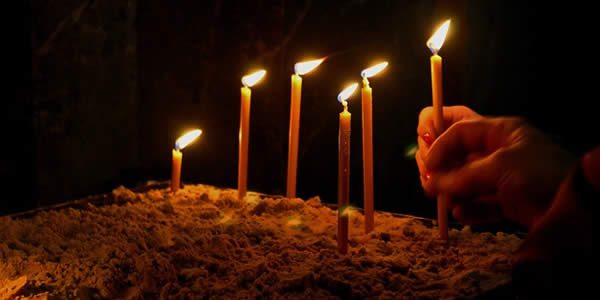
Anyone can tell you what they think the Gods are. No one can tell you what they actually are, despite the ardent assertions of true believers of every stripe (including polytheists and atheists). We’re not certain, because what they are is greater than us. When we look at the earth, all we see is flat plains and mountains; it took us a long time to come to a generally-accepted understanding of its curvature. The earth is something that we all have in common; we can’t fail to see and interact with it. Though I believe that we all do have the Gods in common, and interact with them, their nature is obviously more subtle since after so many thousands of years of interaction and recording our thoughts on them we’re still arguing about it.
I have grown comfortable with that uncertainty. There is a freedom that comes of knowing what you do not know, and being aware of your limitations even if you seek to still overcome them. In some ways I’ve learned to thrive on it; I deeply distrust certainty of anything in anyone and find pleasure when people admit that they do not know a thing for certain. I developed this comfort in my own struggles with theism and nihilism, with fear of Nothing and Meaninglessness and existential angst. The balms that healed my soul included wandering in nature and writing about what I saw and embracing the reality that I don’t know anything for certain, and likely never will. Out of this agnosticism and naturalism my polytheism emerged, because it was the assumption (not knowledge) that makes the most sense to how I’ve come to see myself and everything else as being a part of a vast, dancing cosmos and existence. It’s a cosmos where there are no true boundaries, merely zones of gradation demarcating zones of relative purity. It’s a cosmos where there is room for afterlife and material decomposition, land-spirits and wide-scale geological activity, Gods and galaxies, and more besides. It’s an inclusive worldview, and one whose boundaries may change with new information and experiences.

Our Paganism is not a strictly religious or theological movement. That ship sailed long ago as even some of the big names in the modern Pagan revival were not strict polytheists. Now that our religions are no longer mandates of tribal or state law, there will be those in our tribe or state who will publicly disagree with some of many of the tenets of the dogmas that we set down. They will disagree vocally with our interpretations, they will refuse to partake in some of our rites, and they will occasionally be questioners. It’s good practice to listen to them; I’ve found it to be far more perilous to one’s faith and religion to ignore questions than it is to engage them. If they antagonize or harass once you’ve answered the questions to your own satisfaction (not theirs) then they’re being asses, and it does not reflect poorly upon you to turn your back or ignore the repetitions. They’ve then ceased to be skeptics (which in its basic definition means “questioner”) and have become their opposites, evangelicals and zealots.
The emphasis on “believing” one thing or another to qualify for membership in a group is also something that I find odd. First off, there’s no way to know what another believes beyond what they say. For millenia, Christians who did not agree with Christian dogma (and likewise with Muslims and Islamic dogma) likely simply lied about it rather than face the punishment for saying that they did not agree with another’s interpretation of reality. Pascal’s Wager always baffled me for that reason: saying that you believe something simply for the purpose of pleasing a deity whose existence you are uncertain of is dishonest and self-defeating. Besides, wouldn’t your God know what was truly in your heart? Humans certainly cannot, and in an age and place where the freedom to speak our minds rather than punishment for the same is an ideal that many support, it doesn’t make sense that we should force people to be silent about their thoughts and opinions.
Secondly, I do not think that belief is an action. I think that it’s a matter of our reaction to the world around us and what framework we use to make sense of it. We can choose to try and use different frameworks, but if they do not occur organically but instead are imposed artificially it is merely an intellectual exercise. In other words, you stop believing one thing and start believing another when a deep part of your understanding of your perceptions shift. Trying to force someone to believe something ends in misery, cognitive dissonance, and madness. Most of those escaping from strict modern monotheistic faiths will be familiar with this.
That’s why I don’t believe in a test of faith for modern Paganism in general (although I understand if particular traditions within the Pagan Village might want to maintain it). We have no way to prove what someone thinks about what they experience, and trying forcing them to change their thoughts to conform to the tribes that they identify with is harmful and futile in a way that the major world faiths still have not reconciled themselves with.
What I do believe is helpful is a focus on practice. Is your practice Pagan? Do you put your money where your mouth is? Do you perform rites or prayers or offerings or ceremonies that are generally accepted as Pagan (which is a sticky wicket that we’ll have to discuss elsewhere). We can observe and participate in practices that we don’t agree with; many years of attending painfully (to me) heterosexist Wiccan rites and Pagan rituals that call upon angels from faiths that spit upon ours has taught me that. I attend those rites because I felt a social bond of community with the people involved, just as I attended my maternal grandmother’s Methodist memorial (though because of her deep associations with them in life it had some elements of the funerals of the Upper Skagit people incorporated into it which actually made it more palatable to me). Active practice is more important than passive observation and belief in determining whether or not someone belongs to a social movement, which, at the end of the day, modern Paganism has become.
So, how do we determine if someone is Pagan? Do they join our events and participate in our communities? Do they support our rights to practice and believe as we think that Pagans should? Then I’ll say that they are Pagan. That doesn’t make them a polytheist, nor do I feel it should have to. Trying to control how we see the world is a harmful mistake of our monotheistic forbears that I think we would do well to avoid.

Click here to like
Patheos Pagan on Facebook.

Click here to like
the Agora on Facebook
The Lady’s Quill is published on the second and fourth Thursday of every month. You can subscribe by RSS and e-mail.
Please use the links to the right to keep on top of activities here on the Agora as well as across the entire Patheos Pagan channel.
Previous Post

November 4, 2015
Dandelion Seeds: How to Talk to Squirrel Spirits
Next Post

November 6, 2015 Adventures in Wortcunning: The Last Harvest
Browse Our Archives
Select a Category A Lakeside Hearth Adventures in Wortcunning Alone In Her Presence Arts, Crafts & Cooking Birthing Hereditary Witchcraft Book of Blackbirds Book Reviews Born-Again Witch Cauldron, Sword, Spear, & Stone Cermony and Liturgy Columns Community Dandelion Seeds Dear Jasmine Druid Thoughts Editor's Picks Everyday Pagan Family & Household Practice Family Traditions Full Frontal Magic Gateway Goddess Guest Articles Happily Heathen Health and Wellness Hearth of Hellenism Heathen Woman Hills of the Horizon History Holidays Horse Goddesses Interfaith Interviews Irish-American Witchcraft Jewish Witch Lamp & Labyrinth Letters from Midgard Literature, Media, Film, Music Loop of Brighid Love, Sex & Relationships Magic or Magick Making Light Naturalistic Traditions Nature News Outside The Circle Pantheisticon Politics Prayers, Poems, Blessings & Stories Queer Femme Mystic Queer of Swords Recipes Ritual and Practice Science and Research Seekers and Guides Seeking the Grail Socially Responsible Magic Spear of Athena Star Made Witch Syncretic Electric Technology The Blooming Staff The Busy Witch The Cartomancer The Crow's Nest The Dance of Pagan Recovery The Hearth of Hellenism The Lady's Quill The Other Side of the Hedge The Path of She The Rantin' Raven The Witches Next Door The Zen Pagan Theology, Ethics, Philosophy Tree City Witch Urban Earthwitch Wayfaring Woman Witch on Fire Wyrd Words
Select a Month January 2026 March 2025 December 2024 June 2024 April 2024 March 2024 January 2024 December 2023 November 2023 October 2023 August 2023 July 2023 May 2023 April 2023 March 2023 February 2023 January 2023 December 2022 November 2022 October 2022 September 2022 August 2022 July 2022 June 2022 May 2022 March 2022 February 2022 January 2022 December 2021 November 2021 October 2021 September 2021 August 2021 July 2021 June 2021 May 2021 April 2021 March 2021 February 2021 January 2021 December 2020 November 2020 October 2020 September 2020 August 2020 July 2020 June 2020 May 2020 April 2020 March 2020 February 2020 January 2020 December 2019 November 2019 October 2019 September 2019 August 2019 July 2019 June 2019 May 2019 April 2019 March 2019 February 2019 January 2019 December 2018 November 2018 October 2018 September 2018 August 2018 July 2018 June 2018 May 2018 April 2018 March 2018 February 2018 January 2018 December 2017 November 2017 October 2017 September 2017 August 2017 July 2017 June 2017 May 2017 April 2017 March 2017 February 2017 January 2017 December 2016 November 2016 October 2016 September 2016 August 2016 July 2016 June 2016 May 2016 April 2016 March 2016 February 2016 January 2016 December 2015 November 2015 October 2015 September 2015 August 2015 July 2015 June 2015 May 2015 April 2015 March 2015 February 2015 January 2015 December 2014 November 2014 October 2014 September 2014 August 2014 July 2014 June 2014 May 2014 April 2014 March 2014 February 2014 January 2014 December 2013 November 2013 October 2013 September 2013 August 2013 July 2013 June 2013 May 2013 April 2013 March 2013 February 2013 January 2013 December 2012 November 2012 October 2012 September 2012 August 2012 July 2012 June 2012 May 2012 April 2012 March 2012 February 2012 January 2012
Follow Us!
TAKE THE
Religious Wisdom Quiz
In 2 Thessalonians, what does Paul say the man of lawlessness will proclaim himself to be?
Select your answer to see how you score.
God A prophet The Messiah King of the world
Related posts from Agora

Simple Witchery: To Keep Silent

Simple Witchery: Leaning On The Four Pillars


Simple Witchery: Resistance and Resilience in Hard Times
TRENDING AT PATHEOS Pagan

I was recently chatting with someone on Instagram. She asked me what...

While there are many people who share their results, the end of...

On July 23, I saw Christopher Nolan's The Odyssey which is Homer’s...

As I write this two big events have just finished up. One...

Restoring the Watershed of Divine Love
Perhaps cooperation is not something we manufacture through legislation, ideology, or moral...

Many UUs don’t pray because of bad experiences in a previous religion,...
view all Pagan blogs
Ad-Free & Subscriber Log-In Subscription Support
- About Us
- 2026 Calendar
- Videos
- Podcasts
- Library of World Religions
- Faith In Media Tracker
- Advertise With Us
- Write for Us
- Privacy Policy
- Terms of Service
- Do Not Sell My Data
- Contact Us
- Radiant Digital
- Manage Newsletter Subscriptions
- Unsubscribe From Notifications
- Sitemap
Copyright 2008-2026, Patheos. All rights reserved.
Subscription Support Ad-Free & Subscriber Log-In
Follow Patheos