
BuddhistCatholicContemplativeEvangelicalGeneral ChristianHinduJewishLatter-day SaintMuslimNew VisionsProgressive Christian
Beliefs
- Buddhist
- Catholic
- Contemplative
- Evangelical
- General Christian
- Hindu
- Jewish
- Latter-day Saint
- More Voices
- Muslim
- New Visions
- Pagan
- Progressive Christian
Topics
- Religion News
- Food and Religion
- Sports and Religion
- Religious Art
- Religious Music and Entertainment
- Religious Events
- History and Religion
- Style and Religion
- Politics and Religion
- Women in Religion
- Recreation Outdoors and Religion
- Business Finance and Religion
- Careers Workplace and Religion
- Education and Religion
- Family Parenting and Religion
- Health Fitness and Religion
- Home and Religion
- Relationships and Religion
- Technology and Religion
- Travel and Religion
Columnists
- Buddhist Columnists
- Business Finance and Religion Columnists
- Careers Workplace and Religion Columnists
- Catholic Columnists
- Contemplative Columnists
- Education and Religion Columnists
- Evangelists Columnists
- Family Parenting and Religion Columnists
- General Christian Columnists
- Health Fitness and Religion Columnists
- Hindu Columnists
- History and Religion Columnists
- Home and Religion Columnists
- Jewish Columnists
- More Voices Columnists
- Latter Day Columnists
- Muslim Columnists
- New Visions Columnists
- Nonreligious Columnists
- Pagan Columnists
- Politics and Religion Columnists
- Progressive Columnists
- Recreation Outdoors and Religion Columnists
- Relationships and Religion Columnists
- Religion News Columnists
- Religious Art Columnists
- Religious Events Columnists
- Religious Music and Entertainment Columnists
- Sports and Religion Columnists
- Style and Religion Columnists
- Technology and Religion Columnists
- Travel and Religion Columnists
- Women in Religion Columnists
Resource Library
- 2026 Calendar
- Library of World Religions
- The 100 Most Holy Places on Earth
- Patheos Answers
- Podcasts
- Videos
- Faith Leaders Database
- Anglican Episcopalian
- Bahai
- Baptist
- Buddhism
- Christianity
- Confucianism
- Eastern Orthodoxy
- Hinduism
- Holiness and Pentecostal
- ISKCON
- Islam
- Judaism
- Lutheran
- Methodist
- The Church of Jesus Christ of Latter-day Saints
- New Age
- Paganism
- Presbytarian and Reformed
- Protestantism
- Religion Behind the Scenes
- Roman Catholic
- Scientology
- Shia Islam
- Sikhism
- Sufism
- Sunni Islam
- Taoism
- Zen
- See all religions
Research Tools
 Ad-Free & Subscriber Log-In Subscription Support
Ad-Free & Subscriber Log-In Subscription Support
Follow Patheos 

- Trending:
- Forgiveness
- |
- Marriage
- |
- Consciousness
- |
- Death Penalty
- |
- Election
- |
- Halloween
 The Other Side of the Hedge
- Home
- Pagan
- The Other Side of the Hedge: The Thinning of the Veil
The Other Side of the Hedge: The Thinning of the Veil
Last updated on: October 18, 2015 at 4:00 pm by Christopher Drysdale
The Other Side of the Hedge: The Thinning of the Veil 2015-10-18T16:00:48-07:00 Christopher Drysdale
Patheos Explore the world's faith through different perspectives on religion and spirituality! Patheos has the views of the prevalent religions and spiritualities of the world.
Halloween is almost upon us. It’s a time of year for costumes, parties, and maybe a few ghost stories. Samhain is on its way, too. This is the time of year when we see a thinning of the veil between the worlds. If we’re given to such things, it becomes easier to reach across the veil. But as much as the veil thins outside of us, it thins inside of us, too.
But the spiritual changes aren’t just happening out there in the world. With the coming of Samhain, the boundaries between our everyday minds and our spiritual selves become more permeable. The world that seemed so solid in the light of long summer days becomes a bit more uncertain in the fall moonlight. It’s a moment of balance; the noisy madness of summer has quieted, and we’ve yet to fall into the slumber of winter.
If we imagine the veil as a stream, in the springtime it’s gorged and wild, filled with the new life all around us. Then, the crossing can be dangerous, but it’s more likely we’ll just shy aside. In the summer, the water runs high and swift, bursting its banks. But come fall, that same stream loses its mad rush and becomes a bit calmer.
By Samhain, the rush has died down, and we still have strength left over from summer; it is at this moment we can choose to push across the stream. Samhain is the perfect moment for these practices of crossing.

A perfect moment — © Polly Peterson (2008) / Flickr.com
Instead of thinking of Samhain as the moment when the spirits can cross, we might think of it as the moment when we can most easily draw spirits across…and when we can travel to the spirit world ourselves. Outside of stories, it doesn’t seem to be other spirits doing all that crossing. It’s us.
Spirits Are Spirits (This means you!)
When we think of our spirits as truly separate from ourselves, we miss the mark. Crossing through to the spirit world isn’t really us sending our spirits through. We’re like everything else in the world: we already “have spirits” – we already exist in the realm of the spirits as much as we do in the everyday world. The spirit world is not elsewhere; it’s here, and now.
When we “cross,” what we’re doing is moving our attention from our everyday mind to our spirit-minds (or elsewhere – there are advanced techniques). The spirit is just another sense. Just like we can focus on sight, touch, or taste, we can also focus on our sense of spirit.
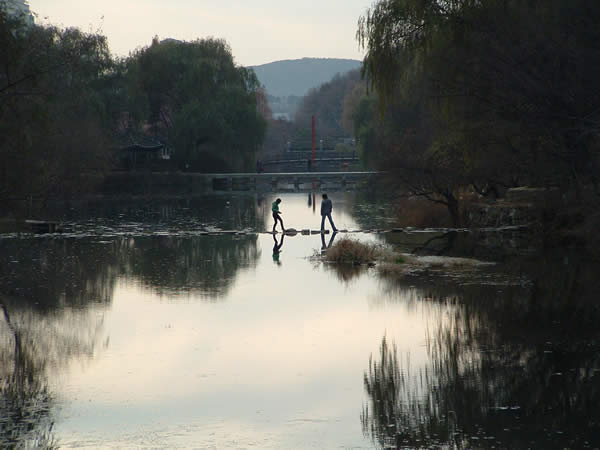
Crossing — © Polly Peterson (2008) / Flickr.com
That isn’t as easy as it sounds. Our spirits aren’t just sitting there, waiting for us to pay attention. They’re already a powerful aspect of who we are – though one we’ve often neglected, and culturally have little idea how to cultivate and strengthen. We think of our spirits as inborn, unchanging – our “character” if you will.
Some people’s spirits are just sitting there, not doing much. Others are powerful in their own right, active in the everyday world, lending a certain luck or charisma. Just as there are born geniuses and born athletes, there are people who have powerful spirits from birth. It hardly seems fair, but that’s just the way it is.
Awakening the Spirit
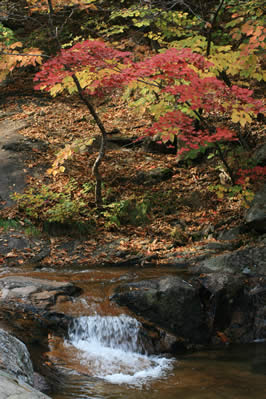
Learning to listen — © Polly Peterson (2008) / Flickr.com
Just like geniuses and athletes, for the spiritually gifted, raw talent is not enough. Yet no matter if we have a little talent or a lot, we can train and harness our own spirits. Our spirits are not just “out there” – they are active in the world and a part of who we are.
After all, our spirits are not too different from any other spirits, whether the spirit of a mountain, a river, an animal, or most anything else. They can know the unknowable, bring luck or misfortune, bring health or illness, guard or welcome, travel to other worlds, or do any of a number of things.
Samhain can be about more than the mighty dead. It’s an opportunity for spiritual clarity. If we can call spirits across the veil, there’s nothing to stop us from summoning our own. The idea that rocks and trees and man-made things have spirits is cool. But experiencing our own spirits? That can be downright terrifying.
So this Samhain, welcome your spirit back to you. Ask it to bring you luck, and take you where you need to be. We talk a lot about “path” here in the Pagan world; for us animists, the path begins with learning to listen to our own spirits.
[ProTip: On the other hand, like any other spirit, don’t give your own spirit free rein or a blank check. An untempered spirit is no better than a mind of pure reason, or a body given wholly to hedonism. Your spirit is part of you to be welcomed back, not some mythical “true” self that has been hidden until now.]

Click here to like
Patheos Pagan on Facebook.
Click here to like
the Agora on Facebook
The Other Side of the Hedge is published on the first and third Sunday of the month. Subscribe via RSS or e-mail!
Please use the links to the right to keep on top of activities here on the Agora as well as across the entire Patheos Pagan channel.
Previous Post

October 4, 2015
The Other Side of the Hedge: Animism and Virtue
Next Post
November 1, 2015 The Other Side of the Hedge: The Magnum Opus
Browse Our Archives
Select a Category Columns History Holidays Politics Ritual and Practice The Other Side of the Hedge Theology, Ethics, Philosophy
Select a Month June 2019 May 2019 April 2019 March 2019 February 2019 January 2019 December 2018 November 2018 October 2018 September 2018 August 2018 July 2018 June 2018 May 2018 April 2018 March 2018 February 2018 January 2018 November 2017 October 2017 September 2017 August 2017 July 2017 June 2017 May 2017 April 2017 March 2017 February 2017 January 2016 December 2015 November 2015 October 2015 September 2015
TAKE THE
Religious Wisdom Quiz
What empire destroyed Jerusalem in 70 AD?
Select your answer to see how you score.
Roman Greek Persian Babylonian
Related posts from The Other Side of the Hedge




TRENDING AT PATHEOS Pagan

I was recently chatting with someone on Instagram. She asked me what...

While there are many people who share their results, the end of...

On July 23, I saw Christopher Nolan's The Odyssey which is Homer’s...

As I write this two big events have just finished up. One...

Restoring the Watershed of Divine Love
Perhaps cooperation is not something we manufacture through legislation, ideology, or moral...

Many UUs don’t pray because of bad experiences in a previous religion,...
view all Pagan blogs
Ad-Free & Subscriber Log-In Subscription Support
- About Us
- 2026 Calendar
- Videos
- Podcasts
- Library of World Religions
- Faith In Media Tracker
- Advertise With Us
- Write for Us
- Privacy Policy
- Terms of Service
- Do Not Sell My Data
- Contact Us
- Radiant Digital
- Manage Newsletter Subscriptions
- Unsubscribe From Notifications
- Sitemap
Copyright 2008-2026, Patheos. All rights reserved.
Subscription Support Ad-Free & Subscriber Log-In
Follow Patheos