
BuddhistCatholicContemplativeEvangelicalGeneral ChristianHinduJewishLatter-day SaintMuslimNew VisionsProgressive Christian
Beliefs
- Buddhist
- Catholic
- Contemplative
- Evangelical
- General Christian
- Hindu
- Jewish
- Latter-day Saint
- More Voices
- Muslim
- New Visions
- Pagan
- Progressive Christian
Topics
- Religion News
- Food and Religion
- Sports and Religion
- Religious Art
- Religious Music and Entertainment
- Religious Events
- History and Religion
- Style and Religion
- Politics and Religion
- Women in Religion
- Recreation Outdoors and Religion
- Business Finance and Religion
- Careers Workplace and Religion
- Education and Religion
- Family Parenting and Religion
- Health Fitness and Religion
- Home and Religion
- Relationships and Religion
- Technology and Religion
- Travel and Religion
Columnists
- Buddhist Columnists
- Business Finance and Religion Columnists
- Careers Workplace and Religion Columnists
- Catholic Columnists
- Contemplative Columnists
- Education and Religion Columnists
- Evangelists Columnists
- Family Parenting and Religion Columnists
- General Christian Columnists
- Health Fitness and Religion Columnists
- Hindu Columnists
- History and Religion Columnists
- Home and Religion Columnists
- Jewish Columnists
- More Voices Columnists
- Latter Day Columnists
- Muslim Columnists
- New Visions Columnists
- Nonreligious Columnists
- Pagan Columnists
- Politics and Religion Columnists
- Progressive Columnists
- Recreation Outdoors and Religion Columnists
- Relationships and Religion Columnists
- Religion News Columnists
- Religious Art Columnists
- Religious Events Columnists
- Religious Music and Entertainment Columnists
- Sports and Religion Columnists
- Style and Religion Columnists
- Technology and Religion Columnists
- Travel and Religion Columnists
- Women in Religion Columnists
Resource Library
- 2026 Calendar
- Library of World Religions
- The 100 Most Holy Places on Earth
- Patheos Answers
- Podcasts
- Videos
- Faith Leaders Database
- Anglican Episcopalian
- Bahai
- Baptist
- Buddhism
- Christianity
- Confucianism
- Eastern Orthodoxy
- Hinduism
- Holiness and Pentecostal
- ISKCON
- Islam
- Judaism
- Lutheran
- Methodist
- The Church of Jesus Christ of Latter-day Saints
- New Age
- Paganism
- Presbytarian and Reformed
- Protestantism
- Religion Behind the Scenes
- Roman Catholic
- Scientology
- Shia Islam
- Sikhism
- Sufism
- Sunni Islam
- Taoism
- Zen
- See all religions
Research Tools
 Ad-Free & Subscriber Log-In Subscription Support
Ad-Free & Subscriber Log-In Subscription Support
Follow Patheos 

- Trending:
- Forgiveness
- |
- Marriage
- |
- Consciousness
- |
- Death Penalty
- |
- Election
- |
- Halloween

- Home
- Pagan
- The Lady’s Quill: The Three Kindreds and My Polytheist Theology
The Lady’s Quill: The Three Kindreds and My Polytheist Theology
Last updated on: October 22, 2015 at 4:00 pm by Laine Mardollsdottir
The Lady’s Quill: The Three Kindreds and My Polytheist Theology 2015-10-22T12:52:28+00:00 Laine Mardollsdottir
Patheos Explore the world's faith through different perspectives on religion and spirituality! Patheos has the views of the prevalent religions and spiritualities of the world.
“I, King, have dealt with the Gods for three generations of men, and I know that they dazzle our eyes and flow in and out of one another like eddies on a river, and nothing that is said clearly can be said truly about them.” C. S. Lewis, Til We Have Faces
In ADF we refer to the “Kindreds”, the three classifications of spiritual beings that we honor and work with in our rituals. The three categories of Kindred are the Ancestors, the Nature Spirits, and the Shining Ones. By and large all three have some representation in most Indo-European Pagan cultures and their practice and worship. I’ll explain how they tie in to my personal theology later; for the moment let me describe them and my understanding of them in general as well as with an eye to Norse Hearth Culture (in ADF we often associate with a particular Indo-European culture for the purposes of study, worldview, and practice, called our “Hearth Cultures”).
The Ancestors
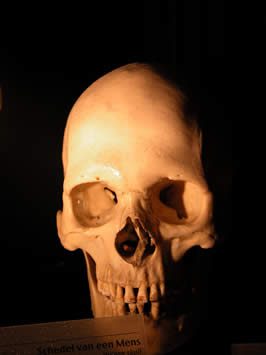
The Ancestors are venerated in most cultures across the globe. The term “ancestor” literally refers to those of your physical lineage; those whose blood runs through your veins. It is widely believed that of all categories of spiritual beings, they are the ones most likely to take interest in your day-to-day activities and the ones who care the most directly about you.
In Heathenry the Ancestors are given a special place of veneration. They are often those called upon first in any sort of rite as they are kin and Germanic Paganisms hold the value of familial bonds in high regard. In the Eddas and Sagas we see great importance placed on your direct ancestors as well as those married in to your blood line; all seem to be honored together.
There is a tendency in modern Heathenry to compartmentalize them into Alfar (male ancestors) and Disir (female ancestors). This is not part of my practice or belief for a multitude of reasons. First and foremost, as a transgender person I am aware that there are and have always been people who do not identify as either male or female (what we often refer to nowadays as “nonbinary” people). The sharp gender divide excludes them as Ancestors just as sharp gender divides exclude them from participation in many activities and organizations nowadays. In addition, I have found far more reference to the Alfar as nonhuman supernatural beings in the Eddas and Sagas (such as Delling, the Red Elf of Dawn) and there have been recent discussions that have suggested that either “Alf” was a synonym for “Van” (one of the primary tribes of Norse Gods) or an entirely different classification of divine beings. As for the Disir, while they do seem to encompass some of the female dead, human ancestors are not the only figures given that title. I believe that the confusion arises from the fact that the feminine protective spirits that are the Disir are often inherited or carried along family lines.
In addition, this system leaves little room for veneration of the dead that are not direct ancestors or ancestors by marriage. There are many dead heroes who are honored throughout the Sagas as well as in our modern daily life and I feel that having no legitimate category for them excludes an important part of human veneration for the dead.
As my understanding of the dead does not fit well within the Hearth culture that I have chosen to practice, I have had to adopt compromises in my practice. I honor the Ancestors of Blood; those of my family line and those who were married or otherwise bonded to them. I also honor the Ancestors of Heart; the Beloved Dead, those who I have loved in life who may not have been direct ancestors of mine but who have passed on from this world. The dead who I have not known personally but whose words and actions have inspired me I refer to as Ancestors of Spirit, or Heroes, and they receive my veneration and offerings as well.
The dead cling to us; we have a unique connection to them in that what we are now, they once were. The Ancestors surround us, as they have interest in what goes on in the halls of the living. The Ancestors care about us and respond to us, as we are their current physical connections to this world. We are their eyes and ears and hands and mouths in both a literal and metaphysical fashion.
The Nature Spirits

It is not unusual to come to a natural place and feel a powerful presence there. Even when alone, it seems that the very air around you is listening and paying attention to you. This is a sign of the attention of the Nature Spirits, those spirits tied to locations and aspects of the natural world.
Most Indo-European cultures acknowledge spirits of individual locales. The Germanic cultures held them in high regard as well, with the Norse referring to them as landvaettir (or land-wights) and making offering to them and attempting to heed their wisdom.
I find this category frustrating because often it seems to be used as a catch-all for those who are neither fish nor fowl, so to speak. There are many spirits of different types that are spoken of in our mythologies that do not fit aptly into any of the categories provided, and in ADF practice I often see them relegated to the status of Nature spirits. Among the Germanic and Scandanavian cultures there are many hosts of these beings from the huldafok (or hidden people) to the Alfar (again, the name is used in many different contexts), the mosswives (who lead men to their doom through their comely but ultimately hollow bodies) and the dveger (the dwarves who dwell beneath the earth, misshapen crafters of great skill).
While I understand how many of these beings do not fit well into the other categories, I do not associate them with “Nature Spirits” simply because they (often, but not always) dwell outside the bounds of human civilization. When I think of land spirits I think of beings tied to particular locations, or those who watch over particular breeds of animal or varieties of vegetation. I share the world with them, as I walk through their terrain every day; most houses have their own spirits, as well as the land that they are on and the region that they are in. In addition, there is suggestion among modern spirit-workers who spend time building ties with them that there is some kind of local hierarchy, something that I have experienced in my own practice when working with the nature spirits of the Genesee Valley.
The Shining Ones
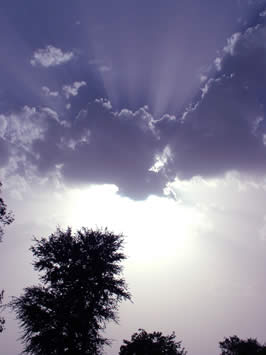
“Shining Ones” is a term that we use for the mighty Gods, beings of great power and (often) wisdom, whose wills and powers shake the world around them and change the world. Nearly every culture has analagous beings, often described in very human terms of tribe and lineage, of personality and connection.
Among the Norse there were two primary tribes of Gods: the Aesir and the Vanir. The Aesir have been described by some as Gods of civilization; many of their qualities and stories relate to aspects of human life such as sovereignty, poetry, and war. The Vanir have been described as Gods of Nature, as those whom we know of are venerated in prayers for fertility, prosperity, love, and weather.
I am personally distrustful of the “God of X” construct. I prefer to try and know a God through lore and direct experience rather than reducing them to what feels like a mail-order catalogue list of attributes that they are called upon for. Thus the distinction of “Gods of Nature” and “Gods of Civilization” falls flat for me. The Vanir are Gods who work with more than just the cycles of the world; Freyja is a lady whose powers of magic are well known and whose ties to war are indisputable, Freyja, Freyr, and Njord are all associated with gold and material wealth, and in the one line that refers to him as such Heimdall is said to be skilled in foresight “like the other Vanir”. The Aesir are likewise more than mere “Gods of Civilization”; Thor’s power is tied to the thunders that shake our heavens, and Odhinn provides breath and is considered by some to be a master of the wind itself, Gefion brings about the good from the Earth and Hodur is often called a God of winter and darkness. When personal stories and attributes of the Gods are investigated, these simplified tags that we use to describe them tend to lose their significance. They are all powerful, complex beings in their own rights.
Personal Theology and Understanding

My personal communion with the land spirits has provided me with an understanding and perspective that has helped to tie things together for me. At one point while sitting with them I asked why it felt like I was two things; why I was sure that my body was of this earth but that there was a part of me that no matter what felt separated from the physical aspects of this world.
Many parts of their explanation go beyond the scope of this essay. However, parts of it helped me to understand the world in ways that I hadn’t before. It gave me perspective on spiritual matters that revealed an underlying theme in my polytheism. The spirits claimed explained that the divisions we make are based wholly on our perspective. Where we see different varieties of spirits, they understand as the same sort of being at different stages of their development and existence.
To the vaettir I spoke with, an Ancestor was merely a spirit who had done time as a human being. A God was a powerful spirit (or perhaps many spirits who answered to the same name and had similar goals). A land spirit was a spirit who inhabited a part of the land. Some Nature spirits were spirits that had incarnated as animals or who watched over plants. Some spirits fit into parts of the Universe that we as living humans have no connection to or cannot even comprehend. Different spirits did different things over the course of their existence, and the vaettir alluded to some Great Dance of the spirits, as they changed roles or performed different tasks over time.
Living humans fit in too, part of us is a spirit bound into flesh. This explains why sometimes dead humans may become Gods, how Gods can become incarnate as humans, how humans may become associated with the spirits of the land, how a living human may feel that they were once a wolf, and many more things. We spirits change positions in the dance, and while those positions influence our history and other qualities we are not limited to single roles. We flow endlessly around and through one another, incarnating and discarnating and choosing or being assigned roles by some authority or authorities beyond my ken.
We are all part of the same dance and process, and the inner part of us is shared with the mightiest of Shining Ones as well as the baby born this very moment. That does not mean that our roles are irrelevant; far from it – they are valuable and powerful and important for us to carry out. We are separate and discrete entities, except that we may take the same role as others at points in our existence. We are all different, except that those differences are defined by the functions that we take on. We are all the same, in that we come from the same place and dance the same dance as the rest of the spirits, though when we clothe ourselves in flesh or other substances the whole of the dance becomes more difficult for us to see.
It is right that we call them Kindred as well as the Kindreds, because we are all of a kind, just holding different positions at this time. They are our kin, our family, and ourselves.

Click here to like
Patheos Pagan on Facebook.

Click here to like
the Agora on Facebook
The Lady’s Quill is published on the second and fourth Thursday of every month. You can subscribe by RSS and e-mail.
Please use the links to the right to keep on top of activities here on the Agora as well as across the entire Patheos Pagan channel.
Previous Post
October 21, 2015
Dandelion Seeds: Religion is For When the System Goes Down
Next Post
October 23, 2015 Happily Heathen: How I Learned To Work With My Ancestors
Browse Our Archives
Select a Category A Lakeside Hearth Adventures in Wortcunning Alone In Her Presence Arts, Crafts & Cooking Birthing Hereditary Witchcraft Book of Blackbirds Book Reviews Born-Again Witch Cauldron, Sword, Spear, & Stone Cermony and Liturgy Columns Community Dandelion Seeds Dear Jasmine Druid Thoughts Editor's Picks Everyday Pagan Family & Household Practice Family Traditions Full Frontal Magic Gateway Goddess Guest Articles Happily Heathen Health and Wellness Hearth of Hellenism Heathen Woman Hills of the Horizon History Holidays Horse Goddesses Interfaith Interviews Irish-American Witchcraft Jewish Witch Lamp & Labyrinth Letters from Midgard Literature, Media, Film, Music Loop of Brighid Love, Sex & Relationships Magic or Magick Making Light Naturalistic Traditions Nature News Outside The Circle Pantheisticon Politics Prayers, Poems, Blessings & Stories Queer Femme Mystic Queer of Swords Recipes Ritual and Practice Science and Research Seekers and Guides Seeking the Grail Socially Responsible Magic Spear of Athena Star Made Witch Syncretic Electric Technology The Blooming Staff The Busy Witch The Cartomancer The Crow's Nest The Dance of Pagan Recovery The Hearth of Hellenism The Lady's Quill The Other Side of the Hedge The Path of She The Rantin' Raven The Witches Next Door The Zen Pagan Theology, Ethics, Philosophy Tree City Witch Urban Earthwitch Wayfaring Woman Witch on Fire Wyrd Words
Select a Month January 2026 March 2025 December 2024 June 2024 April 2024 March 2024 January 2024 December 2023 November 2023 October 2023 August 2023 July 2023 May 2023 April 2023 March 2023 February 2023 January 2023 December 2022 November 2022 October 2022 September 2022 August 2022 July 2022 June 2022 May 2022 March 2022 February 2022 January 2022 December 2021 November 2021 October 2021 September 2021 August 2021 July 2021 June 2021 May 2021 April 2021 March 2021 February 2021 January 2021 December 2020 November 2020 October 2020 September 2020 August 2020 July 2020 June 2020 May 2020 April 2020 March 2020 February 2020 January 2020 December 2019 November 2019 October 2019 September 2019 August 2019 July 2019 June 2019 May 2019 April 2019 March 2019 February 2019 January 2019 December 2018 November 2018 October 2018 September 2018 August 2018 July 2018 June 2018 May 2018 April 2018 March 2018 February 2018 January 2018 December 2017 November 2017 October 2017 September 2017 August 2017 July 2017 June 2017 May 2017 April 2017 March 2017 February 2017 January 2017 December 2016 November 2016 October 2016 September 2016 August 2016 July 2016 June 2016 May 2016 April 2016 March 2016 February 2016 January 2016 December 2015 November 2015 October 2015 September 2015 August 2015 July 2015 June 2015 May 2015 April 2015 March 2015 February 2015 January 2015 December 2014 November 2014 October 2014 September 2014 August 2014 July 2014 June 2014 May 2014 April 2014 March 2014 February 2014 January 2014 December 2013 November 2013 October 2013 September 2013 August 2013 July 2013 June 2013 May 2013 April 2013 March 2013 February 2013 January 2013 December 2012 November 2012 October 2012 September 2012 August 2012 July 2012 June 2012 May 2012 April 2012 March 2012 February 2012 January 2012
Follow Us!
TAKE THE
Religious Wisdom Quiz
What did Jesus cast into a herd of pigs?
Select your answer to see how you score.
Demons Coins Water Leprosy
Related posts from Agora

Simple Witchery: To Keep Silent

Simple Witchery: Leaning On The Four Pillars

Pergamum Unfurled: Magic with the Greek Gods (Book...

Pergamum Unfurled: Cunning Words (Review)
TRENDING AT PATHEOS Pagan

I was recently chatting with someone on Instagram. She asked me what...

While there are many people who share their results, the end of...

On July 23, I saw Christopher Nolan's The Odyssey which is Homer’s...

As I write this two big events have just finished up. One...

Restoring the Watershed of Divine Love
Perhaps cooperation is not something we manufacture through legislation, ideology, or moral...

Many UUs don’t pray because of bad experiences in a previous religion,...
view all Pagan blogs
Ad-Free & Subscriber Log-In Subscription Support
- About Us
- 2026 Calendar
- Videos
- Podcasts
- Library of World Religions
- Faith In Media Tracker
- Advertise With Us
- Write for Us
- Privacy Policy
- Terms of Service
- Do Not Sell My Data
- Contact Us
- Radiant Digital
- Manage Newsletter Subscriptions
- Unsubscribe From Notifications
- Sitemap
Copyright 2008-2026, Patheos. All rights reserved.
Subscription Support Ad-Free & Subscriber Log-In
Follow Patheos