
BuddhistCatholicContemplativeEvangelicalGeneral ChristianHinduJewishLatter-day SaintMuslimNew VisionsProgressive Christian
Beliefs
- Buddhist
- Catholic
- Contemplative
- Evangelical
- General Christian
- Hindu
- Jewish
- Latter-day Saint
- More Voices
- Muslim
- New Visions
- Pagan
- Progressive Christian
Topics
- Religion News
- Food and Religion
- Sports and Religion
- Religious Art
- Religious Music and Entertainment
- Religious Events
- History and Religion
- Style and Religion
- Politics and Religion
- Women in Religion
- Recreation Outdoors and Religion
- Business Finance and Religion
- Careers Workplace and Religion
- Education and Religion
- Family Parenting and Religion
- Health Fitness and Religion
- Home and Religion
- Relationships and Religion
- Technology and Religion
- Travel and Religion
Columnists
- Buddhist Columnists
- Business Finance and Religion Columnists
- Careers Workplace and Religion Columnists
- Catholic Columnists
- Contemplative Columnists
- Education and Religion Columnists
- Evangelists Columnists
- Family Parenting and Religion Columnists
- General Christian Columnists
- Health Fitness and Religion Columnists
- Hindu Columnists
- History and Religion Columnists
- Home and Religion Columnists
- Jewish Columnists
- More Voices Columnists
- Latter Day Columnists
- Muslim Columnists
- New Visions Columnists
- Nonreligious Columnists
- Pagan Columnists
- Politics and Religion Columnists
- Progressive Columnists
- Recreation Outdoors and Religion Columnists
- Relationships and Religion Columnists
- Religion News Columnists
- Religious Art Columnists
- Religious Events Columnists
- Religious Music and Entertainment Columnists
- Sports and Religion Columnists
- Style and Religion Columnists
- Technology and Religion Columnists
- Travel and Religion Columnists
- Women in Religion Columnists
Resource Library
- 2026 Calendar
- Library of World Religions
- The 100 Most Holy Places on Earth
- Patheos Answers
- Podcasts
- Videos
- Faith Leaders Database
- Anglican Episcopalian
- Bahai
- Baptist
- Buddhism
- Christianity
- Confucianism
- Eastern Orthodoxy
- Hinduism
- Holiness and Pentecostal
- ISKCON
- Islam
- Judaism
- Lutheran
- Methodist
- The Church of Jesus Christ of Latter-day Saints
- New Age
- Paganism
- Presbytarian and Reformed
- Protestantism
- Religion Behind the Scenes
- Roman Catholic
- Scientology
- Shia Islam
- Sikhism
- Sufism
- Sunni Islam
- Taoism
- Zen
- See all religions
Research Tools
 Ad-Free & Subscriber Log-In Subscription Support
Ad-Free & Subscriber Log-In Subscription Support
Follow Patheos 

- Trending:
- Forgiveness
- |
- Marriage
- |
- Consciousness
- |
- Death Penalty
- |
- Election
- |
- Halloween

- Home
- Pagan
- The Lady’s Quill: Freyja
The Lady’s Quill: Freyja
Last updated on: September 12, 2015 at 12:02 am by Laine Mardollsdottir
The Lady’s Quill: Freyja 2015-09-12T00:02:34+00:00 Laine Mardollsdottir
Patheos Explore the world's faith through different perspectives on religion and spirituality! Patheos has the views of the prevalent religions and spiritualities of the world.
One of the things that often attracts people to Heathenry and related practices is our Gods. While the Ancestors and vaettir (land spirits) often hold important places in our hearths and hearts, the Gods draw our attention and admiration. How can they not? They are powerful and complex beings, many with great stories attached to them in our lore. They capture our imagination and won’t let go, even manifesting in modern art (though it’s a more recent phenomenon, DeviantArt is a wonderful place to search for many different modern artists’ renditions of figures from Northern mythology, even relatively obscure ones).
So as a regular feature of this blog, I’m going to provide what I’m going to call Divine Profiles, an overview and description of a deity to provide you with a window to their identity. I will warn: these will hardly be complete; there are whole books written about individual Gods within our pantheon. However, I’ll try and draw pertinent lore (information about them from the Eddas and other older sources), shared gnosis and experience, and in some cases personal gnosis. Worry not; I’m committed to making the difference between the two clear.
One thing that I do not intend to do is the Dungeons and Dragons’ style “statistics sheet” that people often create when writing about Gods. I do not trust the concept and construction of “God of”; the Aesir and Vanir (the primary tribes of deities in Norse mythology) are beings in their own right, and attributes like that, while they make a useful shorthand, are unhelpful in getting to know them as the complex figures that they are. What is a God the God “of”? Heathens are fond of the saying, “We are our deeds.”, so perhaps it’s best to know a God by what they do and have done, and then by how others describe them.
Freyja
There are not enough words to describe her. The name that we know her by means, “Lady”, a title and position of power. Her name is worked into the name of my column; the Lady’s Quill refers to the fact that I write devotional material for her (thus trying my best to act as her quill), but it was also a sly reference to her connection to both falcons and boars, both of whom bear quills.
Lore
Freyja is known as the sister of Freyr and the daughter of Njord. According to Snorri, Freyja is “fair of face and mighty” and “the most renowned Goddess.” She rides in a great chariot drawn by cats, and her name comes easily to those who pray to the Gods. She is pleased by songs of love and often called upon in matters of love.
She is also a Goddess involved with death and the battle-slain. One of her bynames is Valfreyja, Lady of the Slain, as she collects half of those who die in battle herself (possibly getting first choice, depending on interpretation). There is a suggestion in Egil’s Saga that women who are devoted to her join her in her hall after death, as well.
She is of the Vanir, one of the families of Gods acknowledged in Norse myth, often described as “Gods of Nature” (though there are multiple reasons I do not strictly agree with this attribution). In the early days of the Gods’ history the Vanir and the Aesir (the more prominent tribe of Gods in Norse mythology, among whom are some of the better known figures such as Odhinn and Thor, Frigga and Sif) were at war with one another. As part of the settlement between the two tribes, Njord and Freyr were called to live among the Aesir in Asgard. Freyja came as well, but she was not traded. Why she chose to live among the Aesir is unclear, but it is reflective of a theme with Freyja: she makes her own decisions about herself. She is a being that lives by her own power and authority, and refuses to subject herself to another’s will but by her own choosing.
Freyja is a sexual Goddess. She is referred to again and again in the tales as being lusty. Demanding Freyja’s hand in marriage is something that enemies of the Gods do multiple times, her beauty and power are obviously widely desired. Indeed, when Loki is performing his equivalent of a celebrity roast on the Gods, he calls her our for having slept with every man in the hall. To his credit, Njord’s response could be paraphrased as, “So what?”
One place that her sexuality is prominent is in the legend of Brisingamen, her sacred necklace. Though there are different versions of the story, the overall narrative is generally the same. A marvelous necklace is made by four dwarven brothers who offer it to her in exchange for spending a night with them. When she returns, proudly bearing Brisingamen, her husband Odr has gone and she wanders the world, weeping tears of loss that turn to amber or gold when they strike the ground.
She is also known to have to daughters, Hnossa and Gersemi. Their names both mean something similar to “treasure” but little else is known about them (other than that Hnossa is the daughter of Odr).

Francois Carstens / Freeimages.com
Freyja is also a powerful sorceress. In the Lay of Hyndla, a devoted follower of hers, Ottar, begs her for aid in winning a contest where the participants are to recite their lineages and prove their worth by their ancestry. Because of all of the offerings and devotion he has given her over the years she cannot refuse it, so she disguises him as her boar Hildsvini and rides him in his dreams and rides him to the lair of the giantess Hyndla to try and convince her to teach him his lineage. Hyndla relents after hurling harsh insults at her and her mount, recounting an extensive lineage and foretelling part of Ragnarok in the middle of it. Freyja asks her for a potion to aid him in remembering all he has learned, which she provides but then reveals that it is cursed and poisonous. Freyja’s blessing shatters the giant’s curse and she throws a ring of fire around Hyndla to protect her and her charge from the giantess before departing.
Her sorcery takes multiple forms, as she herself does; she bears a feathered cloak that can transform her into a falcon, granting her the power of flight. She practices a form of magick known as seidh, which is (in my opinion) a catch-all term used in Norse mythology for withcraft (the sort of powers described as being available to seidh-workers tends to follow standard European folk witchcraft: divination, necromancy, cursing, stealing and bestowing luck, communication with and command of spirits, shapeshifting, etc.) According to the Ynglingsaga, it was she who taught seidh to Odhinn, and he shared the wisdom of the runes with her in exchange. Nowadays Freyja is often called upon for guidance and assistance by those who refer to their practice as seidh.
So from the Lore, we have a picture of a powerful sovereign Goddess, whose name is a title of authority, a woman of agency and might, sexuality and abundance, one who wields powerful magic and who the other Gods are afraid to cross. It’s no wonder that she’s one of the most popular of the Norse deities; both by word of Snorri in the past and evidenced by her popularity among modern Pagans, Heathen and otherwise.
Heiti or Bynames
Some Norse deities have a list of heiti, or by-names, that they go by. Some look to them for a greater understanding of the deity; they are certainly reflective of different aspects of their power and personality.
Freyja has more heiti in the lore than any other Goddess (as far as I’ve been able to discern). She is known as Mardoll (which might be translated as “Sea-bright” or “Sea-shine”). She is called Syr, or “Sow”. Nowadays that might not be considered complimentary but in the cultures in which she was venerated the boar was considered a symbol of robust fertility and abundance as well as being associated with the cults of the Vanir. She is called Valfreyja, Lady of the Slain, as one who chooses half of the war dead herself. She is known as Vanadis, the Dis of the Vanir (Disir are feminine protective spirits, who may or may not be Ancestors, who protect and bless family lines). She is called Blotgythia, the Priestess of the Sacrifice.

I have personal heiti I’ve given her, based on my own experiences with her. I call her Red-Gold, because that is the color that comes to mind in her presence. I name her Wand-Wise, as the wand was an important tool of magic in the North (the name could reference other ways that she is wise about wands, too, though I admit I had to have that pointed out to me). I call her the Mother of Twin Treasures or Mother of Treasures Twain, because her children are so rarely mentioned and few parents are not proud of their offspring or their role in raising them. I’ve also referred to her as Our Lady of the Runny Mascara, because eyes rarely remain dry in her presence.
Gnosis
I’ve given a description of a Goddess from her mythology. Let me tell you know why I love her so, and what she means to me.
Freyja is the being who I admire most of all. She is many of the things that I’d like to be – powerful, beautiful, wealthy, wise, magical, sovereign over her own destiny. She does what she wants when she wants to, but it is not by simple impulse but a combination of her passion and foresight (a trait that the Vanir are famous for) that guide her actions.
Freyja brings blessings of self-love and strength; many of her followers have observed this. She challenges us to be better than we are, pushing at our boundaries and forcing us to confront the things that we lie to ourselves about. That is one experience that seems consistent for most of her devotees that I’ve spoken to: she dislikes self-deception and challenges it.
She has many kinds of love, but none of it is saccharine. Whether it is sweet, sensual, fierce, or even violent, her love is a thing that is felt so strongly that it moves you.
Given that the Vanir are considered by many to be tied to the cycles of Nature I’d often wondered before how that was applicable to her. I came to realize that she is Passion. Passion is what gives us need and desire, what pushes us to connect to the world around us and interact with it. Passion drives us to appreciate the beauty of the world and reach out with our hands and change it where we will. Passion connects us through our senses to the world around us.
There have been many good things said lately about re-enchantment of the world – I think that the Lady is a powerful agent of it. The lifeless, bloodless, dry tick of the watch, the cold buzzing of a fly in an empty room with a linoleum floor, the quiet desperation that so many people dwell in because they know no other way to be feel like anathema to the fiery, powerful Goddess that I know. She demands that you live in the world, that you love the world, that you engage the world around you with your hands, eyes and tongue, with your love, lust, and life, with your magic, wisdom, and passion. Through her I see the world in a Red-Gold haze; her fire burns through the lies that we are presented by society and traditions grown stagnant and corrupt. She demands that you act on what you see, because once you’ve seen past the falsehoods continuing to support them is continuing to lie to yourself, and she will not abide by that. She is the Savage Reality, the Singing Storm, the Burning Heart, the Shrieking Falcon. Hers is the howl let loose in passion (of any kind). Hers is the magic that lets you see and touch the heart of the world itself. Hers is the love that teaches of your own value. Hers is the fire that fuels passion itself. Hers are the brightest jewels and the greatest treasures, and hers is the power to let you see them for what they truly are.
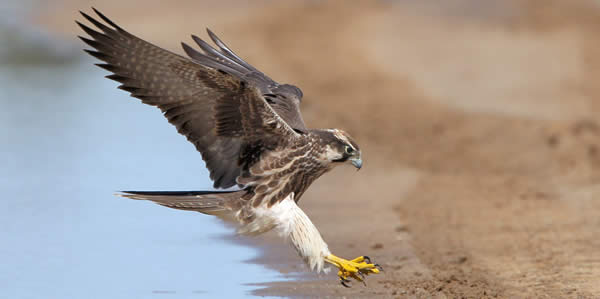
Neal Cooper / Shutterstock.com
Resources
I will always recommend original sources first; read up on her in the Eddas (especially the Lay of Hyndla and with honorable mention to the Lay of Thrym). She is mentioned in many of the Sagas as well, including Egil’s Saga, the Ynglingsaga, and Volsunginsaga.
I definitely recommend Patricia Lafayllve’s Freyja, Lady, Vanadis as a comprehensive and detailed look at Lady. Patricia focuses on information in the lore, although she does discuss modern gnosis as well in one chapter. She’s been a priestess of Freyja for many years and is the first person that I would want to ask if I had a question about the Lady.
Cara Freyasdaughter (of Happily Heathen here on Patheos) runs a wonderful blog devoted to her called The Gold Thread. The blog is filled with good insight about the Lady, including her “Love Notes From Freya”.
Though it may be considered unorthodox (that’s a huge surprise coming from me, right?) to say so, go to the Lady herself. Read the lore, both old and new, but offer to her, pray to her, reach out to her. Share mead and sweet drinks with her, offer her your pleasure, joy, and tears, sing love songs to her and dedicate to her the study and practice of magic. Know whom you approach, but approach her nevertheless with your head held high, your hands outstretched, your heart open and your eyes clear. She brings beauty and wonders to those who bring good things to her, and though some of her lessons may be painful they are always worth the price in the end.

Click here to like
Patheos Pagan on Facebook.

Click here to like
the Agora on Facebook
The Lady’s Quill is published on the second and fourth Thursday of every month. You can subscribe by RSS and e-mail.
Please use the links to the right to keep on top of activities here on the Agora as well as across the entire Patheos Pagan channel.
Previous Post
September 9, 2015
The Cartomancer: Questions of Excellence
Next Post

September 11, 2015 Happily Heathen: A Simple Blot for Freyr
Browse Our Archives
Select a Category A Lakeside Hearth Adventures in Wortcunning Alone In Her Presence Arts, Crafts & Cooking Birthing Hereditary Witchcraft Book of Blackbirds Book Reviews Born-Again Witch Cauldron, Sword, Spear, & Stone Cermony and Liturgy Columns Community Dandelion Seeds Dear Jasmine Druid Thoughts Editor's Picks Everyday Pagan Family & Household Practice Family Traditions Full Frontal Magic Gateway Goddess Guest Articles Happily Heathen Health and Wellness Hearth of Hellenism Heathen Woman Hills of the Horizon History Holidays Horse Goddesses Interfaith Interviews Irish-American Witchcraft Jewish Witch Lamp & Labyrinth Letters from Midgard Literature, Media, Film, Music Loop of Brighid Love, Sex & Relationships Magic or Magick Making Light Naturalistic Traditions Nature News Outside The Circle Pantheisticon Politics Prayers, Poems, Blessings & Stories Queer Femme Mystic Queer of Swords Recipes Ritual and Practice Science and Research Seekers and Guides Seeking the Grail Socially Responsible Magic Spear of Athena Star Made Witch Syncretic Electric Technology The Blooming Staff The Busy Witch The Cartomancer The Crow's Nest The Dance of Pagan Recovery The Hearth of Hellenism The Lady's Quill The Other Side of the Hedge The Path of She The Rantin' Raven The Witches Next Door The Zen Pagan Theology, Ethics, Philosophy Tree City Witch Urban Earthwitch Wayfaring Woman Witch on Fire Wyrd Words
Select a Month January 2026 March 2025 December 2024 June 2024 April 2024 March 2024 January 2024 December 2023 November 2023 October 2023 August 2023 July 2023 May 2023 April 2023 March 2023 February 2023 January 2023 December 2022 November 2022 October 2022 September 2022 August 2022 July 2022 June 2022 May 2022 March 2022 February 2022 January 2022 December 2021 November 2021 October 2021 September 2021 August 2021 July 2021 June 2021 May 2021 April 2021 March 2021 February 2021 January 2021 December 2020 November 2020 October 2020 September 2020 August 2020 July 2020 June 2020 May 2020 April 2020 March 2020 February 2020 January 2020 December 2019 November 2019 October 2019 September 2019 August 2019 July 2019 June 2019 May 2019 April 2019 March 2019 February 2019 January 2019 December 2018 November 2018 October 2018 September 2018 August 2018 July 2018 June 2018 May 2018 April 2018 March 2018 February 2018 January 2018 December 2017 November 2017 October 2017 September 2017 August 2017 July 2017 June 2017 May 2017 April 2017 March 2017 February 2017 January 2017 December 2016 November 2016 October 2016 September 2016 August 2016 July 2016 June 2016 May 2016 April 2016 March 2016 February 2016 January 2016 December 2015 November 2015 October 2015 September 2015 August 2015 July 2015 June 2015 May 2015 April 2015 March 2015 February 2015 January 2015 December 2014 November 2014 October 2014 September 2014 August 2014 July 2014 June 2014 May 2014 April 2014 March 2014 February 2014 January 2014 December 2013 November 2013 October 2013 September 2013 August 2013 July 2013 June 2013 May 2013 April 2013 March 2013 February 2013 January 2013 December 2012 November 2012 October 2012 September 2012 August 2012 July 2012 June 2012 May 2012 April 2012 March 2012 February 2012 January 2012
Follow Us!
TAKE THE
Religious Wisdom Quiz
According to Hebrews, who serves as a copy and shadow of what is in heaven?
Select your answer to see how you score.
The priests in the earthly sanctuary The angels The prophets The apostles
Related posts from Agora

Simple Witchery: To Keep Silent

Simple Witchery: Leaning On The Four Pillars

Pergamum Unfurled: Magic with the Greek Gods (Book...

Pergamum Unfurled: Cunning Words (Review)
TRENDING AT PATHEOS Pagan

I was recently chatting with someone on Instagram. She asked me what...

While there are many people who share their results, the end of...

On July 23, I saw Christopher Nolan's The Odyssey which is Homer’s...

As I write this two big events have just finished up. One...

Restoring the Watershed of Divine Love
Perhaps cooperation is not something we manufacture through legislation, ideology, or moral...

Many UUs don’t pray because of bad experiences in a previous religion,...
view all Pagan blogs
Ad-Free & Subscriber Log-In Subscription Support
- About Us
- 2026 Calendar
- Videos
- Podcasts
- Library of World Religions
- Faith In Media Tracker
- Advertise With Us
- Write for Us
- Privacy Policy
- Terms of Service
- Do Not Sell My Data
- Contact Us
- Radiant Digital
- Manage Newsletter Subscriptions
- Unsubscribe From Notifications
- Sitemap
Copyright 2008-2026, Patheos. All rights reserved.
Subscription Support Ad-Free & Subscriber Log-In
Follow Patheos