
BuddhistCatholicContemplativeEvangelicalGeneral ChristianHinduJewishLatter-day SaintMuslimNew VisionsProgressive Christian
Beliefs
- Buddhist
- Catholic
- Contemplative
- Evangelical
- General Christian
- Hindu
- Jewish
- Latter-day Saint
- More Voices
- Muslim
- New Visions
- Pagan
- Progressive Christian
Topics
- Religion News
- Food and Religion
- Sports and Religion
- Religious Art
- Religious Music and Entertainment
- Religious Events
- History and Religion
- Style and Religion
- Politics and Religion
- Women in Religion
- Recreation Outdoors and Religion
- Business Finance and Religion
- Careers Workplace and Religion
- Education and Religion
- Family Parenting and Religion
- Health Fitness and Religion
- Home and Religion
- Relationships and Religion
- Technology and Religion
- Travel and Religion
Columnists
- Buddhist Columnists
- Business Finance and Religion Columnists
- Careers Workplace and Religion Columnists
- Catholic Columnists
- Contemplative Columnists
- Education and Religion Columnists
- Evangelists Columnists
- Family Parenting and Religion Columnists
- General Christian Columnists
- Health Fitness and Religion Columnists
- Hindu Columnists
- History and Religion Columnists
- Home and Religion Columnists
- Jewish Columnists
- More Voices Columnists
- Latter Day Columnists
- Muslim Columnists
- New Visions Columnists
- Nonreligious Columnists
- Pagan Columnists
- Politics and Religion Columnists
- Progressive Columnists
- Recreation Outdoors and Religion Columnists
- Relationships and Religion Columnists
- Religion News Columnists
- Religious Art Columnists
- Religious Events Columnists
- Religious Music and Entertainment Columnists
- Sports and Religion Columnists
- Style and Religion Columnists
- Technology and Religion Columnists
- Travel and Religion Columnists
- Women in Religion Columnists
Resource Library
- 2026 Calendar
- Library of World Religions
- The 100 Most Holy Places on Earth
- Patheos Answers
- Podcasts
- Videos
- Faith Leaders Database
- Anglican Episcopalian
- Bahai
- Baptist
- Buddhism
- Christianity
- Confucianism
- Eastern Orthodoxy
- Hinduism
- Holiness and Pentecostal
- ISKCON
- Islam
- Judaism
- Lutheran
- Methodist
- The Church of Jesus Christ of Latter-day Saints
- New Age
- Paganism
- Presbytarian and Reformed
- Protestantism
- Religion Behind the Scenes
- Roman Catholic
- Scientology
- Shia Islam
- Sikhism
- Sufism
- Sunni Islam
- Taoism
- Zen
- See all religions
Research Tools
 Ad-Free & Subscriber Log-In Subscription Support
Ad-Free & Subscriber Log-In Subscription Support
Follow Patheos 

- Trending:
- Forgiveness
- |
- Marriage
- |
- Consciousness
- |
- Death Penalty
- |
- Election
- |
- Halloween

- Home
- Pagan
- Star Made Witch
Star Made Witch
Last updated on: September 14, 2015 at 4:00 pm by Spiritscraft
Star Made Witch 2015-09-14T11:53:41+00:00 Spiritscraft
Patheos Explore the world's faith through different perspectives on religion and spirituality! Patheos has the views of the prevalent religions and spiritualities of the world.
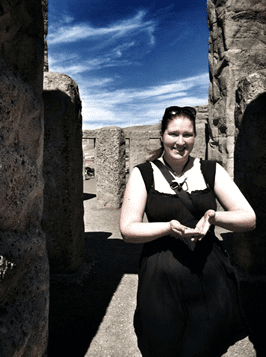
Sara Star aka Spiritscraft / Eric AhernSawyer
(used with permission)
In my family, the great outdoors is our church. I suppose that is animism in a nutshell. I was raised with new age ideas and practices so it wasn’t a shock to them I’m a witch. My mom just figured we’d always been weird and what’s more typical of weird people than a witch in the family? We went out camping to be closer to divine spirits sleeping under the night sky. This perspective on everything is as good a reason as any to call my column Star Made Witch.
There’s more to a person than can be said in a few lines, but the main thing to tell you about myself and my column is that I am a Traditional Witch. Traditional Witchcraft is a post modern term that indicates irreligious (indifferent to religion) counter-cultural and animist magical practices. In contrast, Wicca is generally understood to be a tradition of religious (organized set of worship practices and moral rules) pagan ritual magic. At this point, the differences between Initiatory Wicca and Traditional Witchcraft are probably negligible–most lineages are oathbound so we can’t say. However, it’s only fair to recognize they forged out on different paths.
As I am using them: Traditional Witchcraft and Wicca are post modern terms. Despite notable instances of people identifying themselves as witches prior to the 1950’s, it was illegal to do so. Witch was pretty much a incriminating slur. The term is reclaimed and casts a more holistic view on those it was thrown at in the past: cunning folk, certain kinds of heretics, and fairy doctors.
Even though Traditional Witchcraft is irreligious, it intersects with religions, even those that forbid it. People practice witchcraft usually not because of their religion, but despite it. It is vital to the understanding of Traditional Witchcraft to acknowledge that people do things against their religion while still being a member of that religion. They might do it because they want change or because that aspect of the religion isn’t serving them but others are. Perhaps they have no choice but to publicly subscribe to religion to fulfill social expectations while practicing their magical ways privately. The point being most of the figures now described as Traditional Witches were also members of the state religion and did not always identify as witches.
To date, the words taken alone– “traditional” and “witchcraft” have been attached to connotations of an ancient unbroken lineage of unchanged pagan belief and custom. While the forces Traditional Witches partner with or sometimes command may be ancient pagan survivals, few actually claim or expect their lines to be unchanged, unbroken nor ancient. These are World Religion values imposed onto alternative spiritualities because they are religions of the book which are validated by its age and assumed unchanged meaning of the word of their God(s). Traditional Witchcraft is mostly oral and experiential, but most witches did and do love magical books which may include the Bible. Traditional Witchcraft is constellations of living, creative and poetic magic mystery disciplines.
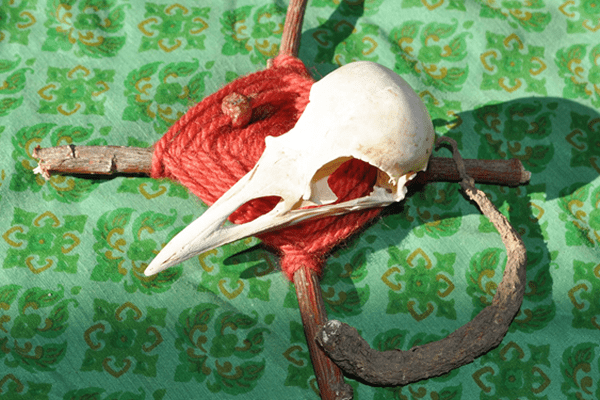
Photo Courtesy of Amy (used with permission)
Clarifications aside, what do Traditional Witches do? Hallmarks of Traditional Witchcraft include association with familiar spirits, subverting oppressive regimes magically and traveling to or dealing with the otherworld intimately. Additionally, Traditional Witches do the same kinds of things pretty much any other kind of witch does: that is cast magic spells for personal or community improvement.
I know some people are uncomfortable with the resistance aspect, but during the medieval period, things we take as a given like: getting to have sex with your partner on your wedding night, bathing, taking care to heal illness, having pets and parties were at various times and places counter to the law and religious dogma. Many of the people tried as witches were accused of violating those religious expectations. I have no reason to think people then were much different from people now. There were rebels then just as there are rebels now who did/do naughty things like have sex in the woods, skinny dip, bite their thumbs at authority and did/do (or help friends) use herbs for healing, opening their minds, and to ease pain.
In every expression of Traditional Witchcraft I have seen there is some level of interaction with spirits, be it ancestors, fairies, personal gods, or animal spirits. Possibly the familiar spirits are the source of the witch’s powers. In some reports the relationships are romantic or sexual, in others they are more fraternal or civil. People house spirits in bottles, in idols, in tools or they visit them at set locations. Some come to them only in dreams and visions. Others sense their spirit(s) all the time.

Photo Courtesy of Amy (used with permission)
These practices are very ecstatic. This involves a level of mysticism that is unpredictable because it is happening outside of rigid religious standards. Things can get wild. People fly their souls off to battle spiritual enemies, or to dance within a circle with a horned beast, or party with fairies. All of this rending of standard reality occurs with an otherworld consciousness. This is compared to some more transcendent traditions in which a higher level of knowledge is sought. Traditional witches are usually seeking knowledge through atavism. Atavism is experiences of wisdom through wildness and unlearning the illusions of societal structures and strictures.

Click here to like
Patheos Pagan on Facebook.

Click here to like
the Agora on Facebook
Star Made Witch is published bi-monthly on alternating Mondays here on the Agora. Subscribe via RSS or e-mail!
Please use the links to the right to keep on top of activities here on the Agora as well as across the entire Patheos Pagan channel.
Previous Post

September 13, 2015
Witch on Fire: Mabon Feasts Serve Up a Challenge
Next Post

September 15, 2015 Irish-American Witchcraft: Books On Irish Paganism and the Fairy Faith
Browse Our Archives
Select a Category A Lakeside Hearth Adventures in Wortcunning Alone In Her Presence Arts, Crafts & Cooking Birthing Hereditary Witchcraft Book of Blackbirds Book Reviews Born-Again Witch Cauldron, Sword, Spear, & Stone Cermony and Liturgy Columns Community Dandelion Seeds Dear Jasmine Druid Thoughts Editor's Picks Everyday Pagan Family & Household Practice Family Traditions Full Frontal Magic Gateway Goddess Guest Articles Happily Heathen Health and Wellness Hearth of Hellenism Heathen Woman Hills of the Horizon History Holidays Horse Goddesses Interfaith Interviews Irish-American Witchcraft Jewish Witch Lamp & Labyrinth Letters from Midgard Literature, Media, Film, Music Loop of Brighid Love, Sex & Relationships Magic or Magick Making Light Naturalistic Traditions Nature News Outside The Circle Pantheisticon Politics Prayers, Poems, Blessings & Stories Queer Femme Mystic Queer of Swords Recipes Ritual and Practice Science and Research Seekers and Guides Seeking the Grail Socially Responsible Magic Spear of Athena Star Made Witch Syncretic Electric Technology The Blooming Staff The Busy Witch The Cartomancer The Crow's Nest The Dance of Pagan Recovery The Hearth of Hellenism The Lady's Quill The Other Side of the Hedge The Path of She The Rantin' Raven The Witches Next Door The Zen Pagan Theology, Ethics, Philosophy Tree City Witch Urban Earthwitch Wayfaring Woman Witch on Fire Wyrd Words
Select a Month January 2026 March 2025 December 2024 June 2024 April 2024 March 2024 January 2024 December 2023 November 2023 October 2023 August 2023 July 2023 May 2023 April 2023 March 2023 February 2023 January 2023 December 2022 November 2022 October 2022 September 2022 August 2022 July 2022 June 2022 May 2022 March 2022 February 2022 January 2022 December 2021 November 2021 October 2021 September 2021 August 2021 July 2021 June 2021 May 2021 April 2021 March 2021 February 2021 January 2021 December 2020 November 2020 October 2020 September 2020 August 2020 July 2020 June 2020 May 2020 April 2020 March 2020 February 2020 January 2020 December 2019 November 2019 October 2019 September 2019 August 2019 July 2019 June 2019 May 2019 April 2019 March 2019 February 2019 January 2019 December 2018 November 2018 October 2018 September 2018 August 2018 July 2018 June 2018 May 2018 April 2018 March 2018 February 2018 January 2018 December 2017 November 2017 October 2017 September 2017 August 2017 July 2017 June 2017 May 2017 April 2017 March 2017 February 2017 January 2017 December 2016 November 2016 October 2016 September 2016 August 2016 July 2016 June 2016 May 2016 April 2016 March 2016 February 2016 January 2016 December 2015 November 2015 October 2015 September 2015 August 2015 July 2015 June 2015 May 2015 April 2015 March 2015 February 2015 January 2015 December 2014 November 2014 October 2014 September 2014 August 2014 July 2014 June 2014 May 2014 April 2014 March 2014 February 2014 January 2014 December 2013 November 2013 October 2013 September 2013 August 2013 July 2013 June 2013 May 2013 April 2013 March 2013 February 2013 January 2013 December 2012 November 2012 October 2012 September 2012 August 2012 July 2012 June 2012 May 2012 April 2012 March 2012 February 2012 January 2012
Follow Us!
TAKE THE
Religious Wisdom Quiz
What food did Jesus say He is, symbolically?
Select your answer to see how you score.
Salt of the Earth Honey from the Rock Bread of Life Fruit of the Vine
Related posts from Agora

Simple Witchery: To Keep Silent

Simple Witchery: Leaning On The Four Pillars


Simple Witchery: Resistance and Resilience in Hard Times
TRENDING AT PATHEOS Pagan

I was recently chatting with someone on Instagram. She asked me what...

While there are many people who share their results, the end of...

On July 23, I saw Christopher Nolan's The Odyssey which is Homer’s...

As I write this two big events have just finished up. One...

Restoring the Watershed of Divine Love
Perhaps cooperation is not something we manufacture through legislation, ideology, or moral...

Many UUs don’t pray because of bad experiences in a previous religion,...
view all Pagan blogs
Ad-Free & Subscriber Log-In Subscription Support
- About Us
- 2026 Calendar
- Videos
- Podcasts
- Library of World Religions
- Faith In Media Tracker
- Advertise With Us
- Write for Us
- Privacy Policy
- Terms of Service
- Do Not Sell My Data
- Contact Us
- Radiant Digital
- Manage Newsletter Subscriptions
- Unsubscribe From Notifications
- Sitemap
Copyright 2008-2026, Patheos. All rights reserved.
Subscription Support Ad-Free & Subscriber Log-In
Follow Patheos