
BuddhistCatholicContemplativeEvangelicalGeneral ChristianHinduJewishLatter-day SaintMuslimNew VisionsProgressive Christian
Beliefs
- Buddhist
- Catholic
- Contemplative
- Evangelical
- General Christian
- Hindu
- Jewish
- Latter-day Saint
- More Voices
- Muslim
- New Visions
- Pagan
- Progressive Christian
Topics
- Religion News
- Food and Religion
- Sports and Religion
- Religious Art
- Religious Music and Entertainment
- Religious Events
- History and Religion
- Style and Religion
- Politics and Religion
- Women in Religion
- Recreation Outdoors and Religion
- Business Finance and Religion
- Careers Workplace and Religion
- Education and Religion
- Family Parenting and Religion
- Health Fitness and Religion
- Home and Religion
- Relationships and Religion
- Technology and Religion
- Travel and Religion
Columnists
- Buddhist Columnists
- Business Finance and Religion Columnists
- Careers Workplace and Religion Columnists
- Catholic Columnists
- Contemplative Columnists
- Education and Religion Columnists
- Evangelists Columnists
- Family Parenting and Religion Columnists
- General Christian Columnists
- Health Fitness and Religion Columnists
- Hindu Columnists
- History and Religion Columnists
- Home and Religion Columnists
- Jewish Columnists
- More Voices Columnists
- Latter Day Columnists
- Muslim Columnists
- New Visions Columnists
- Nonreligious Columnists
- Pagan Columnists
- Politics and Religion Columnists
- Progressive Columnists
- Recreation Outdoors and Religion Columnists
- Relationships and Religion Columnists
- Religion News Columnists
- Religious Art Columnists
- Religious Events Columnists
- Religious Music and Entertainment Columnists
- Sports and Religion Columnists
- Style and Religion Columnists
- Technology and Religion Columnists
- Travel and Religion Columnists
- Women in Religion Columnists
Resource Library
- 2026 Calendar
- Library of World Religions
- The 100 Most Holy Places on Earth
- Patheos Answers
- Podcasts
- Videos
- Faith Leaders Database
- Anglican Episcopalian
- Bahai
- Baptist
- Buddhism
- Christianity
- Confucianism
- Eastern Orthodoxy
- Hinduism
- Holiness and Pentecostal
- ISKCON
- Islam
- Judaism
- Lutheran
- Methodist
- The Church of Jesus Christ of Latter-day Saints
- New Age
- Paganism
- Presbytarian and Reformed
- Protestantism
- Religion Behind the Scenes
- Roman Catholic
- Scientology
- Shia Islam
- Sikhism
- Sufism
- Sunni Islam
- Taoism
- Zen
- See all religions
Research Tools
 Ad-Free & Subscriber Log-In Subscription Support
Ad-Free & Subscriber Log-In Subscription Support
Follow Patheos 

- Trending:
- Forgiveness
- |
- Marriage
- |
- Consciousness
- |
- Death Penalty
- |
- Election
- |
- Halloween

- Home
- Pagan
- Seeking the Grail: Into Gold She Sang
Seeking the Grail: Into Gold She Sang
Last updated on: August 3, 2015 at 4:00 pm by Shauna Aura Knight
Seeking the Grail: Into Gold She Sang 2015-08-03T12:36:06+00:00 Shauna Aura Knight
Patheos Explore the world's faith through different perspectives on religion and spirituality! Patheos has the views of the prevalent religions and spiritualities of the world.
I think a lot about the meaning of fairytales and stories. Recently I began working with the fairytale Rumplestiltskin and the idea of “Straw into Gold” as the theme of a festival I’m presenting at in a couple of weeks. On first blush, I thought…that’s a fantastic theme. I’m all about personal transformation, alchemy. But then I thought about the source fairytale…and I realized, this is not at all an empowering story of transformation. It’s a story about a girl put in a horrible situation by her father, and then by the king, and she’s then exploited by Rumplestiltskin. The only agency the girl displays is when she discover’s the name of Rumplestiltskin so she can renege on her contract.
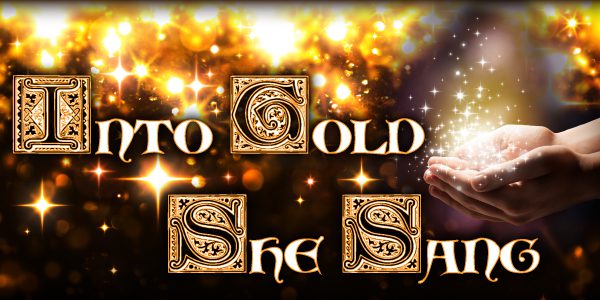
Since I have fairytales on the brain, both as stories as a vehicle for personal transformation in ritual, and as I’m also a fiction author and fairytale themes weave their way through my paranormal romance books, that got me thinking–as it usually does–about myths and stories and themes. And since it’s the height of summer harvest and Lughnassadh, I’m also often thinking about the magic of gold.
And I needed to figure out the nugget of gold in this story since I’d be working with it for the main ritual as well as other workshops.
I posted about my dilemma on Facebook, and had a great conversationon my wall with a bunch of folks who had similar thoughts about the disempowering aspects of this particular tale. Here are some of the various facets that came up, and then I’ll outline how I finally decided to approach the main ritual I’m facilitating in two weeks to be true to the fairytale, but to also make the ritual an empowering and transformative experience.
Contracts
Much of this story revolves around the power of names, the power of contracts, the power of words, the power of oaths. The young woman is trapped by a boast her father makes: that she can spin straw into gold. Now–her father never suffers the consequences of this lie, because the young woman pays for it instead. She is the one who will be killed by the king if she doesn’t produce the gold. She, then, makes two contracts that she fulfills, and one she does not. She gives Rumplestiltskin two pieces of jewelry (usually it’s a ring, then a necklace) for the first and second night, and she promises her first-born child for the third.
Some potential lessons for this facet:
- Don’t make boasts you can’t fulfill, don’t take oaths you can’t keep. Lies have consequences
- Sometimes it’s time to break an oath, such as when you made a promise in an unfair situation.
The latter one is of especial interest to me because I often find–when I teach leadership and personal growth workshops–people get bound up in contracts signed in their own blood, their own naivete, and they are bad contracts. Yet, people feel bound by them, and they end up damaging their own lives by trying to stay in these contracts.
In the story, the young woman’s clearly taken advantage of by Rumplestiltskin, and the oath he takes from her is unfair, it’s under duress. Years ago I worked with the story of Psyche and Eros and one of the themes of the story was the unfair contract, the time when the oath must be broken. We explored lots of different types of oaths–such as a marriage oath–and sometimes it just isn’t realistic to stay in that contract.
We explored the kinds of “deals with the Devil” that we make all the time. Contracts such as, “I’m not good enough,” or, “I have to….” Name something you say over and over and that might be a contract you made that it’s time to re-evaluate.
Sometimes, taking our own power back is breaking out of the terrible crap we never consented to. Or, we were put in an impossible situation and we made a bad bargain. When you make a mistake, or were forced into a contract, you can take the opportunity to get out. This can include an abusive relationship, or just a friendship that has run its course.
Free Magic
This one has been more and more important for me–free magic. I see so many people coming into the Pagan community (or who’ve been involved for a long time) and they want free magic. What I mean is, they use magic to mean, “I squint really hard and I light the right candle, and burn the right incense, and then stuff happens for me and I don’t have to do any real work.” That’s not how magic works.
The girl’s father promises she can spin straw into gold. He’s lying, but he wants something for free. Now, it’s possible if he’d have come clean, the King wouldn’t have taken his daughter away and locked her in the tower, he might have had mercy. Or if the girl had come clean, the king might have punished the father for lying, and not the girl. But instead, she weeps and wails and Rumplestiltskin comes to her. And–let’s face it, she wants the free magic too. The first two nights, the cost she can bear. And the third night, it seems that it’s no cost to her at all–not until she has her child in her arms does she understand the cost.
What was the cost of that free magic? Because, it’s not free.
Instead, this is the only real empowering aspect of the story, as-told. She is brave and daring and goes to do what could be a very scary thing for a sheltered girl. She goes into the wild to try and learn his name.
Myths and fairytales are full of stories of heroes and heroines who go through difficult things in order to gain their magic, their power. It’s the entire essence of the hero’s journey, the grail quest–the hero goes out into the wild and, in doing so, transforms and becomes more powerful. In the Ballad of Tam Lin, Jennet spends a year sewing her magical green mantle. Isis tricks Ra into gaining his power. Inanna does the same to gain the “me” from Enki. Psyche travels the world and Underworld fulfilling tasks for Aphrodite to regain her lover Eros. Magic is built, it’s developed, it’s grown.
What are the difficult things you’ve had to do, when have you pushed yourself to do the impossible? What was your motivation? When were you willing to do the hard work to gain the magic? What are you willing to give up, what are you willing to sacrifice, to gain the magic?
Secret Names
Secret names are an old trope of many fairytales and myths, but after examining a few, I realized that there’s a commonality; female heroines (and goddesses) are often the ones stealing the secret name of a male god to gain their power.
- Lilith used the secret name of God to escape from Adam, YHVH being a secret name of power
- Name of RA used by Isis to create the magic to bring Osiris back to life
- Inanna gains the “meh” powers/arts from Enki by getting him drunk
- Freyja has sex with four dwarves to gain the power of the Brisingamen necklace
The young woman in the story sneaks out into the woods to learn Rumplestiltskin’s secret name; if she can guess his name, he will not take her first-born child.
Feminism and Misogyny
I’d be remiss if I didn’t point out the complete powerlessness of the young woman in the original story. She doesn’t really have any agency, any power; she’s stuck. It’s not her magic that brings the gold, and she gets taken advantage of. So for me I look at this as an opportunity to acknowledge that disempowered place and reclaim our power.
She’s put into a horrible position by the men around her. Boasting (the father) Greed (the king) Extortion (Rumplestiltskin). This is a story about how weak women are, and how the only way out of a bad situation is to sneak around and maybe use their cleverness to find a way out of the contract. Similar to the above myths about female goddesses taking their power/magic from more powerful gods, this tells a story of how the dominant culture views women.
In many stories, women only get power from stealing it, or from trickery, or by being gifted it by men. Then again, this story can drastically change with a different twist on the stories. I’ve told the story of Isis seeking to bring together the pieces of Osiris, and instead of tricking the sun god Ra for his magic name (and thus, his power) Ra challenges her to acknowledge her own power her own secret name. The cost? She can never see herself as powerless again. (And interestingly, the phallus she creates for Osiris is gold too!)
Worthless and Value
What’s worthless? What’s valuable? Alchemical lore focuses quite a bit on the idea of turning lead into gold–something worthless into something of value. Straw into gold is the same thing–taking something perceived of as worthless into something of value. But what value? Lead is valuable for certain things. It’s certainly not as pretty as gold. Straw, too, would be of more use to a simple villager than golden riches. For that matter, how many myths focus on the rags-to-riches, or something turning into gold?
So the core of the idea of this kind of transformation is that gold is “good” whereas other things are “bad.” That gold has worth, it has value, whereas other things do not.
Generally, I see this as just an easy exercise in metaphor and contrast. Gold is a really easy metaphor for beauty/valuable/special. But thinking about this story has drawn me to ask the question, when is a story about taking something perceived as worthless and transforming it into something of value, and what is that value? And is the “worthless” thing truly worthless, or is it just not valued by the dominant culture?
The risk of this particular cultural meme is that it’s a quick slide into dualism. Dualism is the philosophical belief in two basic binaries, good and evil. Paganism often supports these binaries by breaking things into God/Goddess, Masculine/Feminine, Solar/Lunar, Gold/Silver, White/Black, Transcendance/Embodiment, Heaven/Earth, Light/Dark, Positive/Negative. The problem is that binaries like these can lead to the easy dualism of Good/Bad.
Most “lead into gold” stories, and most stories patterned on the hero’s journey, are about that transformation, but on a personal/spiritual level. The gold is the metaphor. The Grail–often perceived/illustrated as a golden chalice–often serves as the visual representation of that transformation.
Gold, thus, is usually a shorthand for good/valuable/positive, but it’s always useful to take a look at any binaries offered and if it’s connected to a dualistic good/evil approach.
Beauty and Magic
One of my favorite quotes on my comment thread about this story is from Pagan musician Sharon Knight (no relation) who said that for her a theme of straw into gold is “Making beauty out of this fucked up world.”
I couldn’t agree more with that sentiment, and that’s a lot of the essence of my work as an activist, as a change agent, as someone who crafts rituals and workshops to make a fertile ground for personal transformation. So part of the essence of that transformation work is gaining the magic of transformation itself. Gaining the power to transform, to transmute. Gaining the power to transform is a form of magic in itself.
When we’ve done this, we can take challenging, painful, difficult situations and transform them, learn from them, gain power from them, and we can work to step into our authentic selves, our best selves. Most artists I know (painters, musicians, dancers, performers…any kind of artist) is pretty good at transforming the pain of our past, or the pain we see in the world, into something of beauty.
This is the essence of creativity.
Into Gold
A few times when I’ve tried to describe the sensation of connecting to the divine, I’ve described it as having “gold on my tongue.” While I’ve never been fully trance-possessed, the times when I’ve felt closest to drawing down or aspecting a facet of the divine are when words seemed to flow out of my mouth. There was still a conscious connection, but I felt like liquid gold, I felt that I was speaking the right, “correct” words for that moment.
Often it was in a moment of desperation–trying to get a group to sing or otherwise engage in participation when they’re just staring at me, unwilling to open up and be participatory in a ritual. Other times, it was more of a moment of transition, of cracking open, of facing our shadows or opening our hearts to the greater divine. Sometimes people in the ritual seemed to just need that extra…something, that extra push, that extra safety, the right words to open them up to that thing they were seeking, and then I’d have gold on my tongue and that would somehow bring them across to that place.
And this brought me right back to the magic of words, the magic of names, the magic of what activists often call “right speech.”
When I thought about the power of names, and words of power, I had the essence of the ritual: Claiming our gold. Claiming our own name of power. What if, instead of making a really bad contract with Rumplestiltskin to save our own hide and cover for our greedy father, what if we instead learn the power of our own magic? The power of our words?
The ritual would be about claiming our power through our own secret name. The name of God, the name of the divine, the word of power that unlocks creation and our own magic.
Straw Into Gold Ritual Arc
Thus, having gone through all that, here’s the arc of ritual descriptions I wrote up for the weekend’s rituals at the Six Crows festival, and I’ll also be doing a workshop specifically on “Finding Your Personal Magic.”
Opening Ritual: Opening to Gold
Turning straw into gold is about transformation. It’s about manifestation. It’s about unlocking the secrets of the universe, and your own personal magic, your personal power. If you unlock the inner mysteries, if you face your shadows, if you look into the deep within, there your power lies, and within you is the power to turn straw into gold. Let us open to that magic, let us open to that power, let us open that gate within and without, let us open to the gold.
Main Ritual: Claiming Radiance, Power, and Gold
Would you claim your magic? Many fairytales start with a challenge; can you remember when you were trapped in the tower with the straw and the spinning wheel? Then someone offers you help…but only for a price. Magic always has a price.
To claim your own magic is no easy task. What are you willing to sacrifice? Will look into the mirror…face your fears, your shadows…will you break the spells that bind you? There’s a secret to power, to radiance…you can never say you are powerless again…and opening to magic will crack open your heart. What is your secret name of power? With a breath of enchanted gold, speak the incantation, the words of transformation. We spin radiance, beauty, and love…and into gold we sing.
Closing Ritual: Bringing Our Gold Into the World
We have sung the gold. We have breathed out the breath of life, the words of power. We have transformed ourselves, we have claimed the secret name. But what do we do with all of this magic? Is this magic just here to sit within us, untapped? Or is it to bring healing, beauty, and love out into the world? We begin the process of spiraling back out into the world. Let us bring that gold with. Let us breathe out, sing out our magic together to make this a better world around us.

Click here to like
Patheos Pagan on Facebook.

Click here to like
the Agora on Facebook
Seeking the Grail is published on monthly on the third Monday. Subscribe via RSS or e-mail!
Please use the links to the right to keep on top of activities here on the Agora as well as across the entire Patheos Pagan channel.
Previous Post
August 1, 2015
The Rantin' Raven: Cultural Appropriation? Really?
Next Post
August 4, 2015 Irish-American Witchcraft: Why I'm Still ... Liminal
Browse Our Archives
Select a Category A Lakeside Hearth Adventures in Wortcunning Alone In Her Presence Arts, Crafts & Cooking Birthing Hereditary Witchcraft Book of Blackbirds Book Reviews Born-Again Witch Cauldron, Sword, Spear, & Stone Cermony and Liturgy Columns Community Dandelion Seeds Dear Jasmine Druid Thoughts Editor's Picks Everyday Pagan Family & Household Practice Family Traditions Full Frontal Magic Gateway Goddess Guest Articles Happily Heathen Health and Wellness Hearth of Hellenism Heathen Woman Hills of the Horizon History Holidays Horse Goddesses Interfaith Interviews Irish-American Witchcraft Jewish Witch Lamp & Labyrinth Letters from Midgard Literature, Media, Film, Music Loop of Brighid Love, Sex & Relationships Magic or Magick Making Light Naturalistic Traditions Nature News Outside The Circle Pantheisticon Politics Prayers, Poems, Blessings & Stories Queer Femme Mystic Queer of Swords Recipes Ritual and Practice Science and Research Seekers and Guides Seeking the Grail Socially Responsible Magic Spear of Athena Star Made Witch Syncretic Electric Technology The Blooming Staff The Busy Witch The Cartomancer The Crow's Nest The Dance of Pagan Recovery The Hearth of Hellenism The Lady's Quill The Other Side of the Hedge The Path of She The Rantin' Raven The Witches Next Door The Zen Pagan Theology, Ethics, Philosophy Tree City Witch Urban Earthwitch Wayfaring Woman Witch on Fire Wyrd Words
Select a Month January 2026 March 2025 December 2024 June 2024 April 2024 March 2024 January 2024 December 2023 November 2023 October 2023 August 2023 July 2023 May 2023 April 2023 March 2023 February 2023 January 2023 December 2022 November 2022 October 2022 September 2022 August 2022 July 2022 June 2022 May 2022 March 2022 February 2022 January 2022 December 2021 November 2021 October 2021 September 2021 August 2021 July 2021 June 2021 May 2021 April 2021 March 2021 February 2021 January 2021 December 2020 November 2020 October 2020 September 2020 August 2020 July 2020 June 2020 May 2020 April 2020 March 2020 February 2020 January 2020 December 2019 November 2019 October 2019 September 2019 August 2019 July 2019 June 2019 May 2019 April 2019 March 2019 February 2019 January 2019 December 2018 November 2018 October 2018 September 2018 August 2018 July 2018 June 2018 May 2018 April 2018 March 2018 February 2018 January 2018 December 2017 November 2017 October 2017 September 2017 August 2017 July 2017 June 2017 May 2017 April 2017 March 2017 February 2017 January 2017 December 2016 November 2016 October 2016 September 2016 August 2016 July 2016 June 2016 May 2016 April 2016 March 2016 February 2016 January 2016 December 2015 November 2015 October 2015 September 2015 August 2015 July 2015 June 2015 May 2015 April 2015 March 2015 February 2015 January 2015 December 2014 November 2014 October 2014 September 2014 August 2014 July 2014 June 2014 May 2014 April 2014 March 2014 February 2014 January 2014 December 2013 November 2013 October 2013 September 2013 August 2013 July 2013 June 2013 May 2013 April 2013 March 2013 February 2013 January 2013 December 2012 November 2012 October 2012 September 2012 August 2012 July 2012 June 2012 May 2012 April 2012 March 2012 February 2012 January 2012
Follow Us!
TAKE THE
Religious Wisdom Quiz
What does Proverbs 22:6 say about training a child?
Select your answer to see how you score.
Children should be seen and not heard. Train up a child in the way he should go, and when he is old he will not depart from it. Guide the young, and they will not stumble. Teach a child discipline, and he will live in wisdom.
Related posts from Agora

Simple Witchery: To Keep Silent

Simple Witchery: Leaning On The Four Pillars

Pergamum Unfurled: Magic with the Greek Gods (Book...

Pergamum Unfurled: Cunning Words (Review)
TRENDING AT PATHEOS Pagan

I was recently chatting with someone on Instagram. She asked me what...

While there are many people who share their results, the end of...

On July 23, I saw Christopher Nolan's The Odyssey which is Homer’s...

As I write this two big events have just finished up. One...

Restoring the Watershed of Divine Love
Perhaps cooperation is not something we manufacture through legislation, ideology, or moral...

Many UUs don’t pray because of bad experiences in a previous religion,...
view all Pagan blogs
Ad-Free & Subscriber Log-In Subscription Support
- About Us
- 2026 Calendar
- Videos
- Podcasts
- Library of World Religions
- Faith In Media Tracker
- Advertise With Us
- Write for Us
- Privacy Policy
- Terms of Service
- Do Not Sell My Data
- Contact Us
- Radiant Digital
- Manage Newsletter Subscriptions
- Unsubscribe From Notifications
- Sitemap
Copyright 2008-2026, Patheos. All rights reserved.
Subscription Support Ad-Free & Subscriber Log-In
Follow Patheos