
BuddhistCatholicContemplativeEvangelicalGeneral ChristianHinduJewishLatter-day SaintMuslimNew VisionsProgressive Christian
Beliefs
- Buddhist
- Catholic
- Contemplative
- Evangelical
- General Christian
- Hindu
- Jewish
- Latter-day Saint
- More Voices
- Muslim
- New Visions
- Pagan
- Progressive Christian
Topics
- Religion News
- Food and Religion
- Sports and Religion
- Religious Art
- Religious Music and Entertainment
- Religious Events
- History and Religion
- Style and Religion
- Politics and Religion
- Women in Religion
- Recreation Outdoors and Religion
- Business Finance and Religion
- Careers Workplace and Religion
- Education and Religion
- Family Parenting and Religion
- Health Fitness and Religion
- Home and Religion
- Relationships and Religion
- Technology and Religion
- Travel and Religion
Columnists
- Buddhist Columnists
- Business Finance and Religion Columnists
- Careers Workplace and Religion Columnists
- Catholic Columnists
- Contemplative Columnists
- Education and Religion Columnists
- Evangelists Columnists
- Family Parenting and Religion Columnists
- General Christian Columnists
- Health Fitness and Religion Columnists
- Hindu Columnists
- History and Religion Columnists
- Home and Religion Columnists
- Jewish Columnists
- More Voices Columnists
- Latter Day Columnists
- Muslim Columnists
- New Visions Columnists
- Nonreligious Columnists
- Pagan Columnists
- Politics and Religion Columnists
- Progressive Columnists
- Recreation Outdoors and Religion Columnists
- Relationships and Religion Columnists
- Religion News Columnists
- Religious Art Columnists
- Religious Events Columnists
- Religious Music and Entertainment Columnists
- Sports and Religion Columnists
- Style and Religion Columnists
- Technology and Religion Columnists
- Travel and Religion Columnists
- Women in Religion Columnists
Resource Library
- 2026 Calendar
- Library of World Religions
- The 100 Most Holy Places on Earth
- Patheos Answers
- Podcasts
- Videos
- Faith Leaders Database
- Anglican Episcopalian
- Bahai
- Baptist
- Buddhism
- Christianity
- Confucianism
- Eastern Orthodoxy
- Hinduism
- Holiness and Pentecostal
- ISKCON
- Islam
- Judaism
- Lutheran
- Methodist
- The Church of Jesus Christ of Latter-day Saints
- New Age
- Paganism
- Presbytarian and Reformed
- Protestantism
- Religion Behind the Scenes
- Roman Catholic
- Scientology
- Shia Islam
- Sikhism
- Sufism
- Sunni Islam
- Taoism
- Zen
- See all religions
Research Tools
 Ad-Free & Subscriber Log-In Subscription Support
Follow Patheos 

- Trending:
- Advent
- |
- Forgiveness
- |
- Thanksgiving
- |
- Election
- |
- Seasonal Holidays
- |
- Marriage

- Home
- Pagan
- Spear of Athena: Reconstructionism as Methodology, Strengths and Weaknesses
Spear of Athena: Reconstructionism as Methodology, Strengths and Weaknesses
Last updated on: July 24, 2015 at 1:18 am by Conor Warren
Spear of Athena: Reconstructionism as Methodology, Strengths and Weaknesses 2015-07-24T01:18:09+00:00 Conor Warren
Patheos Explore the world's faith through different perspectives on religion and spirituality! Patheos has the views of the prevalent religions and spiritualities of the world.
[Editor’s Note: For a “throwback Thursday” Conor wanted to share an essay originally written as part of his clergy application within Hellenion. It was originally posted on his site, Under the Owl’s Wing, on August 13, 2013]
The strengths and weaknesses of reconstructionism as a methodology are many and varied, and are things that could be hotly debate by individuals for a while, the views presented are my own as arrived at by introspection and contemplation as well as by interaction with various Hellenists and reconstructionists of other polytheistic faiths.
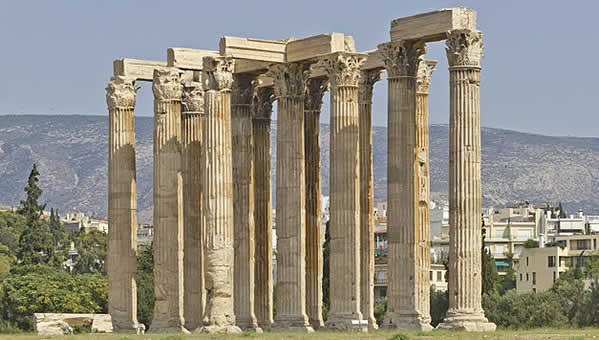
“Attica 06-13 Athens 25 Olympian Zeus Temple” by A.Savin.
Licensed under CC BY-SA 3.0 via Wikimedia Commons.

The biggest strength of this methodology is that you don’t have to make things up as you go along. Reconstructionism has a base foundation set-up, individual devotional rites may vary from person to person but will tend to have the same essential form. This method also provides us with a calendar (however vague it may be) and sets us up a way of tracking time that reinforces our religious identities and helps us separate ourselves a bit more from the sometimes secular, sometimes Christian culture that we are surrounded by.
Another benefit of this approach is that we can more clearly and more carefully define who we aren’t and who we are. Polytheistic religions in general tend to have many variations and nuances from region to region (just looking at Hinduism [not technically polytheistic, but close enough in function], Shinto, and West African religions) even among the same general “grouping” given to the faith from those with an etic perspective. Thus certain boundaries get very blurry and it can cause the ‘essence’ or the distinctness of the faith to be muddled with other traditions. This is not to say that this methodology prevents people from doing these things, but rather that things can be a bit more clearly defined as Hellenic and non-Hellenic, though not with one-hundred percent precision. In concept this is a big asset to allowing religious exploration in other areas in so long as it results in a dual practice [two religions that are practiced by one person yet kept separately] and not syncretism (historical syncretism is a different issue and will not be discussed at this time). A Hellenist should then, very easily, be able to practice Shinto, Kemetism, Heathenry, Ceremonial Magic, Buddhism, or Hinduism assuming that it does not interfere with or appropriate things from their Hellenic faith. Sadly this concept is not always followed and persons who engage in dual faith practice are often marginalized by other Hellenists and driven from groups, which is a habit that we must avoid.

“The Parthenon in Athens” by Steve Swayne – File:O Partenon de Atenas.jpg
Originally posted to Flickr as The Parthenon Athens
Licensed under CC BY 2.0 via Wikimedia Commons.

We also can (with some ambiguity) point to what the ancient Athenians or Spartans did and draw from this into creating a modern practice and tradition that will withstand the test of time. This however, is also a big problem for us as many folks assume that they must draw the attitudes from these time periods and places as well which is certainly not the case. We see this most prominently with the treatment of magic within the Hellenic community. The objections are generally rooted in ancient attitudes and beliefs about magic which aren’t necessarily reflective of modern magic and certainly not indicative of the behaviors and attitudes of Hellenists who have such practices. There is no general worldview that can be reconstructed, I believe, since worldviews are born into and altered from there, immigrating into another country will not result in a person adopting that country’s worldview wholly, but rather will result in an augmenting of their former worldview and even after decades of immersion the individuals often only adopt a fraction of the worldview. Thus we should mindfully and carefully adopt these attitudes and viewpoints and keep in mind that the worldview of the ancient Hellenes was not universal and did change throughout time. Doing otherwise will result in a stagnant faith that will not survive the next two hundred years.
Our wealth of source materials and secondary academic texts is also another example of something that while being a huge asset is also a huge burden and potential failure. It benefits us for the fact that we have things clearer than some other reconstructionist faiths (Celtic Reconstructionism, Natib Qadish, Reconstructionist Heathenry etc.). We also have a wealth of preserved myths and philosophical writings that can be used and read by modern Hellenists as a means of connecting with the gods and honoring them. This, however, is also a big burden because of the text bias imported from Christianity by many Hellenists. Appeals to Plato, Sallust, and Hippocrates to “prove” an individual correct or incorrect are all too common within Hellenic circles and the sentiment that if it isn’t in Burkert you shouldn’t do it seems to be even more pronounced. These attitudes are dangerous. The information we do have is often incomplete and thus means that we must fill in the gaps with innovations fueled by personal gnosis. There is an issue however with many Hellenists blocking attempts to do this via social pressures and exclusions by generally citing “the Greeks didn’t do that” which indicates that they wholly miss the point and proper execution of the reconstructionist methodology. The tendency to fall into absolute mimicry is all too common and can be sourced towards the aforementioned text bias in many cases. There is some stifling of needed innovations and the creation of new rites, rituals, and initiations compatible with the Hellenic religion.

“Hephaistos Temple” by Storeye – Own work
Licensed under Public Domain via Wikimedia Commons.

In the end, Reconstructionism is a tool which must be wielded carefully and with care. In the wrong hands it results in a stifled, stiff, and ultimately stagnant religion which resembles an academic exercise at “The Ancient World” immersion camp for young adults. It is, however, a tool that we do need to utilize lest our religion become watered down and its core torn apart and made unrecognizable. This is just as much of a failure as creating a religion which is too stiff and stagnant.
ADDENDUM: This has no relation to P. Sufenas Virius Lupus’s (PSVL) “Reconstructionism as Methodology” class. I am sure that e has far more to say on the subject than I and goes into it more thoroughly. At the time of the writing of this essay, I was completely unaware that the class existed and want to make it clear that I did not plagiarize from eir page, class, or posts and that the thoughts contained in my post are my own and have absolutely no relation to Aedicula Antinoi, Academia Antinoi, or PSVL.

Click here to like
Patheos Pagan on Facebook.
Click here to like
the Agora on Facebook
Spear of Athena is posted on alternate Thursdays here at the Agora. Subscribe by RSS or e-mail!
Please use the links to the right to keep on top of activities here on the Agora as well as across the entire Patheos Pagan channel.
Previous Post
July 22, 2015
The Cartomancer: Fixing Blind Spots with Cards
Next Post

July 24, 2015 Happily Heathen: Heathens and Tolerance - Iceland, You Are *Not* Alone
Browse Our Archives
Select a Category A Lakeside Hearth Adventures in Wortcunning Alone In Her Presence Arts, Crafts & Cooking Birthing Hereditary Witchcraft Book of Blackbirds Book Reviews Born-Again Witch Cauldron, Sword, Spear, & Stone Cermony and Liturgy Columns Community Dandelion Seeds Dear Jasmine Druid Thoughts Editor's Picks Everyday Pagan Family & Household Practice Family Traditions Full Frontal Magic Gateway Goddess Guest Articles Happily Heathen Health and Wellness Hearth of Hellenism Heathen Woman Hills of the Horizon History Holidays Horse Goddesses Interfaith Interviews Irish-American Witchcraft Jewish Witch Lamp & Labyrinth Letters from Midgard Literature, Media, Film, Music Loop of Brighid Love, Sex & Relationships Magic or Magick Making Light Naturalistic Traditions Nature News Outside The Circle Pantheisticon Politics Prayers, Poems, Blessings & Stories Queer Femme Mystic Queer of Swords Recipes Ritual and Practice Science and Research Seekers and Guides Seeking the Grail Socially Responsible Magic Spear of Athena Star Made Witch Syncretic Electric Technology The Blooming Staff The Busy Witch The Cartomancer The Crow's Nest The Dance of Pagan Recovery The Hearth of Hellenism The Lady's Quill The Other Side of the Hedge The Path of She The Rantin' Raven The Witches Next Door The Zen Pagan Theology, Ethics, Philosophy Tree City Witch Urban Earthwitch Wayfaring Woman Witch on Fire Wyrd Words
Select a Month January 2026 March 2025 December 2024 June 2024 April 2024 March 2024 January 2024 December 2023 November 2023 October 2023 August 2023 July 2023 May 2023 April 2023 March 2023 February 2023 January 2023 December 2022 November 2022 October 2022 September 2022 August 2022 July 2022 June 2022 May 2022 March 2022 February 2022 January 2022 December 2021 November 2021 October 2021 September 2021 August 2021 July 2021 June 2021 May 2021 April 2021 March 2021 February 2021 January 2021 December 2020 November 2020 October 2020 September 2020 August 2020 July 2020 June 2020 May 2020 April 2020 March 2020 February 2020 January 2020 December 2019 November 2019 October 2019 September 2019 August 2019 July 2019 June 2019 May 2019 April 2019 March 2019 February 2019 January 2019 December 2018 November 2018 October 2018 September 2018 August 2018 July 2018 June 2018 May 2018 April 2018 March 2018 February 2018 January 2018 December 2017 November 2017 October 2017 September 2017 August 2017 July 2017 June 2017 May 2017 April 2017 March 2017 February 2017 January 2017 December 2016 November 2016 October 2016 September 2016 August 2016 July 2016 June 2016 May 2016 April 2016 March 2016 February 2016 January 2016 December 2015 November 2015 October 2015 September 2015 August 2015 July 2015 June 2015 May 2015 April 2015 March 2015 February 2015 January 2015 December 2014 November 2014 October 2014 September 2014 August 2014 July 2014 June 2014 May 2014 April 2014 March 2014 February 2014 January 2014 December 2013 November 2013 October 2013 September 2013 August 2013 July 2013 June 2013 May 2013 April 2013 March 2013 February 2013 January 2013 December 2012 November 2012 October 2012 September 2012 August 2012 July 2012 June 2012 May 2012 April 2012 March 2012 February 2012 January 2012
Follow Us!
TAKE THE
Religious Wisdom Quiz
Who had a coat of many colors?
Select your answer to see how you score.
Saul Jacob Joseph Moses
Related posts from Agora
Simple Witchery: To Keep Silent

Simple Witchery: Leaning On The Four Pillars
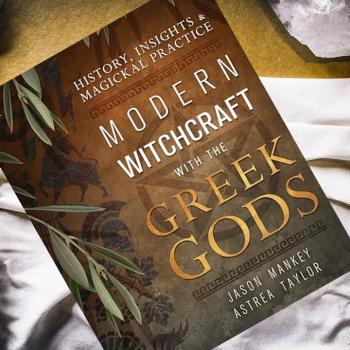
Pergamum Unfurled: Magic with the Greek Gods (Book...

Pergamum Unfurled: Cunning Words (Review)
TRENDING AT PATHEOS Pagan

To help with the upcoming holiday season, I'm introducing the Holiday Helper...

10 years of the Power Sigil & Moving...
Last week while reorganizing my studio space, I found the sketchbook that...

Why are younger seekers drawn to Paganism and...
One of the things I've noticed the most is that I'm far...

When we talk about Greek religion, we often begin with the dodekatheion—the...

I was recently chatting with someone on Instagram. She asked me what...

On July 23, I saw Christopher Nolan's The Odyssey which is Homer’s...
view all Pagan blogs
Ad-Free & Subscriber Log-In Subscription Support
- About Us
- 2026 Calendar
- Videos
- Podcasts
- Library of World Religions
- Faith In Media Tracker
- Advertise With Us
- Write for Us
- Privacy Policy
- Terms of Service
- Do Not Sell My Data
- Contact Us
- Radiant Digital
- Manage Newsletter Subscriptions
- Unsubscribe From Notifications
- Sitemap
Copyright 2008-2026, Patheos, part of the Radiant Digital network of media brands. All rights reserved.
Subscription Support Ad-Free & Subscriber Log-In
Follow Patheos