
BuddhistCatholicContemplativeEvangelicalGeneral ChristianHinduJewishLatter-day SaintMuslimNew VisionsProgressive Christian
Beliefs
- Buddhist
- Catholic
- Contemplative
- Evangelical
- General Christian
- Hindu
- Jewish
- Latter-day Saint
- More Voices
- Muslim
- New Visions
- Pagan
- Progressive Christian
Topics
- Religion News
- Food and Religion
- Sports and Religion
- Religious Art
- Religious Music and Entertainment
- Religious Events
- History and Religion
- Style and Religion
- Politics and Religion
- Women in Religion
- Recreation Outdoors and Religion
- Business Finance and Religion
- Careers Workplace and Religion
- Education and Religion
- Family Parenting and Religion
- Health Fitness and Religion
- Home and Religion
- Relationships and Religion
- Technology and Religion
- Travel and Religion
Columnists
- Buddhist Columnists
- Business Finance and Religion Columnists
- Careers Workplace and Religion Columnists
- Catholic Columnists
- Contemplative Columnists
- Education and Religion Columnists
- Evangelists Columnists
- Family Parenting and Religion Columnists
- General Christian Columnists
- Health Fitness and Religion Columnists
- Hindu Columnists
- History and Religion Columnists
- Home and Religion Columnists
- Jewish Columnists
- More Voices Columnists
- Latter Day Columnists
- Muslim Columnists
- New Visions Columnists
- Nonreligious Columnists
- Pagan Columnists
- Politics and Religion Columnists
- Progressive Columnists
- Recreation Outdoors and Religion Columnists
- Relationships and Religion Columnists
- Religion News Columnists
- Religious Art Columnists
- Religious Events Columnists
- Religious Music and Entertainment Columnists
- Sports and Religion Columnists
- Style and Religion Columnists
- Technology and Religion Columnists
- Travel and Religion Columnists
- Women in Religion Columnists
Resource Library
- 2026 Calendar
- Library of World Religions
- The 100 Most Holy Places on Earth
- Patheos Answers
- Podcasts
- Videos
- Faith Leaders Database
- Anglican Episcopalian
- Bahai
- Baptist
- Buddhism
- Christianity
- Confucianism
- Eastern Orthodoxy
- Hinduism
- Holiness and Pentecostal
- ISKCON
- Islam
- Judaism
- Lutheran
- Methodist
- The Church of Jesus Christ of Latter-day Saints
- New Age
- Paganism
- Presbytarian and Reformed
- Protestantism
- Religion Behind the Scenes
- Roman Catholic
- Scientology
- Shia Islam
- Sikhism
- Sufism
- Sunni Islam
- Taoism
- Zen
- See all religions
Research Tools
 Ad-Free & Subscriber Log-In Subscription Support
Ad-Free & Subscriber Log-In Subscription Support
Follow Patheos 

- Trending:
- Forgiveness
- |
- Marriage
- |
- Consciousness
- |
- Death Penalty
- |
- Election
- |
- Halloween

- Home
- Pagan
- The Rantin’ Raven: Songs for the Old Religion, in Context
The Rantin’ Raven: Songs for the Old Religion, in Context
Last updated on: January 31, 2017 at 7:28 pm by Dana Corby
The Rantin’ Raven: Songs for the Old Religion, in Context 2017-01-31T19:28:04+00:00 Dana Corby
Patheos Explore the world's faith through different perspectives on religion and spirituality! Patheos has the views of the prevalent religions and spiritualities of the world.
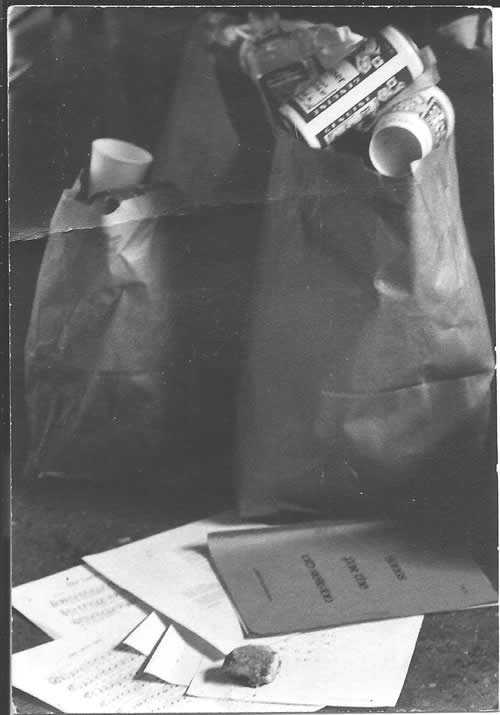
Image Courtesy of Susan Lohwasser
Something like Songs for the Old Religion could not happen in today’s Pagan world, because Paganism has changed and we have changed. In 1975 music was something everyone did, everyone shared, everyone wove into the fabric of their lives. Today, music – even Pagan music – is performed by professionals and bought by the rest of us. It’s expected to contain professional performances and good engineering. The idea of daring to produce something that honestly home-made, just for the love of it, is totally foreign now. Oh, there are still folk/acoustic musicians around, but I haven’t played at a Pagan gathering in years, because I can’t get anyone to play with me. All the acoustic musicians have drifted over to the SCA and can’t come to Pagan gatherings because they conflict with RenFaire and the latest War. Which is, to me, a huge and significant change: most of those who self-identify as Pagan choose other activities over involvement in their religion.
I’m asked if Pagan music was important in the 70’s. Well, not as such, though individual Witches who were also musicians could not help writing songs that expressed it — I wrote several myself, including The Sungod, which appears on the album. Folk music was crucial, because so many of the secrets and mysteries are encoded in old folk songs. Witch rituals were intended to have music, specific old songs for the Sabbats, Moons, and other occasions. Pagan music — Witches’ music as it was then — grew out of that. Gwydion was to my knowledge the first to compile and sell his music, and even then it was sold at first as sheet music, for other people to learn and perform among themselves. The album was an afterthought, the result of a serendipitous meeting between Gwydion and me.
Pagan musicians in particular ask me about the Pagan music scene of the time – who else was doing what we did, what clubs played Pagan music, how records got distributed, and so forth. Wow. They really have no idea. There was no ‘Pagan music scene’ in 1975; SFTOR started it. There were no Pagan clubs, though there were a couple of short-lived metaphysical coffee houses and of course the Bodhi Tree in Los Angeles which is as of this writing finally closing its doors, alas. I heard rumors that a Witches’ coffee house in Atlanta had live entertainment; we all thought that exciting if risky – just anyone could walk in off the street and make trouble! The music industry was all corporate and union-controlled, no indy labels as there are now and for which we should thank the Muses, so SFTOR could not be played on the air or sold in stores; we advertised it through a couple of Witch magazines and sold it entirely by mail order. We were, in effect, black-market.
You must understand that there was no ‘Pagan community’ for there to be a ‘scene’ in. There were Witches, period, and even we didn’t yet think of ourselves as a community. A movement, maybe. There were a few newsletters for Witches in both Britain and the U.S., but of course this was all long before the Internet. There was little contact with other Witches outside one’s own geographic area. A ‘festival’ was just a campout that might have 100 people at it, tops, last 3 or 4 days, and you heard about it either by invitation or word-of-mouth. The large, well-publicized festivals at which ‘Pagan performers’ could perform were years in the future, though the seeds were undeniably there.
What there was, was the tail end of the folk-music scene. Donovan and many other professional musicians did things that were overtly or covertly Old Religion — Crosby, Stills & Nash’s “Cathedral” is one, as is Bob Dylan’s “Shelter From the Storm.” The British folk group “Pentangle” was understandably popular among Witches, but so were most of the traditional folk performers. But music was much less stratified into producer/performers and consumers than it is now. It was shared. At any gathering, you could count on lots of people showing up with instruments and song sheets, eager to swap songs and sing together. Sitting around a fire singing happened at night after supper the way the (in my opinion, effing) drum circles do now. Music was not about fame & fortune, it was about sharing, it was about magic — it was about fun! And this wasn’t just at Witches’ parties & camp outs, but at everyone’s. It was just how young people socialized.
The rise of the Pagan music business is inextricably interwoven with the rise of the lavish Pagan festival. Today’s Pagan performers generally work the festival circuit, making at least part of their income by that and the CD sales it generates. But in 1975 it would never have occurred to any of us to make a profession of it; we all had regular jobs. If we had musical aspirations it was as folk singers, blues men, rock and rollers or even cabaret crooners; our identity as Witches was not part of our professional ambition. And anyway there was no place to perform Witch music — the summertime festival circuit didn’t exist yet. I think the first really big festival was Pan Pagan 1980, in Indiana. There were 600+ people there and it overwhelmed the site’s capacity and the organizers’ ability to handle things. There was no stage, performers, no costume party, and (huzzah) no all-night drum circle. I didn’t even take my guitar with me, as there was no room in the car. Neither did Gwydion; he was there to run a workshop.
I’m also asked – often — if we had any idea we were making history. No, we just wanted to make an album expressing our ideas of what Witch music ought to sound like. The first pressing of 1,000 copies of SFTOR sold out in about 3 months – and we were flabbergasted! There was a 2nd pressing on vinyl and then it went to cassette tape, which was so much easier & cheaper to produce and could be done at home, on demand. CAW, Gwydion’s heirs, did a limited release on vinyl for the 30th anniversary edition, but by then the original master had been lost; everything after the first couple of years has been dubbed from a 2nd generation tape. — And there’s your answer as to whether or not we were aware of how ‘historical’ this recording was: Gwydion lost the master.
To put a meaningful context on Songs for the Old Religion, look it up on the Web. At one site original 1975 LPs are selling for $300 – no idea where they got them. They describe it thus: “Rare private press 1975 hippy stoner wizard gypsy folk…” Farm Faves devotes a long, loving analysis to it, while at Rate Your Music, it’s described as “So bad it’s brilliant.”
Yeah. It was.

Click here to like
Patheos Pagan on Facebook.

Click here to like
the Agora on Facebook
The Rantin’ Raven is published on alternate Saturdays here on the Agora. Subscribe via RSS or e-mail!
Please use the links to the right to keep on top of activities here on the Agora as well as across the entire Patheos Pagan channel.
Previous Post

June 19, 2015
Adventures in Wortcunning: BS & Compost
Next Post

June 22, 2015 Born-Again Witch: The Pope, Pagans, and Evangelical Environmentalists
Browse Our Archives
Select a Category A Lakeside Hearth Adventures in Wortcunning Alone In Her Presence Arts, Crafts & Cooking Birthing Hereditary Witchcraft Book of Blackbirds Book Reviews Born-Again Witch Cauldron, Sword, Spear, & Stone Cermony and Liturgy Columns Community Dandelion Seeds Dear Jasmine Druid Thoughts Editor's Picks Everyday Pagan Family & Household Practice Family Traditions Full Frontal Magic Gateway Goddess Guest Articles Happily Heathen Health and Wellness Hearth of Hellenism Heathen Woman Hills of the Horizon History Holidays Horse Goddesses Interfaith Interviews Irish-American Witchcraft Jewish Witch Lamp & Labyrinth Letters from Midgard Literature, Media, Film, Music Loop of Brighid Love, Sex & Relationships Magic or Magick Making Light Naturalistic Traditions Nature News Outside The Circle Pantheisticon Politics Prayers, Poems, Blessings & Stories Queer Femme Mystic Queer of Swords Recipes Ritual and Practice Science and Research Seekers and Guides Seeking the Grail Socially Responsible Magic Spear of Athena Star Made Witch Syncretic Electric Technology The Blooming Staff The Busy Witch The Cartomancer The Crow's Nest The Dance of Pagan Recovery The Hearth of Hellenism The Lady's Quill The Other Side of the Hedge The Path of She The Rantin' Raven The Witches Next Door The Zen Pagan Theology, Ethics, Philosophy Tree City Witch Urban Earthwitch Wayfaring Woman Witch on Fire Wyrd Words
Select a Month January 2026 March 2025 December 2024 June 2024 April 2024 March 2024 January 2024 December 2023 November 2023 October 2023 August 2023 July 2023 May 2023 April 2023 March 2023 February 2023 January 2023 December 2022 November 2022 October 2022 September 2022 August 2022 July 2022 June 2022 May 2022 March 2022 February 2022 January 2022 December 2021 November 2021 October 2021 September 2021 August 2021 July 2021 June 2021 May 2021 April 2021 March 2021 February 2021 January 2021 December 2020 November 2020 October 2020 September 2020 August 2020 July 2020 June 2020 May 2020 April 2020 March 2020 February 2020 January 2020 December 2019 November 2019 October 2019 September 2019 August 2019 July 2019 June 2019 May 2019 April 2019 March 2019 February 2019 January 2019 December 2018 November 2018 October 2018 September 2018 August 2018 July 2018 June 2018 May 2018 April 2018 March 2018 February 2018 January 2018 December 2017 November 2017 October 2017 September 2017 August 2017 July 2017 June 2017 May 2017 April 2017 March 2017 February 2017 January 2017 December 2016 November 2016 October 2016 September 2016 August 2016 July 2016 June 2016 May 2016 April 2016 March 2016 February 2016 January 2016 December 2015 November 2015 October 2015 September 2015 August 2015 July 2015 June 2015 May 2015 April 2015 March 2015 February 2015 January 2015 December 2014 November 2014 October 2014 September 2014 August 2014 July 2014 June 2014 May 2014 April 2014 March 2014 February 2014 January 2014 December 2013 November 2013 October 2013 September 2013 August 2013 July 2013 June 2013 May 2013 April 2013 March 2013 February 2013 January 2013 December 2012 November 2012 October 2012 September 2012 August 2012 July 2012 June 2012 May 2012 April 2012 March 2012 February 2012 January 2012
Follow Us!
TAKE THE
Religious Wisdom Quiz
What does Proverbs say about a soft answer?
Select your answer to see how you score.
It brings wealth It is useless It turns away wrath It starts a fight
Related posts from Agora

Simple Witchery: To Keep Silent

Simple Witchery: Leaning On The Four Pillars

Pergamum Unfurled: Magic with the Greek Gods (Book...

Pergamum Unfurled: Cunning Words (Review)
TRENDING AT PATHEOS Pagan

When we talk about Greek religion, we often begin with the dodekatheion—the...

I was recently chatting with someone on Instagram. She asked me what...

While there are many people who share their results, the end of...

On July 23, I saw Christopher Nolan's The Odyssey which is Homer’s...

As I write this two big events have just finished up. One...

Restoring the Watershed of Divine Love
Perhaps cooperation is not something we manufacture through legislation, ideology, or moral...
view all Pagan blogs
Ad-Free & Subscriber Log-In Subscription Support
- About Us
- 2026 Calendar
- Videos
- Podcasts
- Library of World Religions
- Faith In Media Tracker
- Advertise With Us
- Write for Us
- Privacy Policy
- Terms of Service
- Do Not Sell My Data
- Contact Us
- Radiant Digital
- Manage Newsletter Subscriptions
- Unsubscribe From Notifications
- Sitemap
Copyright 2008-2026, Patheos. All rights reserved.
Subscription Support Ad-Free & Subscriber Log-In
Follow Patheos