
BuddhistCatholicContemplativeEvangelicalGeneral ChristianHinduJewishLatter-day SaintMuslimNew VisionsProgressive Christian
Beliefs
- Buddhist
- Catholic
- Contemplative
- Evangelical
- General Christian
- Hindu
- Jewish
- Latter-day Saint
- More Voices
- Muslim
- New Visions
- Pagan
- Progressive Christian
Topics
- Religion News
- Food and Religion
- Sports and Religion
- Religious Art
- Religious Music and Entertainment
- Religious Events
- History and Religion
- Style and Religion
- Politics and Religion
- Women in Religion
- Recreation Outdoors and Religion
- Business Finance and Religion
- Careers Workplace and Religion
- Education and Religion
- Family Parenting and Religion
- Health Fitness and Religion
- Home and Religion
- Relationships and Religion
- Technology and Religion
- Travel and Religion
Columnists
- Buddhist Columnists
- Business Finance and Religion Columnists
- Careers Workplace and Religion Columnists
- Catholic Columnists
- Contemplative Columnists
- Education and Religion Columnists
- Evangelists Columnists
- Family Parenting and Religion Columnists
- General Christian Columnists
- Health Fitness and Religion Columnists
- Hindu Columnists
- History and Religion Columnists
- Home and Religion Columnists
- Jewish Columnists
- More Voices Columnists
- Latter Day Columnists
- Muslim Columnists
- New Visions Columnists
- Nonreligious Columnists
- Pagan Columnists
- Politics and Religion Columnists
- Progressive Columnists
- Recreation Outdoors and Religion Columnists
- Relationships and Religion Columnists
- Religion News Columnists
- Religious Art Columnists
- Religious Events Columnists
- Religious Music and Entertainment Columnists
- Sports and Religion Columnists
- Style and Religion Columnists
- Technology and Religion Columnists
- Travel and Religion Columnists
- Women in Religion Columnists
Resource Library
- 2026 Calendar
- Library of World Religions
- The 100 Most Holy Places on Earth
- Patheos Answers
- Podcasts
- Videos
- Faith Leaders Database
- Anglican Episcopalian
- Bahai
- Baptist
- Buddhism
- Christianity
- Confucianism
- Eastern Orthodoxy
- Hinduism
- Holiness and Pentecostal
- ISKCON
- Islam
- Judaism
- Lutheran
- Methodist
- The Church of Jesus Christ of Latter-day Saints
- New Age
- Paganism
- Presbytarian and Reformed
- Protestantism
- Religion Behind the Scenes
- Roman Catholic
- Scientology
- Shia Islam
- Sikhism
- Sufism
- Sunni Islam
- Taoism
- Zen
- See all religions
Research Tools
 Ad-Free & Subscriber Log-In Subscription Support
Ad-Free & Subscriber Log-In Subscription Support
Follow Patheos 

- Trending:
- Forgiveness
- |
- Marriage
- |
- Consciousness
- |
- Death Penalty
- |
- Election
- |
- Halloween

- Home
- Pagan
- Wyrd Words: Pagan Relationships – Building a Lasting Community
Wyrd Words: Pagan Relationships – Building a Lasting Community
Last updated on: June 30, 2014 at 7:03 pm by Alyxander Folmer
Wyrd Words: Pagan Relationships – Building a Lasting Community 2014-06-30T19:03:03+00:00 Alyxander Folmer
Patheos Explore the world's faith through different perspectives on religion and spirituality! Patheos has the views of the prevalent religions and spiritualities of the world.
Greetings, and welcome back to Wyrd Words. Keeping the Thor in Thursdays, every other week here on Agora!
In a recent article, I mentioned the relatively short lifespan of many kindreds, covens, and groves within the Pagan community. This is a statistical trend that almost all of us have encountered, and it inspires many of us to simply forgo the trouble of searching for a stable community in favor of a solitary practice. There are all kinds of reasons why these local communities can seem so transient. Sometimes people’s jobs force them to move away, or differences of personality or practice drive a group apart. But the Pagan community seems to be affected by these shifts more than other faith groups. I believe that the reason for this can be broken down into three major problems: size, distribution, and (most importantly) the types of relationships we build within our local communities.
Size & Distribution
Let’s be honest here. We can talk about growth percentages and community networking all we want, but our communities have always been small. Even if we combined ALL of the various religions beneath the general umbrella of “Paganism,” our numbers are still INCREDIBLY small when compared to other religious populations. While this can offer us certain advantages, it also comes with some unfortunate downsides.
In many ways, a community is an organism unto itself. Communities claim territory, react to changes in their environment, and compete for resources with other communities that fill the same ecological niche. As many of our Wiccan readers would say: As above, so below. Much like any natural population of organisms in the wild, social communities with low population numbers are affected much more drastically by changes in their environment. If there is only one group in your area, and the person who’s running it has to move away, it’s going to be a lot more difficult to adapt than if there was a larger selection.
Further, our community is made up of a LOT of radically different belief systems. Thus our tiny population is divided into even smaller subgroups, mixed up like a bag of marbles, and then scattered randomly all over the world. It can be hard enough in some areas to find a local Pagan group at all, but what if you’re a Druid, and the only group in your area is a Wiccan coven? You’re left with the choice of going solitary or joining a group who’s beliefs you don’t (entirely) share. This is how our community looks in most places around the world that aren’t dense metropolitan areas, and it leaves our organizations poorly equipped to deal with rapid change.
Pagan Relationships
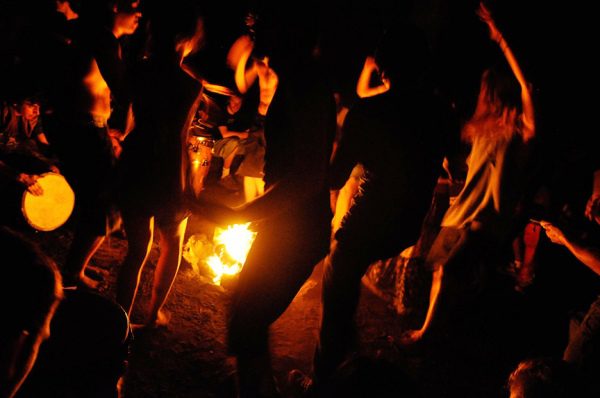
Size and distribution are important factors for Pagans in most of the world, but what about those metropolitan areas where their effects are reduced? Here in the Valley of the Sun (where I live), we have a comparativelylarge and diverse Pagan population. Yet the average lifespan of these local groups isn’t any higher than those in more rural areas. So what’s the secret? What factor allows for those rare groups that seem to stay together so much longer than the statistical average? It took me years of searching to figure it out, but the conclusion I eventually came to was that it all has to do with the nature of the relationships that people build within those communities.
I’ve drifted through a large number of groups in my area, and I’ve seen plenty of them rise and fall within a year or two. I looked for an answer to this conundrum for a long time, but in a surprising twist it was my wife who solved this riddle for me! Whenever she would refer to my friends in the local community, she would always call them my “Pagan Friends.” Yet when we would hang out with our friends from college (several of whom are Wiccan) she never referred to them this way. This struck me as odd, so I asked her about it. She told me that when I was with my “Pagan Friends,” even at a non-religious gathering, all we ever really talked about was Paganism. The conversation might range a bit, but it always came back to religion. I didn’t think much of it at the time, but I later came to realize that this was the answer to my question.
In Christian terms, my grandfather used to refer to this as the difference between “Friends from Church” and “Church Friends.” “Friends from Church” are those people who you genuinely enjoy spending time with. You have a lot in common, enjoy each other’s company, and just happened to meet at church. “Church Friends” are those people whom you only ever see at church functions. You sit together and chat about church stuff, because that’s all you really have in common.
We have our own version of this, and my wife hit the nail right on the head! Too often we go to our local groves or kindreds, and we make lots of “Pagan Friends.” We honestly like these people, but all we ever really talk about is our shared religious views. That’s the secret. I found that those groups that managed to achieve real, stable longevity promoted a different kind of relationship. People in those groups shared a common faith that brought them together, but then they found others within their group that shared other kinds of interests. They didn’t just get together to worship; they hung out to watch football, swap baking recipes, and play board games. It was those relationships that kept people returning to the group for years.
In some of the larger organizations (like the ADF) this is even built into their practice via a number of special interest groups for brewers, poets, martial artists, etc. I think fostering social relationships is the most important thing we can do to build more permanent and stable groups. A shared faith can be a great thing for bringing people together initially, but it’s important to build relationships BEYOND that! That’s the difference between a religious club and a real community.
Wyrd Words is published on alternate Thursdays. Subscribe via RSS or e-mail!
Previous Post

May 27, 2014
The Busy Witch: Wedding Magic
Next Post

May 30, 2014 Heathen Woman: Patron Gods and the Pledging of Ourselves
Browse Our Archives
Select a Category A Lakeside Hearth Adventures in Wortcunning Alone In Her Presence Arts, Crafts & Cooking Birthing Hereditary Witchcraft Book of Blackbirds Book Reviews Born-Again Witch Cauldron, Sword, Spear, & Stone Cermony and Liturgy Columns Community Dandelion Seeds Dear Jasmine Druid Thoughts Editor's Picks Everyday Pagan Family & Household Practice Family Traditions Full Frontal Magic Gateway Goddess Guest Articles Happily Heathen Health and Wellness Hearth of Hellenism Heathen Woman Hills of the Horizon History Holidays Horse Goddesses Interfaith Interviews Irish-American Witchcraft Jewish Witch Lamp & Labyrinth Letters from Midgard Literature, Media, Film, Music Loop of Brighid Love, Sex & Relationships Magic or Magick Making Light Naturalistic Traditions Nature News Outside The Circle Pantheisticon Politics Prayers, Poems, Blessings & Stories Queer Femme Mystic Queer of Swords Recipes Ritual and Practice Science and Research Seekers and Guides Seeking the Grail Socially Responsible Magic Spear of Athena Star Made Witch Syncretic Electric Technology The Blooming Staff The Busy Witch The Cartomancer The Crow's Nest The Dance of Pagan Recovery The Hearth of Hellenism The Lady's Quill The Other Side of the Hedge The Path of She The Rantin' Raven The Witches Next Door The Zen Pagan Theology, Ethics, Philosophy Tree City Witch Urban Earthwitch Wayfaring Woman Witch on Fire Wyrd Words
Select a Month January 2026 March 2025 December 2024 June 2024 April 2024 March 2024 January 2024 December 2023 November 2023 October 2023 August 2023 July 2023 May 2023 April 2023 March 2023 February 2023 January 2023 December 2022 November 2022 October 2022 September 2022 August 2022 July 2022 June 2022 May 2022 March 2022 February 2022 January 2022 December 2021 November 2021 October 2021 September 2021 August 2021 July 2021 June 2021 May 2021 April 2021 March 2021 February 2021 January 2021 December 2020 November 2020 October 2020 September 2020 August 2020 July 2020 June 2020 May 2020 April 2020 March 2020 February 2020 January 2020 December 2019 November 2019 October 2019 September 2019 August 2019 July 2019 June 2019 May 2019 April 2019 March 2019 February 2019 January 2019 December 2018 November 2018 October 2018 September 2018 August 2018 July 2018 June 2018 May 2018 April 2018 March 2018 February 2018 January 2018 December 2017 November 2017 October 2017 September 2017 August 2017 July 2017 June 2017 May 2017 April 2017 March 2017 February 2017 January 2017 December 2016 November 2016 October 2016 September 2016 August 2016 July 2016 June 2016 May 2016 April 2016 March 2016 February 2016 January 2016 December 2015 November 2015 October 2015 September 2015 August 2015 July 2015 June 2015 May 2015 April 2015 March 2015 February 2015 January 2015 December 2014 November 2014 October 2014 September 2014 August 2014 July 2014 June 2014 May 2014 April 2014 March 2014 February 2014 January 2014 December 2013 November 2013 October 2013 September 2013 August 2013 July 2013 June 2013 May 2013 April 2013 March 2013 February 2013 January 2013 December 2012 November 2012 October 2012 September 2012 August 2012 July 2012 June 2012 May 2012 April 2012 March 2012 February 2012 January 2012
Follow Us!
TAKE THE
Religious Wisdom Quiz
Which epistle focuses on joy and is addressed to believers in Macedonia?
Select your answer to see how you score.
Colossians Philippians Ephesians Galatians
Related posts from Agora

Simple Witchery: To Keep Silent

Simple Witchery: Leaning On The Four Pillars


Simple Witchery: Resistance and Resilience in Hard Times
TRENDING AT PATHEOS Pagan

I was recently chatting with someone on Instagram. She asked me what...

While there are many people who share their results, the end of...

On July 23, I saw Christopher Nolan's The Odyssey which is Homer’s...

As I write this two big events have just finished up. One...

Restoring the Watershed of Divine Love
Perhaps cooperation is not something we manufacture through legislation, ideology, or moral...

Many UUs don’t pray because of bad experiences in a previous religion,...
view all Pagan blogs
Ad-Free & Subscriber Log-In Subscription Support
- About Us
- 2026 Calendar
- Videos
- Podcasts
- Library of World Religions
- Faith In Media Tracker
- Advertise With Us
- Write for Us
- Privacy Policy
- Terms of Service
- Do Not Sell My Data
- Contact Us
- Radiant Digital
- Manage Newsletter Subscriptions
- Unsubscribe From Notifications
- Sitemap
Copyright 2008-2026, Patheos. All rights reserved.
Subscription Support Ad-Free & Subscriber Log-In
Follow Patheos