
BuddhistCatholicContemplativeEvangelicalGeneral ChristianHinduJewishLatter-day SaintMuslimNew VisionsProgressive Christian
Beliefs
- Buddhist
- Catholic
- Contemplative
- Evangelical
- General Christian
- Hindu
- Jewish
- Latter-day Saint
- More Voices
- Muslim
- New Visions
- Pagan
- Progressive Christian
Topics
- Religion News
- Food and Religion
- Sports and Religion
- Religious Art
- Religious Music and Entertainment
- Religious Events
- History and Religion
- Style and Religion
- Politics and Religion
- Women in Religion
- Recreation Outdoors and Religion
- Business Finance and Religion
- Careers Workplace and Religion
- Education and Religion
- Family Parenting and Religion
- Health Fitness and Religion
- Home and Religion
- Relationships and Religion
- Technology and Religion
- Travel and Religion
Columnists
- Buddhist Columnists
- Business Finance and Religion Columnists
- Careers Workplace and Religion Columnists
- Catholic Columnists
- Contemplative Columnists
- Education and Religion Columnists
- Evangelists Columnists
- Family Parenting and Religion Columnists
- General Christian Columnists
- Health Fitness and Religion Columnists
- Hindu Columnists
- History and Religion Columnists
- Home and Religion Columnists
- Jewish Columnists
- More Voices Columnists
- Latter Day Columnists
- Muslim Columnists
- New Visions Columnists
- Nonreligious Columnists
- Pagan Columnists
- Politics and Religion Columnists
- Progressive Columnists
- Recreation Outdoors and Religion Columnists
- Relationships and Religion Columnists
- Religion News Columnists
- Religious Art Columnists
- Religious Events Columnists
- Religious Music and Entertainment Columnists
- Sports and Religion Columnists
- Style and Religion Columnists
- Technology and Religion Columnists
- Travel and Religion Columnists
- Women in Religion Columnists
Resource Library
- 2026 Calendar
- Library of World Religions
- The 100 Most Holy Places on Earth
- Patheos Answers
- Podcasts
- Videos
- Faith Leaders Database
- Anglican Episcopalian
- Bahai
- Baptist
- Buddhism
- Christianity
- Confucianism
- Eastern Orthodoxy
- Hinduism
- Holiness and Pentecostal
- ISKCON
- Islam
- Judaism
- Lutheran
- Methodist
- The Church of Jesus Christ of Latter-day Saints
- New Age
- Paganism
- Presbytarian and Reformed
- Protestantism
- Religion Behind the Scenes
- Roman Catholic
- Scientology
- Shia Islam
- Sikhism
- Sufism
- Sunni Islam
- Taoism
- Zen
- See all religions
Research Tools
 Ad-Free & Subscriber Log-In Subscription Support
Ad-Free & Subscriber Log-In Subscription Support
Follow Patheos 

- Trending:
- Forgiveness
- |
- Marriage
- |
- Consciousness
- |
- Death Penalty
- |
- Election
- |
- Halloween

- Home
- Pagan
- Heathen Woman: Patron Gods and the Pledging of Ourselves
Heathen Woman: Patron Gods and the Pledging of Ourselves
Last updated on: January 5, 2015 at 9:53 pm by Heather O'Brien
Heathen Woman: Patron Gods and the Pledging of Ourselves 2015-01-05T21:53:19+00:00 Heather O'Brien
Patheos Explore the world's faith through different perspectives on religion and spirituality! Patheos has the views of the prevalent religions and spiritualities of the world.
There has been a lot of discussion lately about choosing a patron god in heathenry and whether doing so is of spiritual importance. Personally, I think: to each their own. Spirituality, after all, is individualistic. If, however, the decision to choose a patron comes at the expense of excluding the other gods, then it becomes a practice that ignores the premise behind a polytheistic faith. This isn’t to say that all people who choose a patron deity ignore the rest of their chosen pantheon; it’s merely a word of caution to make sure the rest of the gods still have their worth appreciated with vital enthusiasm.
I understand the desire to reach out to the gods and want them to reach back. Sometimes, however, this notion of selecting only one seems to be a byproduct of the monotheism that many people were raised with, either by societal standards or through familial religious convictions. For a long time now, a singular omnipotent presence that can identify with us on a personal level has been considered the norm. And for many people, this is a comforting point of faith, one that’s central to most mainstream religions.
There are some basic historical tenants that provide a foundation for heathenry. Primarily, this includes the tradition of blót and symbel, reverence for the gods, caring for the land, paying respect to the wights, and honoring our ancestors. In addition to those, we try to understand how heathen peoples lived by studying their rites and their system of gifting and honor, as well as what it means to live a life according to ancient tradition. Through the understanding of these elements, we gain insight into the heathen view of the gods, and we’re given a window of how the Northern people pledged themselves to their way of life.
In ancient custom, when a person devoted themselves to a Lord, they did not yet have experience that necessarily put them at the head of the table as an honorable person. That was something that was earned over time in a relationship established on integrity and renown, built through proven deeds. Concepts like luck and fate were strongly considered. Choices were made with deliberate intent that was for the betterment of the tribe. The gods and goddesses were powerful presences of awareness and intervention who had their own battles and concerns, some of which would mingle with human lives – especially where agriculture, prosperity, seafaring, fertility, success in battle, and healing of illnesses were concerned. (Examples of these interventions abound in the Eddas, where a god is sought after and then responds, such as Ríg coming to Midgard to create the classes of humanity.) In each of these areas, the gods were given a reverent place that acknowledged their attributes and significance. Kings were said to have held the luck of the tribe while maintaining a close connection with the gods, and the gods were viewed as directly affecting the lives of people. Further aid from the gods was sought through the offering of sacrifices and upholding of traditions. The actual divinity of the gods was seen as sacred, however, and as something that existed outside of what a human being was able to accomplish by their own will.
Scholarship has helped to uncover the established traditions, beliefs, and practices of the ancient heathen people, and we are still in the process of studying it. But no matter how much is uncovered–which hasn’t been lot–there will still be holes left in what we know of their spiritual experiences. We can reasonably attest to the larger cults dedicated to Odin, Freyr, and Thor, but it’s likely that there were other groups just as dedicated to lesser known regional or tribal deities, such as Nehalennia. Much of that history may have been passed orally, and so finding much more than what we already have is a far-fetched wish. We must aim to preserve what we’ve been given thus far by dedicating ourselves to the ancients’ spiritual framework.
In recognizing and honoring the gods, the ideal is to remain inclusive of the roles that all of the deities play in our lives. Heathens blót often to a certain god or goddess, but are also intentional in continuing to honor the other gods, the Dísir, and the wights of the land. Heathen traditions should be studied and accounted for through the use of historical findings while also recognizing that spirituality is an individual, organic, and evolving process. There is no “one size fits all” where spiritual development is concerned, so the goal is to incorporate our spiritual awareness into heathen tradition. Our appreciation of all the roles that our gods play should continue to grow, regardless of whether we choose a patron god or not. Certainly, there are aspects of particular gods and goddesses that may be especially appealing to individuals, and requesting aid from a particular deity is common. However, gods are not confined to placating our passing mundane desires — which is something to keep in mind when communicating with them. Gods exist in a larger capacity that may be outside our realm of understanding.
Our pledge to our ancestors, and our pledge to heathenry, involves searching for truths and incorporating them into our lives honestly and mindfully. It is in these ways that we pledge ourselves, through deed and the pursuit of truth, and honor the heathen gods in a way that includes them all.
Heathen Woman is published on alternate Fridays. Subscribe via RSS or e-mail!
Previous Post

May 29, 2014
Wyrd Words: Pagan Relationships - Building a Lasting Community
Next Post

June 2, 2014 Birthing Hereditary Witchcraft: Family Coven Can Be Enough
Browse Our Archives
Select a Category A Lakeside Hearth Adventures in Wortcunning Alone In Her Presence Arts, Crafts & Cooking Birthing Hereditary Witchcraft Book of Blackbirds Book Reviews Born-Again Witch Cauldron, Sword, Spear, & Stone Cermony and Liturgy Columns Community Dandelion Seeds Dear Jasmine Druid Thoughts Editor's Picks Everyday Pagan Family & Household Practice Family Traditions Full Frontal Magic Gateway Goddess Guest Articles Happily Heathen Health and Wellness Hearth of Hellenism Heathen Woman Hills of the Horizon History Holidays Horse Goddesses Interfaith Interviews Irish-American Witchcraft Jewish Witch Lamp & Labyrinth Letters from Midgard Literature, Media, Film, Music Loop of Brighid Love, Sex & Relationships Magic or Magick Making Light Naturalistic Traditions Nature News Outside The Circle Pantheisticon Politics Prayers, Poems, Blessings & Stories Queer Femme Mystic Queer of Swords Recipes Ritual and Practice Science and Research Seekers and Guides Seeking the Grail Socially Responsible Magic Spear of Athena Star Made Witch Syncretic Electric Technology The Blooming Staff The Busy Witch The Cartomancer The Crow's Nest The Dance of Pagan Recovery The Hearth of Hellenism The Lady's Quill The Other Side of the Hedge The Path of She The Rantin' Raven The Witches Next Door The Zen Pagan Theology, Ethics, Philosophy Tree City Witch Urban Earthwitch Wayfaring Woman Witch on Fire Wyrd Words
Select a Month January 2026 March 2025 December 2024 June 2024 April 2024 March 2024 January 2024 December 2023 November 2023 October 2023 August 2023 July 2023 May 2023 April 2023 March 2023 February 2023 January 2023 December 2022 November 2022 October 2022 September 2022 August 2022 July 2022 June 2022 May 2022 March 2022 February 2022 January 2022 December 2021 November 2021 October 2021 September 2021 August 2021 July 2021 June 2021 May 2021 April 2021 March 2021 February 2021 January 2021 December 2020 November 2020 October 2020 September 2020 August 2020 July 2020 June 2020 May 2020 April 2020 March 2020 February 2020 January 2020 December 2019 November 2019 October 2019 September 2019 August 2019 July 2019 June 2019 May 2019 April 2019 March 2019 February 2019 January 2019 December 2018 November 2018 October 2018 September 2018 August 2018 July 2018 June 2018 May 2018 April 2018 March 2018 February 2018 January 2018 December 2017 November 2017 October 2017 September 2017 August 2017 July 2017 June 2017 May 2017 April 2017 March 2017 February 2017 January 2017 December 2016 November 2016 October 2016 September 2016 August 2016 July 2016 June 2016 May 2016 April 2016 March 2016 February 2016 January 2016 December 2015 November 2015 October 2015 September 2015 August 2015 July 2015 June 2015 May 2015 April 2015 March 2015 February 2015 January 2015 December 2014 November 2014 October 2014 September 2014 August 2014 July 2014 June 2014 May 2014 April 2014 March 2014 February 2014 January 2014 December 2013 November 2013 October 2013 September 2013 August 2013 July 2013 June 2013 May 2013 April 2013 March 2013 February 2013 January 2013 December 2012 November 2012 October 2012 September 2012 August 2012 July 2012 June 2012 May 2012 April 2012 March 2012 February 2012 January 2012
Follow Us!
TAKE THE
Religious Wisdom Quiz
Who said, "I am not worthy to untie the strap of his sandals"?
Select your answer to see how you score.
Thomas Peter Paul John the Baptist
Related posts from Agora

Simple Witchery: To Keep Silent

Simple Witchery: Leaning On The Four Pillars
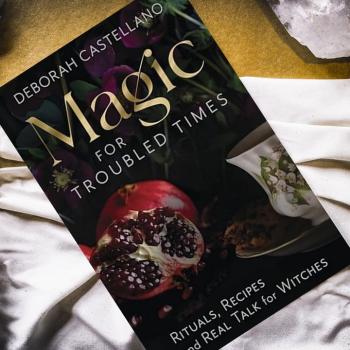
Pergamum Unfurled: Review - Magic for Troubled Times

Simple Witchery: Don’t Be That Witch
TRENDING AT PATHEOS Pagan

I was recently chatting with someone on Instagram. She asked me what...

While there are many people who share their results, the end of...

On July 23, I saw Christopher Nolan's The Odyssey which is Homer’s...

As I write this two big events have just finished up. One...

Restoring the Watershed of Divine Love
Perhaps cooperation is not something we manufacture through legislation, ideology, or moral...

Many UUs don’t pray because of bad experiences in a previous religion,...
view all Pagan blogs
Ad-Free & Subscriber Log-In Subscription Support
- About Us
- 2026 Calendar
- Videos
- Podcasts
- Library of World Religions
- Faith In Media Tracker
- Advertise With Us
- Write for Us
- Privacy Policy
- Terms of Service
- Do Not Sell My Data
- Contact Us
- Radiant Digital
- Manage Newsletter Subscriptions
- Unsubscribe From Notifications
- Sitemap
Copyright 2008-2026, Patheos. All rights reserved.
Subscription Support Ad-Free & Subscriber Log-In
Follow Patheos