
BuddhistCatholicContemplativeEvangelicalGeneral ChristianHinduJewishLatter-day SaintMuslimNew VisionsProgressive Christian
Beliefs
- Buddhist
- Catholic
- Contemplative
- Evangelical
- General Christian
- Hindu
- Jewish
- Latter-day Saint
- More Voices
- Muslim
- New Visions
- Pagan
- Progressive Christian
Topics
- Religion News
- Food and Religion
- Sports and Religion
- Religious Art
- Religious Music and Entertainment
- Religious Events
- History and Religion
- Style and Religion
- Politics and Religion
- Women in Religion
- Recreation Outdoors and Religion
- Business Finance and Religion
- Careers Workplace and Religion
- Education and Religion
- Family Parenting and Religion
- Health Fitness and Religion
- Home and Religion
- Relationships and Religion
- Technology and Religion
- Travel and Religion
Columnists
- Buddhist Columnists
- Business Finance and Religion Columnists
- Careers Workplace and Religion Columnists
- Catholic Columnists
- Contemplative Columnists
- Education and Religion Columnists
- Evangelists Columnists
- Family Parenting and Religion Columnists
- General Christian Columnists
- Health Fitness and Religion Columnists
- Hindu Columnists
- History and Religion Columnists
- Home and Religion Columnists
- Jewish Columnists
- More Voices Columnists
- Latter Day Columnists
- Muslim Columnists
- New Visions Columnists
- Nonreligious Columnists
- Pagan Columnists
- Politics and Religion Columnists
- Progressive Columnists
- Recreation Outdoors and Religion Columnists
- Relationships and Religion Columnists
- Religion News Columnists
- Religious Art Columnists
- Religious Events Columnists
- Religious Music and Entertainment Columnists
- Sports and Religion Columnists
- Style and Religion Columnists
- Technology and Religion Columnists
- Travel and Religion Columnists
- Women in Religion Columnists
Resource Library
- 2026 Calendar
- Library of World Religions
- The 100 Most Holy Places on Earth
- Patheos Answers
- Podcasts
- Videos
- Faith Leaders Database
- Anglican Episcopalian
- Bahai
- Baptist
- Buddhism
- Christianity
- Confucianism
- Eastern Orthodoxy
- Hinduism
- Holiness and Pentecostal
- ISKCON
- Islam
- Judaism
- Lutheran
- Methodist
- The Church of Jesus Christ of Latter-day Saints
- New Age
- Paganism
- Presbytarian and Reformed
- Protestantism
- Religion Behind the Scenes
- Roman Catholic
- Scientology
- Shia Islam
- Sikhism
- Sufism
- Sunni Islam
- Taoism
- Zen
- See all religions
Research Tools
 Ad-Free & Subscriber Log-In Subscription Support
Ad-Free & Subscriber Log-In Subscription Support
Follow Patheos 

- Trending:
- Forgiveness
- |
- Marriage
- |
- Consciousness
- |
- Death Penalty
- |
- Election
- |
- Halloween

- Home
- Pagan
- Heathen Woman: Putting the Best Foot Forward
Heathen Woman: Putting the Best Foot Forward
Last updated on: January 5, 2015 at 9:56 pm by Heather O'Brien
Heathen Woman: Putting the Best Foot Forward 2015-01-05T21:56:10+00:00 Heather O'Brien
Patheos Explore the world's faith through different perspectives on religion and spirituality! Patheos has the views of the prevalent religions and spiritualities of the world.
Recently, there have been discussions in heathen groups as to how our behavior influences our values. The standards we hold ourselves to are based on our own concepts of what is moral and just. There are a few common threads, though, that that most can agree on. One is honor. Striving to be our highest and best is to accept our own failings and misgivings in an honest and objective way – for we cannot strengthen what we do not recognize.
In the past there were traditional, communal ways of addressing whether those shared ethics had been upheld or whether they had been violated. Echoing back to the god of justice through mediation, Forseti, the parliamentary common law known as the Althing was once practiced to ensure both civil and criminal offenses were rectified in a fair and just way. Even after Iceland’s union with Norway, the Althing was still held seasonally. During the time of public mediation, wrongs that were rectified via a repayment system known as ‘weregild,’ whereby the person who had committed the injustice would pay the offended, or their family, a price that was equal to or greater than the value of the crime committed. In upholding this tradition, the community felt that their values were kept in check. The payment made was usually paid in the form of cattle, as they were the most valuable livestock and frequently used as a measure of exchange in ancient times. Interestingly, the rune Fehu represents this type of exchange in its attribute of movable wealth. The gods themselves enacted weregild when it was deemed appropriate, and examples can be found in the lore.
In the story ofSkaði (Skadi), we learn that she approached the Asa-gods and demanded retribution because they had slain her father. An agreement was reached between Skaði and the Aesir, and she was allowed to choose a husband from among them, but it was stated that she must choose him by the look of his feet. In an effort to choose Baldur, she chose the feet that were most perfect – which actually belonged to the seaside godNjörðr (Njord). All of that sea salt must’ve done him wonders! In this example, we’re provided with a picture of how honor was restored and restitution made, but the repayment for it, even though it is valuable, may not be exactly what we want. Njörðr and Skaði could not abide each others’ homes, each preferring the natural setting of where they had always lived, Njörðr by the sea and Skaði in her homeland in the mountains. The two eventually separated and remained living apart. This shows, however, that the gods themselves recognize the need to make amends and keep their honor intact even if it means coming to a compromise. Njörðr and Skaði did not stay married, and he was not the one that she had set her heart on. Ultimately, though restitution was made, it was not enough to take the place of her father, to whose homeland she eventually returned.
We now have formalized laws with jurisdiction over crimes, and the court system has its own sentencing procedure. It is becoming common for inmates to discover heathenry in prison. Several larger heathen organizations have established prison outreach programs to help provide written materials to those that are incarcerated. The goal is to provide valid information that discourages any undertone of white supremacy, and instead replace it with ethical values that are inherent to heathens, such as honesty, working personally to build honor, and remaining diligent in the pursuit of excellence through perseverance and determination. When heathen inmates leave the prison population, it is hoped they will exit with better judgment. If they’ve had access to good information during their incarceration, then it can be a foundation from which they can continue to build.
However, what happens when an injustice is committed that doesn’t legally qualify as a crime towards another person? Technically, there is no longer a parliamentary democracy of our peers that will hold us accountable unless a crime according to modern laws has been committed. It is up to us to maintain a higher level of accountability for ourselves and put right what we’ve done damage to. Many heathens aim to live by their own personal code of honor, whether those ethics be those they developed on their own or a preset group of values such as the Nine Noble Virtues. When we’ve violated our own principles, either consciously or even inadvertently, we become directly responsible for restoring our honor the best we can. This requires an honest objectivity, self-awareness, and willingness to make any necessary amends. It takes a great deal of truth to examine our part in having wronged someone else, and there are no guarantees that what we offer as repayment will be accepted. This process has nothing to do with moralizing ourselves into any set practice of doctrine or dogma. It really boils down to our ability to fairly look at ourselves and our actions. Restoring our honor when it’s needed, and making amends, is sometimes necessary, and though we may be the only ones holding ourselves accountable, the value of it remains. No one is perfect, and everyone has wronged another person. We all sometimes fall into less than stellar circumstances where we play a part in what happens – and the subsequent outcome. The importance is recognizing when it happens and our responsibility in working to make it right. Taking that measure of accountability and maintaining our honor, however, are important parts of putting our best foot forward.
Heathen Woman is published on alternate Fridays. Subscribe via RSS or e-mail!
Previous Post
May 1, 2014
Wyrd Words: Daily Devotions
Next Post

May 5, 2014 Birthing Hereditary Witchcraft: Family Coven - Blood Is Not Enough
Browse Our Archives
Select a Category A Lakeside Hearth Adventures in Wortcunning Alone In Her Presence Arts, Crafts & Cooking Birthing Hereditary Witchcraft Book of Blackbirds Book Reviews Born-Again Witch Cauldron, Sword, Spear, & Stone Cermony and Liturgy Columns Community Dandelion Seeds Dear Jasmine Druid Thoughts Editor's Picks Everyday Pagan Family & Household Practice Family Traditions Full Frontal Magic Gateway Goddess Guest Articles Happily Heathen Health and Wellness Hearth of Hellenism Heathen Woman Hills of the Horizon History Holidays Horse Goddesses Interfaith Interviews Irish-American Witchcraft Jewish Witch Lamp & Labyrinth Letters from Midgard Literature, Media, Film, Music Loop of Brighid Love, Sex & Relationships Magic or Magick Making Light Naturalistic Traditions Nature News Outside The Circle Pantheisticon Politics Prayers, Poems, Blessings & Stories Queer Femme Mystic Queer of Swords Recipes Ritual and Practice Science and Research Seekers and Guides Seeking the Grail Socially Responsible Magic Spear of Athena Star Made Witch Syncretic Electric Technology The Blooming Staff The Busy Witch The Cartomancer The Crow's Nest The Dance of Pagan Recovery The Hearth of Hellenism The Lady's Quill The Other Side of the Hedge The Path of She The Rantin' Raven The Witches Next Door The Zen Pagan Theology, Ethics, Philosophy Tree City Witch Urban Earthwitch Wayfaring Woman Witch on Fire Wyrd Words
Select a Month January 2026 March 2025 December 2024 June 2024 April 2024 March 2024 January 2024 December 2023 November 2023 October 2023 August 2023 July 2023 May 2023 April 2023 March 2023 February 2023 January 2023 December 2022 November 2022 October 2022 September 2022 August 2022 July 2022 June 2022 May 2022 March 2022 February 2022 January 2022 December 2021 November 2021 October 2021 September 2021 August 2021 July 2021 June 2021 May 2021 April 2021 March 2021 February 2021 January 2021 December 2020 November 2020 October 2020 September 2020 August 2020 July 2020 June 2020 May 2020 April 2020 March 2020 February 2020 January 2020 December 2019 November 2019 October 2019 September 2019 August 2019 July 2019 June 2019 May 2019 April 2019 March 2019 February 2019 January 2019 December 2018 November 2018 October 2018 September 2018 August 2018 July 2018 June 2018 May 2018 April 2018 March 2018 February 2018 January 2018 December 2017 November 2017 October 2017 September 2017 August 2017 July 2017 June 2017 May 2017 April 2017 March 2017 February 2017 January 2017 December 2016 November 2016 October 2016 September 2016 August 2016 July 2016 June 2016 May 2016 April 2016 March 2016 February 2016 January 2016 December 2015 November 2015 October 2015 September 2015 August 2015 July 2015 June 2015 May 2015 April 2015 March 2015 February 2015 January 2015 December 2014 November 2014 October 2014 September 2014 August 2014 July 2014 June 2014 May 2014 April 2014 March 2014 February 2014 January 2014 December 2013 November 2013 October 2013 September 2013 August 2013 July 2013 June 2013 May 2013 April 2013 March 2013 February 2013 January 2013 December 2012 November 2012 October 2012 September 2012 August 2012 July 2012 June 2012 May 2012 April 2012 March 2012 February 2012 January 2012
Follow Us!
TAKE THE
Religious Wisdom Quiz
Who were the first man and woman according to Genesis?
Select your answer to see how you score.
Abram and Sarai Cain and Abel Noah and his wife Adam and Eve
Related posts from Agora

Simple Witchery: To Keep Silent

Simple Witchery: Leaning On The Four Pillars
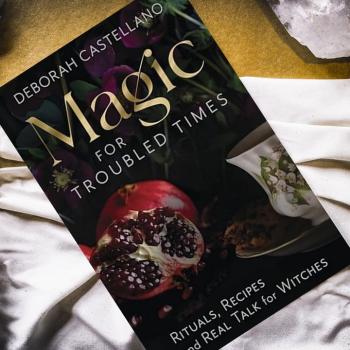
Pergamum Unfurled: Review - Magic for Troubled Times

Simple Witchery: Don’t Be That Witch
TRENDING AT PATHEOS Pagan

I was recently chatting with someone on Instagram. She asked me what...

While there are many people who share their results, the end of...

On July 23, I saw Christopher Nolan's The Odyssey which is Homer’s...

As I write this two big events have just finished up. One...

Restoring the Watershed of Divine Love
Perhaps cooperation is not something we manufacture through legislation, ideology, or moral...

Many UUs don’t pray because of bad experiences in a previous religion,...
view all Pagan blogs
Ad-Free & Subscriber Log-In Subscription Support
- About Us
- 2026 Calendar
- Videos
- Podcasts
- Library of World Religions
- Faith In Media Tracker
- Advertise With Us
- Write for Us
- Privacy Policy
- Terms of Service
- Do Not Sell My Data
- Contact Us
- Radiant Digital
- Manage Newsletter Subscriptions
- Unsubscribe From Notifications
- Sitemap
Copyright 2008-2026, Patheos. All rights reserved.
Subscription Support Ad-Free & Subscriber Log-In
Follow Patheos