
BuddhistCatholicContemplativeEvangelicalGeneral ChristianHinduJewishLatter-day SaintMuslimNew VisionsProgressive Christian
Beliefs
- Buddhist
- Catholic
- Contemplative
- Evangelical
- General Christian
- Hindu
- Jewish
- Latter-day Saint
- More Voices
- Muslim
- New Visions
- Pagan
- Progressive Christian
Topics
- Religion News
- Food and Religion
- Sports and Religion
- Religious Art
- Religious Music and Entertainment
- Religious Events
- History and Religion
- Style and Religion
- Politics and Religion
- Women in Religion
- Recreation Outdoors and Religion
- Business Finance and Religion
- Careers Workplace and Religion
- Education and Religion
- Family Parenting and Religion
- Health Fitness and Religion
- Home and Religion
- Relationships and Religion
- Technology and Religion
- Travel and Religion
Columnists
- Buddhist Columnists
- Business Finance and Religion Columnists
- Careers Workplace and Religion Columnists
- Catholic Columnists
- Contemplative Columnists
- Education and Religion Columnists
- Evangelists Columnists
- Family Parenting and Religion Columnists
- General Christian Columnists
- Health Fitness and Religion Columnists
- Hindu Columnists
- History and Religion Columnists
- Home and Religion Columnists
- Jewish Columnists
- More Voices Columnists
- Latter Day Columnists
- Muslim Columnists
- New Visions Columnists
- Nonreligious Columnists
- Pagan Columnists
- Politics and Religion Columnists
- Progressive Columnists
- Recreation Outdoors and Religion Columnists
- Relationships and Religion Columnists
- Religion News Columnists
- Religious Art Columnists
- Religious Events Columnists
- Religious Music and Entertainment Columnists
- Sports and Religion Columnists
- Style and Religion Columnists
- Technology and Religion Columnists
- Travel and Religion Columnists
- Women in Religion Columnists
Resource Library
- 2026 Calendar
- Library of World Religions
- The 100 Most Holy Places on Earth
- Patheos Answers
- Podcasts
- Videos
- Faith Leaders Database
- Anglican Episcopalian
- Bahai
- Baptist
- Buddhism
- Christianity
- Confucianism
- Eastern Orthodoxy
- Hinduism
- Holiness and Pentecostal
- ISKCON
- Islam
- Judaism
- Lutheran
- Methodist
- The Church of Jesus Christ of Latter-day Saints
- New Age
- Paganism
- Presbytarian and Reformed
- Protestantism
- Religion Behind the Scenes
- Roman Catholic
- Scientology
- Shia Islam
- Sikhism
- Sufism
- Sunni Islam
- Taoism
- Zen
- See all religions
Research Tools
 Ad-Free & Subscriber Log-In Subscription Support
Ad-Free & Subscriber Log-In Subscription Support
Follow Patheos 

- Trending:
- Forgiveness
- |
- Marriage
- |
- Consciousness
- |
- Death Penalty
- |
- Election
- |
- Halloween

- Home
- Pagan
- The Best of the Equinox – Vol 1: Enochian Magick (Review)
The Best of the Equinox – Vol 1: Enochian Magick (Review)
Last updated on: December 17, 2013 at 4:58 pm by Adam Blodgett
The Best of the Equinox – Vol 1: Enochian Magick (Review) 2013-12-17T16:58:27+00:00 Adam Blodgett
Patheos Explore the world's faith through different perspectives on religion and spirituality! Patheos has the views of the prevalent religions and spiritualities of the world.
 The Best of the Equinox – Vol 1: Enochian Magick is the record of Aleister Crowley’s experience making contact with angels using the methods and information of Dr. John Dee. The volume is composed of two separate books: Liber LXXXIV and Liber XXX AERVM, better known as The Vision and the Voice. The first book, Liber LXXXIV, is broken into two parts. Part One is an overly-complex description of the method by which the names of the angels were obtained and a list of the names themselves. Crowley’s tortured writing style and the inclusion of the transliterated Enochian language reduce much of this section to near-nonsensicality. One thing that Crowley does make clear is that Dee represented the 4th dimensional world of the angels as a square surrounded by 30 concentric circles or aethyrs, which Crowley will explore in great detail in the The Vision and the Voice.
Part Two of Liber LXXXIV is titled “The 48 Calls or Keys”, and includes 19 calls, or maybe 20, since the 18th key proclaims: “These first 18 calls are in reality 19; that is 19 in the Celestial Orders; but with us the first table hath no call, and can have no call, seeing that it is of the Godhead. Thus, then, with us hath it the number of 0, though with them that of I…” The final key is titled “The Call or Key of the Thirty Aethyrs,” and this one key is actually 30 keys to be used in combination of the name of the aethyr that you’d like to explore. Part Two also introduces us to the style of language that Crowley uses throughout The Vision and the Voice: “I reign over ye, saith the God of Justice, in power exalted above the Firmament of Wrath…who measureth your Garments in the midst of my hands.” This awkwardly ornate style lends the Keys and the entirety of The Vision and the Voice an air of artificial antiquity and makes reading them incredibly tiring.
The second book in the volume, The Vision and the Voice is a collection of Crowley’s explorations of the 30 aethyrs. The power of the visions is undeniable, but their presentation is lamentable. Crowley is at best a highly uneven writer, at worst nearly unintelligible. The majority of the volume is written in the extemporaneous style of received prophecy, reminiscent of John’s biblical Revelation. While there are times when this style lends the volume an arresting immediacy, more often it lapses into the solipsistic ramblings of a blitzed-out stoner, whose profound experience can’t be properly communicated just with words, man: “I lie prostrate upon the ground before this mystery. Its splendour is impossible to describe. I can only say that its splendour is so great that my heart stops with the terror and the wonder and the rapture of it. I am almost mad. A million insane images chase each other through my brain…” Crowley’s experiences are noble, terrible, terrifying, and inspired in turns, but the intensely dramatic nature of each experience becomes exhausting to the reader, like a movie made up only of climactic explosions.
The visions themselves are intricately detailed, right down to the colors of sequins on the outfits. It’s clear that much of Crowley’s personal symbolism was solidified in this volume, some of it appearing almost unchanged in the Thoth Tarot that he created in tandem with Lady Frieda Harris nearly 40 years after The Vision and the Voice. For those already familiar with Crowleyana, this blast of syncretic religious and spiritual imagery may not be as intimidating as it will be for the first time reader, but even a familiar reader might find the onslaught of prophetic vision overwhelming.
Taken as a whole, the narrative of the 30 visions encompass a great arc, thickly veiled in the biblical language of received prophecy. While the aethyrs do reference one another, they don’t hand the prophet on to the next angel in the way that, say, Scrooge’s ghosts do in A Christmas Carol. There is a sense that it’s all related, but the labyrinthine language, deeply encoded religious symbolism, and intentional misdirection of Crowley’s own personal religious system (specifically the Formula of the Cup of Babalon, which pervades this volume), make it incredibly difficult to determine the direction or meaning of any of the aethyrs individually, or the significance of them as a whole, leaving me deeply unsatisfied for most of the book.
Thankfully, at the very end of The Vision and the Voice Crowley includes a short list titled “A Comment Upon the Nature of the Aethyrs” that clearly and concisely breaks down the action and significance of each vision singly and as a whole. In this new context, the 30 aethyrs are transformed from a series of incomprehensible visions into a dramatic initiation rite of into the transformational spiritual revolution that is the foundation of Crowley’s spiritual writing. The way that Crowley interweaves his personal religious symbols into a narrative populated by angels, whose lineage dates back to the biblical patriarch Enoch, is a reflection of where Crowley saw himself in the evolution of the Abrahamic faiths: not as a blasphemer, but as the next voice in the wilderness, leading the flock out of the dead end that the Abrahamic faiths offered and into the new age. Or in Crowley’s terms, out of the Aeon of Osiris and into the Aeon of Horus.
It is strangely ironic, then, that Crowley chose the language and mode of the very group he was critiquing to lead the world into its new aeon. It was this deeply flawed choice that left Crowley’s powerful, if Byzantine, work to languish in relative obscurity while the less spiritual but more accessible Carl Jung and Joseph Campbell went on to deeply influence the direction of personal spirituality in the new age. Though they’re clearly contemporaries, Crowley’s work and impact on contemporary western culture is hindered by its complication, secrecy and symbolism, and The Vision and the Voice is perfectly emblematic of that: a thorny bramble of pseudo-biblical prophecy that ultimately fails at the goal clearly stated in the 6th aethyr: “And thou shalt not seek to better this my instruction; but thou shalt interpret it, and make it easy, for them that seek understanding.” In being unable, or perhaps unwilling, to give the world a straightforward prophecy for a new age, or perhaps simply in couching his work in the language of prophecy itself, Crowley’s powerful vision of self-empowerment remains mostly ignored by a generation of people eager for spiritual alternatives to the religion they were raised with, and for good reason: his text is largely unreadable and hardly worth revisiting for any but the most dedicated student of magick.
 Adam Blodgett is an artist, writer, and designer with a deep interest in magick and its everyday applications. He lives in Olympia, Washington, where he runs Pixelsmith Design and works feverishly to finish his super-cute tarot deck, the Chibi Tarot.
Previous Post

December 16, 2013
Birthing Hereditary Witchcraft: Family Coven - The Ultimate DIY
Next Post

December 18, 2013 Druid Thoughts: Pagan Author, Christian Characters
Browse Our Archives
Select a Category A Lakeside Hearth Adventures in Wortcunning Alone In Her Presence Arts, Crafts & Cooking Birthing Hereditary Witchcraft Book of Blackbirds Book Reviews Born-Again Witch Cauldron, Sword, Spear, & Stone Cermony and Liturgy Columns Community Dandelion Seeds Dear Jasmine Druid Thoughts Editor's Picks Everyday Pagan Family & Household Practice Family Traditions Full Frontal Magic Gateway Goddess Guest Articles Happily Heathen Health and Wellness Hearth of Hellenism Heathen Woman Hills of the Horizon History Holidays Horse Goddesses Interfaith Interviews Irish-American Witchcraft Jewish Witch Lamp & Labyrinth Letters from Midgard Literature, Media, Film, Music Loop of Brighid Love, Sex & Relationships Magic or Magick Making Light Naturalistic Traditions Nature News Outside The Circle Pantheisticon Politics Prayers, Poems, Blessings & Stories Queer Femme Mystic Queer of Swords Recipes Ritual and Practice Science and Research Seekers and Guides Seeking the Grail Socially Responsible Magic Spear of Athena Star Made Witch Syncretic Electric Technology The Blooming Staff The Busy Witch The Cartomancer The Crow's Nest The Dance of Pagan Recovery The Hearth of Hellenism The Lady's Quill The Other Side of the Hedge The Path of She The Rantin' Raven The Witches Next Door The Zen Pagan Theology, Ethics, Philosophy Tree City Witch Urban Earthwitch Wayfaring Woman Witch on Fire Wyrd Words
Select a Month January 2026 March 2025 December 2024 June 2024 April 2024 March 2024 January 2024 December 2023 November 2023 October 2023 August 2023 July 2023 May 2023 April 2023 March 2023 February 2023 January 2023 December 2022 November 2022 October 2022 September 2022 August 2022 July 2022 June 2022 May 2022 March 2022 February 2022 January 2022 December 2021 November 2021 October 2021 September 2021 August 2021 July 2021 June 2021 May 2021 April 2021 March 2021 February 2021 January 2021 December 2020 November 2020 October 2020 September 2020 August 2020 July 2020 June 2020 May 2020 April 2020 March 2020 February 2020 January 2020 December 2019 November 2019 October 2019 September 2019 August 2019 July 2019 June 2019 May 2019 April 2019 March 2019 February 2019 January 2019 December 2018 November 2018 October 2018 September 2018 August 2018 July 2018 June 2018 May 2018 April 2018 March 2018 February 2018 January 2018 December 2017 November 2017 October 2017 September 2017 August 2017 July 2017 June 2017 May 2017 April 2017 March 2017 February 2017 January 2017 December 2016 November 2016 October 2016 September 2016 August 2016 July 2016 June 2016 May 2016 April 2016 March 2016 February 2016 January 2016 December 2015 November 2015 October 2015 September 2015 August 2015 July 2015 June 2015 May 2015 April 2015 March 2015 February 2015 January 2015 December 2014 November 2014 October 2014 September 2014 August 2014 July 2014 June 2014 May 2014 April 2014 March 2014 February 2014 January 2014 December 2013 November 2013 October 2013 September 2013 August 2013 July 2013 June 2013 May 2013 April 2013 March 2013 February 2013 January 2013 December 2012 November 2012 October 2012 September 2012 August 2012 July 2012 June 2012 May 2012 April 2012 March 2012 February 2012 January 2012
Follow Us!
TAKE THE
Religious Wisdom Quiz
Which letter contains a section on taming the tongue?
Select your answer to see how you score.
Galatians Romans James Titus
Related posts from Agora

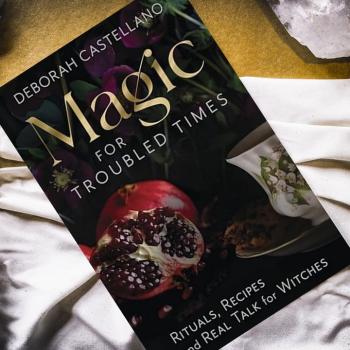
Pergamum Unfurled: Review - Magic for Troubled Times
TRENDING AT PATHEOS Pagan

I was recently chatting with someone on Instagram. She asked me what...

While there are many people who share their results, the end of...

On July 23, I saw Christopher Nolan's The Odyssey which is Homer’s...

As I write this two big events have just finished up. One...

Restoring the Watershed of Divine Love
Perhaps cooperation is not something we manufacture through legislation, ideology, or moral...

Many UUs don’t pray because of bad experiences in a previous religion,...
view all Pagan blogs
Ad-Free & Subscriber Log-In Subscription Support
- About Us
- 2026 Calendar
- Videos
- Podcasts
- Library of World Religions
- Faith In Media Tracker
- Advertise With Us
- Write for Us
- Privacy Policy
- Terms of Service
- Do Not Sell My Data
- Contact Us
- Radiant Digital
- Manage Newsletter Subscriptions
- Unsubscribe From Notifications
- Sitemap
Copyright 2008-2026, Patheos. All rights reserved.
Subscription Support Ad-Free & Subscriber Log-In
Follow Patheos