
BuddhistCatholicContemplativeEvangelicalGeneral ChristianHinduJewishLatter-day SaintMuslimNew VisionsProgressive Christian
Beliefs
- Buddhist
- Catholic
- Contemplative
- Evangelical
- General Christian
- Hindu
- Jewish
- Latter-day Saint
- More Voices
- Muslim
- New Visions
- Pagan
- Progressive Christian
Topics
- Religion News
- Food and Religion
- Sports and Religion
- Religious Art
- Religious Music and Entertainment
- Religious Events
- History and Religion
- Style and Religion
- Politics and Religion
- Women in Religion
- Recreation Outdoors and Religion
- Business Finance and Religion
- Careers Workplace and Religion
- Education and Religion
- Family Parenting and Religion
- Health Fitness and Religion
- Home and Religion
- Relationships and Religion
- Technology and Religion
- Travel and Religion
Columnists
- Buddhist Columnists
- Business Finance and Religion Columnists
- Careers Workplace and Religion Columnists
- Catholic Columnists
- Contemplative Columnists
- Education and Religion Columnists
- Evangelists Columnists
- Family Parenting and Religion Columnists
- General Christian Columnists
- Health Fitness and Religion Columnists
- Hindu Columnists
- History and Religion Columnists
- Home and Religion Columnists
- Jewish Columnists
- More Voices Columnists
- Latter Day Columnists
- Muslim Columnists
- New Visions Columnists
- Nonreligious Columnists
- Pagan Columnists
- Politics and Religion Columnists
- Progressive Columnists
- Recreation Outdoors and Religion Columnists
- Relationships and Religion Columnists
- Religion News Columnists
- Religious Art Columnists
- Religious Events Columnists
- Religious Music and Entertainment Columnists
- Sports and Religion Columnists
- Style and Religion Columnists
- Technology and Religion Columnists
- Travel and Religion Columnists
- Women in Religion Columnists
Resource Library
- 2026 Calendar
- Library of World Religions
- The 100 Most Holy Places on Earth
- Patheos Answers
- Podcasts
- Videos
- Faith Leaders Database
- Anglican Episcopalian
- Bahai
- Baptist
- Buddhism
- Christianity
- Confucianism
- Eastern Orthodoxy
- Hinduism
- Holiness and Pentecostal
- ISKCON
- Islam
- Judaism
- Lutheran
- Methodist
- The Church of Jesus Christ of Latter-day Saints
- New Age
- Paganism
- Presbytarian and Reformed
- Protestantism
- Religion Behind the Scenes
- Roman Catholic
- Scientology
- Shia Islam
- Sikhism
- Sufism
- Sunni Islam
- Taoism
- Zen
- See all religions
Research Tools
 Ad-Free & Subscriber Log-In Subscription Support
Ad-Free & Subscriber Log-In Subscription Support
Follow Patheos 

- Trending:
- Forgiveness
- |
- Marriage
- |
- Consciousness
- |
- Death Penalty
- |
- Election
- |
- Halloween

- Home
- Pagan
- Seekers and Guides: Wicca and the Lotus-Eaters – Reaching the New Generation of Witches
Seekers and Guides: Wicca and the Lotus-Eaters – Reaching the New Generation of Witches
Last updated on: December 28, 2013 at 3:25 pm by Sable Aradia
Seekers and Guides: Wicca and the Lotus-Eaters – Reaching the New Generation of Witches 2013-12-28T15:25:32+00:00 Sable Aradia
Patheos Explore the world's faith through different perspectives on religion and spirituality! Patheos has the views of the prevalent religions and spiritualities of the world.
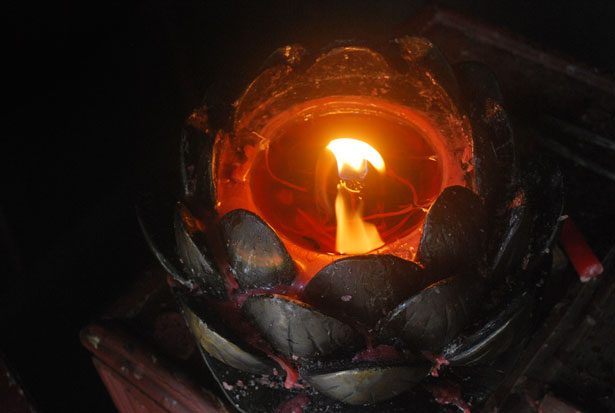 It has been proposed by some that modern witchcraft is declining. But some argue that modern witchcraft has just changed form. The new generation of Witches is no longer looking for coven practice or ritual. They are suspicious of secrecy and anything that smells hierarchical. They want spirituality they can find on the internet between their jobs, their commutes, and their social media.
People may have strong feelings about that one way or the other. I’m not here to argue those points (though I might in a future article). I am here, speaking to what I generally presume to be an older generation of Guides who want to reach the younger generation of Seekers. This is what they want; many prominent writers of the next generation of Witches have said so. You can argue that this is an inappropriate attitude, but you’ll be arguing to an empty room because no one will be listening.
I came to Wicca at a very interesting time both personally and in terms of modern Craft history. I was very young (ten years old when I discovered Raymond Buckland’s Practical Candleburning Rituals; fourteen when I started serious practice.) I was a teenager exploring the Craft during the time of the Satanic Panic. About that time, Witchcraft was already in the midst of a transformation, from a coven-focused, initiatory experience to an army of solitary practitioners. A whole flurry of books appeared: from Janet and Stewart Farrar, Starhawk and the Reclaiming Community in the mid-eighties; Scott Cunningham and Raymond Buckland in the early ’90s; Silver RavenWolf and Ann Moura in the late ’90s and early millennium. There were others, but those were the ones everybody read. These books stressed a background in ritual and practice. They came out of what was primarily, in the Western world, a Protestant Christian culture. So much of their training (and mine) focused on breaking the conditioning of that culture. We concentrated on releasing “either, or” thinking and learning “yes, and” thinking. We fought long, hard battles with ourselves and others about whether or not Witchcraft was evil and wrong because the Bible objected to it. We were products of our time, fighting for recognition, fighting over feminism, fighting over gender and issues of sexuality. All of these were results of breaking our conditioning.
Well guys, the battle is over. Millennials did not grow up in a Protestant Christian culture. Instead, many of them are lotus-eaters lulled by the Cult of Mammon, who are used to being acted upon rather than acting, often apathetic towards the issues that the previous generation fought so passionately about.[1] The books that have informed their Craft were written by Christopher Penczak, Raven Grimassi and T. Thorn Coyle, who are all about experience and transcendence. They grew up with feminism, with Gay Pride, and with a sense of entitlement to all forms of equality. They don’t need to break their “either, or” conditioning; they’ve already been raised to understand “yes, and.” They are used to high-speed internet and instant gratification. They are interested in direct, personal gnosis, and they don’t want to waste a lot of time to get it.
People genuinely believe they can teach themselves the Craft over the internet. I’m not sure I know why; if you tried to tell people you learned karate over the internet, they would laugh at you and no one would recognize your belt unless you challenged for it (and most masters wouldn’t even honor your challenge). And I’m not saying it’s good or bad, or even that it’s impossible (I’m teaching an online course on Witchcraft myself). But they’re not going to listen to any live person if they’re not giving them something that the internet doesn’t.
Any experienced Witch, no matter whether you are solitary or coven-trained, Feri or Alexandrian or Reclaiming or Gardnerian or eclectic, will say that Witchcraft is all in the practice. We know that nothing but time and experience will teach the skills necessary to be good at the Craft, and there’s just no substitute for it. But I remember being young (and I’m only pushing 40, so I guess I’m still young in many ways) and clever and strong-willed. If anyone had tried to tell me that, I wouldn’t have been very patient with it. We know this “instant gratification” desire and limited attention span is the bugaboo of the new generation, just as “either, or” thinking was the bugaboo of the last (and due to age and practice, I straddle the fence and have had to work to break through both of those bugaboos at once!). But if you can’t offer ways to find personal, direct gnosis along the way, they’re not going to stay interested.
My last several articles have developed a pattern of listing, with direct points that I then illustrate. Listing isn’t going to work here because reading the balance is a technique. There’s no checklist I can offer; all I can say is that with my students, my most positive results have involved keeping a few things in mind. That need for ongoing experiences of direct, personal gnosis is the most significant point I can think of. And yet, we need to train the minds of the next generation to not to give up on things when they get boring; because we know that’s when the trance begins and the brain begins to learn the skills you’re trying to teach it.
One of the big challenges facing us as Guides is convincing a new Seeker that reading about it is not the same as doing it for oneself. But a virtual experience is no substitute for actual experience. For that reason, I think it’s important to provide a lot more hands-on, experiential activity than it may have been in previous generations. When I start a new coven these days, I do the basic Esbat ritual two or three times myself or with my Priest. Then I make the Seekers copy it into their Books of Shadows, preferably by hand so it sticks with them, and then I make them start doing portions of the ritual (Calling Quarters, etc.). I make the ones with more experience (you’ll end up with that a lot these days; a few complete newbies and a couple of keeners with a lot of solitary practice under their belts) do the ritual themselves and do almost nothing myself at about six to eight months in. I make other people take charge of the Sabbats when possible, and rather than directing them, I encourage them to do their own research and then offer my help – if they should ask for it. Afterwards, I critique the ritual and offer suggestions.
When I am introducing a training exercise, I assign the exercise and explain why I am assigning it. Then I send the coven home to do it on their own and find an experiential connection. Until they’ve done the exercise, I don’t assign the next exercise. We discuss it, I ask them to tell me what they got from it and then I tell them what I wanted them to get from it, and we move on. Rather than getting students to copy a list of correspondence tables on the phases of the moon and their powers, I tell them to go out and experience that phase of the moon directly and in their own way. Then I tell them what the traditional sources say.
When I do things that are directed in group, I allow for variations and individual experience. And this includes some of the more “dangerous” activities such as astral journeys to face the Shadow-Self; dealing with cultural taboos such as nakedness, scourging, intoxicating substances or sex magick; and things that require the setting aside of your ego-consciousness such as Drawing Down or religious ecstasy. I teach this outside of ritual so that only those ready to explore it directly do so. I find that with each passing year, I teach it earlier and earlier. I believe this is because the new generation is more ready to challenge cultural taboos. The one exception is Drawing Down and other forms of channeling, which I teach later and later. I think that’s also a manifestation of the millennial culture, which exalts the individual so much that it is increasingly challenging to set the ego aside and let the Gods speak. The last generation feared it because it was “evil possession”; this generation fears it because they are afraid of losing themselves.
It helps to tell yourself that there is no “right” or “wrong” answer (that’s our “either, or” bugaboo again.) There might be a specific way that your tradition does things, but this kind of co-creative process allows the new generation to exercise their independence and their own creativity. It also allows them to make their own mistakes. I will sometimes point out that I don’t think a particular action is a good idea and state my reasons, but I’ll let them figure it out for themselves. Some people have to learn that way. I generally find that if something’s been done a certain way for generations, there’s a good reason for it. (Judy Harrow’s analysis of coven procedure and structure in Wicca Covens is a good object lesson in that, and my experience holds up her theories.)
The last suggestion I can make is that you shouldn’t take the Millennial creativity and individuality personally. We aspired to ideals of equality and balance; we shouldn’t sneer at them for taking us up on it. The young have their own contributions to make. There are times when my students aren’t as clever as they think they are, but there are times that I learn things from them as well.
Overall, I think that the emphasis on the new face of Witchcraft is experiential rather than theoretical, and there’s no need to fight that. Offer opportunities for experiences. Guide rather than teach.
Next column: Witches of Cyberspace – Online vs. In-Person Instruction in the Craft
[1] Because I have received flak in the recent past for not being clear when making a general statement, I point out that I don’t mean that everyone in the Millennial generation is like this, any more than every person from the previous generation is a Protestant Christian; nor is this a judgment on the character of Millennials. I mean this is a significant trend in the culture and it has an influence. If I am casting a judgment, it is on the blind materialism of present society. Witchcraft is counter-cultural; I think Millennial Witches, though influenced by this culture, are looking for a way out of it, just as previous generations wanted a way out of Protestant Christian dualism.
Seekers and Guides is published on alternate Mondays. Follow it via RSS or e-mail!
Previous Post

December 7, 2013
Remembering Nelson Mandela: A Reflection by Selena Fox
Next Post
December 10, 2013 The Busy Witch: GODDESS SPELLS FOR BUSY GIRLS
Browse Our Archives
Select a Category A Lakeside Hearth Adventures in Wortcunning Alone In Her Presence Arts, Crafts & Cooking Birthing Hereditary Witchcraft Book of Blackbirds Book Reviews Born-Again Witch Cauldron, Sword, Spear, & Stone Cermony and Liturgy Columns Community Dandelion Seeds Dear Jasmine Druid Thoughts Editor's Picks Everyday Pagan Family & Household Practice Family Traditions Full Frontal Magic Gateway Goddess Guest Articles Happily Heathen Health and Wellness Hearth of Hellenism Heathen Woman Hills of the Horizon History Holidays Horse Goddesses Interfaith Interviews Irish-American Witchcraft Jewish Witch Lamp & Labyrinth Letters from Midgard Literature, Media, Film, Music Loop of Brighid Love, Sex & Relationships Magic or Magick Making Light Naturalistic Traditions Nature News Outside The Circle Pantheisticon Politics Prayers, Poems, Blessings & Stories Queer Femme Mystic Queer of Swords Recipes Ritual and Practice Science and Research Seekers and Guides Seeking the Grail Socially Responsible Magic Spear of Athena Star Made Witch Syncretic Electric Technology The Blooming Staff The Busy Witch The Cartomancer The Crow's Nest The Dance of Pagan Recovery The Hearth of Hellenism The Lady's Quill The Other Side of the Hedge The Path of She The Rantin' Raven The Witches Next Door The Zen Pagan Theology, Ethics, Philosophy Tree City Witch Urban Earthwitch Wayfaring Woman Witch on Fire Wyrd Words
Select a Month January 2026 March 2025 December 2024 June 2024 April 2024 March 2024 January 2024 December 2023 November 2023 October 2023 August 2023 July 2023 May 2023 April 2023 March 2023 February 2023 January 2023 December 2022 November 2022 October 2022 September 2022 August 2022 July 2022 June 2022 May 2022 March 2022 February 2022 January 2022 December 2021 November 2021 October 2021 September 2021 August 2021 July 2021 June 2021 May 2021 April 2021 March 2021 February 2021 January 2021 December 2020 November 2020 October 2020 September 2020 August 2020 July 2020 June 2020 May 2020 April 2020 March 2020 February 2020 January 2020 December 2019 November 2019 October 2019 September 2019 August 2019 July 2019 June 2019 May 2019 April 2019 March 2019 February 2019 January 2019 December 2018 November 2018 October 2018 September 2018 August 2018 July 2018 June 2018 May 2018 April 2018 March 2018 February 2018 January 2018 December 2017 November 2017 October 2017 September 2017 August 2017 July 2017 June 2017 May 2017 April 2017 March 2017 February 2017 January 2017 December 2016 November 2016 October 2016 September 2016 August 2016 July 2016 June 2016 May 2016 April 2016 March 2016 February 2016 January 2016 December 2015 November 2015 October 2015 September 2015 August 2015 July 2015 June 2015 May 2015 April 2015 March 2015 February 2015 January 2015 December 2014 November 2014 October 2014 September 2014 August 2014 July 2014 June 2014 May 2014 April 2014 March 2014 February 2014 January 2014 December 2013 November 2013 October 2013 September 2013 August 2013 July 2013 June 2013 May 2013 April 2013 March 2013 February 2013 January 2013 December 2012 November 2012 October 2012 September 2012 August 2012 July 2012 June 2012 May 2012 April 2012 March 2012 February 2012 January 2012
Follow Us!
TAKE THE
Religious Wisdom Quiz
Who was the oldest man recorded in the Bible?
Select your answer to see how you score.
Jared Methuselah Adam Noah
Related posts from Agora

Simple Witchery: To Keep Silent

Simple Witchery: Leaning On The Four Pillars


TRENDING AT PATHEOS Pagan

I was recently chatting with someone on Instagram. She asked me what...

While there are many people who share their results, the end of...

On July 23, I saw Christopher Nolan's The Odyssey which is Homer’s...

As I write this two big events have just finished up. One...

Restoring the Watershed of Divine Love
Perhaps cooperation is not something we manufacture through legislation, ideology, or moral...

Many UUs don’t pray because of bad experiences in a previous religion,...
view all Pagan blogs
Ad-Free & Subscriber Log-In Subscription Support
- About Us
- 2026 Calendar
- Videos
- Podcasts
- Library of World Religions
- Faith In Media Tracker
- Advertise With Us
- Write for Us
- Privacy Policy
- Terms of Service
- Do Not Sell My Data
- Contact Us
- Radiant Digital
- Manage Newsletter Subscriptions
- Unsubscribe From Notifications
- Sitemap
Copyright 2008-2026, Patheos. All rights reserved.
Subscription Support Ad-Free & Subscriber Log-In
Follow Patheos