
BuddhistCatholicContemplativeEvangelicalGeneral ChristianHinduJewishLatter-day SaintMuslimNew VisionsProgressive Christian
Beliefs
- Buddhist
- Catholic
- Contemplative
- Evangelical
- General Christian
- Hindu
- Jewish
- Latter-day Saint
- More Voices
- Muslim
- New Visions
- Pagan
- Progressive Christian
Topics
- Religion News
- Food and Religion
- Sports and Religion
- Religious Art
- Religious Music and Entertainment
- Religious Events
- History and Religion
- Style and Religion
- Politics and Religion
- Women in Religion
- Recreation Outdoors and Religion
- Business Finance and Religion
- Careers Workplace and Religion
- Education and Religion
- Family Parenting and Religion
- Health Fitness and Religion
- Home and Religion
- Relationships and Religion
- Technology and Religion
- Travel and Religion
Columnists
- Buddhist Columnists
- Business Finance and Religion Columnists
- Careers Workplace and Religion Columnists
- Catholic Columnists
- Contemplative Columnists
- Education and Religion Columnists
- Evangelists Columnists
- Family Parenting and Religion Columnists
- General Christian Columnists
- Health Fitness and Religion Columnists
- Hindu Columnists
- History and Religion Columnists
- Home and Religion Columnists
- Jewish Columnists
- More Voices Columnists
- Latter Day Columnists
- Muslim Columnists
- New Visions Columnists
- Nonreligious Columnists
- Pagan Columnists
- Politics and Religion Columnists
- Progressive Columnists
- Recreation Outdoors and Religion Columnists
- Relationships and Religion Columnists
- Religion News Columnists
- Religious Art Columnists
- Religious Events Columnists
- Religious Music and Entertainment Columnists
- Sports and Religion Columnists
- Style and Religion Columnists
- Technology and Religion Columnists
- Travel and Religion Columnists
- Women in Religion Columnists
Resource Library
- 2026 Calendar
- Library of World Religions
- The 100 Most Holy Places on Earth
- Patheos Answers
- Podcasts
- Videos
- Faith Leaders Database
- Anglican Episcopalian
- Bahai
- Baptist
- Buddhism
- Christianity
- Confucianism
- Eastern Orthodoxy
- Hinduism
- Holiness and Pentecostal
- ISKCON
- Islam
- Judaism
- Lutheran
- Methodist
- The Church of Jesus Christ of Latter-day Saints
- New Age
- Paganism
- Presbytarian and Reformed
- Protestantism
- Religion Behind the Scenes
- Roman Catholic
- Scientology
- Shia Islam
- Sikhism
- Sufism
- Sunni Islam
- Taoism
- Zen
- See all religions
Research Tools
 Ad-Free & Subscriber Log-In Subscription Support
Ad-Free & Subscriber Log-In Subscription Support
Follow Patheos 

- Trending:
- Forgiveness
- |
- Marriage
- |
- Consciousness
- |
- Death Penalty
- |
- Election
- |
- Halloween

- Home
- Pagan
- Anne Newkirk Niven: A Conversation on Pagan Publishing and the Future of Our Movement
Anne Newkirk Niven: A Conversation on Pagan Publishing and the Future of Our Movement
Last updated on: January 22, 2015 at 7:51 pm by Christine Kraemer
Anne Newkirk Niven: A Conversation on Pagan Publishing and the Future of Our Movement 2015-01-22T19:51:59+00:00 Christine Kraemer
Patheos Explore the world's faith through different perspectives on religion and spirituality! Patheos has the views of the prevalent religions and spiritualities of the world.
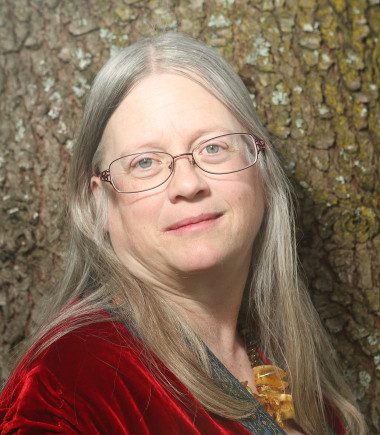
I had the good fortune recently to chat with Anne Newkirk Niven, publisher of Witches&Pagans magazine and the PaganSquare website, about Pagan publishing, columnist Teo Bishop’s controversial announcement about his return to Christianity, and the future of the Pagan movement. Read on for Anne’s insights into where we’ve been, where we’re going, and how it all relates to Pagan intellectual culture.
–Christine Kraemer, Patheos Pagan Managing Editor
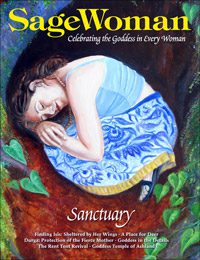 C: Anne, you’ve been in Pagan publishing for twenty-five years now, and you’ve edited a host of titles, including your current titles Witches&Pagans, SageWoman, and Crone. You’re also the managing editor for PaganSquare, which features dozens of blogs by Pagan practitioners, writers, and teachers.
Over the decades, Pagan magazines have a had a huge impact on the development of Pagan culture (including your own PanGaia and newWitch*, as well as* Green Egg*,* Gnosis*, and others). How do you see the impact of Pagan magazines on the movement today? Are blogs replacing magazines, or do the two mediums simply have different purposes?*
A: Thanks for asking, Christine!
Over the last decade or so, we’ve seen the entire publishing industry change from being paper-centric to being pixel-centric. The news cycle has been truncated from the leisurely pace of the newsweeklies (or even monthlies) to the minutes-long whirlwind of the Twitterverse. The locus of power has also changed, from the publisher-centric, vetted, edited world of professional publishing to the reader-enabled, popularized, “anything goes” world of the blogosphere.
 Pagan publishing is not immune to the disruptive effect of this technological tidal wave. However, Pagan publishing—especially the magazines, newsletters, and bulletin-boards that characterized the first Golden Age of Pagan popularity in the 1980s and 1990s—were almost entirely made up of reader-generated content in the first place, so it’s not been as big a shift for us as for our more commercial media comrades.
Today, blogs fill a specific niche: real-time, fast-paced information. No print media can keep up with the blogosphere; on the other hoof, even the most super-heated debate in the legendary Green Egg forum (letters to the editor) never got as crazily divisive as what happens in the comment-rich, disinhibited atmosphere of the Web.
Pagans are an information-hungry group of people; reading led many, if not most, of us onto our paths. (Most of our magazine readers are solitaries, which I suspect is true of Pagan culture as a whole.) The purpose of a magazine is to gather together a group of collated, vetted, and edited articles in a way that makes sense as a set and which forms a non-evolving collection of knowledge; blogs, on the other hoof, are radically individualized by their nature and are constantly evolving. I see these two modalities as fundamentally complementary—what one does well, the other does poorly. I hope we can see the continuance of literary paper-based culture even as the digital culture continues to grow, which is why I publish magazines (both in digital and paper formats) as well as hosting a rapidly-growing Pagan blogosphere.
I’d also like to put in a word for those on the downside of the digital divide: many people do not have access to the technology or bandwidth to keep up with the blogosphere—but they are literate, informed people who want to be members of our community. We do not wish to disenfranchise non-digerati (digital citizens aka netizens) from our communities.
C: How would you describe your Paganism today, and how do you see the relationship between the publishing you do for a living and your Pagan practice?
A: I identify today as a polytheist Witch with a Gaian heart.
Candidly speaking, what I do for a living *is* my Pagan practice. I am acutely aware of how fortunate I am to be able to spend all day long working at a Pagan day job, and it’s an amazing blessing to be able do this work. My practice has always been highly idiosyncratic (I haven’t been in a coven since the late 1980’s) and pretty cerebral to boot. So my intellectual Pagan practice comes directly from what I do in editing and publishing three magazines and a blogosphere. My more spiritual Pagan practice mostly consists of being out in Nature—walking, gardening, bicycling or motorcycling, or even just working at my desk with the window open so I can hear the birds and critters out in the backyard.
C: I love that you refer to your “intellectual Pagan practice.” Would you say more about that? One of the recurring comments I see in the Pagan blogosphere is that blogging or doing other writing about Paganism is somehow a distraction from doing Pagan things—and maybe even outright counterproductive. How can intellectual work, conversation, and debate be part of a meaningful Pagan practice?
A: Ah, that comment always puts my back up. I think about religion—about the gods, goddesses, practices, rituals, ideas and so forth—pretty much all day long. I always have, even back when I was a little girl growing up as a mainstream Christian. In fact, my first negative experience with Christianity was in the third grade Sunday school class, when my teacher told the class that only prayers that included the rote phrase “in Jesus’ name, Amen” would be heard by God. I cheekily pointed out that the Old Testament heroes seemed to have regular conversations with God long before Jesus was born—a logical inconsistency with her ritualistic formulation. For that bit of grade-school theology I got sent to the pastor and, eventually expelled from the church.
The concept that “thinking about Paganism” is deletory to actually “doing Paganism” is a false dichotomy that arises from the anti-intellectual bias of the Pagan revival. The modern Pagan movement has picked up two threads—a sense of mystic connection to nature (from the Romantic movement) and an emphasis on a personal relationship with deity (from evangelical Protestant Christianity) that are both hostile to intellectual analysis. Admittedly, it’s a great relief to just go out into nature and feel the presence of the Goddess, or to construct an altar, do ritual, and ground the reality of the divine in our everyday lives. In our over-achieving, materialist culture, throwing off the bounds of reason and cynicism is an amazingly liberating experience. But to condemn theology—which really, is just the discipline of thinking about God/dess—in favor of a sole emphasis on practice leads to a multitude of evils, including fundamentalism, demagoguery, and downright foolishness.
Every religious community needs both its mystics and its theologians; the former to open the Gates to allow the Divine Waters to flow to the people, and the latter to channel that often overwhelming flood of sensation into useful channels. Theology without experience is a lifeless distraction; but religious practice that does not allow itself to be discussed, debated, and even dissected, is merely superstition.

C: You mentioned that the conversations that happen on blogs today—many of which are about theology!—are far more heated and contentious than even the worst debates that happened in the Pagan magazines of the past. I have to agree, the anonymous or semi-anonymous atmosphere where no one has to look anyone else in the eye contributes to behavior that hurts our communities. As a website editor myself, I’m also frustrated at how much more attention readers pay to contentious articles. Provocative posts get hundreds of comments, while brilliant, insightful, well-written ones that readers agree with get a small smattering of brief compliments. It’s sad when promising bloggers get discouraged from writing because of this pattern.
A few months ago, you wrote a controversial editorial about how easily online Pagan debates tend to slip into outraged shouting matches. Do you have thoughts on what “best practices” might be for Pagan bloggers—strategies that create more constructive community discussions?
A: We’ve recently had incidents of this sort of thing on PaganSquare; I had (foolishly) assumed that since I had hand-recruited all the bloggers, and since they all got along with me, they would therefore all get along with one another. (Laughs.) Looking back, I can see how my assumptions got us into trouble.
I’ve come to the conclusion that community norms for online have to be a) laid out carefully and completely and b) enforced fairly and quickly. My basic rule has always been: if you wouldn’t say this to someone’s face, don’t say it online. The so-called Silver Rule (“anything you would not want done to you, don’t do to anyone else”) also seems to apply. We’ve created a Beta Version of our PaganSquare community norms and posted it here.
C: What a wonderful resource for PaganSquare participants—I especially like the way you’re seeking to encourage and reward people who create a friendly, civil environment. I definitely think we do better for ourselves when we model positive behaviors than when we condemn negative ones.
The Code of Conduct points out implicitly that Pagan spaces are inherently interfaith—not all those who want to participate in them are Pagan-identified or even necessarily share beliefs or values with Pagans. Just defining the word “Pagan” is an intense source of contention these days. I often wonder if groups that consider themselves to be on the fringes of the Pagan movement will need to break away more completely in order for Paganism to gain greater coherence and community cohesion. Do you think an interfaith model suits our future as a movement, or is it important to try to keep the “Pagan umbrella” intact as much as possible?
A: I really don’t see a conflict between the Pagan umbrella and identifying ourselves as an interfaith movement. It just means that the word “Pagan” is more of a social label than a religious one.
I see the Pagan community, more and more, as a collection of diverse constituencies than as a moniker to denote a specific faith path. That’s why our magazine (and the homepage of our blogosphere, PaganSquare) is called “Witches and Pagans.” Both, in the plural, not the singular. There are many kinds of Witches (by which I use the term to mean “magick-wielders”) as well as many kinds of Pagans.
The question, of course, becomes, what do we all have in common? I’d say that the most basic common principle is a commitment to religious diversity, freedom of conscience, and separation of church and state. Past that, there are large groups of Pagans who coalesce around certain styles of belief, including polytheism, the reality of non-physical forms of knowledge and existence, and the relevance of spiritual technologies including those commonly known as “magick.”
 C: The current issue of W&P features (former?) Druid blogger and spokesperson Teo Bishop on the cover — right at the same time as Bishop’s announcement that he is being drawn back to Christianity. Reactions from readers have been mixed, with some supporting Bishop in following what he perceives as a divine call, and others feeling betrayed by what they feel is an unflattering portrayal of polytheism. Bishop isn’t the first high-profile Pagan to publicly distance themselves from the Pagan movement, however. What’s your reaction when an outspoken Pagan leaves the fold?
A: First of all, I want to thank Teo Bishop and T. Thorn Coyle for putting together the original interview with Teo. I’ve been a fan of his “Bishop in the Grove” blog for some time (having first been alerted to it from Teo’s blog on Patheos). I was thrilled with this interview, and had the opportunity to meet Teo in person shortly after his recent move to Portland, Oregon.
I’ll admit that my first reaction to Teo’s initial blog post about being called back to Jesus was shock and a certain amount of frustration. Teo has a wonderful writing voice, and is very open and honest about his theological and personal reflections, and I was really enjoying reading his perspective, so my immediate thought was disappointment that the movement might lose a promising young leader.
But upon further reflection, I believe that Teo’s much-discussed (and very public) change of direction actually provides the Pagan community a much-needed opportunity to discuss our extremely conflicted, contradictory, and painfully repressed relationship with the majority religious community in the Western world: Christianity.
C: Tell me more about what you mean by “repressed.” What would a healthy relationship to Christianity look like for the Pagan movement?
A: A healthy relationship between post-modern Paganism and Christianity should, at a minimum, be open and public. Many Pagans act as if their Christian past, ancestors, or even current interests or practices are a dirty secret to be kept in the closet. This sense of shame is painfully reminiscent of the kind of pain that is characteristic of dysfunctional families. In fact, that’s an apt parallel, as much of modern Paganism’s relationship with Christianity lacks boundaries and consists of knee-jerk rejection based on deeply-held pain, rather than being mature, thoughtful, and reflective. If Teo had announced “I’m going to become a Buddhist,” or had decided to convert to Judaism, no one would be talking about it. Why? Because Christianity is the elephant in the Pagan living room. We all know it’s there, taking up a lot of room, but we’ve all tacitly agreed not to talk about it.
C: A collection of essays by Pagans reflecting on their relationships with Christianity — both positive aspects and deep wounds — might make for a very interesting anthology. I think your analogy about dysfunctional families is compelling.
Does W&P have follow-up plans for the interview with Bishop?
A: I’m planning to write an editorial on the subject of Teo’s new directions, and the Christian-Pagan relationship in general, as well as my response to it. Whether or not Teo continues to write a column for us is a subject he and I are still discussing.
I have specific editorial boundaries for what belongs in Witches&Pagans magazine, and I’m not sure either one of us knows where he fits on that continuum at the moment. If he stays with us, I expect his column will address the issues he has raised; if he doesn’t stay, I’m sure I’ll make a short editorial announcement of his departure and the reason behind it.
C: Anne, thanks so much for taking time out from your busy schedule for this discussion. I’ve really appreciated hearing your insights about the state of Pagan media.
To wrap up, just one more question: what would you most like to see happen to the Pagan movement over the next ten years?
A: I’d love to see us find ways to disagree without rancor. As Paganism continues to expand, we have seen a great change in the diversity of practices and traditions in our movement. With the boundaries expanding, we are often seeing people of very different perspectives brought together for the first time and sometimes that doesn’t go well, especially when there’s an (often unspoken) assumption that it’s Bad Form to either a) define boundaries around a practice or tradition that doesn’t include everyone or b) to question each other’s beliefs or practices. Truth is, we aren’t a homogenous Wiccan-derived, mostly female, mostly liberal community anymore. Figuring out how to be respectful in a community that doesn’t always have a common frame of reference theologically speaking is really, really HARD and I’d love to see us make more progress towards figuring that out.
Literature, Media, Film, Music
Previous Post
November 12, 2013
The Busy Witch: Seeking Abundance
Next Post
November 14, 2013 Wyrd Words: Civil Religion Isn't What It Used To Be
Browse Our Archives
Select a Category A Lakeside Hearth Adventures in Wortcunning Alone In Her Presence Arts, Crafts & Cooking Birthing Hereditary Witchcraft Book of Blackbirds Book Reviews Born-Again Witch Cauldron, Sword, Spear, & Stone Cermony and Liturgy Columns Community Dandelion Seeds Dear Jasmine Druid Thoughts Editor's Picks Everyday Pagan Family & Household Practice Family Traditions Full Frontal Magic Gateway Goddess Guest Articles Happily Heathen Health and Wellness Hearth of Hellenism Heathen Woman Hills of the Horizon History Holidays Horse Goddesses Interfaith Interviews Irish-American Witchcraft Jewish Witch Lamp & Labyrinth Letters from Midgard Literature, Media, Film, Music Loop of Brighid Love, Sex & Relationships Magic or Magick Making Light Naturalistic Traditions Nature News Outside The Circle Pantheisticon Politics Prayers, Poems, Blessings & Stories Queer Femme Mystic Queer of Swords Recipes Ritual and Practice Science and Research Seekers and Guides Seeking the Grail Socially Responsible Magic Spear of Athena Star Made Witch Syncretic Electric Technology The Blooming Staff The Busy Witch The Cartomancer The Crow's Nest The Dance of Pagan Recovery The Hearth of Hellenism The Lady's Quill The Other Side of the Hedge The Path of She The Rantin' Raven The Witches Next Door The Zen Pagan Theology, Ethics, Philosophy Tree City Witch Urban Earthwitch Wayfaring Woman Witch on Fire Wyrd Words
Select a Month January 2026 March 2025 December 2024 June 2024 April 2024 March 2024 January 2024 December 2023 November 2023 October 2023 August 2023 July 2023 May 2023 April 2023 March 2023 February 2023 January 2023 December 2022 November 2022 October 2022 September 2022 August 2022 July 2022 June 2022 May 2022 March 2022 February 2022 January 2022 December 2021 November 2021 October 2021 September 2021 August 2021 July 2021 June 2021 May 2021 April 2021 March 2021 February 2021 January 2021 December 2020 November 2020 October 2020 September 2020 August 2020 July 2020 June 2020 May 2020 April 2020 March 2020 February 2020 January 2020 December 2019 November 2019 October 2019 September 2019 August 2019 July 2019 June 2019 May 2019 April 2019 March 2019 February 2019 January 2019 December 2018 November 2018 October 2018 September 2018 August 2018 July 2018 June 2018 May 2018 April 2018 March 2018 February 2018 January 2018 December 2017 November 2017 October 2017 September 2017 August 2017 July 2017 June 2017 May 2017 April 2017 March 2017 February 2017 January 2017 December 2016 November 2016 October 2016 September 2016 August 2016 July 2016 June 2016 May 2016 April 2016 March 2016 February 2016 January 2016 December 2015 November 2015 October 2015 September 2015 August 2015 July 2015 June 2015 May 2015 April 2015 March 2015 February 2015 January 2015 December 2014 November 2014 October 2014 September 2014 August 2014 July 2014 June 2014 May 2014 April 2014 March 2014 February 2014 January 2014 December 2013 November 2013 October 2013 September 2013 August 2013 July 2013 June 2013 May 2013 April 2013 March 2013 February 2013 January 2013 December 2012 November 2012 October 2012 September 2012 August 2012 July 2012 June 2012 May 2012 April 2012 March 2012 February 2012 January 2012
Follow Us!
TAKE THE
Religious Wisdom Quiz
I denied my Lord three times before dawn broke and a bird announced the morning. What creature's cry fulfilled the prophecy?
Select your answer to see how you score.
An eagle A rooster A dove A raven
Related posts from Agora

Simple Witchery: To Keep Silent

Simple Witchery: Leaning On The Four Pillars


Simple Witchery: Resistance and Resilience in Hard Times
TRENDING AT PATHEOS Pagan

I was recently chatting with someone on Instagram. She asked me what...

While there are many people who share their results, the end of...

On July 23, I saw Christopher Nolan's The Odyssey which is Homer’s...

As I write this two big events have just finished up. One...

Restoring the Watershed of Divine Love
Perhaps cooperation is not something we manufacture through legislation, ideology, or moral...

Many UUs don’t pray because of bad experiences in a previous religion,...
view all Pagan blogs
Ad-Free & Subscriber Log-In Subscription Support
- About Us
- 2026 Calendar
- Videos
- Podcasts
- Library of World Religions
- Faith In Media Tracker
- Advertise With Us
- Write for Us
- Privacy Policy
- Terms of Service
- Do Not Sell My Data
- Contact Us
- Radiant Digital
- Manage Newsletter Subscriptions
- Unsubscribe From Notifications
- Sitemap
Copyright 2008-2026, Patheos. All rights reserved.
Subscription Support Ad-Free & Subscriber Log-In
Follow Patheos