
BuddhistCatholicContemplativeEvangelicalGeneral ChristianHinduJewishLatter-day SaintMuslimNew VisionsProgressive Christian
Beliefs
- Buddhist
- Catholic
- Contemplative
- Evangelical
- General Christian
- Hindu
- Jewish
- Latter-day Saint
- More Voices
- Muslim
- New Visions
- Pagan
- Progressive Christian
Topics
- Religion News
- Food and Religion
- Sports and Religion
- Religious Art
- Religious Music and Entertainment
- Religious Events
- History and Religion
- Style and Religion
- Politics and Religion
- Women in Religion
- Recreation Outdoors and Religion
- Business Finance and Religion
- Careers Workplace and Religion
- Education and Religion
- Family Parenting and Religion
- Health Fitness and Religion
- Home and Religion
- Relationships and Religion
- Technology and Religion
- Travel and Religion
Columnists
- Buddhist Columnists
- Business Finance and Religion Columnists
- Careers Workplace and Religion Columnists
- Catholic Columnists
- Contemplative Columnists
- Education and Religion Columnists
- Evangelists Columnists
- Family Parenting and Religion Columnists
- General Christian Columnists
- Health Fitness and Religion Columnists
- Hindu Columnists
- History and Religion Columnists
- Home and Religion Columnists
- Jewish Columnists
- More Voices Columnists
- Latter Day Columnists
- Muslim Columnists
- New Visions Columnists
- Nonreligious Columnists
- Pagan Columnists
- Politics and Religion Columnists
- Progressive Columnists
- Recreation Outdoors and Religion Columnists
- Relationships and Religion Columnists
- Religion News Columnists
- Religious Art Columnists
- Religious Events Columnists
- Religious Music and Entertainment Columnists
- Sports and Religion Columnists
- Style and Religion Columnists
- Technology and Religion Columnists
- Travel and Religion Columnists
- Women in Religion Columnists
Resource Library
- 2026 Calendar
- Library of World Religions
- The 100 Most Holy Places on Earth
- Patheos Answers
- Podcasts
- Videos
- Faith Leaders Database
- Anglican Episcopalian
- Bahai
- Baptist
- Buddhism
- Christianity
- Confucianism
- Eastern Orthodoxy
- Hinduism
- Holiness and Pentecostal
- ISKCON
- Islam
- Judaism
- Lutheran
- Methodist
- The Church of Jesus Christ of Latter-day Saints
- New Age
- Paganism
- Presbytarian and Reformed
- Protestantism
- Religion Behind the Scenes
- Roman Catholic
- Scientology
- Shia Islam
- Sikhism
- Sufism
- Sunni Islam
- Taoism
- Zen
- See all religions
Research Tools
 Ad-Free & Subscriber Log-In Subscription Support
Ad-Free & Subscriber Log-In Subscription Support
Follow Patheos 

- Trending:
- Forgiveness
- |
- Marriage
- |
- Consciousness
- |
- Death Penalty
- |
- Election
- |
- Halloween

- Home
- Pagan
- Syncretic Electric: Looking at Our History (Part 5) — Feminism
Syncretic Electric: Looking at Our History (Part 5) — Feminism
Last updated on: October 25, 2013 at 8:00 am by Julian Betkowski
Syncretic Electric: Looking at Our History (Part 5) — Feminism 2013-10-24T16:29:49+00:00 Julian Betkowski
Patheos Explore the world's faith through different perspectives on religion and spirituality! Patheos has the views of the prevalent religions and spiritualities of the world.

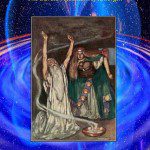
Pallas Athene, Parmigianino, 1539
Feminism has been a powerful force within Paganism. Indeed, it could be argued that feminism changed the face of Paganism. While modern paganism had a strong focus on female divinity, it was not until the feminist movement began interacting Paganism properly that the roles of women were seriously questioned within the traditional pagan social constructions. In her landmark book Drawing Down the Moon, first published in 1979 and then revised in 1986, Margot Adler (1986) describes paganism in general as being fertile ground for feminist ideas to take root:
Neo-Paganism, from its inception, has been less authoritarian, less dogmatic, less institutionalized, less filled with father figures, and less tied institutions and ideas dominated by males. The religious concepts and historical premises behind Neo-Paganism and Witchcraft give women a role equal or superior to that of men. (p. 208)
Of course Adler concedes that this is not always the case with every form of Paganism, but as a general rule these trends made the work of Feminism much easier within the pagan community.
The emergence and development of Dianic Wicca is one of the more dramatic examples of Feminism working within Paganism to restore the spiritual authority of women.
Beyond their focus on the Goddess, Dianics consider themselves to be “radical feminist and politically on the fringe”: they focus solely on the Goddess to the exclusion of the Gods, the covens are composed of women only, and their rituals deconstruct patriarchy while affirming womanhood. (Foltz, 2000, p. 410)
Of course, not all Feminist covens followed the Wiccan format. In fact, Tanice G. Foltz (2000, p. 410) observes that many Feminist covens eschewed hierarchical structures altogether and relied on consensus and other anarchic forms of decision making, inspired by Feminist theorists and Feminist political action. Adler (1986) adds that for many feminists interacting with the Paganism, spirituality was not separated from their greater lives, but was often bound up with their political stances, “Most feminist Witches feel the spiritual and political can be combined. They’re moving out a position that would, in the words of Z Budapest, ‘fight for our sweet womon of souls’ as well as our bodies” (p. 186).
Some of our most prominent voices in Paganism have had a background in the politics of Feminism. Starhawk, T. Thorn Coyle, and Z Budapest all have strong associations with the Feminist movement, and, arguably, their spirituality does seem to be powerfully integrated with their politics. T. Thorn Coyle, for example, is a strong advocate for equality and civil rights, and often speaks of the reflexivity between spirituality and political action.
It is important, as well, to recognize the role of Z Budapest, despite recent events justifiably tarnishing her reputation. From the founding of the Susan B. Anthony Coven in 1971 and her attention raising court case in 1975, Z Budapest has been an outspoken proponent of women’s spiritual authority and power. While many today would disagree with the Feminist proposition:
…that women are Witches by right of the fact that they are women, that nothing else is needed, and feminist Witch Z Budapest has at times declared the craft to be “Wimmins Religion,” a religion not open to men. (Adler, 1986, p. 178)
In the 1970’s, when these sentiments were first voiced, the idea that women’s spirituality was entirely complete without the presence of men, and furthermore, as Z Budapest asserted, that there is not even a place for men at all within women’s spirituality, was powerfully transformative and affirming for many women. Even within the traditional Wiccan construction, despite the elevation of the Goddess, the feminine was viewed as incomplete without the masculine. Indeed, both were viewed as necessary for the proper functioning of a coven. While today the idea the women alone had full possession of spiritual power and authority is hardly shocking, it was, at the time, often met with hostility. As Adler observed in 1979, “Many men (and some women) in the more mainstream Craft groups are upset by the growth of feminist covens, since any feminist Witches have purposefully rejected some principles, norms, and structures of the modern Craft” (1986, p. 178).
By today, however, this particularly radical form of Feminist Paganism has largely died out, for good or for ill. Adler even notes that in 1986, at the time of her revision:
Much of this previous chapter is now history. The tensions between the feminist and traditional Craft are much less evident. Women’s circles and men’s circles happen routinely at Pagan festivals and even in the traditional Craft. English traditional covens are creating rites of passage for boys and girls. In the feminist Craft separatism has diminished—at least in the United States. (1986, p. 228)
Today, while Feminist ideas continue to influence Pagan thought, the movement as a whole seems to have lost a great deal of its drive. It is of vital importance, though, that we remain mindful of the project of Feminism, at least in as much as it intersects the larger project of Paganism (if we can even claim that Paganism as a whole has a project). We do still live in a society infused with misogyny and sexism. It is very important that we recognize how these often subtle forces impact us on a day to day basis and how they influence our views and decisions. It is insufficient for us to simply rest on the work done in the 70’s and 80’s. We must recognize that project of Feminism is far from complete, and that even within our own communities, there is still work to be done.
Indeed, Margot Adler (1986) notes within a still powerfully patriarchal society:
One might almost say that the Craft at times acts as a “safety valve” for the establishment, providing an outlet for oppressed women but stopping short of true liberation. If so, the craft in these cases becomes conservative force, making real change even more difficult. (p. 214)
We need to be sure that our Paganism amounts to more than just a safety valve, a temporary escape. At least as far as the project of Feminism goes, this kind of function only serves to reinforce patriarchal dominance, since it allows some women a feeling of freedom, while still allowing the overarching structures to remain unchallenged.
Of course, not every Pagan views their spirituality as a site of political action, but, for many of us, I do believe that this has been one of the lasting gifts of Feminism. For the early Feminists, spirituality and politics were bound up in each other, and this action, I suggest, is often mirrored in the eco-consciousness elements of Modern Paganism, as well. It is vital that we continue to engage with these projects and be aware of the impact that they have had on the formation of Modern Paganism, so that we can continue the work, or at least resist retrograde action.
References:
Adler, M. (1986). Drawing down the moon: Witches, druids, goddess worshippers, and other pagans in america today. New York, NY: Penguin Group.
Foltz, T. G. (2000). Women’s spirituality research: Doing feminism. Sociology of Religion, 61(4), 409-418.
Syncretic Electric is published on alternate Fridays. Subscribe via RSS or e-mail!
Previous Post
October 24, 2013
Loop of Brighid: The Cauldrons of Inspiration

Browse Our Archives
Select a Category A Lakeside Hearth Adventures in Wortcunning Alone In Her Presence Arts, Crafts & Cooking Birthing Hereditary Witchcraft Book of Blackbirds Book Reviews Born-Again Witch Cauldron, Sword, Spear, & Stone Cermony and Liturgy Columns Community Dandelion Seeds Dear Jasmine Druid Thoughts Editor's Picks Everyday Pagan Family & Household Practice Family Traditions Full Frontal Magic Gateway Goddess Guest Articles Happily Heathen Health and Wellness Hearth of Hellenism Heathen Woman Hills of the Horizon History Holidays Horse Goddesses Interfaith Interviews Irish-American Witchcraft Jewish Witch Lamp & Labyrinth Letters from Midgard Literature, Media, Film, Music Loop of Brighid Love, Sex & Relationships Magic or Magick Making Light Naturalistic Traditions Nature News Outside The Circle Pantheisticon Politics Prayers, Poems, Blessings & Stories Queer Femme Mystic Queer of Swords Recipes Ritual and Practice Science and Research Seekers and Guides Seeking the Grail Socially Responsible Magic Spear of Athena Star Made Witch Syncretic Electric Technology The Blooming Staff The Busy Witch The Cartomancer The Crow's Nest The Dance of Pagan Recovery The Hearth of Hellenism The Lady's Quill The Other Side of the Hedge The Path of She The Rantin' Raven The Witches Next Door The Zen Pagan Theology, Ethics, Philosophy Tree City Witch Urban Earthwitch Wayfaring Woman Witch on Fire Wyrd Words
Select a Month January 2026 March 2025 December 2024 June 2024 April 2024 March 2024 January 2024 December 2023 November 2023 October 2023 August 2023 July 2023 May 2023 April 2023 March 2023 February 2023 January 2023 December 2022 November 2022 October 2022 September 2022 August 2022 July 2022 June 2022 May 2022 March 2022 February 2022 January 2022 December 2021 November 2021 October 2021 September 2021 August 2021 July 2021 June 2021 May 2021 April 2021 March 2021 February 2021 January 2021 December 2020 November 2020 October 2020 September 2020 August 2020 July 2020 June 2020 May 2020 April 2020 March 2020 February 2020 January 2020 December 2019 November 2019 October 2019 September 2019 August 2019 July 2019 June 2019 May 2019 April 2019 March 2019 February 2019 January 2019 December 2018 November 2018 October 2018 September 2018 August 2018 July 2018 June 2018 May 2018 April 2018 March 2018 February 2018 January 2018 December 2017 November 2017 October 2017 September 2017 August 2017 July 2017 June 2017 May 2017 April 2017 March 2017 February 2017 January 2017 December 2016 November 2016 October 2016 September 2016 August 2016 July 2016 June 2016 May 2016 April 2016 March 2016 February 2016 January 2016 December 2015 November 2015 October 2015 September 2015 August 2015 July 2015 June 2015 May 2015 April 2015 March 2015 February 2015 January 2015 December 2014 November 2014 October 2014 September 2014 August 2014 July 2014 June 2014 May 2014 April 2014 March 2014 February 2014 January 2014 December 2013 November 2013 October 2013 September 2013 August 2013 July 2013 June 2013 May 2013 April 2013 March 2013 February 2013 January 2013 December 2012 November 2012 October 2012 September 2012 August 2012 July 2012 June 2012 May 2012 April 2012 March 2012 February 2012 January 2012
Follow Us!
TAKE THE
Religious Wisdom Quiz
How many verses are in the shortest chapter in the Bible?
Select your answer to see how you score.
10 5 2 7
Related posts from Agora

Simple Witchery: To Keep Silent

Simple Witchery: Leaning On The Four Pillars

Pergamum Unfurled: Magic with the Greek Gods (Book...

Pergamum Unfurled: Cunning Words (Review)
TRENDING AT PATHEOS Pagan

I was recently chatting with someone on Instagram. She asked me what...

While there are many people who share their results, the end of...

On July 23, I saw Christopher Nolan's The Odyssey which is Homer’s...

As I write this two big events have just finished up. One...

Restoring the Watershed of Divine Love
Perhaps cooperation is not something we manufacture through legislation, ideology, or moral...

Many UUs don’t pray because of bad experiences in a previous religion,...
view all Pagan blogs
Ad-Free & Subscriber Log-In Subscription Support
- About Us
- 2026 Calendar
- Videos
- Podcasts
- Library of World Religions
- Faith In Media Tracker
- Advertise With Us
- Write for Us
- Privacy Policy
- Terms of Service
- Do Not Sell My Data
- Contact Us
- Radiant Digital
- Manage Newsletter Subscriptions
- Unsubscribe From Notifications
- Sitemap
Copyright 2008-2026, Patheos. All rights reserved.
Subscription Support Ad-Free & Subscriber Log-In
Follow Patheos