
BuddhistCatholicContemplativeEvangelicalGeneral ChristianHinduJewishLatter-day SaintMuslimNew VisionsProgressive Christian
Beliefs
- Buddhist
- Catholic
- Contemplative
- Evangelical
- General Christian
- Hindu
- Jewish
- Latter-day Saint
- More Voices
- Muslim
- New Visions
- Pagan
- Progressive Christian
Topics
- Religion News
- Food and Religion
- Sports and Religion
- Religious Art
- Religious Music and Entertainment
- Religious Events
- History and Religion
- Style and Religion
- Politics and Religion
- Women in Religion
- Recreation Outdoors and Religion
- Business Finance and Religion
- Careers Workplace and Religion
- Education and Religion
- Family Parenting and Religion
- Health Fitness and Religion
- Home and Religion
- Relationships and Religion
- Technology and Religion
- Travel and Religion
Columnists
- Buddhist Columnists
- Business Finance and Religion Columnists
- Careers Workplace and Religion Columnists
- Catholic Columnists
- Contemplative Columnists
- Education and Religion Columnists
- Evangelists Columnists
- Family Parenting and Religion Columnists
- General Christian Columnists
- Health Fitness and Religion Columnists
- Hindu Columnists
- History and Religion Columnists
- Home and Religion Columnists
- Jewish Columnists
- More Voices Columnists
- Latter Day Columnists
- Muslim Columnists
- New Visions Columnists
- Nonreligious Columnists
- Pagan Columnists
- Politics and Religion Columnists
- Progressive Columnists
- Recreation Outdoors and Religion Columnists
- Relationships and Religion Columnists
- Religion News Columnists
- Religious Art Columnists
- Religious Events Columnists
- Religious Music and Entertainment Columnists
- Sports and Religion Columnists
- Style and Religion Columnists
- Technology and Religion Columnists
- Travel and Religion Columnists
- Women in Religion Columnists
Resource Library
- 2026 Calendar
- Library of World Religions
- The 100 Most Holy Places on Earth
- Patheos Answers
- Podcasts
- Videos
- Faith Leaders Database
- Anglican Episcopalian
- Bahai
- Baptist
- Buddhism
- Christianity
- Confucianism
- Eastern Orthodoxy
- Hinduism
- Holiness and Pentecostal
- ISKCON
- Islam
- Judaism
- Lutheran
- Methodist
- The Church of Jesus Christ of Latter-day Saints
- New Age
- Paganism
- Presbytarian and Reformed
- Protestantism
- Religion Behind the Scenes
- Roman Catholic
- Scientology
- Shia Islam
- Sikhism
- Sufism
- Sunni Islam
- Taoism
- Zen
- See all religions
Research Tools
 Ad-Free & Subscriber Log-In Subscription Support
Ad-Free & Subscriber Log-In Subscription Support
Follow Patheos 

- Trending:
- Forgiveness
- |
- Marriage
- |
- Consciousness
- |
- Death Penalty
- |
- Election
- |
- Halloween

- Home
- Pagan
- Seekers and Guides: Imparting the Mysteries – Helping Your Students Find Personal Gnosis
Seekers and Guides: Imparting the Mysteries – Helping Your Students Find Personal Gnosis
Last updated on: October 28, 2013 at 8:00 am by Sable Aradia
Seekers and Guides: Imparting the Mysteries – Helping Your Students Find Personal Gnosis 2013-10-24T16:24:43+00:00 Sable Aradia
Patheos Explore the world's faith through different perspectives on religion and spirituality! Patheos has the views of the prevalent religions and spiritualities of the world.
 It’s been almost a month since you’ve heard from me. Sorry about that; the last scheduled publication fell right on the Canadian Thanksgiving weekend and I was “chillin’ with the fam.” Business as usual resumes!
My initiator Lord Redleaf once said the most insightful thing I have heard about the nature of the Craft, and I now quote it to all my students: “Wicca is an individual pursuit, best practiced in groups.” I love this statement because it observes one of the essential truths of our path, even of spirituality in general. In the Craft, we don’t interpret the Divine for you. We expect that each Witch will go and seek Divine contact for him- or herself. It’s the reason we emphasize practice over dogma. Who am I to tell you that your vision of the Divine in wrong, just because it’s different from mine?
Witches are mystics. The definition of mysticism is “a doctrine of an immediate spiritual intuition of truths believed to transcend ordinary understanding, or of a direct, intimate union of the soul with God through contemplation or ecstasy.”[1] That’s what “Aspecting” or “Drawing Down the Moon (or Sun)” is all about. That’s what “trusting your intuition” or “finding your True Will” or even “reclaiming your Shadow-Self” is all about. We don’t want to tell you what the gods think; we want you to find out for yourself. We want you to experience your own personal gnosis.
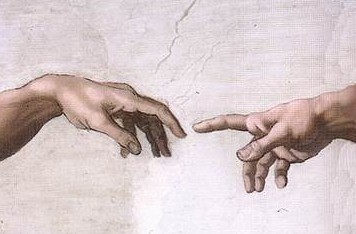
And therein lays the dilemma for the Wiccan teacher. How do you impart a personal experience of the Divine that may not be at all like your own? How do you teach the sound of one hand clapping?
The answer is: you don’t. You teach the skills needed in order to make this very personal discovery instead.
Step 1: Break Old Patterns
A full cup holds no more water. In order to make room for the wine of personal gnosis, you have to empty the cup. You have to teach your student to “forget all they know, or think they know.”[2] You will probably have to do this more than once.
But how do you break the patterns? There are a few tricks in our bag. “Trick” is probably the right word, because when people think that their paradigm is working, it usually requires you to compel them to see it at a different angle. Most of the time students won’t come to you anyway unless circumstances have already forced them to see the cracks in the reality they thought was pristine, and so you can usually work in a figurative chisel and start chipping away. As Leonard Cohen says, “There is a crack, a crack in everything. That’s how the light gets in.”[3]
Playing the Devil’s Advocate can be effective. If a student tells you that something is the truth, argue the other point of view, even if that’s not how you feel about it. If your student says yes, tell them the answer is no, and then when they’ve become convinced of this, persuade them that the answer is yes again. Demand that they make moral and ethical decisions, not based on what people have told them to do, but based instead on how they feel about it[4]. Ask them questions for which there is no true answer, or many. Koans are good examples. These methods force Seekers to eventually stop thinking in absolutes and polarities, and learn instead to embrace the “yes, and” thinking that I believe to be one of the most beautiful aspects of Paganism; a belief that many things can be true at once, “from a certain point of view,” just like Obi-Wan Kenobi tells us.
Another respected method in our community of emptying the cup is something I call “Coyote Wisdom.” This is the wisdom of the fool. Laughing at our pretentions and pulling the wool over our eyes are the tools of the trade. Most Pagan traditions have a place for the Trickster, from Loki to Coyote to Hermes to Pan. Shamans of varying cultures often do things that are socially awkward, uncomfortable, lewd, rude or downright embarrassing in order to make use of this principle in training themselves and others. When we are shocked into seeing how ridiculous our assumptions and ego-based constructs are, we are more willing to accept that maybe we don’t actually know everything, and we open up a crack. Remember that our Goddess exhorts us to have “mirth and reverence” for a reason!
Shock and fear are less comfortable, but equally effective ways of emptying the cup. Crises can be one of the most effective tools there are of dumping out all that stagnant water, because they force an entire paradigm change. Initiations induce artificial crises that are often easier to handle than the ones life hands you. Pain, suffering and grief are effective in this vein, which is why British Traditional Witches use the Scourge to purify and the Witch’s Cradle to meditate; why Feri Witches teach about the Iron Pentacle, and why Reclaiming and Dianic Witches teach the lessons of the Dark Goddess. This is also why Indian and Eastern mystics have pierced the skin with rings and needles, and why so many sacred paths have a tradition of the “wounded healer” (Siberian shamans were actually required to be maimed or suffer a Near Death Experience before they were accepted for training.) Some traditions have used psychoactive drugs, called “entheogens” by anthropologists, for this purpose as well.
Step 2: Feed the Right Brain
We think of logic and reason as being the province of the “left brain.” We think of creativity and imagination as being the province of the “right brain.” You can’t find the Divine with the left brain. The left brain classifies and categorizes; it adds and subtracts; and it gives things names and labels. The right brain is the source of Divine connection and inspiration, and we use the left brain to give those experiences understanding and meaning.
The Druids called it Awen. They knew that the same “fire-in-the-head” that inspires the creativity of bards also inspires the insights of holy people. And our society has no use for it because it doesn’t breed good workers and good data processors, or obedient consumers. We are so busy developing our left brain thinking that we often neglect our right brains entirely. Even much of our entertainment and art is pre-packaged within particular acceptable perimeters.
Artists have always been rebels and outsiders by necessity; and so are Magicians and Witches. Our culture is materialistic and overly rational. We believe that if you can’t smell it and touch it, it doesn’t exist; and we still believe in absolutes of wrong and right, yes and no, true and false. And that kind of thinking doesn’t let the light get in.
Trancing is the way in which we touch the Divine. It gets the left brain out of the way. So teaching ways to enter that trance-state is the most valuable skill you will impart on your students. From intense meditation, to cloud gazing, to ecstatic dancing, to sex; from pain to pleasure; from rhythm and movement to flashing lights and psychoactive drugs, opening up that right brain is essential.
Anything that feeds and trains the right brain is good for teaching the skills necessary to find personal gnosis. Guided meditations, creative rituals, ritual writing, story-writing, art, healing arts, music, even daydreaming; all of these things teach us to access the right brain’s gifts of imagination and visualization. That’s where God/dess is found. So this is where language fails us. It’s not because it’s not a “real” experience, it’s because divine connection takes place on a level that the left brain is designed to help us to understand, but not experience. Foster your students’ creativity as well as their willingness to be open to possibility.
Step 3: Offer Language for the New Paradigm
This is a stage that is often neglected. Now that you have literally “blown your students’ minds,” you have an obligation to aid them in putting those minds back together again, or else their experience in the Underworld, and their communion with Divinity, has no meaning.[5] They will also have no ability to function again in our three dimensional reality; which is why it’s not really unusual for practicing metaphysicians to go a little crazy. The reason why this is often neglected is because you can’t tell them how to do this! Most of us found our way to Pagan paths because we resented being told what and how to think. If you do that, you are limiting rather than empowering your students. Julian Betkowski just wrote a great article about all this recently in his Agora column “Syncretic Electric” called “Materialism and Narcissism.”
This is a good opportunity to make use of that “yes, and” thinking we talked about earlier. The Eleusinian Mysteries offered the tale of Persephone as a metaphor of the transformation, which likely came from the Descent of Inanna and the Isis Mysteries; and later versions offered the tale of Dionysus, Osiris, perhaps even Jesus as paradigms of this essential transformation. A person who has experienced personal gnosis is no longer merely mortal, but is now interconnected to the universal powers that we call Divine. Give it whatever name you want – Awen, the Higher Self, the Holy Spirit – there is a part of everyone that is entirely made of spirit and stars, and the person who has communed with it should be able to bring that Divine part into the physical world to improve his or her life and the lives of others. Offer myths and possible meanings without stating that any of them are “the truth.” Encourage your students to heed their own “inner voices.” That is, after all, why most of us are here.
Next column: Your Mileage May Vary – Embracing Multiple & Contradicting Truths in the Craft.
[1] Dictionary.com http://dictionary.reference.com/browse/mysticism, accessed October 23, 2013.
[2] Willow (1988). Written by George Lucas, directed by Ron Howard. MGM and Lucasfilm/Imagine Entertainment.
[3] Cohen, Leonard. “Anthem.” From “The Future: Ten New Songs,” released 1992.
[4] I believe assertiveness training should be part of every Witch’s study. I recommend the book When I Say No I Feel Guilty by Manuel J. Smith, Ph.D. (Bantam Books, 1985). You can also find a useful abstract at this link.
[5] As Dr. Joseph Campbell tells us in The Hero with a Thousand Faces, original publication 1949 by Pantheon Books.
Seekers and Guides is published on alternate Mondays. Follow it via RSS or e-mail!
Previous Post

October 25, 2013
Syncretic Electric: Looking at Our History (Part 5) -- Feminism
Next Post

October 29, 2013 The Busy Witch: Letting Go of Summer
Browse Our Archives
Select a Category A Lakeside Hearth Adventures in Wortcunning Alone In Her Presence Arts, Crafts & Cooking Birthing Hereditary Witchcraft Book of Blackbirds Book Reviews Born-Again Witch Cauldron, Sword, Spear, & Stone Cermony and Liturgy Columns Community Dandelion Seeds Dear Jasmine Druid Thoughts Editor's Picks Everyday Pagan Family & Household Practice Family Traditions Full Frontal Magic Gateway Goddess Guest Articles Happily Heathen Health and Wellness Hearth of Hellenism Heathen Woman Hills of the Horizon History Holidays Horse Goddesses Interfaith Interviews Irish-American Witchcraft Jewish Witch Lamp & Labyrinth Letters from Midgard Literature, Media, Film, Music Loop of Brighid Love, Sex & Relationships Magic or Magick Making Light Naturalistic Traditions Nature News Outside The Circle Pantheisticon Politics Prayers, Poems, Blessings & Stories Queer Femme Mystic Queer of Swords Recipes Ritual and Practice Science and Research Seekers and Guides Seeking the Grail Socially Responsible Magic Spear of Athena Star Made Witch Syncretic Electric Technology The Blooming Staff The Busy Witch The Cartomancer The Crow's Nest The Dance of Pagan Recovery The Hearth of Hellenism The Lady's Quill The Other Side of the Hedge The Path of She The Rantin' Raven The Witches Next Door The Zen Pagan Theology, Ethics, Philosophy Tree City Witch Urban Earthwitch Wayfaring Woman Witch on Fire Wyrd Words
Select a Month January 2026 March 2025 December 2024 June 2024 April 2024 March 2024 January 2024 December 2023 November 2023 October 2023 August 2023 July 2023 May 2023 April 2023 March 2023 February 2023 January 2023 December 2022 November 2022 October 2022 September 2022 August 2022 July 2022 June 2022 May 2022 March 2022 February 2022 January 2022 December 2021 November 2021 October 2021 September 2021 August 2021 July 2021 June 2021 May 2021 April 2021 March 2021 February 2021 January 2021 December 2020 November 2020 October 2020 September 2020 August 2020 July 2020 June 2020 May 2020 April 2020 March 2020 February 2020 January 2020 December 2019 November 2019 October 2019 September 2019 August 2019 July 2019 June 2019 May 2019 April 2019 March 2019 February 2019 January 2019 December 2018 November 2018 October 2018 September 2018 August 2018 July 2018 June 2018 May 2018 April 2018 March 2018 February 2018 January 2018 December 2017 November 2017 October 2017 September 2017 August 2017 July 2017 June 2017 May 2017 April 2017 March 2017 February 2017 January 2017 December 2016 November 2016 October 2016 September 2016 August 2016 July 2016 June 2016 May 2016 April 2016 March 2016 February 2016 January 2016 December 2015 November 2015 October 2015 September 2015 August 2015 July 2015 June 2015 May 2015 April 2015 March 2015 February 2015 January 2015 December 2014 November 2014 October 2014 September 2014 August 2014 July 2014 June 2014 May 2014 April 2014 March 2014 February 2014 January 2014 December 2013 November 2013 October 2013 September 2013 August 2013 July 2013 June 2013 May 2013 April 2013 March 2013 February 2013 January 2013 December 2012 November 2012 October 2012 September 2012 August 2012 July 2012 June 2012 May 2012 April 2012 March 2012 February 2012 January 2012
Follow Us!
TAKE THE
Religious Wisdom Quiz
What does "Nain" mean in Hebrew?
Select your answer to see how you score.
Pleasant Holy place City of refuge Land of God
Related posts from Agora

Simple Witchery: To Keep Silent

Simple Witchery: Leaning On The Four Pillars


Simple Witchery: Resistance and Resilience in Hard Times
TRENDING AT PATHEOS Pagan

I was recently chatting with someone on Instagram. She asked me what...

While there are many people who share their results, the end of...

On July 23, I saw Christopher Nolan's The Odyssey which is Homer’s...

As I write this two big events have just finished up. One...

Restoring the Watershed of Divine Love
Perhaps cooperation is not something we manufacture through legislation, ideology, or moral...

Many UUs don’t pray because of bad experiences in a previous religion,...
view all Pagan blogs
Ad-Free & Subscriber Log-In Subscription Support
- About Us
- 2026 Calendar
- Videos
- Podcasts
- Library of World Religions
- Faith In Media Tracker
- Advertise With Us
- Write for Us
- Privacy Policy
- Terms of Service
- Do Not Sell My Data
- Contact Us
- Radiant Digital
- Manage Newsletter Subscriptions
- Unsubscribe From Notifications
- Sitemap
Copyright 2008-2026, Patheos. All rights reserved.
Subscription Support Ad-Free & Subscriber Log-In
Follow Patheos