
BuddhistCatholicContemplativeEvangelicalGeneral ChristianHinduJewishLatter-day SaintMuslimNew VisionsProgressive Christian
Beliefs
- Buddhist
- Catholic
- Contemplative
- Evangelical
- General Christian
- Hindu
- Jewish
- Latter-day Saint
- More Voices
- Muslim
- New Visions
- Pagan
- Progressive Christian
Topics
- Religion News
- Food and Religion
- Sports and Religion
- Religious Art
- Religious Music and Entertainment
- Religious Events
- History and Religion
- Style and Religion
- Politics and Religion
- Women in Religion
- Recreation Outdoors and Religion
- Business Finance and Religion
- Careers Workplace and Religion
- Education and Religion
- Family Parenting and Religion
- Health Fitness and Religion
- Home and Religion
- Relationships and Religion
- Technology and Religion
- Travel and Religion
Columnists
- Buddhist Columnists
- Business Finance and Religion Columnists
- Careers Workplace and Religion Columnists
- Catholic Columnists
- Contemplative Columnists
- Education and Religion Columnists
- Evangelists Columnists
- Family Parenting and Religion Columnists
- General Christian Columnists
- Health Fitness and Religion Columnists
- Hindu Columnists
- History and Religion Columnists
- Home and Religion Columnists
- Jewish Columnists
- More Voices Columnists
- Latter Day Columnists
- Muslim Columnists
- New Visions Columnists
- Nonreligious Columnists
- Pagan Columnists
- Politics and Religion Columnists
- Progressive Columnists
- Recreation Outdoors and Religion Columnists
- Relationships and Religion Columnists
- Religion News Columnists
- Religious Art Columnists
- Religious Events Columnists
- Religious Music and Entertainment Columnists
- Sports and Religion Columnists
- Style and Religion Columnists
- Technology and Religion Columnists
- Travel and Religion Columnists
- Women in Religion Columnists
Resource Library
- 2026 Calendar
- Library of World Religions
- The 100 Most Holy Places on Earth
- Patheos Answers
- Podcasts
- Videos
- Faith Leaders Database
- Anglican Episcopalian
- Bahai
- Baptist
- Buddhism
- Christianity
- Confucianism
- Eastern Orthodoxy
- Hinduism
- Holiness and Pentecostal
- ISKCON
- Islam
- Judaism
- Lutheran
- Methodist
- The Church of Jesus Christ of Latter-day Saints
- New Age
- Paganism
- Presbytarian and Reformed
- Protestantism
- Religion Behind the Scenes
- Roman Catholic
- Scientology
- Shia Islam
- Sikhism
- Sufism
- Sunni Islam
- Taoism
- Zen
- See all religions
Research Tools
 Ad-Free & Subscriber Log-In Subscription Support
Follow Patheos 

- Trending:
- Advent
- |
- Forgiveness
- |
- Thanksgiving
- |
- Election
- |
- Seasonal Holidays
- |
- Marriage

- Home
- Pagan
- Seekers and Guides: The Hero’s Journey (Part 3)
Seekers and Guides: The Hero’s Journey (Part 3)
Last updated on: August 29, 2013 at 4:18 pm by Sable Aradia
Seekers and Guides: The Hero’s Journey (Part 3) 2013-08-29T16:18:39+00:00 Sable Aradia
Patheos Explore the world's faith through different perspectives on religion and spirituality! Patheos has the views of the prevalent religions and spiritualities of the world.
Mythologist Joseph Campbell wrote about “The Monomyth” or “The Hero’s Journey.” All myths, he postulated, echo the stories of our lives, and the great trials and learning experiences that we face in our individual experience. In Part 1, I explained the myth-model and how it applied to some of the more well-known myths of our modern culture. In Part 2, I explained how we can apply the Monomyth in our own lives. In Part 3, I will give some tools and suggestions to work with our own myths to heal and move on with our lives.

Making Sense of the Narrative
When we endure a difficult and traumatic experience, often the big question is, “why?” “Why did this happen to me?” The need to make sense of the narrative leads us to indulge in a lot of self-destructive behaviors, such as self-blame, blaming the victim, or survivor’s guilt. This is why, in my experience, one of the worst things you can do to people who are in the process of dealing with trauma is to trot out anything that tries to do this work for them. When your husband is in the ICU from a horrible car accident, the last thing in the world you want to hear is, “Maybe he should have zigged instead of zagged,” “What was going on that made you attract this into your life?” or the best one of all, “Everything happens for a reason.”
No. No it doesn’t. Sometimes, crappy things just happen to people who don’t deserve it for no reason at all. It’s a comforting fairy-tale to believe otherwise, but it’s not the case. Nature is sometimes random and cruel, and the truth is, every life is a tragedy. We’re all going to die someday, somehow, and no amount of “attracting positivity” or good behavior is going to change that.
Often in a myth, the Hero is thrust into a situation not of his or her choosing, or sometimes a choice made leads to unexpected (or even expected) results. What did Luke Skywalker do to deserve having the people who raised him horribly murdered and his home destroyed? He was born with strength in the Force, which is really no different from happening to be born gay, or Jewish. Sometimes we’re just in the wrong place at the wrong time. And sometimes, our lives and circumstances lead us to make poor choices and we suffer for it. There’s a difference between blaming yourself and taking responsibility for your actions.
PTSD: Trapped in the Underworld

Post Traumatic Stress Disorder is far more common than people realize. From the perspective of the myth-cycle we are stuck in the Underworld. Sometimes our experience is so overwhelming that we simply cannot process it properly or grieve it appropriately. There are reams of literature written about this phenomenon, particularly from a wartime perspective. It’s been called “shellshock” and “combat fatigue” before we gave it its modern moniker, but it’s been with us since the dawn of human civilization, and it can result from abuse, accidents and bad marriages as much as it can from warfare. Much depression and anxiety in our modern world results from PTSD that is unaddressed because we tell people to “toughen up” and “get over it.” I won’t reiterate a lot of this information here because more knowledgeable people than myself have written about it extensively. I can tell you this: modern psychology still has no idea how to treat PTSD effectively. Many people suffer with it for years. Most never realize why they are suffering.
Shamanism has been more effective. That’s because the work of a shaman is to confront the Dreamtime, which is the realm of myth. That’s where the demons live, and in battling those demons, it’s possible to confront the Underworld and emerge into the light once more. Shamans practice something that they call “soul retrieval.” Powerful emotional experiences, they say, especially traumas, fragment our souls, and a piece of ourselves remains behind, stuck in the situation. If you go back to re-integrate the soul fragment, grieving can occur and the trauma can be processed and dealt with. There has been successful work in modern psychology that imitates this by integrating the “child within,” sometimes with hypnotherapy.
The Five Stages of Grief: Emerging from the Underworld
You may have heard of this. Called the “Kübler-Ross model” by psychologists, grief (otherwise known as “processing something awful that happened to you and the resulting loss”) works through five stages:
1) Denial
2) Anger
3) Bargaining
4) Depression
5) Acceptance
Take note: If you don’t allow yourself to experience one of those stages, you’ll stay stuck. If you go around pretending nothing’s wrong, you’re still in denial. If you don’t experience your anger, you’ll never get through it. You must make some kind of deal with yourself or the Universe to adjust to your new reality. If you don’t give yourself time to be unhappy, then you will never be happy, and if you don’t eventually accept the truth, you will stay in the Underworld forever. And we must all do this in our own ways and own times, and no one else can tell you how.
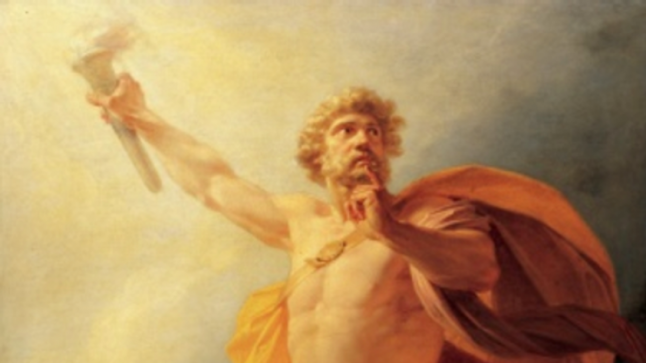 Post-Traumatic Growth: Bringing Back the Prize
Paganism teaches us that suffering can be a great source of positive transformation. There’s a name for this in modern psychology; we call it “post-traumatic growth.” Sometimes bad things just happen, but if we can find our own meanings and learn from the process, they can be great catalysts for healthy change.
There is nothing like a brush with death to teach you to appreciate and enjoy life. There is nothing like a bad relationship to make you truly appreciate a good one. People who have experienced great horror or suffering, and survived, are often more spiritual, more empathic, have greater emotional strength, and have more intimate relationships and a greater enjoyment of life than those who have not.
Often such people are more extroverted and more open to experience than they were. Finding meaning after my husband’s near-fatal car accident led me to face fear more effectively and to doubt myself less. It was a direct catalyst in submitting my novel for publication, learning to drive, driving across the country to Montreal, pursuing music, and opening myself to loving relationships and friendships. It taught me to stop trying to plan everything in my life and surrender control; thus, I learned to take my time and enjoy experiences for what they are, without coloring them with my dashed expectations. And while I found that during the crisis I had much less patience with people that I had before, in the wake of the crisis, having returned to the world of the living, the exact reverse is true.
Why am I here? To write this column, to teach my blog and my workshops, to write my music and my stories; because I have touched the Infinite, and seen into the heart of the Abyss, and I want to share with you what I’ve learned and thus help others to find a great quality of life. I have found a meaning to the narrative. My meaning is the Myth. And may you also find meaning in your quest!
Next column: The role of music in teaching the Craft.
Seekers and Guides is published on alternate Mondays. Follow it via RSS or e-mail!
post-traumatic stress disorder
Previous Post

August 16, 2013
Syncretic Electric: Looking at Our History (Part 1)
Next Post

August 20, 2013 The Busy Witch: Timing, Intention, and Luck
Browse Our Archives
Select a Category A Lakeside Hearth Adventures in Wortcunning Alone In Her Presence Arts, Crafts & Cooking Birthing Hereditary Witchcraft Book of Blackbirds Book Reviews Born-Again Witch Cauldron, Sword, Spear, & Stone Cermony and Liturgy Columns Community Dandelion Seeds Dear Jasmine Druid Thoughts Editor's Picks Everyday Pagan Family & Household Practice Family Traditions Full Frontal Magic Gateway Goddess Guest Articles Happily Heathen Health and Wellness Hearth of Hellenism Heathen Woman Hills of the Horizon History Holidays Horse Goddesses Interfaith Interviews Irish-American Witchcraft Jewish Witch Lamp & Labyrinth Letters from Midgard Literature, Media, Film, Music Loop of Brighid Love, Sex & Relationships Magic or Magick Making Light Naturalistic Traditions Nature News Outside The Circle Pantheisticon Politics Prayers, Poems, Blessings & Stories Queer Femme Mystic Queer of Swords Recipes Ritual and Practice Science and Research Seekers and Guides Seeking the Grail Socially Responsible Magic Spear of Athena Star Made Witch Syncretic Electric Technology The Blooming Staff The Busy Witch The Cartomancer The Crow's Nest The Dance of Pagan Recovery The Hearth of Hellenism The Lady's Quill The Other Side of the Hedge The Path of She The Rantin' Raven The Witches Next Door The Zen Pagan Theology, Ethics, Philosophy Tree City Witch Urban Earthwitch Wayfaring Woman Witch on Fire Wyrd Words
Select a Month January 2026 March 2025 December 2024 June 2024 April 2024 March 2024 January 2024 December 2023 November 2023 October 2023 August 2023 July 2023 May 2023 April 2023 March 2023 February 2023 January 2023 December 2022 November 2022 October 2022 September 2022 August 2022 July 2022 June 2022 May 2022 March 2022 February 2022 January 2022 December 2021 November 2021 October 2021 September 2021 August 2021 July 2021 June 2021 May 2021 April 2021 March 2021 February 2021 January 2021 December 2020 November 2020 October 2020 September 2020 August 2020 July 2020 June 2020 May 2020 April 2020 March 2020 February 2020 January 2020 December 2019 November 2019 October 2019 September 2019 August 2019 July 2019 June 2019 May 2019 April 2019 March 2019 February 2019 January 2019 December 2018 November 2018 October 2018 September 2018 August 2018 July 2018 June 2018 May 2018 April 2018 March 2018 February 2018 January 2018 December 2017 November 2017 October 2017 September 2017 August 2017 July 2017 June 2017 May 2017 April 2017 March 2017 February 2017 January 2017 December 2016 November 2016 October 2016 September 2016 August 2016 July 2016 June 2016 May 2016 April 2016 March 2016 February 2016 January 2016 December 2015 November 2015 October 2015 September 2015 August 2015 July 2015 June 2015 May 2015 April 2015 March 2015 February 2015 January 2015 December 2014 November 2014 October 2014 September 2014 August 2014 July 2014 June 2014 May 2014 April 2014 March 2014 February 2014 January 2014 December 2013 November 2013 October 2013 September 2013 August 2013 July 2013 June 2013 May 2013 April 2013 March 2013 February 2013 January 2013 December 2012 November 2012 October 2012 September 2012 August 2012 July 2012 June 2012 May 2012 April 2012 March 2012 February 2012 January 2012
Follow Us!
TAKE THE
Religious Wisdom Quiz
What four things does the Pale Horse in Revelations bring upon the earth?
Select your answer to see how you score.
Storms, earthquakes, floods, and darkness Sword, famine, plague, and wild beasts Wrath, power, redemption, and judgment Silence, fire, blood, and pestilence
Related posts from Agora
Simple Witchery: To Keep Silent

Simple Witchery: Leaning On The Four Pillars
Simple Witchery: Resistance and Resilience in Hard Times
TRENDING AT PATHEOS Pagan

10 years of the Power Sigil & Moving...
Last week while reorganizing my studio space, I found the sketchbook that...

Here comes a rant (and TLDR: if you're a US citizen eligible...

Why are younger seekers drawn to Paganism and...
One of the things I've noticed the most is that I'm far...

When we talk about Greek religion, we often begin with the dodekatheion—the...

I was recently chatting with someone on Instagram. She asked me what...

On July 23, I saw Christopher Nolan's The Odyssey which is Homer’s...
view all Pagan blogs
Ad-Free & Subscriber Log-In Subscription Support
- About Us
- 2026 Calendar
- Videos
- Podcasts
- Library of World Religions
- Faith In Media Tracker
- Advertise With Us
- Write for Us
- Privacy Policy
- Terms of Service
- Do Not Sell My Data
- Contact Us
- Radiant Digital
- Manage Newsletter Subscriptions
- Unsubscribe From Notifications
- Sitemap
Copyright 2008-2026, Patheos. All rights reserved.
Subscription Support Ad-Free & Subscriber Log-In
Follow Patheos