
BuddhistCatholicContemplativeEvangelicalGeneral ChristianHinduJewishLatter-day SaintMuslimNew VisionsProgressive Christian
Beliefs
- Buddhist
- Catholic
- Contemplative
- Evangelical
- General Christian
- Hindu
- Jewish
- Latter-day Saint
- More Voices
- Muslim
- New Visions
- Pagan
- Progressive Christian
Topics
- Religion News
- Food and Religion
- Sports and Religion
- Religious Art
- Religious Music and Entertainment
- Religious Events
- History and Religion
- Style and Religion
- Politics and Religion
- Women in Religion
- Recreation Outdoors and Religion
- Business Finance and Religion
- Careers Workplace and Religion
- Education and Religion
- Family Parenting and Religion
- Health Fitness and Religion
- Home and Religion
- Relationships and Religion
- Technology and Religion
- Travel and Religion
Columnists
- Buddhist Columnists
- Business Finance and Religion Columnists
- Careers Workplace and Religion Columnists
- Catholic Columnists
- Contemplative Columnists
- Education and Religion Columnists
- Evangelists Columnists
- Family Parenting and Religion Columnists
- General Christian Columnists
- Health Fitness and Religion Columnists
- Hindu Columnists
- History and Religion Columnists
- Home and Religion Columnists
- Jewish Columnists
- More Voices Columnists
- Latter Day Columnists
- Muslim Columnists
- New Visions Columnists
- Nonreligious Columnists
- Pagan Columnists
- Politics and Religion Columnists
- Progressive Columnists
- Recreation Outdoors and Religion Columnists
- Relationships and Religion Columnists
- Religion News Columnists
- Religious Art Columnists
- Religious Events Columnists
- Religious Music and Entertainment Columnists
- Sports and Religion Columnists
- Style and Religion Columnists
- Technology and Religion Columnists
- Travel and Religion Columnists
- Women in Religion Columnists
Resource Library
- 2026 Calendar
- Library of World Religions
- The 100 Most Holy Places on Earth
- Patheos Answers
- Podcasts
- Videos
- Faith Leaders Database
- Anglican Episcopalian
- Bahai
- Baptist
- Buddhism
- Christianity
- Confucianism
- Eastern Orthodoxy
- Hinduism
- Holiness and Pentecostal
- ISKCON
- Islam
- Judaism
- Lutheran
- Methodist
- The Church of Jesus Christ of Latter-day Saints
- New Age
- Paganism
- Presbytarian and Reformed
- Protestantism
- Religion Behind the Scenes
- Roman Catholic
- Scientology
- Shia Islam
- Sikhism
- Sufism
- Sunni Islam
- Taoism
- Zen
- See all religions
Research Tools
 Ad-Free & Subscriber Log-In Subscription Support
Ad-Free & Subscriber Log-In Subscription Support
Follow Patheos 

- Trending:
- Forgiveness
- |
- Marriage
- |
- Consciousness
- |
- Death Penalty
- |
- Election
- |
- Halloween

- Home
- Pagan
- Naturalistic Traditions: All Things December
Naturalistic Traditions: All Things December
Last updated on: January 19, 2015 at 10:46 pm by B. T. Newberg
Naturalistic Traditions: All Things December 2015-01-19T22:46:08+00:00 B. T. Newberg
Patheos Explore the world's faith through different perspectives on religion and spirituality! Patheos has the views of the prevalent religions and spiritualities of the world.
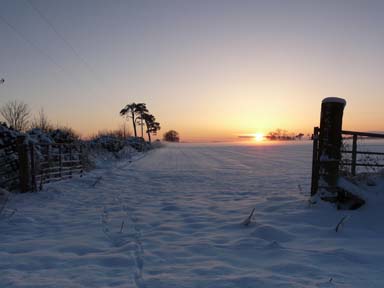
What can a naturalist celebrate in December? This post is part of Naturalistic Traditions, a column exploring naturalism in Pagan ways. This column will cover seasonal celebrations, historical and contemporary movements, and ritual practices.
Natural Cycles
For places in the northern hemisphere, winter has arrived. Snow pricks your cheeks, and naked branches rattle in the wind. The day of longest darkness, after which the sun begins to return, comes on December 21st as the Winter Solstice. As for lunar cycles, the 13th will see a new moon, with a full moon on the 28th.
Neopagan Traditions
In the Northern Hemisphere, the solstice is celebrated as Yule. This year, the date falls on December 21st. The precise date and time for the cross-quarter can be found at archaeoastronomy.com. According to Mike Nichols, the winter solstice is the time when the Goddess gives birth to the new Sun King. He observes:
[I]t makes perfect poetic sense that on the longest night of the winter, “the dark night of our souls,” there springs the new spark of hope, the Sacred Fire, the Light of the World, the Coel Coeth.
Nichols further asserts that the name for the festival, Yule, comes from the Anglo-Saxon yula, meaning “wheel” of the year. Regarding the Yule log, he says:
Once, the Yule log had been the center of the celebration. It was lighted on the eve of the solstice (it should light on the first try) and must be kept burning for twelve hours, for good luck. It should be made of ash. Later, the Yule log was replaced by the Yule tree but, instead of burning it, lighted candles were placed on it.
Glenys Livingstone of Pagaiantransposes the solstice onto the birth of the universe itself. Her ritual script sees all lights extinguished and, after a time in the darkness, a fire is kindled with the following words:
“We recall our Beginnings – the Great Flaring Forth, and our Grandmother Supernova Tiamat – Goddess Mother of our Solar system, of our star the Sun. This is our Cosmic lineage. We are Gift of Tiamat – Goddess Mother supernova. Out of her stardust we are born. Carbon, hydrogen, oxygen, nitrogen, sulphur, phosphorus and trace elements. We are Gift of Tiamat – out of her stardust we are born.”
Jon Cleland Host of the Naturalistic Paganism Yahoo group celebrates the solstice with his family, including Yule log and sunrise viewing:
A Yule log can be made and burned. This is done by selecting and cutting the log, then taking it inside for decoration. Kids can contribute by helping with the decorations. Some Pagans use the log as a stand for candles, and light the candles (especially for apartment dwellers, or those without a fireplace) on Solstice eve. Others actually burn the log on Solstice eve, lighting it with a small piece of the log from the previous year. More can be found on the web about the tradition of the Yule Log. A tradition practiced in my family, but not apparently very widespread, is to get up to welcome the sunrise on the morning of the Winter Solstice. This is often done from a location where the horizon can be seen, such as the shore of Lake Huron or Michigan. The weather is often cloudy, so knowing the exact minute of the sunrise is important. A short ritual can be done to greet the rising sun, and poems or readings can be read. Long rituals are not recommended due to the cold temperatures usually seen on the morning of Solstice (not to mention that long rituals aren’t fun for kids). After returning from that, the stockings are found to be filled, and presents appear. In the past they appeared under the Yule/Solstice tree, this year they appeared in the center of our stone circle outside.
Meanwhile, those in the Southern Hemisphere experience this time as Midsummer.
Civic and Scientific Traditions
As the calendar year comes to the close, an especially fun way to count down to the New Year is with Carl Sagan’s Cosmic Calendar (illustrated as a comic strip here), which maps the entire history of our cosmos onto a single year.
All year, we’ve noted sparse reminders of the evolving universe. Now, in the final month, the calendar kicks into high gear as virtually everything familiar to us happens in history’s last few moments, including all of civilization in the final thirty seconds of the last day. Jon Cleland Host shares the experience with his children, calling out momentous events by the tick of a watch, as history whizzes by in the last few seconds before midnight. The following tables are from Wikipedia:
Evolution of life
Date bya Event 21 Sep 3.8 first life (prokaryotes) 12 Oct 3 photosynthesis 29 Oct 2.4 Oxygenation of atmosphere 8 Nov 2 complex cells (eukaryotes) 5 Dec 1 first multicellular life 14 Dec 0.67 simple animals 14 Dec 0.55 arthropods (ancestors of insects, arachnids) 18 Dec 0.5 fish and proto-amphibians 20 Dec 0.45 land plants 21 Dec 0.4 insects and seeds 22 Dec 0.36 amphibians 23 Dec 0.3 reptiles 26 Dec 0.2 mammals 27 Dec 0.15 birds 28 Dec 0.13 flowers 30 Dec 0.065 Cretaceous–Paleogene extinction event, non-avian dinosaurs die out
Human evolution
Date / time mya Event 30 Dec 65 Primates 31 Dec, 06:05 15 Apes 31 Dec, 14:24 15 hominids 31 Dec, 22:24 2.5 primitive humans and stone tools 31 Dec, 23:44 0.4 Domestication of fire 31 Dec, 23:52 0.2 Anatomically modern humans 31 Dec, 23:55 0.11 Beginning of most recent glacial period 31 Dec, 23:58 0.035 sculpture and painting 31 Dec, 23:59:32 0.012 Agriculture
History begins
Date / time kya Event 31 Dec, 23:59:47 5.5 First writing (marks end of prehistory and beginning of history), beginning of the Bronze Age 31 Dec, 23:59:48 5.0 First dynasty of Egypt, Early Dynastic period in Sumer, Astronomy 31 Dec, 23:59:49 4.5 Alphabet, Akkadian Empire, Wheel 31 Dec, 23:59:51 4.0 Code of Hammurabi, Middle Kingdom of Egypt 31 Dec, 23:59:52 3.5 Mycenaean Greece; Olmec civilization; Iron Age in Near East, India, and Europe; founding of Carthage 31 Dec, 23:59:53 3.0 Kingdom of Israel, ancient Olympic games 31 Dec, 23:59:54 2.5 Buddha, Confucius, Qin Dynasty, Classical Greece, Ashokan Empire, Vedas completed, Euclidean geometry, Archimedean physics, Roman Republic 31 Dec, 23:59:55 2.0 Ptolemaic astronomy, Roman Empire, Christ, invention of numeral 0 31 Dec, 23:59:56 1.5 Muhammad, Maya civilization, Song Dynasty, rise of Byzantine Empire 31 Dec, 23:59:58 1.0 Mongol Empire, Crusades, Christopher Columbus voyages to the Americas, Renaissance in Europe
The current second
Date / time kya Event 31 Dec, 23:59:59 0.5 modern science and technology, American Revolution, French revolution, World War I, World War II, Apollo Moon landing
Isaac Newton’s birthday
 Finally, December 25th is known as the birthday of a certain famous child, who brought light into the world. I’m talking of course about the baby Isaac Newton, who later used a prism to split light into the spectrum of the rainbow. Sir Isaac Newton, born December 25th, 1642, was the genius behind the physics that reigned before relativity and quantum mechanics, and which is still used today for most terrestrial-scale calculations.
Newton showed that the motion of objects on Earth and that of celestial bodies is governed by the same set of natural laws: by demonstrating the consistency between Kepler’s laws of planetary motion and his theory of gravitation he removed the last doubts about heliocentrism and advanced the scientific revolution. The Principia is generally considered to be one of the most important scientific books ever written, both due to the specific physical laws the work successfully described, and for its style, which assisted in setting standards for scientific publication down to the present time. Newton built the first practical reflecting telescope[9] and developed a theory of colour based on the observation that a prism decomposes white light into the many colours that form the visible spectrum. He also formulated an empirical law of cooling and studied the speed of sound. In mathematics, Newton shares the credit with Gottfried Leibniz for the development of differential and integral calculus. He generalised the binomial theorem to non-integer exponents, developed Newton’s method for approximating the roots of a function, and contributed to the study of power series. Although an unorthodox Christian, Newton was deeply religious and wrote more on Biblical hermeneutics and occult studies than on science and mathematics. He secretly rejected Trinitarianism and refused holy orders. (Wikipedia)
About the author

B. T. Newberg has been practicing meditation and ritual from a naturalistic perspective since 2000. After experimenting with Agnosticism, Buddhism, Contemporary Paganism, and Spiritual Humanism, he currently combines the latter two into a dynamic path embracing both science and myth. He is the editor of a community blog for naturalistic spirituality called Humanistic Paganism, which just published an anthology called Year One with over a dozen contributing authors. After growing up in Minnesota, and living in England, Malaysia, and Japan, B. T. Newberg currently resides in South Korea with his wife and cat.
Previous Post
November 25, 2012
Druid Thoughts: Once Upon a Time
Next Post
December 5, 2012 Druid Thoughts: The Difficult Teachers
Browse Our Archives
Select a Category A Lakeside Hearth Adventures in Wortcunning Alone In Her Presence Arts, Crafts & Cooking Birthing Hereditary Witchcraft Book of Blackbirds Book Reviews Born-Again Witch Cauldron, Sword, Spear, & Stone Cermony and Liturgy Columns Community Dandelion Seeds Dear Jasmine Druid Thoughts Editor's Picks Everyday Pagan Family & Household Practice Family Traditions Full Frontal Magic Gateway Goddess Guest Articles Happily Heathen Health and Wellness Hearth of Hellenism Heathen Woman Hills of the Horizon History Holidays Horse Goddesses Interfaith Interviews Irish-American Witchcraft Jewish Witch Lamp & Labyrinth Letters from Midgard Literature, Media, Film, Music Loop of Brighid Love, Sex & Relationships Magic or Magick Making Light Naturalistic Traditions Nature News Outside The Circle Pantheisticon Politics Prayers, Poems, Blessings & Stories Queer Femme Mystic Queer of Swords Recipes Ritual and Practice Science and Research Seekers and Guides Seeking the Grail Socially Responsible Magic Spear of Athena Star Made Witch Syncretic Electric Technology The Blooming Staff The Busy Witch The Cartomancer The Crow's Nest The Dance of Pagan Recovery The Hearth of Hellenism The Lady's Quill The Other Side of the Hedge The Path of She The Rantin' Raven The Witches Next Door The Zen Pagan Theology, Ethics, Philosophy Tree City Witch Urban Earthwitch Wayfaring Woman Witch on Fire Wyrd Words
Select a Month January 2026 March 2025 December 2024 June 2024 April 2024 March 2024 January 2024 December 2023 November 2023 October 2023 August 2023 July 2023 May 2023 April 2023 March 2023 February 2023 January 2023 December 2022 November 2022 October 2022 September 2022 August 2022 July 2022 June 2022 May 2022 March 2022 February 2022 January 2022 December 2021 November 2021 October 2021 September 2021 August 2021 July 2021 June 2021 May 2021 April 2021 March 2021 February 2021 January 2021 December 2020 November 2020 October 2020 September 2020 August 2020 July 2020 June 2020 May 2020 April 2020 March 2020 February 2020 January 2020 December 2019 November 2019 October 2019 September 2019 August 2019 July 2019 June 2019 May 2019 April 2019 March 2019 February 2019 January 2019 December 2018 November 2018 October 2018 September 2018 August 2018 July 2018 June 2018 May 2018 April 2018 March 2018 February 2018 January 2018 December 2017 November 2017 October 2017 September 2017 August 2017 July 2017 June 2017 May 2017 April 2017 March 2017 February 2017 January 2017 December 2016 November 2016 October 2016 September 2016 August 2016 July 2016 June 2016 May 2016 April 2016 March 2016 February 2016 January 2016 December 2015 November 2015 October 2015 September 2015 August 2015 July 2015 June 2015 May 2015 April 2015 March 2015 February 2015 January 2015 December 2014 November 2014 October 2014 September 2014 August 2014 July 2014 June 2014 May 2014 April 2014 March 2014 February 2014 January 2014 December 2013 November 2013 October 2013 September 2013 August 2013 July 2013 June 2013 May 2013 April 2013 March 2013 February 2013 January 2013 December 2012 November 2012 October 2012 September 2012 August 2012 July 2012 June 2012 May 2012 April 2012 March 2012 February 2012 January 2012
Follow Us!
TAKE THE
Religious Wisdom Quiz
What was Nehemiah's royal position?
Select your answer to see how you score.
Priest Cupbearer Governor Soldier
Related posts from Agora

Simple Witchery: To Keep Silent

Simple Witchery: Leaning On The Four Pillars

Pergamum Unfurled: Magic with the Greek Gods (Book...

Pergamum Unfurled: Cunning Words (Review)
TRENDING AT PATHEOS Pagan

I was recently chatting with someone on Instagram. She asked me what...

While there are many people who share their results, the end of...

On July 23, I saw Christopher Nolan's The Odyssey which is Homer’s...

As I write this two big events have just finished up. One...

Restoring the Watershed of Divine Love
Perhaps cooperation is not something we manufacture through legislation, ideology, or moral...

Many UUs don’t pray because of bad experiences in a previous religion,...
view all Pagan blogs
Ad-Free & Subscriber Log-In Subscription Support
- About Us
- 2026 Calendar
- Videos
- Podcasts
- Library of World Religions
- Faith In Media Tracker
- Advertise With Us
- Write for Us
- Privacy Policy
- Terms of Service
- Do Not Sell My Data
- Contact Us
- Radiant Digital
- Manage Newsletter Subscriptions
- Unsubscribe From Notifications
- Sitemap
Copyright 2008-2026, Patheos. All rights reserved.
Subscription Support Ad-Free & Subscriber Log-In
Follow Patheos