
BuddhistCatholicContemplativeEvangelicalGeneral ChristianHinduJewishLatter-day SaintMuslimNew VisionsProgressive Christian
Beliefs
- Buddhist
- Catholic
- Contemplative
- Evangelical
- General Christian
- Hindu
- Jewish
- Latter-day Saint
- More Voices
- Muslim
- New Visions
- Pagan
- Progressive Christian
Topics
- Religion News
- Food and Religion
- Sports and Religion
- Religious Art
- Religious Music and Entertainment
- Religious Events
- History and Religion
- Style and Religion
- Politics and Religion
- Women in Religion
- Recreation Outdoors and Religion
- Business Finance and Religion
- Careers Workplace and Religion
- Education and Religion
- Family Parenting and Religion
- Health Fitness and Religion
- Home and Religion
- Relationships and Religion
- Technology and Religion
- Travel and Religion
Columnists
- Buddhist Columnists
- Business Finance and Religion Columnists
- Careers Workplace and Religion Columnists
- Catholic Columnists
- Contemplative Columnists
- Education and Religion Columnists
- Evangelists Columnists
- Family Parenting and Religion Columnists
- General Christian Columnists
- Health Fitness and Religion Columnists
- Hindu Columnists
- History and Religion Columnists
- Home and Religion Columnists
- Jewish Columnists
- More Voices Columnists
- Latter Day Columnists
- Muslim Columnists
- New Visions Columnists
- Nonreligious Columnists
- Pagan Columnists
- Politics and Religion Columnists
- Progressive Columnists
- Recreation Outdoors and Religion Columnists
- Relationships and Religion Columnists
- Religion News Columnists
- Religious Art Columnists
- Religious Events Columnists
- Religious Music and Entertainment Columnists
- Sports and Religion Columnists
- Style and Religion Columnists
- Technology and Religion Columnists
- Travel and Religion Columnists
- Women in Religion Columnists
Resource Library
- 2026 Calendar
- Library of World Religions
- The 100 Most Holy Places on Earth
- Patheos Answers
- Podcasts
- Videos
- Faith Leaders Database
- Anglican Episcopalian
- Bahai
- Baptist
- Buddhism
- Christianity
- Confucianism
- Eastern Orthodoxy
- Hinduism
- Holiness and Pentecostal
- ISKCON
- Islam
- Judaism
- Lutheran
- Methodist
- The Church of Jesus Christ of Latter-day Saints
- New Age
- Paganism
- Presbytarian and Reformed
- Protestantism
- Religion Behind the Scenes
- Roman Catholic
- Scientology
- Shia Islam
- Sikhism
- Sufism
- Sunni Islam
- Taoism
- Zen
- See all religions
Research Tools
 Ad-Free & Subscriber Log-In Subscription Support
Ad-Free & Subscriber Log-In Subscription Support
Follow Patheos 

- Trending:
- Forgiveness
- |
- Marriage
- |
- Consciousness
- |
- Death Penalty
- |
- Election
- |
- Halloween

- Home
- Pagan
- Naturalistic Traditions: All Things November
Naturalistic Traditions: All Things November
Last updated on: January 19, 2015 at 10:44 pm by B. T. Newberg
Naturalistic Traditions: All Things November 2015-01-19T22:44:45+00:00 B. T. Newberg
Patheos Explore the world's faith through different perspectives on religion and spirituality! Patheos has the views of the prevalent religions and spiritualities of the world.
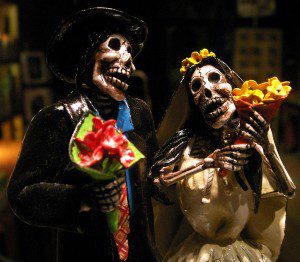 What can a naturalist celebrate in November?
This post is part of Naturalistic Traditions, a column exploring naturalism in Pagan ways. This column will cover seasonal celebrations, historical and contemporary movements, and ritual practices.
Natural Cycles
For places in the northern hemisphere with four seasons, autumn is giving way to the coming winter. The last leaves cling to the branches or fall, and the harvest is near completion.
As for lunar cycles, the 13th will see a new moon, with a full moon on the 28th.
Neopagan Traditions
In the Northern Hemisphere, the cross-quarter is celebrated as Samhain, the Pagan new year and origin of modern Halloween. This year, the date falls on November 6th. The precise date and time for the cross-quarter can be found at archaeoastronomy.com.
According to Mike Nichols, Samhain means “summer’s end” and marked the conclusion of the summer in the old two-fold division of the year. In the new four-fold division, it is the end of autumn and beginning of winter. The pronunciation of the name of this originally Celtic festival varies:
Samhain is pronounced (depending on where you’re from) as “sow-in” (in Ireland), or “sow-een” (in Wales), or “sav-en” (in Scotland), or (inevitably) “sam-hane” (in the U.S., where we don’t speak Gaelic).
Nichols calls it “the most important holiday of the year.” It is a day of the dead:
As a feast of the dead, this was the one night when the dead could, if they wished, return to the land of the living, to celebrate with their family, tribe, or clan. And so the great burial mounds of Ireland (sidhe mounds) were opened up, with lighted torches lining the walls, so the dead could find their way. Extra places were set at the table and food set out for any who had died that year. And there are many stories that tell of Irish heroes making raids on the Underworld while the gates of faery stood open, though all must return to their appointed places by cockcrow.
Since ancient concepts of time were cyclical rather than linear, Nichols says, this moment between the old year and the next is “outside of time” and hence “the night par excellence for peering into the future.” A naturalist may take this moment for divination, not in the sense of literally seeing the future, but seeing within: contemplating one’s potential for future action.
In a similar vein, Glenys Livingstone of Pagaian has her ritual participants bring photos of their old selves, and answer the question: “Who have you been?” The participant holds up the photo and describes the old self, to which the group responds: “Hail to you and your becomings.”
The participants also remember those who have passed on, sharing a feast of lolly snakes while observing:
“We welcome all these, whose lives have been harvested, whose lives have fed our own, and we remember that we too will be consumed, feed others with our lives. May we be interesting food. We also become the ancestors. We are the ancestors.”
Jon Cleland Host of the Naturalistic Paganism yahoo group relates Samhain to events in evolutionary history:
Just as Samhain heralds the dark quarter of the year (Samhain to Imbolc) and then the cold quarter of the year (Yule to Ostara), the Cretaceous extinction started with the dark cloud of ejecta from the asteroid impact, followed by the deadly freeze of a “nuclear” winter. Samhain also works well to commemorate extinction, which has been the fate of over 99.99% of all species that have existed on earth.
He then develops these observations into a seasonal practice:
These extinctions have made room for new species (such as us), and death makes room for new life. Samhain is thus the time to express our gratitude to those who have gone before us, those who have made our lives possible, those who have influenced us, and those who we remember. For this reason our ritual usually includes tributes to our ancestors and others. Photos of the dead can be given a place of prominence leading up to Samhain, and all can be especially remembered, even spoken to, if you like. The meditation to our ancestors can be read (see separate upload [in the Naturalistic Paganism files section] for that).
Finally, Host notes that Samhain is also a time for fun:
Samhain (Halloween) parties are good, as is trick-or-treating, bobbing for apples, and decorating. Colors are black, orange, tombstone gray and sometimes bone (off white).
Meanwhile, those in the Southern Hemisphere experience this time as Beltaine.
Civic and Scientific Traditions
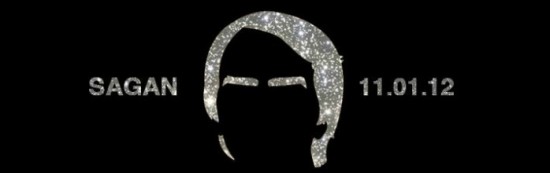
November 1st is Carl Sagan Day (thanks to fellow Patheos blogger Chana for this one). You can celebrate the late popularizer of science at the Chicago event, or plan your own in your local area. In either case, you must not fail to enjoy some apple pie. Why apple pie? It comes from Sagan’s famous quote:
“If you wish to make an apple pie from scratch, you must first invent the universe.”
Speaking of Sagan, his Cosmic Calendar (illustrated as a comic strip here), which maps the entire history of our cosmos onto a single year, witnesses a milestone of evolution in November. On the 2nd, we see the emergence of eukaryotes, or cells with nuclei:
All large complex organisms are eukaryotes, including plants, animals, and fungi.
… Eukaryotes represent a tiny minority of all living things; even in a human body there are 10 times more microbes than human cells. However, due to their much larger size their collective worldwide biomass is estimated at about equal to that of prokaryotes. (Wikipedia)
Paul Harrison’s Elements of Pantheism notes three other noteworthy days this month: the International Day of Tolerance, Spinoza’s birthday, and John Toland’s birthday.
The 16th is the International Day of Tolerance, a UN event to raise awareness of the dangers of intolerance. The official website observes:
…tolerance is neither indulgence nor indifference. It is respect and appreciation of the rich variety of our world’s cultures, our forms of expression and ways of being human. Tolerance recognizes the universal human rights and fundamental freedoms of others. People are naturally diverse; only tolerance can ensure the survival of mixed communities in every region of the globe.
It further asserts that fighting tolerance requires: 1) law, 2) education, 3) access to information, 4) individual awareness, and 5) local solutions.
The 24th is the birthday of Baruch Spinoza (1632-1677), the Jewish-Dutch philosopher who opposed mind-body dualism and identified God with nature:
Spinoza contends that “Deus sive Natura” (“God or Nature”) is a being of infinitely many attributes, of which thought and extension are two. His account of the nature of reality, then, seems to treat the physical and mental worlds as one and the same. The universal substance consists of both body and mind, there being no difference between these aspects. This formulation is a historically significant solution to the mind-body problem known as neutral monism. Spinoza’s system also envisages a God that does not rule over the universe by providence, but a God which itself is the deterministic system of which everything in nature is a part. Thus, according to this understanding of Spinoza’s system, God would be the natural world and have no personality. (Wikipedia)
 Spinoza’s deterministic philosophy was meant to bring happiness through knowledge and reason. By acknowledging everything as a necessary part of the universe, we may embrace life joyously.
While Spinoza is widely claimed as a pantheist, the term was only later coined by John Toland (1670-1721), whose birthday is November 30th. Paul Harrison describes him:
Toland was the first modern pantheist to combine a religious reverence for the Universe, with respect for science, and a belief that everything is made of matter. A pantheist, he wrote to the German philosopher Leibniz, was one of those persons “who believe in no other eternal being but the universe.” When asked for a brief statement of his credo, Toland replied, “The sun is my father, the earth my mother, the world is my country and all men are my family.”
About the author

B. T. Newberg has been practicing meditation and ritual from a naturalistic perspective since 2000. After experimenting with Agnosticism, Buddhism, Contemporary Paganism, and Spiritual Humanism, he currently combines the latter two into a dynamic path embracing both science and myth. He is the editor of a community blog for naturalistic spirituality called Humanistic Paganism, which just published an anthology called Year One with over a dozen contributing authors. After growing up in Minnesota, and living in England, Malaysia, and Japan, B. T. Newberg currently resides in South Korea with his wife and cat.
Previous Post

October 27, 2012
Samhain: Blessed Be All Souls
Next Post

November 4, 2012 The Worship of Strange Gods
Browse Our Archives
Select a Category A Lakeside Hearth Adventures in Wortcunning Alone In Her Presence Arts, Crafts & Cooking Birthing Hereditary Witchcraft Book of Blackbirds Book Reviews Born-Again Witch Cauldron, Sword, Spear, & Stone Cermony and Liturgy Columns Community Dandelion Seeds Dear Jasmine Druid Thoughts Editor's Picks Everyday Pagan Family & Household Practice Family Traditions Full Frontal Magic Gateway Goddess Guest Articles Happily Heathen Health and Wellness Hearth of Hellenism Heathen Woman Hills of the Horizon History Holidays Horse Goddesses Interfaith Interviews Irish-American Witchcraft Jewish Witch Lamp & Labyrinth Letters from Midgard Literature, Media, Film, Music Loop of Brighid Love, Sex & Relationships Magic or Magick Making Light Naturalistic Traditions Nature News Outside The Circle Pantheisticon Politics Prayers, Poems, Blessings & Stories Queer Femme Mystic Queer of Swords Recipes Ritual and Practice Science and Research Seekers and Guides Seeking the Grail Socially Responsible Magic Spear of Athena Star Made Witch Syncretic Electric Technology The Blooming Staff The Busy Witch The Cartomancer The Crow's Nest The Dance of Pagan Recovery The Hearth of Hellenism The Lady's Quill The Other Side of the Hedge The Path of She The Rantin' Raven The Witches Next Door The Zen Pagan Theology, Ethics, Philosophy Tree City Witch Urban Earthwitch Wayfaring Woman Witch on Fire Wyrd Words
Select a Month January 2026 March 2025 December 2024 June 2024 April 2024 March 2024 January 2024 December 2023 November 2023 October 2023 August 2023 July 2023 May 2023 April 2023 March 2023 February 2023 January 2023 December 2022 November 2022 October 2022 September 2022 August 2022 July 2022 June 2022 May 2022 March 2022 February 2022 January 2022 December 2021 November 2021 October 2021 September 2021 August 2021 July 2021 June 2021 May 2021 April 2021 March 2021 February 2021 January 2021 December 2020 November 2020 October 2020 September 2020 August 2020 July 2020 June 2020 May 2020 April 2020 March 2020 February 2020 January 2020 December 2019 November 2019 October 2019 September 2019 August 2019 July 2019 June 2019 May 2019 April 2019 March 2019 February 2019 January 2019 December 2018 November 2018 October 2018 September 2018 August 2018 July 2018 June 2018 May 2018 April 2018 March 2018 February 2018 January 2018 December 2017 November 2017 October 2017 September 2017 August 2017 July 2017 June 2017 May 2017 April 2017 March 2017 February 2017 January 2017 December 2016 November 2016 October 2016 September 2016 August 2016 July 2016 June 2016 May 2016 April 2016 March 2016 February 2016 January 2016 December 2015 November 2015 October 2015 September 2015 August 2015 July 2015 June 2015 May 2015 April 2015 March 2015 February 2015 January 2015 December 2014 November 2014 October 2014 September 2014 August 2014 July 2014 June 2014 May 2014 April 2014 March 2014 February 2014 January 2014 December 2013 November 2013 October 2013 September 2013 August 2013 July 2013 June 2013 May 2013 April 2013 March 2013 February 2013 January 2013 December 2012 November 2012 October 2012 September 2012 August 2012 July 2012 June 2012 May 2012 April 2012 March 2012 February 2012 January 2012
Follow Us!
TAKE THE
Religious Wisdom Quiz
How many "types" of Psalms are often recognized (e.g., praise, lament, wisdom)?
Select your answer to see how you score.
Five or more One Ten only Fifty
Related posts from Agora

Simple Witchery: To Keep Silent

Simple Witchery: Leaning On The Four Pillars

Pergamum Unfurled: Magic with the Greek Gods (Book...

Pergamum Unfurled: Cunning Words (Review)
TRENDING AT PATHEOS Pagan

I was recently chatting with someone on Instagram. She asked me what...

While there are many people who share their results, the end of...

On July 23, I saw Christopher Nolan's The Odyssey which is Homer’s...

As I write this two big events have just finished up. One...

Restoring the Watershed of Divine Love
Perhaps cooperation is not something we manufacture through legislation, ideology, or moral...

Many UUs don’t pray because of bad experiences in a previous religion,...
view all Pagan blogs
Ad-Free & Subscriber Log-In Subscription Support
- About Us
- 2026 Calendar
- Videos
- Podcasts
- Library of World Religions
- Faith In Media Tracker
- Advertise With Us
- Write for Us
- Privacy Policy
- Terms of Service
- Do Not Sell My Data
- Contact Us
- Radiant Digital
- Manage Newsletter Subscriptions
- Unsubscribe From Notifications
- Sitemap
Copyright 2008-2026, Patheos. All rights reserved.
Subscription Support Ad-Free & Subscriber Log-In
Follow Patheos