
BuddhistCatholicContemplativeEvangelicalGeneral ChristianHinduJewishLatter-day SaintMuslimNew VisionsProgressive Christian
Beliefs
- Buddhist
- Catholic
- Contemplative
- Evangelical
- General Christian
- Hindu
- Jewish
- Latter-day Saint
- More Voices
- Muslim
- New Visions
- Pagan
- Progressive Christian
Topics
- Religion News
- Food and Religion
- Sports and Religion
- Religious Art
- Religious Music and Entertainment
- Religious Events
- History and Religion
- Style and Religion
- Politics and Religion
- Women in Religion
- Recreation Outdoors and Religion
- Business Finance and Religion
- Careers Workplace and Religion
- Education and Religion
- Family Parenting and Religion
- Health Fitness and Religion
- Home and Religion
- Relationships and Religion
- Technology and Religion
- Travel and Religion
Columnists
- Buddhist Columnists
- Business Finance and Religion Columnists
- Careers Workplace and Religion Columnists
- Catholic Columnists
- Contemplative Columnists
- Education and Religion Columnists
- Evangelists Columnists
- Family Parenting and Religion Columnists
- General Christian Columnists
- Health Fitness and Religion Columnists
- Hindu Columnists
- History and Religion Columnists
- Home and Religion Columnists
- Jewish Columnists
- More Voices Columnists
- Latter Day Columnists
- Muslim Columnists
- New Visions Columnists
- Nonreligious Columnists
- Pagan Columnists
- Politics and Religion Columnists
- Progressive Columnists
- Recreation Outdoors and Religion Columnists
- Relationships and Religion Columnists
- Religion News Columnists
- Religious Art Columnists
- Religious Events Columnists
- Religious Music and Entertainment Columnists
- Sports and Religion Columnists
- Style and Religion Columnists
- Technology and Religion Columnists
- Travel and Religion Columnists
- Women in Religion Columnists
Resource Library
- 2026 Calendar
- Library of World Religions
- The 100 Most Holy Places on Earth
- Patheos Answers
- Podcasts
- Videos
- Faith Leaders Database
- Anglican Episcopalian
- Bahai
- Baptist
- Buddhism
- Christianity
- Confucianism
- Eastern Orthodoxy
- Hinduism
- Holiness and Pentecostal
- ISKCON
- Islam
- Judaism
- Lutheran
- Methodist
- The Church of Jesus Christ of Latter-day Saints
- New Age
- Paganism
- Presbytarian and Reformed
- Protestantism
- Religion Behind the Scenes
- Roman Catholic
- Scientology
- Shia Islam
- Sikhism
- Sufism
- Sunni Islam
- Taoism
- Zen
- See all religions
Research Tools
 Ad-Free & Subscriber Log-In Subscription Support
Ad-Free & Subscriber Log-In Subscription Support
Follow Patheos 

- Trending:
- Forgiveness
- |
- Marriage
- |
- Consciousness
- |
- Death Penalty
- |
- Election
- |
- Halloween
 Aestheism
- Home
- Latter-day Saint
- Where to Go? Destinations and Mormon Shame
Where to Go? Destinations and Mormon Shame
Last updated on: August 24, 2017 at 11:13 am by David Mason
Where to Go? Destinations and Mormon Shame 2017-08-24T11:13:02-05:00 David Mason
Patheos Explore the world's faith through different perspectives on religion and spirituality! Patheos has the views of the prevalent religions and spiritualities of the world.
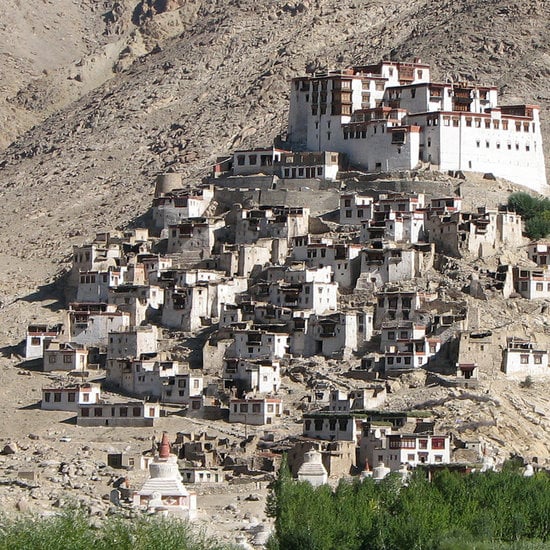
One of the Billion Possibilities
I’m coming a bit late to the party. I was on an international jaunt during the LDS church’s General Conference at the beginning of October, and didn’t get this iteration of the semi-annual gathering live and first-hand. So, I got this year’s (un)popular conference sound bites second-hand and after-the-fact.
The item on which the Internet has most dwelled, it seems, is Russell Ballard’s “To Whom Shall We Go?” address. Russell Ballard asked of folks who might be considering alternatives to formal LDS living: If you choose to become inactive or to leave the restored Church of Jesus Christ of Latter-day Saints, where will you go? What will you do?
The Internet memes that have come in response to Ballard’s inquiry have been amusing. Starbucks is a frequently mentioned destination. Lakes and meadows feature in the imagery.
I’m less interested in noting the grand variety of options that are available to folks who take a step away from the LDS church than I am in the rhetorical strategy of Ballard’s question. Before I launch what might be a sharp critique, let me offer the disclaimer that I don’t think Ballard is a mean-spirited or narrow-minded guy. I really do think that he’s a good soul. I also think that—like many good LDS souls—he’s caught up in cultural tradition that is too often blind to its bad behavior.
A rhetorical question does not solicit an answer. A rhetorical question does not invite open, honest discussion of possibilities. The intent of a rhetorical question is to imply that there is no answer, or that any possible answer is too stupid to take seriously, or that there’s one available answer that’s so obvious that it needn’t be spoken. The rhetorical question maneuvers to make its audience feel as though giving an answer will mark a respondent as naive, or foolish, or ignorant. Rhetorical questions, generally, intend to shame an audience into complicity with an author’s objectives, right?
It’s the subtle shaming in Ballard’s rhetorical questions that most concerns me. As the LDS church gets larger and more international and more intercultural, it becomes less and less reasonable to speak of “Mormon culture”, as a coherent, cohesive, monolithic entity. This is a lovely thing, and the thing that offers more hope to LDS-dom than, perhaps, anything else.
On the way to the joyously fractured LDS future that things like Correlation try so hard to forestall, we still must confront the ongoing cultural prominence (if not dominance) over the LDS church of Utah’s white, pioneer-born, middle class, for which shaming is a natural, quick tendency. The leadership that comes from this cultural legacy relies heavily on paternalistic reproaches—often issued in warm and gentle tones—that undermine Mormons’ confidence, self-respect, and dignity.
The rhetorical questions are the most overt of Ballard’s shaming strategies. There are more subtle instances, throughout, as the address swings weapons that a shame-based culture has honed so sharply that we hardly see, anymore, how they cut.
Ballard labors to own the character of his audience. By design or by instinct, he claims the motivations and rationale of a portion of his listeners, the effect of which is to disgrace that portion of listeners in the eyes (or ears) of the remaining audience.
After offering an anecdote from the Gospels, Ballard asserts that those who consider a move away from the LDS church must be “vacillating” in their faith, as though there were no possibility that certain, sure faith and responsible agency can play a role in the search for a fulfilling life away from the LDS institution. The characterization of a person’s contemplation of alternatives to LDS spirituality and practice as arising from a wavering, impaired faith is, thus, demeaning.
By equating Jesus—the personification of goodness—with the LDS church, Ballard then insists that the person who puts the LDS church aside puts goodness aside. Those drifting away, Ballard muses, must be wondering “if perhaps they should follow those who ‘went back, and walked no more’ with Jesus”. Ballard, thus, implies that a person cannot find lovely, praiseworthy things of good report anywhere but inside the church, and that seeking after lovely, praiseworthy things in the world is necessarily a pursuit of evil.
St. Peter’s confessional “To whom shall we go?” becomes in Ballard’s text an accusatory “To whom shall [you] go?”. Where Peter’s rhetorical question affirms the certainty of his own, personal faith, Ballard’s adaptation of the question calls others into guilty uncertainty. What follows in Ballard’s speech is no less than seven paragraphs, each beginning with Where will you go…? Seven distinct variations on the the rhetorical theme: Wherever it leads you away from the LDS institution’s prescription, your quest to be good, to find good, to do good in the world, is wrong.
Ballard is only a recent example of the well-established tendency in the historically dominant culture of LDS-Mormon life to employ shame to accomplish its ends. As I am a Utah-raised, white, middle-class LDS-Mormon, my own inclination to shame Russell Ballard is both hypocritical and a confirmation of my premise, at the same time.
I would suggest that this tendency to shame has been embedded in LDS-Mormonism’s very theology, in the form of a pernicious fixation on worthiness. Every step of an LDS-Mormon’s religious life is marked by checks on her or his worthiness, and each decision an LDS-Mormon makes is weighed by what the outcome might mean for his or her worthiness. Worthiness stands as the gatekeeper to the LDS-Mormon temple—that frame that defines the LDS-Mormon aristocracy—so that those who do not stand in that holy place must live in a condition of perpetual unworthiness, in perpetual shame, as reiterated in each moment by their exclusion from temple spaces.
Its programming of shame into the lives of adherents may be the LDS church’s most powerful device. The extent and the subtlety of shaming in LDS-Mormon life is most responsible for the culture of dependence that, as much as anything, defines LDS-Mormonism. Perhaps more than anything else, it is the shaming habit that prevents open, honest, non-vindictive discourse among LDS-Mormons with differing understandings of women and priesthood, patriarchy, history and historicity, gay identity, economic responsibility, etc.
Ballard concludes this conference address this way: “I further testify that the Lord ‘inviteth them all to come unto him and partake of his goodness; and he denieth none that come unto him, black and white, bond and free, male and female; … and all are alike unto God.’”
If all are, indeed, alike unto god, there is surely no shame, no unworthiness, in believing, thinking, speaking, and acting according to conscience within the LDS church, nor in standing apart from the LDS church in a genuine quest to find and to give divine love. The god who invites all, surely must be inviting me. And surely this is a perfectly reasonable, perfectly serious, answer to the question.
To whom will you go if you leave the church?
To the divinity that calls me, as me, worthy and worthwhile as I am.
Previous Post

September 6, 2016
Uzzah's Mormon Wish List
Next Post
November 4, 2016 Not a Christian Nation
Browse Our Archives
Select a Category Activism Aesthetics Art Atheism Bible Book of Mormon Christianity Freedom Games Guest Posts Hinduism Identity LDS Church Marriage Prayer Ritual Science Theatre Theism Toxic Theology
Select a Month August 2017 July 2017 June 2017 May 2017 March 2017 February 2017 January 2017 December 2016 November 2016 October 2016 September 2016 August 2016 July 2016 June 2016 May 2016 April 2016 March 2016 February 2016 January 2016 December 2015 November 2015 October 2015 September 2015 August 2015 July 2015 June 2015 May 2015 April 2015 March 2015 February 2015 January 2015 December 2014 November 2014 October 2014 September 2014
Follow Us!
TAKE THE
Religious Wisdom Quiz
"A cheerful heart is good medicine" is found in what book?
Select your answer to see how you score.
Matthew Psalms Genesis Proverbs
Related posts from Aestheism


Toxic Theology: Learning Doesn't Matter


TRENDING AT PATHEOS Latter-day Saint

Did Prayer Cure His Cancer? Or Was It...
At 4 AM one morning, Joshua W. Brown’s wife awoke to a...

8 Ways a Near-Death Experience Rewires the Soul
Does Consciousness Survive Physical Death? After 50 Years of Research, Dr. Raymond...

Holy Longing: What Our Restlessness Is Telling Us
“One can find so many pains when the rain is falling.” -John...

What this is NOT about. This blog is definitely not about...

Who said the Israelites were God’s chosen? That’s right, they did. Who...

The Spirit World Is the Real World: God...
A Monk’s Wisdom on Body and Spirit I sit with Brother Martin...
view all Latter-day Saint blogs
Ad-Free & Subscriber Log-In Subscription Support
- About Us
- 2026 Calendar
- Videos
- Podcasts
- Library of World Religions
- Faith In Media Tracker
- Advertise With Us
- Write for Us
- Privacy Policy
- Terms of Service
- Do Not Sell My Data
- Contact Us
- Radiant Digital
- Manage Newsletter Subscriptions
- Unsubscribe From Notifications
- Sitemap
Copyright 2008-2026, Patheos. All rights reserved.
Subscription Support Ad-Free & Subscriber Log-In
Follow Patheos