
BuddhistCatholicContemplativeEvangelicalGeneral ChristianHinduJewishLatter-day SaintMuslimNew VisionsProgressive Christian
Beliefs
- Buddhist
- Catholic
- Contemplative
- Evangelical
- General Christian
- Hindu
- Jewish
- Latter-day Saint
- More Voices
- Muslim
- New Visions
- Pagan
- Progressive Christian
Topics
- Religion News
- Food and Religion
- Sports and Religion
- Religious Art
- Religious Music and Entertainment
- Religious Events
- History and Religion
- Style and Religion
- Politics and Religion
- Women in Religion
- Recreation Outdoors and Religion
- Business Finance and Religion
- Careers Workplace and Religion
- Education and Religion
- Family Parenting and Religion
- Health Fitness and Religion
- Home and Religion
- Relationships and Religion
- Technology and Religion
- Travel and Religion
Columnists
- Buddhist Columnists
- Business Finance and Religion Columnists
- Careers Workplace and Religion Columnists
- Catholic Columnists
- Contemplative Columnists
- Education and Religion Columnists
- Evangelists Columnists
- Family Parenting and Religion Columnists
- General Christian Columnists
- Health Fitness and Religion Columnists
- Hindu Columnists
- History and Religion Columnists
- Home and Religion Columnists
- Jewish Columnists
- More Voices Columnists
- Latter Day Columnists
- Muslim Columnists
- New Visions Columnists
- Nonreligious Columnists
- Pagan Columnists
- Politics and Religion Columnists
- Progressive Columnists
- Recreation Outdoors and Religion Columnists
- Relationships and Religion Columnists
- Religion News Columnists
- Religious Art Columnists
- Religious Events Columnists
- Religious Music and Entertainment Columnists
- Sports and Religion Columnists
- Style and Religion Columnists
- Technology and Religion Columnists
- Travel and Religion Columnists
- Women in Religion Columnists
Resource Library
- 2026 Calendar
- Library of World Religions
- The 100 Most Holy Places on Earth
- Patheos Answers
- Podcasts
- Videos
- Faith Leaders Database
- Anglican Episcopalian
- Bahai
- Baptist
- Buddhism
- Christianity
- Confucianism
- Eastern Orthodoxy
- Hinduism
- Holiness and Pentecostal
- ISKCON
- Islam
- Judaism
- Lutheran
- Methodist
- The Church of Jesus Christ of Latter-day Saints
- New Age
- Paganism
- Presbytarian and Reformed
- Protestantism
- Religion Behind the Scenes
- Roman Catholic
- Scientology
- Shia Islam
- Sikhism
- Sufism
- Sunni Islam
- Taoism
- Zen
- See all religions
Research Tools
 Ad-Free & Subscriber Log-In Subscription Support
Ad-Free & Subscriber Log-In Subscription Support
Follow Patheos 

- Trending:
- Forgiveness
- |
- Marriage
- |
- Consciousness
- |
- Death Penalty
- |
- Election
- |
- Halloween
 Aestheism
- Home
- Latter-day Saint
- The Lose-Your-Self Jesus
The Lose-Your-Self Jesus
Last updated on: June 26, 2016 at 3:41 pm by David Mason
The Lose-Your-Self Jesus 2016-06-26T15:41:26-05:00 David Mason
Patheos Explore the world's faith through different perspectives on religion and spirituality! Patheos has the views of the prevalent religions and spiritualities of the world.
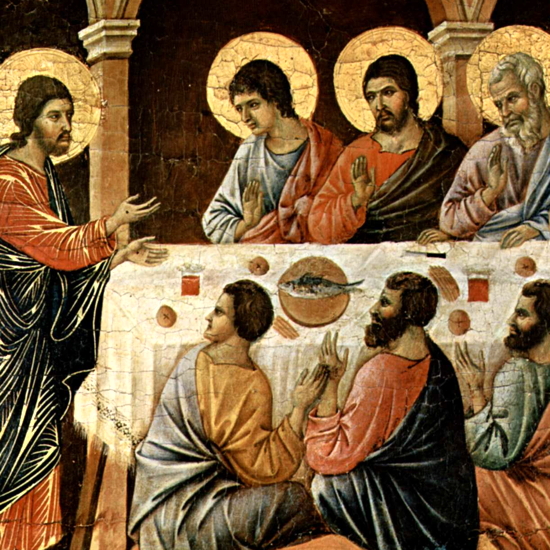
Jesus and His Collective
A medieval reading of Mark 8 justified self-inflicted suffering. Conventional readings of the chapter these days conclude that Jesus advocated unselfish-ness, as especially evident in unrequited acts of service.
I don’t have anything against service. I think Jesus did like it. But I don’t see why we shouldn’t consider an additional layer of meaning in Mark 8 and its synoptic counterparts that currency of thought, these days, makes unavoidable, anyway.
Whosoever will save his life shall lose it, says Jesus, according to King James’s scholars, and whosoever will lose his life for my sake shall find it.
The Greek psuché might just as well be translated as “self”, which would give us a Jesus interested in undermining the very notion of a stable, irreducible, personal identity:
Whoever wants to save his self, says the Jesus of the starkly postmodern, but not absurd, Mason Standard Translation, will lose his personal identity. And whoever will lose his personal identity, on account of me, will deliver it [from a very bad alternative].
The radical Jesus, whom self-professing Christians often work very hard to ignore, might have intuited these most latter-days, in which we can no longer think of selves as having any there there. For ages, perhaps, the reality of self was too plain to question. Personal identity exists, we could simply feel, inside, in a manner that is independent of, and therefore transcendent of, all exterior contingencies. The sacred notion of unalienable rights depends on each person being a unique person, deep, deep down where politics cannot go.
But we’re not so certain, anymore, that we exist.
The doubt goes way back, even in the so-called West. But at least since Wittgenstein a few decades ago, we have had to take seriously, and for perfectly rational reasons, the suggestion that there is no private, interior, untouchable self out of which identity emerges. Wittgenstein, as a summary of more extensive thought, pointed out that language determines what and how we feel, and since language is a public mechanism, the feeling that it determines is public, too. Cognitively, of course, physical bodies interact with the world as they do, and, perhaps, independently of language. But any conscious judgements we can make about that experience—any ownership we can take of the body’s experience—is facilitated by concepts made available by public discourse. A human body might be particular. But a human self probably isn’t.
Rather than independent, autonomous agents, entitled as individuals to life, liberty, and the pursuit of happiness, we may each be collective constructs, assembled by history, cultural proclivities, social mechanisms, and economic forces. The sense we each have that we each possess a private, personal, untouchable interior may be a great illusion—in the way that a flat horizon indicates, so obviously, that the earth is flat.
The Christianity that would valorize a personal relationship with Jesus may be blind to Jesus’s anticipation of post-structuralist insight that we don’t exist in any personal way. At least, some Christianities may be determined not to recognize Jesus’s fundamental charge to his followers to let go of their claims on rights and justice and place and self as individuals distinct from others.
The political implications ought to be obvious. Cling to your sense that your self has some inherent character to it, if you will. Insist that you are entitled to citizenship, to ownership, and to whatever other markers of privilege are due a distinctly free person in the land of free people. Because you earned it. Or were born to it. Or for whatever reason that you, as a distinct entity, are entitled. But don’t expect the lose your self Jesus not to be ashamed of you in the proverbial day of glory.
It isn’t that the qualified selves that end up on the margins—female selves, gay selves, foreigner selves, non-White selves, non-Christian selves, etc.—are a lie. Difference is a very material fact of living, and the dogma that also developed in the twentieth century, that differences don’t exist because, deep, deep down, we’re all the same, has been wielded, as a savage weapon, to insist that deep, deep down you other guys are just like us, so you other guys better act like it.**
The lose your self Jesus asserts that there is no deep, deep down. For anyone. In this radically-Jesus-y world, our experience of self does not emerge, unqualified, from within, but penetrates us from without—as facts of our histories, cultures, genetic codes, upbringing, and even of the laws of physics. Facts they are, and facts that we each inhabit in variety, but the lose your self Jesus would have us surrender our attachment to the facts as qualities of private identities.
The absence of a deep, deep down may not deny normativity, perhaps, but it obviates the essentialization of so-called norms that justifies judgments (read: condemnations) of some bodies and their material facts. In the radical world of the lose your self Jesus, nationality, gender and sexual orientation, race, economic class, religion, and everything else that might follow I am…—including American, male, heterosexual, white, middle-class, and Christian—are public constructs, publicly determined, publicly lived, and publicly shared, to the end that none of these adjectives enjoys an ontological advantage.
The identity that we mistake for our own, natural, exclusive self does not exist except as a function of everyone. The extent to which you are an Amurrican is wholly determined by Mexicans and Canadians and Nigerians and Syrians, and the extent to which you cling to your Amurrican-ness as yours and as you, as a particular entity existing independent of all others, is the extent to which you seek to save your self, to spite Jesus and holy self-less-ness.*** We’re all gay. We’re all Syrians. We’re all immigrants. We’re all impoverished. Because, deep, deep down, no one is anything else.
In the most radical ways we can imagine, the lose your self Jesus saw people, not persons, and knew that identity—identity that could be saved—is only collective, a bursting cosmos of being accounting collectively for all particulars.
———-
* Image adapted from https://commons.wikimedia.org/wiki/%D7%99%D7%A9%D7%95%D7%A2#/media/File:Duccio_di_Buoninsegna_017.jpg
** Which is to say that there most certainly are gay people in the LDS church, just as there are gay people in Christianity, writ large. The idea that a gay person is a broken version of a person is a hateful idea, no matter how warm the tones in which it is spoken. At least, the notion that a gay person needs fixing presumes that this person’s gay identity is at odds with the person’s not-gay, core self. Give it up. There is no core self, straight or otherwise. You, who would save your straight self, says Jesus, will, in the end, lose everything.
*** Jesus’s self-less-ness presents an epistemological and soteriological challenge, too. Since the eighteenth century, Christianity has invested itself in personal experience, and such experience has become identified with knowing—that one has been “saved”, for instance, or (as in Mormonism) that certain things are incontestably ‘true’. Jesus’s dismissal of self puts the legitimacy of personal experience in jeopardy, and either calls for a new spiritual paradigm by which certainty without self is possible, or calls for a new spiritual paradigm in which certainty is not such a big deal.
Previous Post

June 6, 2016
Amurrica's Anti-Christian Prosperity Gospel
Next Post
July 13, 2016 Real Religion Doesn't Know
Browse Our Archives
Select a Category Activism Aesthetics Art Atheism Bible Book of Mormon Christianity Freedom Games Guest Posts Hinduism Identity LDS Church Marriage Prayer Ritual Science Theatre Theism Toxic Theology
Select a Month August 2017 July 2017 June 2017 May 2017 March 2017 February 2017 January 2017 December 2016 November 2016 October 2016 September 2016 August 2016 July 2016 June 2016 May 2016 April 2016 March 2016 February 2016 January 2016 December 2015 November 2015 October 2015 September 2015 August 2015 July 2015 June 2015 May 2015 April 2015 March 2015 February 2015 January 2015 December 2014 November 2014 October 2014 September 2014
Follow Us!
TAKE THE
Religious Wisdom Quiz
Who said, "Here am I, send me"?
Select your answer to see how you score.
Ezekiel Elijah Isaiah Jeremiah
Related posts from Aestheism



Utah: A Shining City on a Hill
TRENDING AT PATHEOS Latter-day Saint

Did Prayer Cure His Cancer? Or Was It...
At 4 AM one morning, Joshua W. Brown’s wife awoke to a...

8 Ways a Near-Death Experience Rewires the Soul
Does Consciousness Survive Physical Death? After 50 Years of Research, Dr. Raymond...

Holy Longing: What Our Restlessness Is Telling Us
“One can find so many pains when the rain is falling.” -John...

What this is NOT about. This blog is definitely not about...

Who said the Israelites were God’s chosen? That’s right, they did. Who...

The Spirit World Is the Real World: God...
A Monk’s Wisdom on Body and Spirit I sit with Brother Martin...
view all Latter-day Saint blogs
Ad-Free & Subscriber Log-In Subscription Support
- About Us
- 2026 Calendar
- Videos
- Podcasts
- Library of World Religions
- Faith In Media Tracker
- Advertise With Us
- Write for Us
- Privacy Policy
- Terms of Service
- Do Not Sell My Data
- Contact Us
- Radiant Digital
- Manage Newsletter Subscriptions
- Unsubscribe From Notifications
- Sitemap
Copyright 2008-2026, Patheos. All rights reserved.
Subscription Support Ad-Free & Subscriber Log-In
Follow Patheos