
BuddhistCatholicContemplativeEvangelicalGeneral ChristianHinduJewishLatter-day SaintMuslimNew VisionsProgressive Christian
Beliefs
- Buddhist
- Catholic
- Contemplative
- Evangelical
- General Christian
- Hindu
- Jewish
- Latter-day Saint
- More Voices
- Muslim
- New Visions
- Pagan
- Progressive Christian
Topics
- Religion News
- Food and Religion
- Sports and Religion
- Religious Art
- Religious Music and Entertainment
- Religious Events
- History and Religion
- Style and Religion
- Politics and Religion
- Women in Religion
- Recreation Outdoors and Religion
- Business Finance and Religion
- Careers Workplace and Religion
- Education and Religion
- Family Parenting and Religion
- Health Fitness and Religion
- Home and Religion
- Relationships and Religion
- Technology and Religion
- Travel and Religion
Columnists
- Buddhist Columnists
- Business Finance and Religion Columnists
- Careers Workplace and Religion Columnists
- Catholic Columnists
- Contemplative Columnists
- Education and Religion Columnists
- Evangelists Columnists
- Family Parenting and Religion Columnists
- General Christian Columnists
- Health Fitness and Religion Columnists
- Hindu Columnists
- History and Religion Columnists
- Home and Religion Columnists
- Jewish Columnists
- More Voices Columnists
- Latter Day Columnists
- Muslim Columnists
- New Visions Columnists
- Nonreligious Columnists
- Pagan Columnists
- Politics and Religion Columnists
- Progressive Columnists
- Recreation Outdoors and Religion Columnists
- Relationships and Religion Columnists
- Religion News Columnists
- Religious Art Columnists
- Religious Events Columnists
- Religious Music and Entertainment Columnists
- Sports and Religion Columnists
- Style and Religion Columnists
- Technology and Religion Columnists
- Travel and Religion Columnists
- Women in Religion Columnists
Resource Library
- 2026 Calendar
- Library of World Religions
- The 100 Most Holy Places on Earth
- Patheos Answers
- Podcasts
- Videos
- Faith Leaders Database
- Anglican Episcopalian
- Bahai
- Baptist
- Buddhism
- Christianity
- Confucianism
- Eastern Orthodoxy
- Hinduism
- Holiness and Pentecostal
- ISKCON
- Islam
- Judaism
- Lutheran
- Methodist
- The Church of Jesus Christ of Latter-day Saints
- New Age
- Paganism
- Presbytarian and Reformed
- Protestantism
- Religion Behind the Scenes
- Roman Catholic
- Scientology
- Shia Islam
- Sikhism
- Sufism
- Sunni Islam
- Taoism
- Zen
- See all religions
Research Tools
 Ad-Free & Subscriber Log-In Subscription Support
Ad-Free & Subscriber Log-In Subscription Support
Follow Patheos 

- Trending:
- Forgiveness
- |
- Marriage
- |
- Consciousness
- |
- Death Penalty
- |
- Election
- |
- Halloween
 Aestheism
- Home
- Latter-day Saint
- Lose Your Religion, And Follow Me
Lose Your Religion, And Follow Me
Last updated on: September 15, 2015 at 12:13 pm by David Mason
Lose Your Religion, And Follow Me 2015-09-15T12:13:29-05:00 David Mason
Patheos Explore the world's faith through different perspectives on religion and spirituality! Patheos has the views of the prevalent religions and spiritualities of the world.
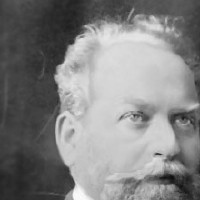
Edmund Husserl
At one of the several crucial moments of the narrative, Jesus tells his followers that they have to give everything up. Whoever will save his life will lose it, he says. Whoever will lose his life for me will find it. If you’re going to be a Jesusite, he insists, deny your self.
Conventionally, we read this as an injunction to serve each other so earnestly and with such commitment that we lose track of our own interests, our selfishness gives way and sloughs off, and the happiness and well-being of others become our identities. I don’t object to the conventional reading. It seems certain that Jesus advocated this type of transformation. But it does seem that the conventional reading helps us to secure and to protect all sorts of excuses for mistreating each other. We can go on loving the sinner but hating the sin, for instance. We can help people we insist on impoverishing. We can give our time and talents to imposing misery on our fellows for the sake of doctrine.
As he did in so many other cases, perhaps Jesus was speaking even more radically than conventional reading admits. Maybe Jesus was a phenomenologist.
The early twentieth-century philosopher Edmund Husserl proposed a kind of philosophy that would finally solve the epistemological problem that we don’t really know anything, by getting to the “thingness” of things. Phenomenology was to produce something we can call knowledge, without any equivocation. Never mind whether or not he succeeded in capturing the goose that western thought has been chasing since, at least, Socrates. On the way, Husserl argued that each is alone.
At least where knowing is concerned, each person is an island. No one really knows anything on the basis of someone else’s say-so—not even on the say-so of science. The grand, impossible method that Husserl proposed insisted that each individual person would have to start over, from scratch, in the project of knowing, and starting over includes giving up what one thinks one knows about one’s self.
The phenomenological reduction of the self involves facing everything about oneself that is conventional, and it expects ruthless, remorseless honesty in the confession of one’s conventional constituents. That honesty is likely to strip a person of everything as he or she discovers that everything personal is inherited, or conceptual, or intended, rather than essential. From nothing, then, the only sure foundation, one can begin to build one’s self anew, and also build anew a relation to the cosmos, as a thing of its own thingness, rather than something existing for one’s private objectives.
You think you know your self? Husserl asked. If you lose your self, you might be able to find it.
Which brings us back around to Jesus’s most radical insinuation. In the quest to be Jesus-y, it seems, we must be willing to surrender everything, especially the expectations that our selves have for the world. The Jesus-y reduction would give up all that our selves impose on the world, so that the world can appear to us, instead, as it is. Without that reduction, we find ourselves loving ephemera, the phantasms of our own trivial aims, and not existence, and all its elements, as Jesus seems to have done.
So, the fearsome charge of lose life for my sake. Could it be that losing one’s self for Jesus’ sake necessarily involves the abandonment of all with which we obscure the world’s manifestation of itself: the dogma, the doctrine, the policies, the practice, the genuflected principles by which we squeeze the world into shape, all the institutional hoo-hah that clouds our being in creation?
Could it be that losing life for Jesus means sacrificing church?
The pathway to Jesus requires such a radical reduction of the self that even church must be crucified, in the hope that has no sure guarantee that a new thing—potentially perfect—can be made. While we let a religion tell us what constitutes truth, we have no knowledge. While we cling to a religion as the force that secures our place in the world, we are simply, desperately, saving our lives. We’ll go to prison for a few days, rather than lose our lives, and Jesus can go hang.
One of Joseph Smith’s more profound moments produced the following declaration: a religion that does not require the sacrifice of all things never has power sufficient to produce the faith necessary unto life and salvation. I like the claim that faith is at odds with things, and I don’t see how we can avoid the great, glittering irony, here, that because church and doctrine are things, we must abandon them, too, on the way to a genuinely saving faith.
We can go on in what Husserl called the “natural attitude”, keeping on a shelf the suspicion that in our mortal condition we see only darkly, so that we can go on behaving badly in a world we have made to accommodate bad behavior. But Jesus wasn’t fond of the “natural person”.* If we face it, Jesus’s most demanding demand charges us to consider that religion cannot be fully realized until we have given up religion itself.
____________________
*At least, Paul wasn’t fond of it, for Christ’s sake.
* Image of Edmund Husserl from Wikimedia Commons.*
Previous Post

September 3, 2015
God's Law Does Change
Next Post
September 20, 2015 The Tao of Hula
Browse Our Archives
Select a Category Activism Aesthetics Art Atheism Bible Book of Mormon Christianity Freedom Games Guest Posts Hinduism Identity LDS Church Marriage Prayer Ritual Science Theatre Theism Toxic Theology
Select a Month August 2017 July 2017 June 2017 May 2017 March 2017 February 2017 January 2017 December 2016 November 2016 October 2016 September 2016 August 2016 July 2016 June 2016 May 2016 April 2016 March 2016 February 2016 January 2016 December 2015 November 2015 October 2015 September 2015 August 2015 July 2015 June 2015 May 2015 April 2015 March 2015 February 2015 January 2015 December 2014 November 2014 October 2014 September 2014
Follow Us!
TAKE THE
Religious Wisdom Quiz
Which letter emphasizes faith without works is dead?
Select your answer to see how you score.
1 Peter James Titus Hebrews
Related posts from Aestheism




TRENDING AT PATHEOS Latter-day Saint

Did Prayer Cure His Cancer? Or Was It...
At 4 AM one morning, Joshua W. Brown’s wife awoke to a...

8 Ways a Near-Death Experience Rewires the Soul
Does Consciousness Survive Physical Death? After 50 Years of Research, Dr. Raymond...

Holy Longing: What Our Restlessness Is Telling Us
“One can find so many pains when the rain is falling.” -John...

What this is NOT about. This blog is definitely not about...

Who said the Israelites were God’s chosen? That’s right, they did. Who...

The Spirit World Is the Real World: God...
A Monk’s Wisdom on Body and Spirit I sit with Brother Martin...
view all Latter-day Saint blogs
Ad-Free & Subscriber Log-In Subscription Support
- About Us
- 2026 Calendar
- Videos
- Podcasts
- Library of World Religions
- Faith In Media Tracker
- Advertise With Us
- Write for Us
- Privacy Policy
- Terms of Service
- Do Not Sell My Data
- Contact Us
- Radiant Digital
- Manage Newsletter Subscriptions
- Unsubscribe From Notifications
- Sitemap
Copyright 2008-2026, Patheos. All rights reserved.
Subscription Support Ad-Free & Subscriber Log-In
Follow Patheos