
BuddhistCatholicContemplativeEvangelicalGeneral ChristianHinduJewishLatter-day SaintMuslimNew VisionsProgressive Christian
Beliefs
- Buddhist
- Catholic
- Contemplative
- Evangelical
- General Christian
- Hindu
- Jewish
- Latter-day Saint
- More Voices
- Muslim
- New Visions
- Pagan
- Progressive Christian
Topics
- Religion News
- Food and Religion
- Sports and Religion
- Religious Art
- Religious Music and Entertainment
- Religious Events
- History and Religion
- Style and Religion
- Politics and Religion
- Women in Religion
- Recreation Outdoors and Religion
- Business Finance and Religion
- Careers Workplace and Religion
- Education and Religion
- Family Parenting and Religion
- Health Fitness and Religion
- Home and Religion
- Relationships and Religion
- Technology and Religion
- Travel and Religion
Columnists
- Buddhist Columnists
- Business Finance and Religion Columnists
- Careers Workplace and Religion Columnists
- Catholic Columnists
- Contemplative Columnists
- Education and Religion Columnists
- Evangelists Columnists
- Family Parenting and Religion Columnists
- General Christian Columnists
- Health Fitness and Religion Columnists
- Hindu Columnists
- History and Religion Columnists
- Home and Religion Columnists
- Jewish Columnists
- More Voices Columnists
- Latter Day Columnists
- Muslim Columnists
- New Visions Columnists
- Nonreligious Columnists
- Pagan Columnists
- Politics and Religion Columnists
- Progressive Columnists
- Recreation Outdoors and Religion Columnists
- Relationships and Religion Columnists
- Religion News Columnists
- Religious Art Columnists
- Religious Events Columnists
- Religious Music and Entertainment Columnists
- Sports and Religion Columnists
- Style and Religion Columnists
- Technology and Religion Columnists
- Travel and Religion Columnists
- Women in Religion Columnists
Resource Library
- 2026 Calendar
- Library of World Religions
- The 100 Most Holy Places on Earth
- Patheos Answers
- Podcasts
- Videos
- Faith Leaders Database
- Anglican Episcopalian
- Bahai
- Baptist
- Buddhism
- Christianity
- Confucianism
- Eastern Orthodoxy
- Hinduism
- Holiness and Pentecostal
- ISKCON
- Islam
- Judaism
- Lutheran
- Methodist
- The Church of Jesus Christ of Latter-day Saints
- New Age
- Paganism
- Presbytarian and Reformed
- Protestantism
- Religion Behind the Scenes
- Roman Catholic
- Scientology
- Shia Islam
- Sikhism
- Sufism
- Sunni Islam
- Taoism
- Zen
- See all religions
Research Tools
 Ad-Free & Subscriber Log-In Subscription Support
Ad-Free & Subscriber Log-In Subscription Support
Follow Patheos 

- Trending:
- Forgiveness
- |
- Marriage
- |
- Consciousness
- |
- Death Penalty
- |
- Election
- |
- Halloween
 Aestheism
- Home
- Latter-day Saint
- On Xmas, Jesus Checked His Privilege
On Xmas, Jesus Checked His Privilege
Last updated on: November 29, 2014 at 11:04 am by David Mason
On Xmas, Jesus Checked His Privilege 2014-11-29T11:04:01-05:00 David Mason
Patheos Explore the world's faith through different perspectives on religion and spirituality! Patheos has the views of the prevalent religions and spiritualities of the world.
The Xmas Capitulation
Here we now, as December comes upon us, open another Xmas season, to remind ourselves of the ideals—human and divine—that ought to guide our lives.
Because I am not a Christian, what I might say about the Christian ethos must admit the absence of an insider’s sympathy. Even so, Mormon that I am, I grew up with the Christian story, thinking of it as my own as much as anyone else’s. Anyway, if the story of Jesus is not for all humankind, we ought to have boxed it up and stored it long ago.
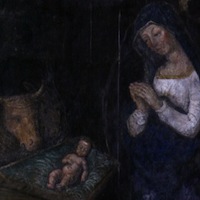
At the heart of the Jesus story is the god who could, but wouldn’t. The unfathomable sovereign of creation, goes the tale, came into creation not only as a toothless baby, wailing wordless and simple, but came as a homeless bastard, wriggling himself to sleep in the filth of animals. When he finally came to own language, the mighty lord of the cosmos, whose very word brought forth galaxies and snuffed them out, told the people who were willing to hang around with a ratty vagabond that divinity and humanity shone more brightly through humility than through majesty. And, to sharpen the point, the god who could have wasted the planet, would not do it, but died, suffering, miserable, and almost all alone, on a stick, with the spit of the powerful still in his eyes.
You don’t have to believe in god or incarnation to appreciate that story’s message.
There is a resurrection, of course, to renew our hope in a glorious end to a tale that, otherwise, brings us all to tragedy. But this happy ending does not change god’s capitulation. Where power almighty might have hurled itself at its recalcitrant creation—if not with justification, then with impunity, anyway—instead, all the strength of all reality’s suns said I will not.
If the Jesus story says anything that matters, it must be first that people with power will get into heaven last, and the loudly religious about it, last of all. Not even god goes into heaven by privilege. Surely, the efforts we have made for two thousand years to make the Jesus story excuse our exertion of authority over the powerless are a blasphemy beside which such sins as adultery mean nothing (as the Son of [Wo]Man said so plainly).
But never mind the next life, which makes no difference to this one, and set aside the traditional Christian god who seems less concerned with blasphemy than we mortals are. The story of Jesus confronts us with the brutal fact that people with power will always abuse it and to the worst extent possible, because they can. The empowered will, therefore, own this life, to everyone else’s sorrow.
Nevertheless—and Nietzsche’s critique of goodness notwithstanding—the abuse of power, which amounts to the worship of might, makes slaves of the powerful, as Bertrand Russell wrote, to Time and Death, whose greater might they cannot deny. Freedom, the philosopher argued, in an oh-so-Jesusy-way, comes from surrendering one’s claims on a private happiness—claims that hurt the powerless, who have not the strength to deny you.
“If Power is bad, as it seems to be, let us reject it from our hearts,” wrote Russell, who must be acknowledged as one of the truest Christians the world has known. Although we can—some of us—with right or impunity, anyway, judge our fellows, push them to the side, shape for them a space away in order to secure our own place, take from them whatever ennobles them, dress them in inferiority, accuse them, rob them, silence them, imprison them, shoot them, and forget them, let us once, at least, this month, follow the Christian god and say, instead, I will not.
It’s the season of giving. Maybe we don’t need to fret so much over the commercialization of a sacred moment. Spend money until you’re sick. Eat until you hate your parents. Build a shrine of Yule logs and bow down before Santa and Rankin-Bass. And, then, perhaps, those of us who have some can give up our power. At the risk of sounding much more maudlin than I am wont: after the xenophobia, homophobia, and racism in which those of us who can have indulged ourselves this past year, we could say no to ourselves this month and make this the best Christmas ever.
Previous Post

November 23, 2014
The Unbearable Lightness of Rasa
Next Post
December 6, 2014 Fishing, Physics, and Devotion
Browse Our Archives
Select a Category Activism Aesthetics Art Atheism Bible Book of Mormon Christianity Freedom Games Guest Posts Hinduism Identity LDS Church Marriage Prayer Ritual Science Theatre Theism Toxic Theology
Select a Month August 2017 July 2017 June 2017 May 2017 March 2017 February 2017 January 2017 December 2016 November 2016 October 2016 September 2016 August 2016 July 2016 June 2016 May 2016 April 2016 March 2016 February 2016 January 2016 December 2015 November 2015 October 2015 September 2015 August 2015 July 2015 June 2015 May 2015 April 2015 March 2015 February 2015 January 2015 December 2014 November 2014 October 2014 September 2014
Follow Us!
TAKE THE
Religious Wisdom Quiz
What did Daniel’s vision of the ram and the goat represent?
Select your answer to see how you score.
The Medo-Persian and Greek Empires The battle of good and evil The end of the world The fall of Jerusalem
Related posts from Aestheism


This is the GOP's Bloody Legacy

The Moral Bankruptcy of the Boy Scouts

TRENDING AT PATHEOS Latter-day Saint

Did Prayer Cure His Cancer? Or Was It...
At 4 AM one morning, Joshua W. Brown’s wife awoke to a...

8 Ways a Near-Death Experience Rewires the Soul
Does Consciousness Survive Physical Death? After 50 Years of Research, Dr. Raymond...

Holy Longing: What Our Restlessness Is Telling Us
“One can find so many pains when the rain is falling.” -John...

What this is NOT about. This blog is definitely not about...

Who said the Israelites were God’s chosen? That’s right, they did. Who...

The Spirit World Is the Real World: God...
A Monk’s Wisdom on Body and Spirit I sit with Brother Martin...
view all Latter-day Saint blogs
Ad-Free & Subscriber Log-In Subscription Support
- About Us
- 2026 Calendar
- Videos
- Podcasts
- Library of World Religions
- Faith In Media Tracker
- Advertise With Us
- Write for Us
- Privacy Policy
- Terms of Service
- Do Not Sell My Data
- Contact Us
- Radiant Digital
- Manage Newsletter Subscriptions
- Unsubscribe From Notifications
- Sitemap
Copyright 2008-2026, Patheos. All rights reserved.
Subscription Support Ad-Free & Subscriber Log-In
Follow Patheos