
BuddhistCatholicContemplativeEvangelicalGeneral ChristianHinduJewishLatter-day SaintMuslimNew VisionsProgressive Christian
Beliefs
- Buddhist
- Catholic
- Contemplative
- Evangelical
- General Christian
- Hindu
- Jewish
- Latter-day Saint
- More Voices
- Muslim
- New Visions
- Pagan
- Progressive Christian
Topics
- Religion News
- Food and Religion
- Sports and Religion
- Religious Art
- Religious Music and Entertainment
- Religious Events
- History and Religion
- Style and Religion
- Politics and Religion
- Women in Religion
- Recreation Outdoors and Religion
- Business Finance and Religion
- Careers Workplace and Religion
- Education and Religion
- Family Parenting and Religion
- Health Fitness and Religion
- Home and Religion
- Relationships and Religion
- Technology and Religion
- Travel and Religion
Columnists
- Buddhist Columnists
- Business Finance and Religion Columnists
- Careers Workplace and Religion Columnists
- Catholic Columnists
- Contemplative Columnists
- Education and Religion Columnists
- Evangelists Columnists
- Family Parenting and Religion Columnists
- General Christian Columnists
- Health Fitness and Religion Columnists
- Hindu Columnists
- History and Religion Columnists
- Home and Religion Columnists
- Jewish Columnists
- More Voices Columnists
- Latter Day Columnists
- Muslim Columnists
- New Visions Columnists
- Nonreligious Columnists
- Pagan Columnists
- Politics and Religion Columnists
- Progressive Columnists
- Recreation Outdoors and Religion Columnists
- Relationships and Religion Columnists
- Religion News Columnists
- Religious Art Columnists
- Religious Events Columnists
- Religious Music and Entertainment Columnists
- Sports and Religion Columnists
- Style and Religion Columnists
- Technology and Religion Columnists
- Travel and Religion Columnists
- Women in Religion Columnists
Resource Library
- 2026 Calendar
- Library of World Religions
- The 100 Most Holy Places on Earth
- Patheos Answers
- Podcasts
- Videos
- Faith Leaders Database
- Anglican Episcopalian
- Bahai
- Baptist
- Buddhism
- Christianity
- Confucianism
- Eastern Orthodoxy
- Hinduism
- Holiness and Pentecostal
- ISKCON
- Islam
- Judaism
- Lutheran
- Methodist
- The Church of Jesus Christ of Latter-day Saints
- New Age
- Paganism
- Presbytarian and Reformed
- Protestantism
- Religion Behind the Scenes
- Roman Catholic
- Scientology
- Shia Islam
- Sikhism
- Sufism
- Sunni Islam
- Taoism
- Zen
- See all religions
Research Tools
 Ad-Free & Subscriber Log-In Subscription Support
Ad-Free & Subscriber Log-In Subscription Support
Follow Patheos 

- Trending:
- Forgiveness
- |
- Marriage
- |
- Consciousness
- |
- Death Penalty
- |
- Election
- |
- Halloween
 Aestheism
- Home
- Latter-day Saint
- Mormon Theocracy, Or the Tribalization of Amurrica
Mormon Theocracy, Or the Tribalization of Amurrica
Last updated on: November 4, 2014 at 12:35 pm by David Mason
Mormon Theocracy, Or the Tribalization of Amurrica 2014-11-04T12:35:34-05:00 David Mason
Patheos Explore the world's faith through different perspectives on religion and spirituality! Patheos has the views of the prevalent religions and spiritualities of the world.
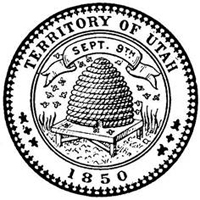
Utah’s Beehive Emblem
Editors’ Note: This article is part of the Patheos Public Square on Politics in the Pulpit. Read other perspectives here.
On a warm summer evening in 1833, the good citizens of Jackson County, Missouri, gathered in a town meeting to determine by democratic deliberation how to handle the Mormon problem. Subsequently, these good citizens tarred and feathered the local Mormon bishop in broad daylight in the town square, burned the Mormons’ printing shop, and drove every last Mormon from the county by violent force. On August 10, the local Missouri Intelligencer newspaper published the minutes of that meeting, during which these good citizens of this democratic republic resolved the following (and I quote):
- That no Mormon shall in future move and settle in this county.
- That those now here… shall be allowed to remain unmolested until they have sufficient time to sell their property.
- That the editor of the “Star” [a Mormon newspaper] be required to close his office… all other stores and shops belonging to the sect… must in every case strictly comply with the terms of the second article of this declaration, and upon failure, prompt and efficient measures will be taken to close the same.
- That the Mormon leaders here… counsel and advise their brethren here to comply with the above requisition.
- That those who fail to comply with the above requisitions, be referred to those of their brethren who have the gift of divination… to inform them of the lot that awaits them.
Mormons still speak in hushed tones about Missouri, where, in the 1830’s, America’s promise of religious freedom—not to mention its guarantees of equal protection, due process, free speech, private property, and what the great American epigrapher Stan Freberg called the purfoot of happineff—hid itself in a hole for fear of being lynched.
But this reading of history ignores that, in 1833, the two thousand far-flung, mind-their-own-business residents of Jackson County found themselves besieged by over one thousand Mormons, materializing, as it seemed, suddenly, out of nowhere, a deliberately alien and growing population voicing a claim to the place as a homeland given them by god. In a frontier region that had been operating ad hoc, the new population’s cohesive organization, political unity, economic insularity, and social impenetrability gave it the power to control the county, so that it could, indeed, transform the area to suit its own interests, in open disregard of outsiders’ equally earnest interests in property and happineff.*
In a country with a constitution and a bill of rights, it seems nigh impossible to justify stripping a man in a town square, spreading hot tar on him, and then dumping feathers on him. I can think of only three or four people who deserve that kind of treatment. But the Missouri Mormons must accept some responsibility for the hostility that followed them around.
In Missouri, lo, these many decades ago, people who affiliated themselves with the LDS church made a practice of voting in coordinated blocs, often under direction from church leaders. The threat of Mormon abolitionism in Missouri was exaggerated, but was taken seriously, nonetheless, by cantankerous Missourians who wanted to keep their slaves and saw that the Mormons’ coordinated voting could undermine the peculiar institution. In any case, at this time, Mormons were a communal order, and the way that the Mormons pooled their money in order to purchase land confirmed other Missourians’ fears that a Mormon takeover of the county was inevitable.
A decade after Jackson County, part of what made Joseph Smith unpopular in Illinois was the way he personally, unpredictably, infuriatingly, manipulated state-wide politics through what had become several thousand voting followers. Smith, for example, in 1843, promised support to a Whig candidate for congress in exchange for legal assistance, but, citing revelation to his brother Hyrum, directed his followers in Illinois’ sixth district to vote for a Democrat, instead. The Mormon vote for the Democrat proved decisive. The frustrated Whigs subsequently started meeting to determine what to do about the Mormon problem. Late in 1843, they began meeting in Carthage, Illinois, where Smith was murdered the next year.
Smith and the Mormons were, for the most part, simply availing themselves of democratic processes in order to secure their safety and prosperity—heaven knows no one else was going to secure the Mormons’ safety and prosperity.
But the Mormon appropriation of government—even by perfectly democratic means—marked out regions of privilege inside a country that purported to offer equality to all. The use of economic communalism to claim a Mormon county in Missouri, and then electioneering to stake out a Mormon city in Illinois, and then colonizing an enormous region of the Rocky Mountains to make a place that provided unique, and in some ways exclusive, security to Mormons apart from everyone else, abused democracy’s trust.
The Mormon appropriation of democracy in the nineteenth century justified the complaints of non-Mormons that Brigham Young’s mountain kingdom operated as a theocracy, rather than as a democratically constituted, U.S. territorial government. In a region in which federal courts often deferred, formally, to the judgment of Mormon bishops, non-Mormons did not feel they had equal or fair access to the guarantees the Constitution was supposed to offer all U.S. citizens.
Brigham’s deliberate efforts to exclude non-Mormons from public life in Utah extended beyond the courts and politics to the economy. When he finally conceded that he could not prevent Mormons from surrendering cash—which he regarded as a communal resource—to outsiders by patronizing the retail outlets of non-Mormons in Utah, Brigham built an LDS competitor to Utah’s gentile retail industry in the form of Zion’s Cooperative Mercantile Institution. Wielding rather fierce religious rhetoric, Brigham manipulated Mormon merchants into surrendering their stock to the church’s own, cooperative venture, and then threatened Mormons with excommunication for patronizing anything but authorized ZCMI outlets.** Non-Mormon retailers in Utah were strangled.
Still, today, we hear reiterations of what Brigham effectively said to the non-Mormons in Utah whom he deliberately marginalized: if you don’t like the perfectly democratic domination of the majority to which you do not belong, you can always move somewhere else. The non-Mormon Utahns’ response was, and still is: “Somewhere else? Like where? Mexico? Utah is part of the United States. I should be able to claim my constitutionally protected rights, right here.”
Religion does not poison everything, but it can be the enemy of democracy’s egalitarian ideal. When discrete sects—and, here, Evangelicalism, Catholicism, Baptistism, etc., are sects every bit as much as Mormonism—seek to make local or national government serve them in a way that privileges them and marginalizes others, those sects abuse the public trust, whether or not they are acting within the letter of democratic law. The real enemy of democracy is not religion, per se, but, instead, the kind of selfish, elitist, privileged tribalism that religion too often cultivates.
Of course, this is Amurrica. Surely religious institutions must be as free as any individuals to contribute whatever they want to public discourse. But what is legal and what is appropriate may not coincide. An institution’s citation of legality to justify its claim on privileges for a population that coheres only around religious beliefs, or, perhaps worse, to mobilize its population to limit another population’s access to Amurrica’s promised freedom, smacks, distinctly, of the bigotry that Amurrica aspires to overcome.
Some years ago, the bishop of my own Mormon congregation in Memphis told us all from the pulpit during church to turn out for imminent midterm polls to vote in favor of an amendment of Tennessee’s constitution that would ban same-sex marriage. I hadn’t planned to vote in a midterm election that I didn’t see as consequential (being convinced that an anti-same-sex-marriage initiative that was a foregone conclusion in Tennessee was only a ploy to bring out voters in favor of mediocre candidates). But because I am a faithful Mormon, this official, ecclesiastical order to vote to make same-sex marriage illegal in my state meant that that week I had to rearrange my schedule, take time away from work, drive across town, and stand in line so I could cast a ballot.
It was rather a pain, but worth it, in the end, when I could report to my bishop that, by voting in favor of same-sex marriage, I had personally nullified his vote against it.
Those of us who like both religion and democracy necessarily carry the responsibility to oppose the inclination of our chosen religious communities to claim for themselves a greater share of our common democratic landscape than they ought.
_______________________
*One might compare the historical situation in Jackson County, MO, to the current turmoil in the East Ramapo school district.
**See Leonard J. Arrington, Great Basin Kingdom (Urbana: University of Illinois Press, 2004), 248-9.
Previous Post

October 26, 2014
Magic Underwear and the Fish Priests of Babylon
Next Post
November 8, 2014 The Death of Humanism in Our Religionless Future
Browse Our Archives
Select a Category Activism Aesthetics Art Atheism Bible Book of Mormon Christianity Freedom Games Guest Posts Hinduism Identity LDS Church Marriage Prayer Ritual Science Theatre Theism Toxic Theology
Select a Month August 2017 July 2017 June 2017 May 2017 March 2017 February 2017 January 2017 December 2016 November 2016 October 2016 September 2016 August 2016 July 2016 June 2016 May 2016 April 2016 March 2016 February 2016 January 2016 December 2015 November 2015 October 2015 September 2015 August 2015 July 2015 June 2015 May 2015 April 2015 March 2015 February 2015 January 2015 December 2014 November 2014 October 2014 September 2014
Follow Us!
TAKE THE
Religious Wisdom Quiz
Who wrote many of the Psalms?
Select your answer to see how you score.
Moses David Solomon Paul
Related posts from Aestheism


This is the GOP's Bloody Legacy

The Moral Bankruptcy of the Boy Scouts
Toxic Theology: Learning Doesn't Matter
TRENDING AT PATHEOS Latter-day Saint

Did Prayer Cure His Cancer? Or Was It...
At 4 AM one morning, Joshua W. Brown’s wife awoke to a...

8 Ways a Near-Death Experience Rewires the Soul
Does Consciousness Survive Physical Death? After 50 Years of Research, Dr. Raymond...

Holy Longing: What Our Restlessness Is Telling Us
“One can find so many pains when the rain is falling.” -John...

What this is NOT about. This blog is definitely not about...

Who said the Israelites were God’s chosen? That’s right, they did. Who...

The Spirit World Is the Real World: God...
A Monk’s Wisdom on Body and Spirit I sit with Brother Martin...
view all Latter-day Saint blogs
Ad-Free & Subscriber Log-In Subscription Support
- About Us
- 2026 Calendar
- Videos
- Podcasts
- Library of World Religions
- Faith In Media Tracker
- Advertise With Us
- Write for Us
- Privacy Policy
- Terms of Service
- Do Not Sell My Data
- Contact Us
- Radiant Digital
- Manage Newsletter Subscriptions
- Unsubscribe From Notifications
- Sitemap
Copyright 2008-2026, Patheos. All rights reserved.
Subscription Support Ad-Free & Subscriber Log-In
Follow Patheos