
BuddhistCatholicContemplativeEvangelicalGeneral ChristianHinduJewishLatter-day SaintMuslimNew VisionsProgressive Christian
Beliefs
- Buddhist
- Catholic
- Contemplative
- Evangelical
- General Christian
- Hindu
- Jewish
- Latter-day Saint
- More Voices
- Muslim
- New Visions
- Pagan
- Progressive Christian
Topics
- Religion News
- Food and Religion
- Sports and Religion
- Religious Art
- Religious Music and Entertainment
- Religious Events
- History and Religion
- Style and Religion
- Politics and Religion
- Women in Religion
- Recreation Outdoors and Religion
- Business Finance and Religion
- Careers Workplace and Religion
- Education and Religion
- Family Parenting and Religion
- Health Fitness and Religion
- Home and Religion
- Relationships and Religion
- Technology and Religion
- Travel and Religion
Columnists
- Buddhist Columnists
- Business Finance and Religion Columnists
- Careers Workplace and Religion Columnists
- Catholic Columnists
- Contemplative Columnists
- Education and Religion Columnists
- Evangelists Columnists
- Family Parenting and Religion Columnists
- General Christian Columnists
- Health Fitness and Religion Columnists
- Hindu Columnists
- History and Religion Columnists
- Home and Religion Columnists
- Jewish Columnists
- More Voices Columnists
- Latter Day Columnists
- Muslim Columnists
- New Visions Columnists
- Nonreligious Columnists
- Pagan Columnists
- Politics and Religion Columnists
- Progressive Columnists
- Recreation Outdoors and Religion Columnists
- Relationships and Religion Columnists
- Religion News Columnists
- Religious Art Columnists
- Religious Events Columnists
- Religious Music and Entertainment Columnists
- Sports and Religion Columnists
- Style and Religion Columnists
- Technology and Religion Columnists
- Travel and Religion Columnists
- Women in Religion Columnists
Resource Library
- 2026 Calendar
- Library of World Religions
- The 100 Most Holy Places on Earth
- Patheos Answers
- Podcasts
- Videos
- Faith Leaders Database
- Anglican Episcopalian
- Bahai
- Baptist
- Buddhism
- Christianity
- Confucianism
- Eastern Orthodoxy
- Hinduism
- Holiness and Pentecostal
- ISKCON
- Islam
- Judaism
- Lutheran
- Methodist
- The Church of Jesus Christ of Latter-day Saints
- New Age
- Paganism
- Presbytarian and Reformed
- Protestantism
- Religion Behind the Scenes
- Roman Catholic
- Scientology
- Shia Islam
- Sikhism
- Sufism
- Sunni Islam
- Taoism
- Zen
- See all religions
Research Tools
 Ad-Free & Subscriber Log-In Subscription Support
Follow Patheos 

- Trending:
- Advent
- |
- Forgiveness
- |
- Thanksgiving
- |
- Election
- |
- Seasonal Holidays
- |
- Marriage
 Adventures in Eco-Mythology
- Home
- Pagan
- History and Religion
- From doves to robins, the role of birds in the Bible
From doves to robins, the role of birds in the Bible
Last updated on: March 23, 2023 at 9:51 am by Ben H. Gagnon
From doves to robins, the role of birds in the Bible 2023-03-23T09:51:59-04:00 Ben H. Gagnon
Patheos Explore the world's faith through different perspectives on religion and spirituality! Patheos has the views of the prevalent religions and spiritualities of the world.
The divine roles played by angels and the Holy Spirit in the Bible were much like the roles inhabited previously by sacred birds in the nature religions.

Sculpture of an angel at sunset. (udra11/Shutterstock)
Most scholars agree the Book of Genesis was written down starting about 3,400 years ago. The people of the time were familiar with the concept of a healing world tree growing in a heavenly garden, with divine birds in its higher branches and a serpent at the base.
While there were two world trees in the Garden of Eden, not a single bird is mentioned, a startling omission for the time. The talking serpent would have been another surprise, considering the gift of language was thought to be limited to people and birds. In the bird-less Garden of Eden, the serpent spoke to Adam and Eve and tempted them into breaking god’s law, resulting in their being cast out of the garden.
The absence of birds in the Garden of Eden was a sign of perhaps the most shocking new idea introduced by Judaism, and later by Christianity and Islam: There was to be no more reincarnation. People would live only one lifetime and their actions would be the basis for the eternal judgment of the soul.
Gone was the mythical role of birds carrying souls to the spirit world in the continual process of reincarnation. It was no accident that waterfowl previously considered soul guides were labeled in the Book of Leviticus as “abominations,” and not to be eaten. The list of unclean birds was filled with previously sacred species such as eagles, vultures, ravens, swans, storks, herons, owls and pelicans.
Angels replace birds
Yet as historian Mircea Eliade wrote, “no religion is completely new,” and in the Abrahamic religions winged angels took on the mythical role once played by birds of intermediary between the earthly realm and the divine vault of heaven.
The word angel comes from the Greek word for messenger and the Old English word aerendgast, meaning errand-spirit. As birds once passed secret knowledge to kings and prophets, angels passed heavenly wisdom to Abraham, Noah, Daniel, Zechariah, and Enoch. Even so, the secret language of birds remained a source of wisdom in the Kabbalah.
Like the sacred birds of nature religions, angels had knowledge of the future, brought the gift of language to humans and taught them how to farm. In the Hebrew Bible, God descended from heaven with 70 angels to teach different language to the peoples of the world. The archangel Michael later oversaw a process in which each tribe adopted the patron angel who taught them language. As winged gods taught the Sumerians how to farm, the archangel Michael taught Adam how to work the soil.
The Hebrew Bible also included the long-held (and accurate) belief in the nature religions that birds spread the seeds of vegetation. As a prophet-priest in Jerusalem and Lebanon, Ezekiel gave a great eagle credit for transplanting a vine, as described in Ezekiel 17.
“A great eagle with powerful wings, long feathers and full plumage of varied colors came to Lebanon. Taking hold of the top of a cedar, he broke off its topmost shoot and carried it away to a land of merchants, where he planted it in a city of traders … by abundant water, and it sprouted and became a low, spreading vine.
The dove as Holy Spirit
Birds played important roles at several points in the life of Jesus, from conception to birth, baptism, and finally his crucifixion and resurrection. His conception and birth also track with the much older sacred calendar of the solar religions.
In the biblical calendar, The Annunciation takes place on March 25, just a few days after the spring equinox, when the Angel Gabriel informs the Virgin Mary that she’s about to conceive the son of God without the help of her husband Joseph.

The dove as Holy Spirit. (Wikimedia Commons)
“The Holy Ghost shall come upon thee … (and) that holy thing which shall be born of thee shall be called the Son of God.” Paintings of The Annunciation often depict a dove hovering in a beam that shines on Mary. In some, there’s a baby behind the dove and both are blown towards Mary by a wind from the mouth of God. The story of Christ’s conception is not unlike the many cross-cultural creation stories claiming birds as divine ancestors.
Nine months after The Annunciation, Jesus was born in Bethlehem on Dec. 25, four days after the winter solstice. The pagan winter solstice celebration was about the miraculous rebirth of the sun and its regenerative power to catalyze the immortal cycle of reincarnation. Those born under the winter solstice sun were destined to be kings or cultural heroes.
The dove as Holy Spirit as appears at Jesus’ baptism in the Gospel of John, when John the Baptist sees “the Spirit descending from heaven like a dove, and it abode upon [Jesus] … And I saw, and bare record that this is the Son of God.”
Doves also played the role of the Holy Spirit in the stories of two female saints martyred for professing their belief in Jesus. A dove was said to fly out of the mouth of a dead 13-year-old girl who was tortured and martyred in Barcelona in 303. She later became known as the virgin St. Eulalia and her story was reenacted in the eastern Pyrenees up to the 20th century.
Also in 303, the young virgin Saint Devota was stoned to death by Romans for professing the Christian faith. Her body was saved and taken away in a boat and although a storm arose, a dove was said to appear and guide the boat to Monaco, to a church dedicated to St. George.
Jesus and the robin
A Christian legend describes a robin alighting on Jesus’ bloodied head during the crucifixion, gently removing some of the thorns and staining its own breast with blood in the process, causing all robins to become red.
In nature the robin enjoys feasting on the hawthorn tree’s red fruit in winter. Featuring thorns up to five inches long, the hawthorn tree blooms with flowers in late spring (around the crucifixion and resurrection). Christian legend says Joseph of Arimathea brought Jesus’ wooden staff on a journey to England, where a hawthorn tree sprung from the rod during a rest stop at Wearyall Hill, just southwest of Glastonbury.

A European Robin. (Charles J. Sharp/Wikimedia Commons)
During the Middle Ages robins were reported to fly into churches and sing in harmony with hymns while perched on lecterns, bibles, and choir lofts. The phenomenon inspired the satirical notion of the Bird Mass, described in the 1509 poem “Philip Sparrow.” Gathered after the death of a sparrow killed by a cat, a robin led the birds of East Anglia in prayer. “And robin redbreast, He shall be the priest, The requiem mass to sing, softly warbling…”
The Rosicrucian pelican
Emerging in the early 17th century, the secretive Order of the Rose Cross claimed to possess ancient wisdom handed down from a 15th century German mystic who made a pilgrimage to the Near East and returned with esoteric knowledge.

The Rosicrucian Cross. (Wikimedia Commons)
The symbol of the Rosicrucians was a rose at the center of a cross, often with a mother pelican piercing its own breast to feed its young with blood. The image of self-sacrifice was a mystical symbol of Christ’s sacrifice and resurrection. The Rosicrucians rejected orthodoxy, dogma, and the cycle of sin and repentance embedded in the institutional church. They preferred instead the pursuit of mystical knowledge and personal spiritual enlightenment.
Jesus and the Phoenix
At least two Christian saints compared Jesus to the legendary Phoenix.
In the late 4th century St. Ambrose of Milan wrote that the Phoenix “teaches us by its example to believe in the Resurrection.” In the early 5th century St. Cyril of Alexandria wrote that God knew men would not believe Christ was resurrected and therefore provided the Phoenix as evidence that resurrection was possible.
In the 14th century Bestiary of Philippe de Thaum, the Phoenix is compared to Jesus in that both had the power to die of their own will and return from death to life.
Christianity later came to equate the molting and regrowth of peacock feathers in the spring with Christ’s resurrection on Easter, a day when the Pope once traditionally waved ostrich feathers at the gathered crowds.

The mythical Phoenix. (Wikimedia Commons)
Decorated ostrich eggs were symbolic of rebirth and purity and could once be found in Christian churches throughout the Middle East, Europe and parts of Africa. In the 10th century, Christians adopted the egg as a symbol of Christ’s resurrection, ultimately giving rise to the modern Easter egg.
(Ben H. Gagnon is an award-winning journalist and author of Church of Birds: an eco-history of myth and religion, coming March 31 from John Hunt Publishing, now available for pre-order. More information can be found at this website, which links to a YouTube video.)
Progressive Christian
Education and Religion
Previous Post

March 20, 2023
Seashells found in the mountains inspired myths of a world ocean
Next Post

March 25, 2023 Forensic evidence points to noble reasons for Neolithic defleshing
Recent Comments
Browse Our Archives
Select a Category contemplative History New Visions Pagan Progressive Christian Uncategorized
Select a Month June 2023 May 2023 April 2023 March 2023 February 2023 January 2023 December 2022
Follow Us!
TAKE THE
Religious Wisdom Quiz
What did the Israelites take from the Egyptians as they left?
Select your answer to see how you score.
Incense Tablets Gold and silver Chariots
Related posts from Adventures in Eco-Mythology

In Greece, Petralona Cave may be oldest sacred...
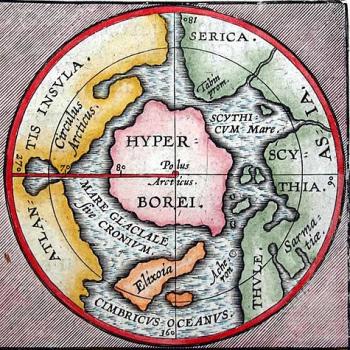
In the Arctic, a 2,500-year-old Greek myth is...

The ancient religious meaning of volcanoes, from Persia...

Evidence shows ape-human hybrids evolved on bird migration...
TRENDING AT PATHEOS Pagan

To help with the upcoming holiday season, I'm introducing the Holiday Helper...

10 years of the Power Sigil & Moving...
Last week while reorganizing my studio space, I found the sketchbook that...

Why are younger seekers drawn to Paganism and...
One of the things I've noticed the most is that I'm far...

When we talk about Greek religion, we often begin with the dodekatheion—the...

I was recently chatting with someone on Instagram. She asked me what...

On July 23, I saw Christopher Nolan's The Odyssey which is Homer’s...
view all Pagan blogs
Ad-Free & Subscriber Log-In Subscription Support
- About Us
- 2026 Calendar
- Videos
- Podcasts
- Library of World Religions
- Faith In Media Tracker
- Advertise With Us
- Write for Us
- Privacy Policy
- Terms of Service
- Do Not Sell My Data
- Contact Us
- Radiant Digital
- Manage Newsletter Subscriptions
- Unsubscribe From Notifications
- Sitemap
Copyright 2008-2026, Patheos, part of the Radiant Digital network of media brands. All rights reserved.
Subscription Support Ad-Free & Subscriber Log-In
Follow Patheos