
BuddhistCatholicContemplativeEvangelicalGeneral ChristianHinduJewishLatter-day SaintMuslimNew VisionsProgressive Christian
Beliefs
- Buddhist
- Catholic
- Contemplative
- Evangelical
- General Christian
- Hindu
- Jewish
- Latter-day Saint
- More Voices
- Muslim
- New Visions
- Pagan
- Progressive Christian
Topics
- Religion News
- Food and Religion
- Sports and Religion
- Religious Art
- Religious Music and Entertainment
- Religious Events
- History and Religion
- Style and Religion
- Politics and Religion
- Women in Religion
- Recreation Outdoors and Religion
- Business Finance and Religion
- Careers Workplace and Religion
- Education and Religion
- Family Parenting and Religion
- Health Fitness and Religion
- Home and Religion
- Relationships and Religion
- Technology and Religion
- Travel and Religion
Columnists
- Buddhist Columnists
- Business Finance and Religion Columnists
- Careers Workplace and Religion Columnists
- Catholic Columnists
- Contemplative Columnists
- Education and Religion Columnists
- Evangelists Columnists
- Family Parenting and Religion Columnists
- General Christian Columnists
- Health Fitness and Religion Columnists
- Hindu Columnists
- History and Religion Columnists
- Home and Religion Columnists
- Jewish Columnists
- More Voices Columnists
- Latter Day Columnists
- Muslim Columnists
- New Visions Columnists
- Nonreligious Columnists
- Pagan Columnists
- Politics and Religion Columnists
- Progressive Columnists
- Recreation Outdoors and Religion Columnists
- Relationships and Religion Columnists
- Religion News Columnists
- Religious Art Columnists
- Religious Events Columnists
- Religious Music and Entertainment Columnists
- Sports and Religion Columnists
- Style and Religion Columnists
- Technology and Religion Columnists
- Travel and Religion Columnists
- Women in Religion Columnists
Resource Library
- 2026 Calendar
- Library of World Religions
- The 100 Most Holy Places on Earth
- Patheos Answers
- Podcasts
- Videos
- Faith Leaders Database
- Anglican Episcopalian
- Bahai
- Baptist
- Buddhism
- Christianity
- Confucianism
- Eastern Orthodoxy
- Hinduism
- Holiness and Pentecostal
- ISKCON
- Islam
- Judaism
- Lutheran
- Methodist
- The Church of Jesus Christ of Latter-day Saints
- New Age
- Paganism
- Presbytarian and Reformed
- Protestantism
- Religion Behind the Scenes
- Roman Catholic
- Scientology
- Shia Islam
- Sikhism
- Sufism
- Sunni Islam
- Taoism
- Zen
- See all religions
Research Tools
 Ad-Free & Subscriber Log-In Subscription Support
Ad-Free & Subscriber Log-In Subscription Support
Follow Patheos 

- Trending:
- Forgiveness
- |
- Marriage
- |
- Consciousness
- |
- Death Penalty
- |
- Election
- |
- Halloween

- Home
- Evangelical
- Health, Fitness and Religion
- Spirituality Does Belong in Healthcare: How to Truly Care
Spirituality Does Belong in Healthcare: How to Truly Care
Last updated on: August 23, 2026 at 7:59 pm by Adrian Warnock
Spirituality Does Belong in Healthcare: How to Truly Care 2026-08-23T19:59:21+01:00 Adrian Warnock
Patheos Explore the world's faith through different perspectives on religion and spirituality! Patheos has the views of the prevalent religions and spiritualities of the world.
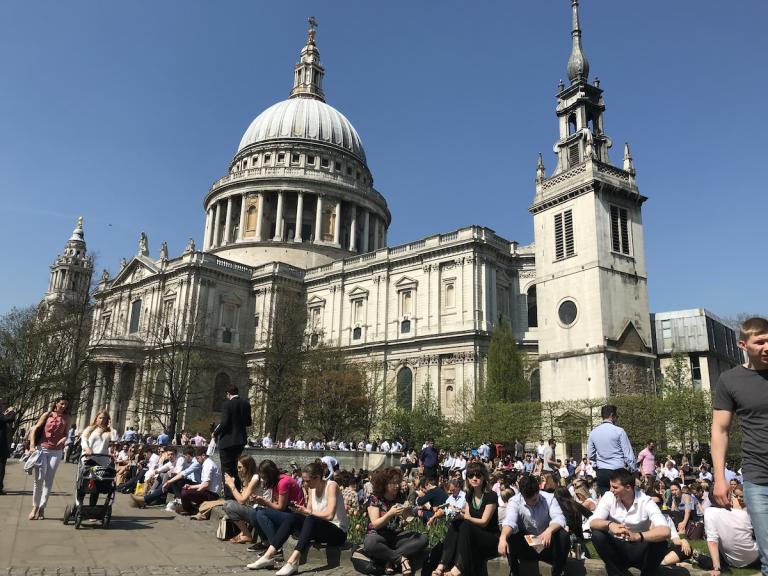
Worship should spill out of the church into the community Image: Adrian Warnock
Readers of this blog should be no strangers to me advocating for the biopsychosocial-spiritual model of health and wellbeing. Today I want to address the sometimes thorny topic of how spirituality can and should be incorporated into healthcare. Clearly I am not talking about bashing people over the head with the Bible and trying to convert them. But as retired mental health nurse Sandra Delemare said in our recent interview, “Spiritual care is asking someone how they are and really listening to the answer because you genuinely want to know”
Watch the full video on Substack or listen wherever you get your podcasts.
Sandra noted that in her hospital they had a form to complete, the WRAP program, Wellness Recovery Action Plan. This was mostly about discharge planning. One section was spirituality, which tended to get left blank. So she decided to try and do something about that.
Spirituality does encompass religious beliefs if we have them, but it’s important to realize that if you don’t have religious beliefs, arguably that’s a belief position in itself. So you are not off the hook, and everyone has a spiritual side. It’s about how we answer the really big questions of life. How do we get meaning out of life? Who are we? Where are we from? How did we get here? What is this world? Is there a creator or does it all come by chance? What’s the purpose of our life? How will we be judged or assessed? What impact are we trying to make with our lives?
It’s also about what happens at the end of our lives. How do we cope with suffering? What are our beliefs about that? Do we believe we’re simply going to disappear or do we believe in some form of afterlife? A religion is simply something that tries to answer all those questions and then puts those answers into practice in some way, whether through attending services or through personal practice.
We all ask those questions, and when you’re sick those questions can sometimes come to mind more forcefully. When we’re well, people can push them away. Frankl is often quoted in this regard. He noticed during his experiences in the concentration camps that some people couldn’t make sense of what was happening, and for them it made everything even worse. Others somehow found meaning in the midst of their suffering, and those people seemed to cope better.
Sometimes people aren’t only experiencing a health crisis. They’re experiencing a faith crisis at the same time.
There’s quite a lot of research now showing that having some form of faith, exploring spirituality, and particularly being part of a spiritual community can have a massive impact not only on mental well-being, but also on physical health and even longevity.
People who belong to religious communities often live longer than people who do not, which is interesting. I’m not suggesting we use that in evangelism and say, “Come to Jesus, join our church and you’ll live longer,” but it’s an interesting observation. In addition certain spiritual practices including meditation, prayer, forgiveness and gratitude are all well proven to be of benefit to our wellbeing. Sometimes when we are unwell, we are also experiencing a spiritual crisis. It is not unreasonable, therefore, for health professionals to raise these questions with their patients, or indeed for those of us who are suffering to raise them with our doctors, nurses, or therapists.
One researched assessment framework goes by the acronym HOPE, appropriately enough.
The HOPE Assessment Sample Questions
H What are your sources of hope, strength, comfort and peace?
O Do you consider yourself part of an organized religion? What aspects of your religion are helpful and not so helpful to you?
P What aspects of your spirituality or spiritual practices do you find most helpful to you personally? (e.g., prayer, meditation, reading scripture, attending religious services, listening to music, hiking, communing with nature)
E How do your beliefs affect the kind of medical care you would like me to provide over the next few days/weeks/months?
For the full assessment and evidence see https://pmc.ncbi.nlm.nih.gov/articles/PMC12236049/
There needs to be a deeper appreciation of spiritual issues, and they should be addressed not only in psychiatric hospitals but in general hospitals as well. Sometimes people think of calling the chaplain only when someone is dying. That’s often almost the only occasion.
The other challenge is that hospital life has changed dramatically. It’s become incredibly busy. There may be doctors or nurses reading this thinking, “It would be wonderful to have time for these conversations.” But actually, you can still take small moments. You can ask basic questions. You can ask what is bothering someone and explore whether faith plays any part in their life and whether they’d benefit from speaking with somebody from chaplaincy. That isn’t unreasonable. It doesn’t need to take a great deal of time.
At the same time, hospitals can be lonely places. Unless you have family and friends nearby, it can be difficult. Sometimes people are treated far from home. In the past, nurses might sit on the end of the bed and have a conversation. Increasingly, they simply don’t have time. That’s part of the challenge.
I don’t suppose we’re suddenly going to find huge amounts of extra staff time. That’s where chaplains come in, but chaplains themselves are often stretched. You mentioned one hour a week. One thought I’ve had, and perhaps it’s a dream, is that pastors, established Christians, retired Christians, and others might consider volunteering.
Most chaplaincies already have volunteer programmes. I’d love to see that expanded significantly, with volunteers receiving some basic training from chaplaincy so they understand appropriate boundaries and don’t treat people as projects. These volunteers can come from any faith or no faith. Many chaplaincies already work that way.
They can then spend time talking with patients. Sometimes they don’t even need formal referrals. For me personally, some of the most meaningful encounters in hospital came from volunteers. Someone bringing newspapers around might stop and chat for a few minutes. It made a huge difference.
I had a volunteer chaplain come and see me when I was in hospital after I requested it. I wasn’t dying, but I’d just received a cancer diagnosis. I was confused, frightened, and unsure where my faith stood. The chaplain came from a different faith tradition. He was a Quaker, and I come more from an evangelical background. We sat and talked. He gave me things to think about and reflect on. I found it incredibly helpful.
Other chaplains later brought communion as well. I really think this kind of ministry could be powerful. Could you imagine Christians and people from other faiths helping in that way?
I have a number of questions that professionals can use with their patients, or that patients could write about before a session and hand their notes in saying “can we talk about some of these things please?” You would not typically use all these questions but they are offered here as a menu:
-
How important are spiritual or religious beliefs in your life?
-
Have you got a faith that helps you at a time like this?
-
Do you have any spiritual practices?
(e.g. prayer, meditation, religious services, confession, spiritual counseling, discipleship, mentoring, group meetings, or even simple gratitude practices.)
-
How do your beliefs affect your decision-making?
-
How do you make sense of difficult life events?
-
Do your beliefs help you, or do they make things more difficult? When illness, bereavement, or relationship breakdown occurs, is your faith a comfort or a struggle?
-
Are there spiritual or religious communities that you’re part of?
-
Have you been wrestling with deeper questions such as:
-
- Why am I here?
- What is the meaning of life?
- Why am I suffering?
-
Do you struggle with guilt or shame? How do you cope with those feelings?
-
Are there are spiritual or religious books, podcasts, videos, sermons, radio programs, or other resources you find particularly helpful, or particularly worrying?
-
What do you think and feel about forgiveness and justice?
This question is a particularly important one because our worldview influences how we respond when people wrong us. Some people say they’ll never forgive. You can often see how bitterness has gripped them. Others believe they must forgive everything immediately. Then a conversation about what forgiveness actually means becomes important. Some think forgiveness means reconciliation regardless of the circumstances. That isn’t always safe or appropriate. Those questions can open very important conversations.
-
Are there any inspirational thoughts, quotations, prayers, scriptures, or ideas that are especially important to you?
-
How can we integrate your spiritual or religious beliefs into the care and support you receive?
We already consider physical needs, psychological needs, and social needs. Why shouldn’t we take spiritual needs seriously as well? If someone has a particular prayer practice, religious observance, or spiritual habit that matters deeply to them, perhaps there are simple ways of enabling or supporting that.
-
Would you like to see a chaplain or speak with someone from a spiritual or religious community?
So often healthcare can become a tick-box exercise, but if you’re prepared to give someone time and listen properly, that’s considered spiritual care. It’s connecting with another human being. In this world of busyness, where doctors and nurses are often overwhelmed, simply treating someone as a human being can make all the difference. I remember being in hospital during COVID. I was terrified. There were all sorts of personal challenges going on as well.
One nurse could clearly see I was struggling and gave me a hug. It probably broke all sorts of normal rules and procedures, but it was a deeply human thing to do and exactly what I needed. We were both wearing masks. There was nothing inappropriate about it. It was simply a moment of human compassion. Another nurse once put her hand on mine. Again, nothing dramatic. Just a moment of kindness.
Sometimes a few extra moments, a brief conversation, one of these questions, or simply seeing someone as a human being rather than patient number five in bed seven can make an enormous difference. The key word is compassion. We hear lots of terms discussed. Some people talk about pity. Others talk about sympathy or empathy. I think the word I prefer is compassion. The Bible is full of the word compassion. Jesus is described as being moved with compassion.
To me, compassion means entering into someone’s suffering, seeing things through their eyes, understanding their experience, and then wanting to do something about it if you can. You may not always be able to remove the suffering, but compassion carries that desire to help. I think that’s one of the most important qualities in healthcare.
Unfortunately, when people work under constant pressure, compassion can become drained away. People become compassion-fatigued. A sort of shell develops around them. As Christians we must fight that and remain compassionate always.
What does Jesus’ resurrection mean for you?
Raised With Christ: How the Resurrection Changes Everything
by Adrian Warnock
https://mybook.to/raisedwithchrist
Raised With Christ explores the historical evidence for the resurrection, why it matters, and how the risen Christ transforms every aspect of the Christian life. This new version includes study guide questions and an afterword by Charles Spurgeon and John Newton, updated into modern English.
Read a free chapter from this book:
A Relationship with the Risen Jesus
The resurrection really does change everything. Just not all at once.
Read more about Raised with Christ on Christian Book Finder

“Finally, a new generation of readers has a clear and highly readable book on the resurrection of Jesus Christ.”
— Joni Eareckson Tada
“What a refreshing wake-up call Adrian’s fine book provides.”
—Terry Virgo, from the Foreword
Buy Now
Subscribe here for my latest thoughts and launch team news
For article notifications only, subscribe through Patheos.
General Christian
Health, Fitness and Religion
Careers, Workplace and Religion

About Adrian Warnock
Adrian Warnock
Medical doctor · Published author · Patheos writer since 2003
I have always lived within sixty miles of London, UK where I studied, worked and worshipped for thirty years. I began writing for this Patheos blog in April 2003, making it one of the longest-running individual columns on the Christian Internet. My writing here, on Substack, and in my books is influenced by my medical training, eight years of working as a psychiatrist in the UK’s National Health Service (NHS), eighteen years working in medical research in the pharmaceutical industry, twenty-five years of serving as a pastoral leader in a growing multicultural church, and a difficult decade of lived experience with chronic illness, including blood cancer, and the unexpected losses, including early retirement, that resulted.
Together, these all shape a biopsychosocial-spiritual approach which I first wrote about on Patheos in 2013. This model offers us hope, compassion, and healing in all life’s challenges. This holistic approach is based on the idea that all truth is God’s truth.
At times, since my illness, my faith has been faint. I wondered if this was the end of my story. I was not strong enough to live for Jesus the way I wanted to. I could not change myself. And then hope reminded me: The resurrection of Jesus changes everything. Just not all at once. Healing takes time. Compassion and patience sustain us over a lifetime of change. I aim to approach suffering with hope and compassion, and address tough questions including:
-
What does Jesus’ resurrection mean for you?
Raised With Christ: How the Resurrection Changes Everything (Crossway, 2010; 2nd edition, Amazon, 2025)
-
Why is change so difficult? What causes the resistance?
The Traitor Within: Understanding and Healing Our Deceitful Hearts (Amazon, 2026)
-
Why is change so slow? How does grace lead us over a lifetime?
Amazing Grace: How Faith Grows in the Human Heart (Amazon, 2026)
-
How do you become a Christian? Can you know if you really are one?
Hope Reborn: How to Become a Christian and Live for Jesus Co-authored with Tope Koleoso (Christian Focus, 2014)
Qualifications
I qualified with an MB BS from the University of London (equivalent to an MD in the United States), hold postgraduate qualifications in psychiatry (MRCPsych) and pharmaceutical medicine (MFFM, DipPharmMed), and took theological training courses run by Newfrontiers.
Connect With me
- Substack: adrianwarnock.substack.com (the best way to ask questions)
- Twitter/X: @adrianwarnock
- Facebook: Adrian Warnock
- Email: [email protected] (I may not be able to respond to every message)
You can read more about the author here.
Previous Post
August 16, 2026
Grab this weeks Amazon Number One Best Seller Easter Book
Next Post
September 10, 2026 Jesus was not Manipulated by Anyone. He Knew when to Move on
Recent Comments
"Atheism is no more a single worldview than theism is a single worldview. Both however ..."
Thank God Atheists Do Not Live ..."
"Athiests believe in love, most reject God because of the God depicted in the old ..."
Thank God Atheists Do Not Live ..."
"Have a read of some history, and you will find that your views are not ..."
Thank God Atheists Do Not Live ..."
"You act like Christians invented basic human decency. Here's a news flash: Humans thrived for ..."
Thank God Atheists Do Not Live ..."
Browse Our Archives
Select a Category 1 and 2 Corinthians 1 and 2 Thessalonians 1 and 2 Timothy 1 John 300 Leaders A Life of Joy Abortion Acts of the Apostles Adrian on radio Adrian on TV Adrian's Story Albert Mohler Amazing Grace Arminocalvinist Spectrum Assurance Atonement Atonement Series Attributes of God Barnabas Best of the Blog Bible Bible Software Bible Translation Biblical Inerrancy Billy Graham Bob Roberts Books C. J. Mahaney Calvinism Cessationism Charis Warnock Charismatic Spectrum Charles Simeon Charles Spurgeon Church Leadership Colossians Complementarian - Egalitarian Spectrum Complementarianism Conferences Culture Daniel Debates Deuteronomy DGM08 DGM13 Discernment Doctrine Don Carson Ed Stetzer Eddy Leo Ephesians ESV Bible Translators Interview Evangelism in a Post-Christian World evolution Exodus Expository Preaching Ezekial Faith and Feelings Family Florida Galatians General Genesis Get Wisdom - Proverbs sermons Gifts of The Holy Spirit Gifts of the Holy Spirit 2006 Global Faith Forum Godly Attitudes Gospel Gospels Grace Greg Haslam Grudem vs Piper: The Baptism Debate Healing Heaven Hell and Rob Bell Hebrews Henry Tyler Henry Warnock Holy Spirit Holy Spirit Baptism Hope Reborn Hugh Palmer Irresistable Grace Isaiah J. I. Packer Jack Hayford Joel Joel Warnock John John Lanferman John MacArthur John Newton John Owen John Piper John Smyth Jonathan Edwards Josh Harris Justification Justin Taylor Kenneth Ulmer Leadership Leadership Lessons from 1 & 2 Samuel Lex Loizides Liam Goligher Lig Duncan Limited Atonement Lou Fellingham Mark Dever Mark Driscoll Martyn Lloyd-Jones Matt Chandler Mental Health Missionary Methods: St Paul’s or Ours? My Story N. T. Wright Nehemiah NWA08 NWA09 NWA10 Opinion OT History Books Pentateuch Personal Personal Revival Philippians PJ Smyth Podcast Politics Preaching Prophecy Proverbs Psalms Raised With Christ Reformed Charismatic Regeneration Relationships Resurrection Resurrection & Salvation Revival Rice Broocks Rich Man and Lazarus Rick Warren Rob Rufus Roland Allen Romans Sam Storms Sanctification Series Sermons Sermons on Philippians Serving Jesus at Work Sexuality Sin St Paul Steve Chalke Strange Fire Suffering T4G T4G Statement TAB09 Tamasin Warnock Teamwork Terry Virgo The Atonement Debate - Chalke book The Soulwinner The Spirit-Filled Church The Traitor Within Theologcial Spectrums Theosis Tim Challies Tim Keller Titus TOAM06 TOAM07 TOAM08 TOAM09 TOAM10 TOAM11 Todd Bentley Tope Koleoso Total Depravity Video Water Baptism Wayne Grudem Worship
Select a Month October 2026 September 2026 August 2026 July 2026 June 2026 May 2026 April 2026 March 2026 February 2026 January 2026 December 2025 November 2025 October 2025 September 2025 May 2025 April 2025 January 2025 November 2024 October 2024 August 2024 July 2024 June 2024 May 2024 April 2024 March 2024 February 2024 January 2024 December 2023 August 2023 May 2023 April 2023 February 2023 October 2022 September 2022 August 2022 July 2022 June 2022 May 2022 April 2022 March 2022 February 2022 August 2021 May 2021 April 2021 February 2021 January 2021 December 2020 October 2020 September 2020 August 2020 July 2020 June 2020 May 2020 April 2020 March 2020 February 2020 January 2020 December 2019 November 2019 October 2019 September 2019 June 2019 May 2019 April 2019 March 2019 January 2019 December 2018 October 2018 September 2018 August 2018 July 2018 June 2018 May 2018 April 2018 March 2018 February 2018 January 2018 December 2017 November 2017 October 2017 September 2017 June 2017 April 2017 March 2017 February 2017 January 2017 December 2016 November 2016 October 2016 June 2016 March 2016 February 2016 January 2016 December 2015 November 2015 September 2015 August 2015 July 2015 June 2015 May 2015 April 2015 March 2015 February 2015 January 2015 December 2014 November 2014 October 2014 September 2014 August 2014 July 2014 June 2014 May 2014 April 2014 March 2014 February 2014 January 2014 December 2013 November 2013 October 2013 September 2013 August 2013 July 2013 June 2013 May 2013 April 2013 March 2013 February 2013 January 2013 December 2012 November 2012 October 2012 September 2012 August 2012 July 2012 June 2012 May 2012 April 2012 March 2012 February 2012 January 2012 December 2011 November 2011 October 2011 September 2011 August 2011 July 2011 June 2011 May 2011 April 2011 March 2011 February 2011 January 2011 December 2010 November 2010 October 2010 September 2010 August 2010 July 2010 June 2010 May 2010 April 2010 March 2010 February 2010 January 2010 December 2009 November 2009 October 2009 September 2009 August 2009 July 2009 June 2009 May 2009 April 2009 March 2009 February 2009 January 2009 December 2008 November 2008 October 2008 September 2008 August 2008 July 2008 June 2008 May 2008 April 2008 March 2008 February 2008 January 2008 December 2007 November 2007 October 2007 September 2007 August 2007 July 2007 June 2007 May 2007 April 2007 March 2007 February 2007 January 2007 December 2006 November 2006 October 2006 September 2006 August 2006 July 2006 June 2006 May 2006 April 2006 March 2006 February 2006 January 2006 December 2005 November 2005 October 2005 September 2005 August 2005 July 2005 June 2005 May 2005 April 2005 March 2005 February 2005 January 2005 December 2004 November 2004 October 2004 September 2004 August 2004 July 2004 June 2004 May 2004 April 2004 March 2004 February 2004 January 2004 December 2003 November 2003 October 2003 September 2003 August 2003 July 2003 June 2003 May 2003 April 2003
Follow Us!
TAKE THE
Religious Wisdom Quiz
Where was Paul headed when he encountered the risen Christ?
Select your answer to see how you score.
Damascus Antioch Jerusalem Rome
Books by This Author Books by Adrian Warnock
Related posts from Adrian Warnock

How the author of the world's best hymn...

"Open" is not Biblical, "eagerly desire spiritual gifts"...

Thank God Atheists Do Not Live By Their...

Jesus was not Manipulated by Anyone. He Knew...
TRENDING AT PATHEOS Evangelical

How the author of the world's best hymn...
I've been working with John Newton for a while now. This makes...

Long before this Lectio Divina, Psalm 130 - the song - started...

What About the Trees? Another Living Parable
After I finished writing the last article about falling leaves as a...

Why Classical Education Is a Conversation, Not a...
Come and Read: Joy in Classical Education When I was a little...

Falling Leaves: A Living Parable on Letting Go
I’ve spent the vast majority of my life in the southeast corner...

Cornell University has received a great deal of negative publicity and intense...
view all Evangelical blogs
What Are Your Thoughts?leave a comment
Ad-Free & Subscriber Log-In Subscription Support
- About Us
- 2026 Calendar
- Videos
- Podcasts
- Library of World Religions
- Faith In Media Tracker
- Advertise With Us
- Write for Us
- Privacy Policy
- Terms of Service
- Do Not Sell My Data
- Contact Us
- Radiant Digital
- Manage Newsletter Subscriptions
- Unsubscribe From Notifications
- Sitemap
Copyright 2008-2026, Patheos. All rights reserved.
Subscription Support Ad-Free & Subscriber Log-In
Follow Patheos