
BuddhistCatholicContemplativeEvangelicalGeneral ChristianHinduJewishLatter-day SaintMuslimNew VisionsProgressive Christian
Beliefs
- Buddhist
- Catholic
- Contemplative
- Evangelical
- General Christian
- Hindu
- Jewish
- Latter-day Saint
- More Voices
- Muslim
- New Visions
- Pagan
- Progressive Christian
Topics
- Religion News
- Food and Religion
- Sports and Religion
- Religious Art
- Religious Music and Entertainment
- Religious Events
- History and Religion
- Style and Religion
- Politics and Religion
- Women in Religion
- Recreation Outdoors and Religion
- Business Finance and Religion
- Careers Workplace and Religion
- Education and Religion
- Family Parenting and Religion
- Health Fitness and Religion
- Home and Religion
- Relationships and Religion
- Technology and Religion
- Travel and Religion
Columnists
- Buddhist Columnists
- Business Finance and Religion Columnists
- Careers Workplace and Religion Columnists
- Catholic Columnists
- Contemplative Columnists
- Education and Religion Columnists
- Evangelists Columnists
- Family Parenting and Religion Columnists
- General Christian Columnists
- Health Fitness and Religion Columnists
- Hindu Columnists
- History and Religion Columnists
- Home and Religion Columnists
- Jewish Columnists
- More Voices Columnists
- Latter Day Columnists
- Muslim Columnists
- New Visions Columnists
- Nonreligious Columnists
- Pagan Columnists
- Politics and Religion Columnists
- Progressive Columnists
- Recreation Outdoors and Religion Columnists
- Relationships and Religion Columnists
- Religion News Columnists
- Religious Art Columnists
- Religious Events Columnists
- Religious Music and Entertainment Columnists
- Sports and Religion Columnists
- Style and Religion Columnists
- Technology and Religion Columnists
- Travel and Religion Columnists
- Women in Religion Columnists
Resource Library
- 2026 Calendar
- Library of World Religions
- The 100 Most Holy Places on Earth
- Patheos Answers
- Podcasts
- Videos
- Faith Leaders Database
- Anglican Episcopalian
- Bahai
- Baptist
- Buddhism
- Christianity
- Confucianism
- Eastern Orthodoxy
- Hinduism
- Holiness and Pentecostal
- ISKCON
- Islam
- Judaism
- Lutheran
- Methodist
- The Church of Jesus Christ of Latter-day Saints
- New Age
- Paganism
- Presbytarian and Reformed
- Protestantism
- Religion Behind the Scenes
- Roman Catholic
- Scientology
- Shia Islam
- Sikhism
- Sufism
- Sunni Islam
- Taoism
- Zen
- See all religions
Research Tools
 Ad-Free & Subscriber Log-In Subscription Support
Ad-Free & Subscriber Log-In Subscription Support
Follow Patheos 

- Trending:
- Forgiveness
- |
- Marriage
- |
- Consciousness
- |
- Death Penalty
- |
- Election
- |
- Halloween

- Home
- Evangelical
- Relationships and Religion
- The Renewed Christian: What does Maturity Look Like?
The Renewed Christian: What does Maturity Look Like?
Last updated on: December 23, 2025 at 4:11 pm by Adrian Warnock
The Renewed Christian: What does Maturity Look Like? 2025-12-23T16:11:06+00:00 Adrian Warnock
Patheos Explore the world's faith through different perspectives on religion and spirituality! Patheos has the views of the prevalent religions and spiritualities of the world.

The mature Christian, ready for harvest Image: Pixabay
John Newton on growth in grace.
First published as The Full Corn of the Ear
“All by itself the soil produces grain—first the stalk, then the head, then the full kernel in the head” (Mark 4:28, NIV).
I have previously shared the first two parts of John Newton’s three-part explanation of how grace grows in the human heart.
-
Growing in Grace: When Shoots Take Root
- Characterized by desire
-
The Blade – How Grace enters the Human Heart
- Characterized by conflict
Today completes this mini-series as we join Newton as he discusses what it means to be a truly mature Christian, like a fully mature head of corn, ready for the harvest. This phase is characterized by contemplation.
Although Newton grounds his phases of faith in Mark 4 they more or less correlate with the phases outlined by Jesus’ disciple John:
“I am writing to you, dear children,
because your sins have been forgiven on account of his name.
I am writing to you, fathers,
because you know him who is from the beginning.
I am writing to you, young men,
because you have overcome the evil one.
14 I write to you, dear children,
because you know the Father.
I write to you, fathers,
because you know him who is from the beginning.
I write to you, young men,
because you are strong,
and the word of God lives in you,
and you have overcome the evil one” (1 John 2:12-14, NIV).
As you read the final article in this series of three (but not the final Newton letter I will update), here are some reflection questions you could ask yourself as you read.
- Which of the three states: desire, conflict, or contemplation most resonates with your current experience?
- What early spiritual experiences do you look back on, and how might God invite you now into deeper, steadier assurance?
- In what ways has the Lord taught you the weakness and deception of your own heart?
- How have the ordinary means of grace (such as prayer, bible reading, attending church) shaped your understanding of Christ’s love?
- What would it look like for “contemplation of Christ” to be your great business this week?
Dear Friend,
When distinguishing Christian experience, I described the first stage as marked by desire and the second by conflict. The best word to describe the final stage is contemplation.
Maturity, compared to the beginning of our journey, does not consist of emotional warmth or intense affections. In fact, many of the most outstanding Christians look back with a kind of regret to the earliest days of their faith, when, although their understanding was limited and their grasp of Gospel truths was very unclear, they felt a deep spiritual fervor. Remembering this is both humbling and refreshing, but they cannot recover the same feelings.
Nor is the most mature phase different in what we described in the “shoots taking root” phase as the awareness of being accepted in the Beloved, or the freedom to call God our Father. I have already described that the growing Christian has reached that point.
But because every kind of grace grows over time, their grasp of the gospel and of the Lord’s faithfulness and mercy have now been confirmed by a longer experience. Such a Christian has of course a more stable and simpler assurance than at the time they first realized they were free from condemnation.
The most mature Christian has no more inherent strength or a greater “stock of grace” in themselves than those at any previous stage. They remain utterly dependent upon the Lord and just as unable to perform spiritual acts or resist temptation by their own power as on the first day of believing.
Yet in another sense they are stronger, because they now see their own weakness more clearly and consistently. The Lord has long been teaching this lesson through many different challenges. By grace they can say that they have not suffered so many things for no reason.
“Have you experienced so much for nothing? Surely it was not in vain, was it?” (Galatians 3:4, NLT).
Their heart has deceived them so often, that they have now been largely weaned from trusting it. Because of this, they have far fewer disappointments.
“The human heart is the most deceitful of all things, and desperately wicked. Who really knows how bad it is?” (Jeremiah 17:9, NLT).
 The Traitor Within
Understanding and Healing Our Deceitful Hearts
→ TV’s The Traitors: Spellbound by Lies
→ How Suffering Revealed What Was in My Heart
→ When Your Body Lies to You: False Messages and Appetites
→ Help when Life Hurts: dealing with specfic challenges
See the full list of deception articles
Having discovered again and again the emptiness of all other help, the mature Christian is now taught to go to the Lord at once for grace at every time of need
“So let us come boldly to the throne of our gracious God. There we will receive his mercy, and we will find grace to help us when we need it most” (Hebrews 4:16, NLT).
Even the most mature Christian is not strong in themselves, but rather in the grace that is in Christ Jesus. Yet their chief joy, and their spiritual growth comes mainly from the Lord’s blessing upon the ordinary means of grace (prayer, Bible reading, hearing the Word).
They have made good use of what they have seen of the Lord and their own heart through long experience. They have gained a clearer, deeper and more comprehensive view of all of the following:
- the mystery of redeeming love
- the glory and excellency of the Lord Jesus in His person, His offices, His grace, and His faithfulness
- the harmony and splendor of God’s attributes manifested in Jesus and by him to the church
- the stability, beauty, completeness, and reliability of the Bible
- the height, depth, length, and breadth of the love of God in Christ
“I pray that from his glorious, unlimited resources he will empower you with inner strength through his Spirit. Then Christ will make his home in your hearts as you trust in him. Your roots will grow down into God’s love and keep you strong. And may you have the power to understand, as all God’s people should, how wide, how long, how high, and how deep his love is. May you experience the love of Christ, though it is too great to understand fully. Then you will be made complete with all the fullness of life and power that comes from God” (Ephesians 3:16-19).
So although their feelings may not be so intense as when they were a new Christian, their judgment is more solid, their mind more fixed, and their thoughts more consistently engaged with the things “within the veil.”
“God has given both his promise and his oath. These two things are unchangeable because it is impossible for God to lie. Therefore, we who have fled to him for refuge can have great confidence as we hold to the hope that lies before us. This hope is a strong and trustworthy anchor for our souls. It leads us through the curtain into God’s inner sanctuary. Jesus has already gone in there for us” (Hebrews 6:18–20, NLT).
Their chief occupation is to contemplate or behold the glory of God in Christ. By beholding Him, they are changed into the same image and bear the fruits of righteousness through Jesus Christ, to the glory and praise of God.
“We all, who with unveiled faces contemplate the Lord’s glory, are being transformed into his image with ever-increasing glory, which comes from the Lord, who is the Spirit” (2 Corinthians 3:18, NIV).
This contemplation is not empty or speculative, but has a real influence, enabling us to live with exemplary Christian character with more consistency than in someone who has not advanced in Christian growth.
The following points will help illustrate what I mean.
1. Humility
A measure of the grace of humility is to be expected in every true Christian, but it can only grow in proportion to how clearly they know Christ and understand their own heart.
It is part of the mature believer’s daily work to look back on the path the Lord has led them along. And as the believer reviews the “Ebenezers” they have set up along the road, they also see, almost in an equal number, the monuments to their own wayward times, and how they have in a thousand instances returned to the Lord evil for his goodness.
“Samuel then took a large stone and placed it between the towns of Mizpah and Jeshanah. He named it Ebenezer (which means “the stone of help”), for he said, “Up to this point the LORD has helped us!” (1 Samuel 7:12, NLT).
When the mature believer compares these things together, they can sincerely adopt the Apostle’s language and describe themself as less than the least of all God’s people and the chief of sinners.
“Though I am the least deserving of all God’s people” (Ephesians 3:8, NLT).
“This is a trustworthy saying, and everyone should accept it: ‘Christ Jesus came into the world to save sinners’—and I am the worst of them all” (1 Timothy 1:15, NLT).
Those in the two earlier stages of the Christian journey we have been discussing know that they ought to be humbled. But only the mature believer is truly humbled and feels the weight of the verse I cited in my last article:
“You will remember your sins and cover your mouth in silent shame when I forgive you of all that you have done” (Ezekiel 16:63, NLT).
The mature believer knows their own self the best, and they have also seen the most of the Lord.
Comprehending both the Lord’s infinite majesty and infinite love makes the believer shrink into the dust.
Then I said, “It’s all over! I am doomed, for I am a sinful man. I have filthy lips, and I live among a people with filthy lips. Yet I have seen the King, the LORD of Heaven’s Armies.” (Isaiah 6:5, NLT).
Am I the worst sinner in the World?
John Newton, like the Apostle Paul before him was very happy to describe himself as the worst of all sinners. Many of us would not want to argue with either of them.
After all, Paul was a persecutor of Christians, and Newton was a slave trader. Both of their actions directly resulted in the deaths of others. Both of them despised the image of Jesus in humankind. Surely they really were the worst sinners alive at the time?
Christians over hundreds of years, however, have believed that each believer should see themselves as the worst sinner they know, because they know themselves better than they know anyone else.
And yet, many people today do not like to admit they have sinned at all. We divide the world into the victims of oppression, and the oppressors. The victims can do no wrong, and the oppressors can do no right to the modern mind . . .
Read the rest in Am I the Worst Sinner in the World?
I have also illustrated this in The Pharisee And The Prostitute.
You may be surprised at that Jesus accepts those who know they have sinned and rejects self-righteous religious people.
From the exercise of this grace of humility, the mature believer gains two other graces, submission, and tenderness of spirit. These are deeply beautiful and are key expressions of “the mind that was in Christ.”
“You must have the same attitude that Christ Jesus had. Though he was God, he did not think of equality with God as something to cling to. Instead, he gave up his divine privileges: he took the humble position of a slave and was born as a human being. When he appeared in human form, he humbled himself in obedience to God and died a criminal’s death on a cross.
Therefore, God elevated him to the place of highest honor and gave him the name above all other names, that at the name of Jesus every knee should bow, in heaven and on earth and under the earth, and every tongue declare that Jesus Christ is Lord, to the glory of God the Father” (Philippians 2:5-11, NLT).
Submission to the will of God.
The mature believer is aware of their own vileness, unworthiness, and ignorance. They also perceive God’s sovereignty, wisdom, and love. This teaches them to be content in every situation and to endure their appointed share of suffering with a quiet, trusting submission.
This reflects King David’s words in a time of trouble:
“I was silent; I would not open my mouth, for you are the one who has done this” (Psalm 39:9, NIV).
Tenderness towards other Christians.
The mature believer cannot avoid assessing the conduct of others by the rule of God’s Word. But they know their own heart well, and has experience of the traps of this world and the subtlety of Satan. Thus they make appropriate allowances for others and are equipped to challenge and restore those who fall with a spirit of meekness.
“Dear brothers and sisters, if another believera is overcome by some sin, you who are godly should gently and humbly help that person back onto the right path.
And be careful not to fall into the same temptation yourself. Share each other’s burdens, and in this way obey the law of Christ.
If you think you are too important to help someone, you are only fooling yourself. You are not that important” (Galatians 6:1-3, NLT).
Here those in the first stage of Christian experience are often at fault. The warmth of their zeal, not yet balanced by a deep sense of their own imperfections, often leads the young believer into a harsh, judgmental spirit.
But the mature believer can patiently bear with those in that early stage, because they were once like that too. They do not expect green, unripe fruit to be mature.
2. Spirituality
This is defined as spiritual taste, a tendency to count everything as empty and worthless compared to the knowledge and love of God in Christ. It is essential to the true Christian.
“I once thought these things were valuable, but now I consider them worthless because of what Christ has done. Yes, everything else is worthless when compared with the infinite value of knowing Christ Jesus my Lord. For his sake I have discarded everything else, counting it all as garbage, so that I could gain Christ and become one with him” (Philippians 3:7-9, NLT).
The World can never be a Christian’s first priority. But we are only partly renewed, because we are prone to forming an unhealthy attachment to worldly things.
“I am writing to you who are mature in the faith
because you know Christ, who existed from the beginning” (1 John 2:13, NLT).
Our hearts cling to the things of earth, against our better judgment. I believe the Lord rarely grants His people a deep and lasting victory over this evil tendency until He first allows them to feel just how deeply it is rooted in their hearts.
We often see people entangled and clogged up in this area, even those whose broad sincerity is clear to us. This is especially true when some sudden and unexpected change in life brings them into a situation they are not used to.
Many of our trials are mercifully intended to wean us from this tendency. The Lord gradually loosens our grip on earthly things by showing us at times the emptiness of the creature, and at others His own excellence and all-sufficiency.
Even the mature believer is not perfect in this, but they are more aware of the evil in these attachments, more humbled by them, more watchful against them, and more delivered from them.
They still feel a chain, but they long to be free. Their true desires have narrowed to one goal: They see nothing is worthy of serious thought other than communion with God and progress in holiness.
Whatever outward changes they undergo, the mature believer generally remains the same in character.
They have learned, like the Apostle Paul, not only how to suffer lack, but also, often the harder lesson, how to handle abundance.
“I have learned how to be content with whatever I have. I know how to live on almost nothing or with everything. I have learned the secret of living in every situation, whether it is with a full stomach or empty, with plenty or little. For I can do everything through Christ, who gives me strength” (Philippians 4:11-13, NLT)
A palace without the Lord’s presence would feel like a prison to the mature Christian. But with the Lord’s presence, even a prison would feel like a palace.
From this springs a peaceful dependence on the Lord. There is nothing in our lives we cannot hand over into His hands. There is nothing we cannot continually submit to His plans.
Therefore the mature Christian is not afraid of bad news; when the heart of others tremble like leaves on a tree in the wind. They remain steady, trusting in the Lord, believing that God can and will restore every loss, sweeten everything that is bitter, and cause all things to work together for their good.
“We know that God causes everything to work together for the good of those who love God and are called according to his purpose for them” (Romans 8:28, NLT).
They see that life is short, and live on foretastes of future glory, and therefore do not counts this life or any lesser concerns as important, so they may finish their race with joy.
3. A Union of heart with the Glory and Will of God
This is another noble sign of the mature believer. God’s glory and the good of His people are always joined together, but of these two great aims, His glory is infinitely higher and more important. In the end, everything will be gathered up into this one purpose: that God may be seen and honoured for who He is.
To the extent that we grow nearer to the Lord, our way of thinking, our goals, and our motives will become shaped by His own. His glory will take the highest place in our hearts. At the beginning of the Christian life this is not the case, or perhaps it is only very faintly true. Our main concern is about ourselves, and it cannot be any different. The convicted soul’s cry is “What must I do to be saved?”
The new believer is intent on emotional comfort. When they feel their salvation is secure, the prospect of the troubles they may meet in life often leads them to wish they could be released early from this world, They long to be at rest, and to avoid what Jesus called the heat and burden of the day.
The mature believer, however, sees things more broadly. Like Paul, they “long to go and be with Christ, which would be far better” (Philippians 1:23, NLT), if they thought only about themselves. But their deepest desire is that God may be glorified in them, “whether by life or by death” (Philippians 1:20, NLT).
They know they do not belong to themselves and they do not wish to belong to themselves.
“Don’t you realize that your body is the temple of the Holy Spirit, who lives in you and was given to you by God? You do not belong to yourself, for God bought you with a high price. So you must honor God with your body” (2 Corinthians 2:19-20, NLT).
So that the power of Jesus may be displayed in them, they can take pleasure in weaknesses, and in distress, and in temptations. Though they long for heaven, they would be content to live as long as Methuselah, if anything they can do or suffer might advance God’s will and glory.
“Three different times I begged the Lord to take it away. Each time he said, “My grace is all you need. My power works best in weakness.” So now I am glad to boast about my weaknesses, so that the power of Christ can work through me.
That’s why I take pleasure in my weaknesses, and in the insults, hardships, persecutions, and troubles that I suffer for Christ. For when I am weak, then I am strong” (2 Corinthians 12:9-10, NLT)
The mature Christian will love and adore the Lord for what He did and suffered for us, for what He has rescued us from, and for all He has planned for us. But they also love and adore Him in a more simple and direct way, where self almost disappears from view. They are taken up with contemplating the glorious excellence and perfections of God’s being in Himself.
The central joy of their soul is this: that God is in Christ glorious over all things and blessed forever.
“He is God, the one who rules over everything and is worthy of eternal praise!” (Romans 9:5, NLT).
Their heart can form no higher desire than that the wise, holy, sovereign will of God may be carried out in them and in all His creatures
“May your will be done on earth, as it is in heaven” (Matthew 6:10, NLT).
This great principle shapes their prayers, their plans, and their actions. In this sense the mature believer is already made like the angels, who delight to do God’s will. As far as is possible while still marked by the persistent remnants of a fallen nature, they treat God’s will on earth in the same way as the inhabitants of heaven.
The power of God’s grace in them can appear in many different settings. A mature believer may be rich or poor, educated or unable to read, naturally energetic, or quiet and slow in temperament. They may walk a relatively smooth path in life, or a remarkably thorny one. They might be a pastor, or they might work in a secular job.
These outward circumstances will colour how grace appears, but they do not change the inner work itself. As much as possible we should stop considering all these externals, or at least make proper allowances for each of them, in order to correctly understand the true life of faith.
The way grace looks on the surface can be made more attractive by many merely natural qualities, like a calm and steady temperament, good common sense, worldly wisdom, and the like. Likewise, grace’s appearance can be dimmed by things that are not in themselves sinful but unavoidable, such as low mood, limited capacity, or pressures and temptations. Others who have not walked through the same experiences may struggle to be considerate regarding these effects.
A double measure of real grace, if I may say that, which has a double quantity of hindrances to struggle with, may not be easily noticed unless those hindrances are known and considered. Likewise a smaller measure of grace may appear great, when its action has no remarkable barriers.
For this reason, we can never be truly competent to judge one another’s spiritual state. We can never fully understand all the complexity of someone else’s situation.
Our great and merciful High Priest, Jesus, knows everything about every one of His people. He considers our “feeble frame” and remembers we are only made of dust. He makes gracious allowances, has compassion on us, bears with us, accepts and approves of us with an unchanging opinion.
“The Lord is compassionate and merciful,
slow to get angry and filled with unfailing love.
He will not constantly accuse us,
nor remain angry forever.
He does not punish us for all our sins;
he does not deal harshly with us, as we deserve.
For his unfailing love toward those who fear him
is as great as the height of the heavens above the earth.
He has removed our sins as far from us
as the east is from the west.
The Lord is like a father to his children,
tender and compassionate to those who fear him.
For he knows how weak we are;
he remembers we are only dust.
Our days on earth are like grass;
like wildflowers, we bloom and die.
The wind blows, and we are gone—
as though we had never been here.
But the love of the Lord remains forever
with those who fear him” (Psalm 103, 8-17, NLT).
Happy is such a Christian! Their toils, sufferings, and hard work, will be soon at an end. Soon their desires will be fulfilled. He who has loved them, and redeemed them with His own blood, will receive them to Himself, with the words:
“Well done, good and faithful servant! You have been faithful with a few things; I will put you in charge of many things. Come and share your master’s happiness!” (Matthew 25:21, NIV).
If this description is faithful to Scripture, how greatly mistaken, and how much to be pitied, are those who claim to believe the Gospel but seem to have no idea of the effect it is designed to produce on the hearts of believers. They either comfortably settle on a worldly spirit and way of life, or they indulge their unsanctified natural tendencies. Such people fiercely fight over names, ideas, and tribal loyalties.
May the Lord grant you and me to grow daily in the experience of that wisdom which “is first of all pure. It is also peace loving, gentle at all times, and willing to yield to others. It is full of mercy and good deeds. It shows no favoritism and is always sincere”
“Who is wise and understanding among you? Let them show it by their good life, by deeds done in the humility that comes from wisdom. But if you harbor bitter envy and selfish ambition in your hearts, do not boast about it or deny the truth.Such “wisdom” does not come down from heaven but is earthly, unspiritual, demonic. For where you have envy and selfish ambition, there you find disorder and every evil practice.
But the wisdom that comes from heaven is first of all pure; then peace-loving, considerate, submissive, full of mercy and good fruit, impartial and sincere. Peacemakers who sow in peace reap a harvest of righteousness” (James 3:13-18, NIV).
Yours in Christ,
John Newton
Adapted into modern English by Adrian Warnock from Newton, J., Richard Cecil (1824) The works of the John Newton. London: Hamilton, Adams & Co., pp. 210–218.
Read More from Adrian Warnock
COMING IN 2026: PREVIEW CONTENT NOW ON ADRIAN’S PATHEOS BLOG
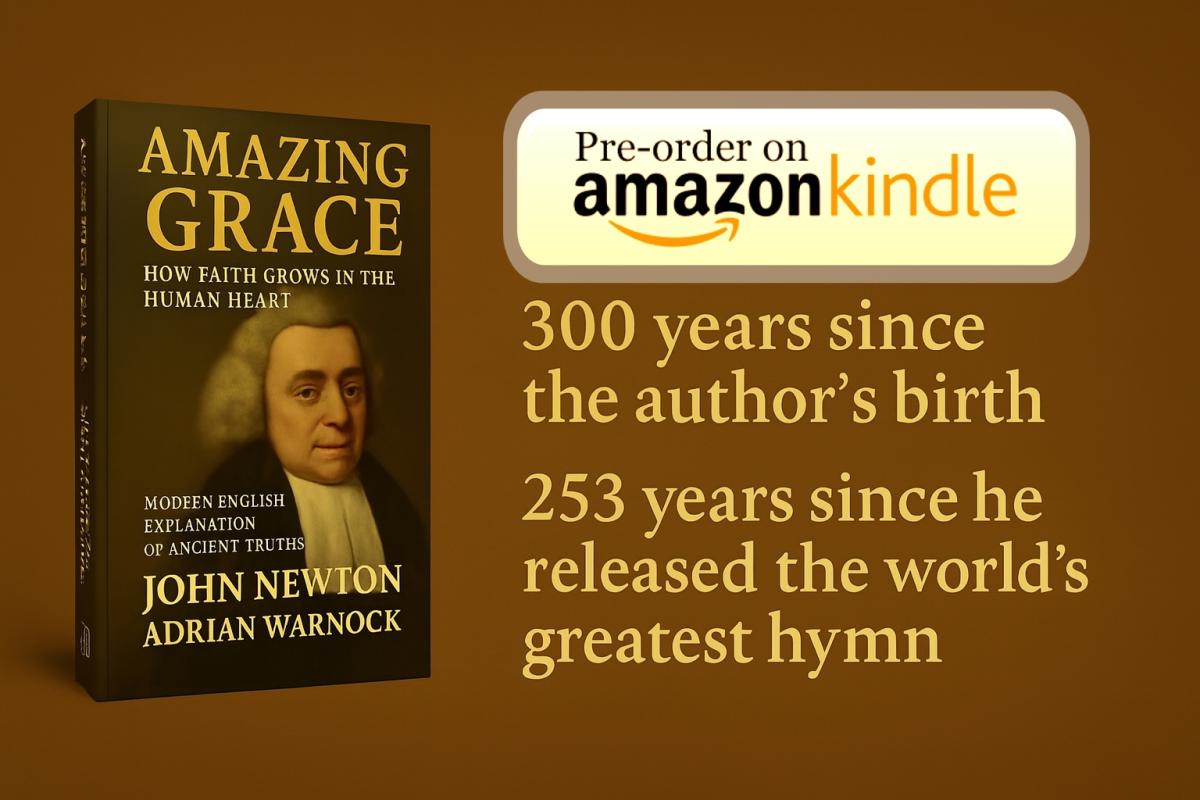
Amazing Grace: How Faith Grows in the Human Heart
Modern English Explanation of Ancient Truths.
By John Newton and Adrian Warnock
Pre-order here
Classic writings updated and a new biography.
300 years after the author’s birth
253 years after he released the world’s greatest hymn, Amazing Grace
This hymn has been recorded more often than any other song of any genre. In the same thirty-six hours which changed the world forever, his close friend William Cowper also wrote God Moves in a Mysterious Way, but then had a crushing mental breakdown from which he never fully recovered. Such powerful grace of God, but marked by terrible suffering. The echoes still reverberate today.
About Adrian Warnock
“Adrian is a first-rate communicator”—Albert Mohler Jr
About John Newton
”I look forward to meeting John Newton” — R. T. Kendall
”One of my heroes”—Tim Keller
“He says it all perfectly”— Martyn Lloyd-Jones
”The memory of his own gracious change of heart and life gave him tenderness in dealing with sinners, and it gave him hope for their restoration” — C. H. Spurgeon
”Why am I interested in this man? Because one of my great desires is to see Christians be as strong and durable as redwood trees, and as tender and fragrant as a field of clover. Oh, how rare are the Christians who speak with a tender heart and have a theological backbone of steel.” — John Piper
”If William Cowper could speak, he’d thank God for not only John Newton, but any friend who prays for and walks beside those with mental illness.” — Joni Eareckson Tada
Preview the content here:
→ I once was blind but now I see
→ Grace Within: The Inner Evidence of Faith
→ How Grace enters the Human Heart
→ Growing in Grace: When Shoots Take Root
→ A modern parable: The Traitors: Spellbound by Lies
More coming soon: subscribe by email or follow on social media
→ The 36 hours that changed the word
and much more…
Adrian Warnock presents a modern English edition of the 18th century classic writings of John Newton (1725-1807), author of Amazing Grace, the world’s greatest hymn and the most recorded song of any genre.
Think of this book as John Newton’s own explanation of his hymn Amazing Grace. His updated autobiography and devotional writings contained in this book form the perfect commentary on his lyrics, demonstrating what really is so amazing about grace.
Modern self-help is no help at all in an existential crisis. These pages contain the secret to genuine personal growth and spiritual transformation. They are simple and yet profoundly deep.
Amazing Grace appears 300 years after John Newton was born, and 253 years after he released his most famous hymn. The result is a seamless blend of Newton’s timeless wisdom with the clarity of thought and plain English that have marked Adrian Warnock’s Patheos blog for more than twenty years, and shapes his other books Raised with Christ, Hope Reborn, and The Traitor Within. Some chapters in this book are modern commentary written by Adrian.
John Newton, the former slave trader turned pastor, wrote letters that still speak to the deepest struggles of our spiritual journeys. In these pastoral devotions, Newton traces how divine grace takes root, grows, and matures in the human heart through three phases: conviction, conflict, and mature contemplation of God’s glory.
The letters in this book are chosen from the thousands preserved from Newton’s vast correspondence, a treasury mined for pastoral wisdom for more than two centuries. A skillful soul physician, Newton describes how grace changes every aspect of a Christian’s life over a lifetime of faith.
Amazing Grace also contains an updated autobiography of this great pastor, with a living interpretation of how significant his extraordinary life still is today. This material and his thoughts on entering Christian Ministry are not included in standard editions of his Works.
Newton becomes for us a vivid example of how God’s grace changes people gradually over time.We meet the rebellious and violent youth, the slave trader who oppressed thousands of innocents, was made a slave himself, and who was found by God’s grace during a storm that nearly sank his ship. This unruly man was pursued, rescued, and transformed by grace.
We learn how over time Newton became a pastor known for his compassion and kindness, most notably demonstrated by his deeply committed care towards the poet William Cowper during his mental illness. Read about how Newton was also a pastor of a whole nation, working for the abolition of the slave trade, and mentoring William Wilberforce for decades.
Newton bridged the gap between the warring denominational movements of his time, a friend of both George Whitefield and John Wesley. He turned his fervor not into the pamphlet flame wars or revival preaching, but into the tenderhearted soul care of the distressed and depressed as they struggled to find greater spiritual freedom and transformation. These pages invite readers not only to understand Newton’s insights, but to experience the living reality of grace in their own lives.
If this book makes you want to read more John Newton, and you do not mind the old English, buy the Logos Bible Software Edition of his Works or a paper version.
The Traitor Within: Understanding and Healing Our Deceitful Hearts
By Adrian Warnock with a chapter by John Newton
Pre-order here
“The human heart is the most deceitful of all things, and desperately wicked. Who really knows how bad it is?” (Jeremiah 17:9, NLT).
And yet our culture tells us to “follow your heart”. No wonder it too is now desperately sick and beyond cure. This book will explore the cultural phenomenon The Traitors as a modern parable as it unmasks the human heart.
Adrian blends his medical insights gained from his work as a doctor and psychiatrist with pastoral wisdom gathered from twenty-five years serving as part of a church leadership team. He witnessed a period of church growth from less than twenty members to thousands.
In recent years Adrian has also experienced chronic illness following his diagnosis with blood cancer, and this book reflects his passion to help others face all kinds of suffering with hope and compassion.
Preview the content here:
→ TV’s The Traitors: Spellbound by Lies
→ How Suffering Revealed What Was in My Heart
→ When Your Body Lies to You: False Messages and Appetites
→ Help when Life Hurts: dealing with specific challenges
More coming in 2026: subscribe or follow on social media
→ Healing Your Body: Practical Tools
→ Follow Your Heart? Not When Your Mind Is Lying to You
→ Healing Your Mind: Taking Every Thought Captive
→ How Lies Create Our Desperately Sick Society
→ Healing Our Broken Society: Work, Friends, and Family
→ Our Deceitful Spirits: Without Hope and without God
→ Healing Your Spirit – Meaning and Religion
→ Forgiven in a Moment. Renewed Over a Lifetime. Glorified for Eternity.
The Traitor Within
Understanding and Healing Our Deceitful Hearts
By Adrian Warnock with a chapter by John Newton
Pre-order here
“The human heart is the most deceitful of all things, and desperately wicked. Who really knows how bad it is?” (Jeremiah 17:9, NLT).
And yet our culture tells us to “follow your heart”. No wonder it too is now desperately sick and beyond cure. This book will explore the cultural phenomenon The Traitors as a modern parable as it unmasks the human heart.
Adrian blends his medical insights gained from his work as a doctor and psychiatrist with pastoral wisdom gathered from twenty-five years serving as part of a church leadership team. He witnessed a period of church growth from less than twenty members to thousands.
In recent years Adrian has also experienced chronic illness following his diagnosis with blood cancer, and this book reflects his passion to help others face all kinds of suffering with hope and compassion.
Preview the content here:
→ TV’s The Traitors: Spellbound by Lies
→ How Suffering Revealed What Was in My Heart
→ When Your Body Lies to You: False Messages and Appetites
→ Help when Life Hurts: dealing with specific challenges
More coming in 2026: subscribe or follow on social media
→ Healing Your Body: Practical Tools
→ Follow Your Heart? Not When Your Mind Is Lying to You
→ Healing Your Mind: Taking Every Thought Captive
→ How Lies Create Our Desperately Sick Society
→ Healing Our Broken Communites: Work, Friends, and Family
→ Our Deceitful Spirits: Without Hope and without God
→ Healing Your Spirit – Meaning and Religion
→ Forgiven in a Moment. Renewed Over a Lifetime. Glorified for Eternity.
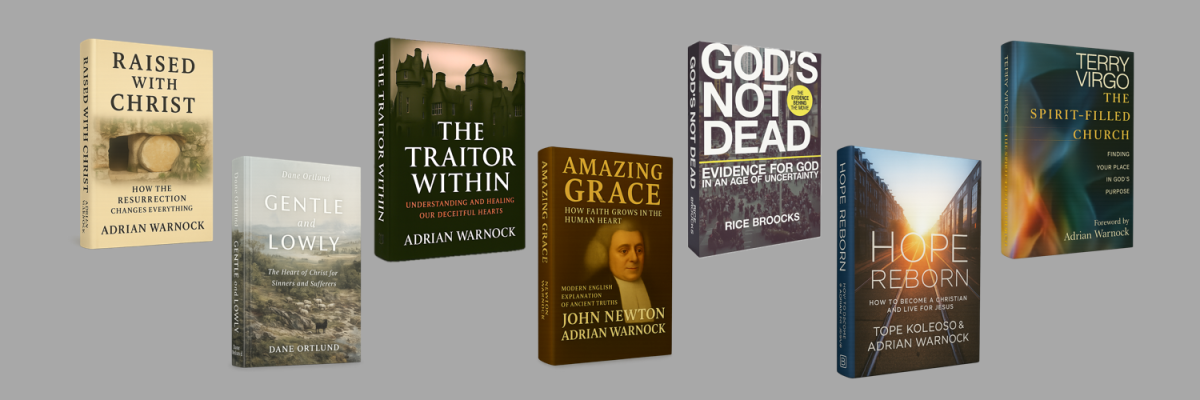
Read Adrian’s Books
Transformed by Jesus: Spiritual Renewal
Buy a Book about Easter this Christmas

Help When Life Hurts: Dealing with Specific Pain
These articles are a growing collection, drawing from Adrian Warnock’s medical and psychological expertise, lived experience, and Christian faith.
Please also reach out to a close friend, family member, pastor, counsellor, or health professional such as your primary care doctor or GP. And if you do not feel safe right now and are in crisis then call a crisis line.
In the USA, in an emergency, call 911. If you are in crisis or suicidal and need someone to talk to call the national Suicide & Crisis Lifeline on 988..
In the UK, in an emergency, call 999. For urgent mental health support call 111, or complete the form at https://111.nhs.uk. For the Samaritans call 116 123.
Other countries have similar crisis helplines and a list is maintained at Wikipedia.
Click the type of pain you or a loved one are facing right now
General suffering Financial difficulties Feeling disqualified Chronic illness Divorce & family pain Depression & mental health Bereavement & end-of-life
See the full list of over 40 articles
Growing in Grace: When Shoots Take Root
The Blade – How Grace enters the Human Heart
Am I the Worst Sinner in the World?
The Pharisee And The Prostitute.
Is your Jesus Strong and Kind? Is He Meek and Majestic?
TV’s The Traitors: Spellbound by Lies
General Christian
Relationships and Religion
History and Religion

About Adrian Warnock
Adrian Warnock
Medical doctor · Published author · Patheos writer since 2003
I have always lived within sixty miles of London, UK where I studied, worked and worshipped for thirty years. I began writing for this Patheos blog in April 2003, making it one of the longest-running individual columns on the Christian Internet. My writing here, on Substack, and in my books is influenced by my medical training, eight years of working as a psychiatrist in the UK’s National Health Service (NHS), eighteen years working in medical research in the pharmaceutical industry, twenty-five years of serving as a pastoral leader in a growing multicultural church, and a difficult decade of lived experience with chronic illness, including blood cancer, and the unexpected losses, including early retirement, that resulted.
Together, these all shape a biopsychosocial-spiritual approach which I first wrote about on Patheos in 2013. This model offers us hope, compassion, and healing in all life’s challenges. This holistic approach is based on the idea that all truth is God’s truth.
At times, since my illness, my faith has been faint. I wondered if this was the end of my story. I was not strong enough to live for Jesus the way I wanted to. I could not change myself. And then hope reminded me: The resurrection of Jesus changes everything. Just not all at once. Healing takes time. Compassion and patience sustain us over a lifetime of change. I aim to approach suffering with hope and compassion, and address tough questions including:
-
What does Jesus’ resurrection mean for you?
Raised With Christ: How the Resurrection Changes Everything (Crossway, 2010; 2nd edition, Amazon, 2025)
-
Why is change so difficult? What causes the resistance?
The Traitor Within: Understanding and Healing Our Deceitful Hearts (Amazon, 2026)
-
Why is change so slow? How does grace lead us over a lifetime?
Amazing Grace: How Faith Grows in the Human Heart (Amazon, 2026)
-
How do you become a Christian? Can you know if you really are one?
Hope Reborn: How to Become a Christian and Live for Jesus Co-authored with Tope Koleoso (Christian Focus, 2014)
Qualifications
I qualified with an MB BS from the University of London (equivalent to an MD in the United States), hold postgraduate qualifications in psychiatry (MRCPsych) and pharmaceutical medicine (MFFM, DipPharmMed), and took theological training courses run by Newfrontiers.
Connect With me
- Substack: adrianwarnock.substack.com (the best way to ask questions)
- Twitter/X: @adrianwarnock
- Facebook: Adrian Warnock
- Email: [email protected] (I may not be able to respond to every message)
You can read more about the author here.
Previous Post

December 11, 2025
Am I the Worst Sinner in the World?
Next Post

December 15, 2025 The Gospel Bids me Fly and Gives me Wings: Historical Source
Recent Comments
"Atheism is no more a single worldview than theism is a single worldview. Both however ..."
Thank God Atheists Do Not Live ..."
"Athiests believe in love, most reject God because of the God depicted in the old ..."
Thank God Atheists Do Not Live ..."
"Have a read of some history, and you will find that your views are not ..."
Thank God Atheists Do Not Live ..."
"You act like Christians invented basic human decency. Here's a news flash: Humans thrived for ..."
Thank God Atheists Do Not Live ..."
Browse Our Archives
Select a Category 1 and 2 Corinthians 1 and 2 Thessalonians 1 and 2 Timothy 1 John 300 Leaders A Life of Joy Abortion Acts of the Apostles Adrian on radio Adrian on TV Adrian's Story Albert Mohler Amazing Grace Arminocalvinist Spectrum Assurance Atonement Atonement Series Attributes of God Barnabas Best of the Blog Bible Bible Software Bible Translation Biblical Inerrancy Billy Graham Bob Roberts Books C. J. Mahaney Calvinism Cessationism Charis Warnock Charismatic Spectrum Charles Simeon Charles Spurgeon Church Leadership Colossians Complementarian - Egalitarian Spectrum Complementarianism Conferences Culture Daniel Debates Deuteronomy DGM08 DGM13 Discernment Doctrine Don Carson Ed Stetzer Eddy Leo Ephesians ESV Bible Translators Interview Evangelism in a Post-Christian World evolution Exodus Expository Preaching Ezekial Faith and Feelings Family Florida Galatians General Genesis Get Wisdom - Proverbs sermons Gifts of The Holy Spirit Gifts of the Holy Spirit 2006 Global Faith Forum Godly Attitudes Gospel Gospels Grace Greg Haslam Grudem vs Piper: The Baptism Debate Healing Heaven Hell and Rob Bell Hebrews Henry Tyler Henry Warnock Holy Spirit Holy Spirit Baptism Hope Reborn Hugh Palmer Irresistable Grace Isaiah J. I. Packer Jack Hayford Joel Joel Warnock John John Lanferman John MacArthur John Newton John Owen John Piper John Smyth Jonathan Edwards Josh Harris Justification Justin Taylor Kenneth Ulmer Leadership Leadership Lessons from 1 & 2 Samuel Lex Loizides Liam Goligher Lig Duncan Limited Atonement Lou Fellingham Mark Dever Mark Driscoll Martyn Lloyd-Jones Matt Chandler Mental Health Missionary Methods: St Paul’s or Ours? My Story N. T. Wright Nehemiah NWA08 NWA09 NWA10 Opinion OT History Books Pentateuch Personal Personal Revival Philippians PJ Smyth Podcast Politics Preaching Prophecy Proverbs Psalms Raised With Christ Reformed Charismatic Regeneration Relationships Resurrection Resurrection & Salvation Revival Rice Broocks Rich Man and Lazarus Rick Warren Rob Rufus Roland Allen Romans Sam Storms Sanctification Series Sermons Sermons on Philippians Serving Jesus at Work Sexuality Sin St Paul Steve Chalke Strange Fire Suffering T4G T4G Statement TAB09 Tamasin Warnock Teamwork Terry Virgo The Atonement Debate - Chalke book The Soulwinner The Spirit-Filled Church The Traitor Within Theologcial Spectrums Theosis Tim Challies Tim Keller Titus TOAM06 TOAM07 TOAM08 TOAM09 TOAM10 TOAM11 Todd Bentley Tope Koleoso Total Depravity Video Water Baptism Wayne Grudem Worship
Select a Month October 2026 September 2026 August 2026 July 2026 June 2026 May 2026 April 2026 March 2026 February 2026 January 2026 December 2025 November 2025 October 2025 September 2025 May 2025 April 2025 January 2025 November 2024 October 2024 August 2024 July 2024 June 2024 May 2024 April 2024 March 2024 February 2024 January 2024 December 2023 August 2023 May 2023 April 2023 February 2023 October 2022 September 2022 August 2022 July 2022 June 2022 May 2022 April 2022 March 2022 February 2022 August 2021 May 2021 April 2021 February 2021 January 2021 December 2020 October 2020 September 2020 August 2020 July 2020 June 2020 May 2020 April 2020 March 2020 February 2020 January 2020 December 2019 November 2019 October 2019 September 2019 June 2019 May 2019 April 2019 March 2019 January 2019 December 2018 October 2018 September 2018 August 2018 July 2018 June 2018 May 2018 April 2018 March 2018 February 2018 January 2018 December 2017 November 2017 October 2017 September 2017 June 2017 April 2017 March 2017 February 2017 January 2017 December 2016 November 2016 October 2016 June 2016 March 2016 February 2016 January 2016 December 2015 November 2015 September 2015 August 2015 July 2015 June 2015 May 2015 April 2015 March 2015 February 2015 January 2015 December 2014 November 2014 October 2014 September 2014 August 2014 July 2014 June 2014 May 2014 April 2014 March 2014 February 2014 January 2014 December 2013 November 2013 October 2013 September 2013 August 2013 July 2013 June 2013 May 2013 April 2013 March 2013 February 2013 January 2013 December 2012 November 2012 October 2012 September 2012 August 2012 July 2012 June 2012 May 2012 April 2012 March 2012 February 2012 January 2012 December 2011 November 2011 October 2011 September 2011 August 2011 July 2011 June 2011 May 2011 April 2011 March 2011 February 2011 January 2011 December 2010 November 2010 October 2010 September 2010 August 2010 July 2010 June 2010 May 2010 April 2010 March 2010 February 2010 January 2010 December 2009 November 2009 October 2009 September 2009 August 2009 July 2009 June 2009 May 2009 April 2009 March 2009 February 2009 January 2009 December 2008 November 2008 October 2008 September 2008 August 2008 July 2008 June 2008 May 2008 April 2008 March 2008 February 2008 January 2008 December 2007 November 2007 October 2007 September 2007 August 2007 July 2007 June 2007 May 2007 April 2007 March 2007 February 2007 January 2007 December 2006 November 2006 October 2006 September 2006 August 2006 July 2006 June 2006 May 2006 April 2006 March 2006 February 2006 January 2006 December 2005 November 2005 October 2005 September 2005 August 2005 July 2005 June 2005 May 2005 April 2005 March 2005 February 2005 January 2005 December 2004 November 2004 October 2004 September 2004 August 2004 July 2004 June 2004 May 2004 April 2004 March 2004 February 2004 January 2004 December 2003 November 2003 October 2003 September 2003 August 2003 July 2003 June 2003 May 2003 April 2003
Follow Us!
TAKE THE
Religious Wisdom Quiz
True or False: Timothy was instructed to avoid godless chatter and opposing ideas of what is falsely called knowledge.
Select your answer to see how you score.
TRUE FALSE
Books by This Author Books by Adrian Warnock
Related posts from Adrian Warnock

How the author of the world's best hymn...

"Open" is not Biblical, "eagerly desire spiritual gifts"...

Thank God Atheists Do Not Live By Their...
Jesus was not Manipulated by Anyone. He Knew...
TRENDING AT PATHEOS Evangelical

How the author of the world's best hymn...
I've been working with John Newton for a while now. This makes...

Long before this Lectio Divina, Psalm 130 - the song - started...

What About the Trees? Another Living Parable
After I finished writing the last article about falling leaves as a...

Why Classical Education Is a Conversation, Not a...
Come and Read: Joy in Classical Education When I was a little...

Falling Leaves: A Living Parable on Letting Go
I’ve spent the vast majority of my life in the southeast corner...

Cornell University has received a great deal of negative publicity and intense...
view all Evangelical blogs
What Are Your Thoughts?leave a comment
Ad-Free & Subscriber Log-In Subscription Support
- About Us
- 2026 Calendar
- Videos
- Podcasts
- Library of World Religions
- Faith In Media Tracker
- Advertise With Us
- Write for Us
- Privacy Policy
- Terms of Service
- Do Not Sell My Data
- Contact Us
- Radiant Digital
- Manage Newsletter Subscriptions
- Unsubscribe From Notifications
- Sitemap
Copyright 2008-2026, Patheos. All rights reserved.
Subscription Support Ad-Free & Subscriber Log-In
Follow Patheos