
BuddhistCatholicContemplativeEvangelicalGeneral ChristianHinduJewishLatter-day SaintMuslimNew VisionsProgressive Christian
Beliefs
- Buddhist
- Catholic
- Contemplative
- Evangelical
- General Christian
- Hindu
- Jewish
- Latter-day Saint
- More Voices
- Muslim
- New Visions
- Pagan
- Progressive Christian
Topics
- Religion News
- Food and Religion
- Sports and Religion
- Religious Art
- Religious Music and Entertainment
- Religious Events
- History and Religion
- Style and Religion
- Politics and Religion
- Women in Religion
- Recreation Outdoors and Religion
- Business Finance and Religion
- Careers Workplace and Religion
- Education and Religion
- Family Parenting and Religion
- Health Fitness and Religion
- Home and Religion
- Relationships and Religion
- Technology and Religion
- Travel and Religion
Columnists
- Buddhist Columnists
- Business Finance and Religion Columnists
- Careers Workplace and Religion Columnists
- Catholic Columnists
- Contemplative Columnists
- Education and Religion Columnists
- Evangelists Columnists
- Family Parenting and Religion Columnists
- General Christian Columnists
- Health Fitness and Religion Columnists
- Hindu Columnists
- History and Religion Columnists
- Home and Religion Columnists
- Jewish Columnists
- More Voices Columnists
- Latter Day Columnists
- Muslim Columnists
- New Visions Columnists
- Nonreligious Columnists
- Pagan Columnists
- Politics and Religion Columnists
- Progressive Columnists
- Recreation Outdoors and Religion Columnists
- Relationships and Religion Columnists
- Religion News Columnists
- Religious Art Columnists
- Religious Events Columnists
- Religious Music and Entertainment Columnists
- Sports and Religion Columnists
- Style and Religion Columnists
- Technology and Religion Columnists
- Travel and Religion Columnists
- Women in Religion Columnists
Resource Library
- 2026 Calendar
- Library of World Religions
- The 100 Most Holy Places on Earth
- Patheos Answers
- Podcasts
- Videos
- Faith Leaders Database
- Anglican Episcopalian
- Bahai
- Baptist
- Buddhism
- Christianity
- Confucianism
- Eastern Orthodoxy
- Hinduism
- Holiness and Pentecostal
- ISKCON
- Islam
- Judaism
- Lutheran
- Methodist
- The Church of Jesus Christ of Latter-day Saints
- New Age
- Paganism
- Presbytarian and Reformed
- Protestantism
- Religion Behind the Scenes
- Roman Catholic
- Scientology
- Shia Islam
- Sikhism
- Sufism
- Sunni Islam
- Taoism
- Zen
- See all religions
Research Tools
 Ad-Free & Subscriber Log-In Subscription Support
Ad-Free & Subscriber Log-In Subscription Support
Follow Patheos 

- Trending:
- Forgiveness
- |
- Marriage
- |
- Consciousness
- |
- Death Penalty
- |
- Election
- |
- Halloween

- Home
- Evangelical
- Our Mission from the Risen Christ: Evangelism Today
Our Mission from the Risen Christ: Evangelism Today
Last updated on: November 5, 2025 at 12:00 pm by Adrian Warnock
Our Mission from the Risen Christ: Evangelism Today 2025-11-05T12:00:21+00:00 Adrian Warnock
Patheos Explore the world's faith through different perspectives on religion and spirituality! Patheos has the views of the prevalent religions and spiritualities of the world.

Jesus commands us to go into all the world and create new followers of him. You clearly can’t follow a dead person, so the Great Commission comes to us from our risen saviour!
As the Father has sent me, even so I am sending you. JOHN 20:21
Jesus was sent into this world to bring glory to his Father and to bring good news to a needy people. He said, “For the Son of Man came to seek and to save the lost” (Luke 19:10).
Our risen Lord sends us into the world with the same task. We are to bring glory to Jesus through our worship of him, enjoying a personal relationship with him, living holy lives in a world that offers endless opportunities to sin, and sharing our faith with others. Having been formed and empowered by the resurrection, the church exists to declare and demonstrate this same power to a risen world. One of the key implications of the resurrection is that this is wonderful news that simply must be shared!
Jesus’ power is not merely for our enjoyment, but the Spirit gives us an infectious hope and joy. The wonder of sins forgiven and the wonder that comes from his Spirit being poured into our hearts will compel us to share. We did not accept Jesus to selfishly enjoy all the benefits of salvation. We have a job to do.
We need to be full of God in the sense that someone might be full of their new child, a new spouse, or, if you are a real geek like me, even the latest gadget. When we are genuinely enjoying someone or something, we can’t help but tell others. When a football fan watches his team win a game, does he not shout and celebrate? Can anyone stop him from telling all his friends about his victory? When we exalt more in other things than we rejoice in Jesus, we make them our idols. Many of us seem to show by our conversations that we are more excited about the latest iPhone than we are about Jesus. How many people who would never dream of clapping or raising a hand in worship would do both and dance at a gig by their favorite band? Why are we not thrilled in an even greater way by Jesus? Martyn Lloyd-Jones explains:
Once a man has the love of Christ in his heart you need not train him to witness; he will do it. He will know the power, the constraint, the motive; everything is already there. It is a plain lie to suggest that people who regard this knowledge of the love of Christ as the supreme thing are useless, unhealthy mystics. The servants of God who have most adorned the life and the history of the Christian church have always been men who have realized that this is the most important thing of all, and they have spent hours in prayer seeking His face and enjoying His love. The man who knows the love of Christ in his heart can do more in one hour than the busy type of man can do in a century.[1]
As we become excited about Jesus and begin sharing him with others, we will receive still more joy and satisfaction from him. This can be as simple as telling a stranger about the church we attend and leaving him an invite card, or it could be helping someone respond to the gospel.
When we fulfill our twin tasks—to worship Jesus and to share him with others—we will feel satisfied, rewarded, and complete. We will also find that we ourselves will understand the gospel better. As the niv paraphrases Paul’s slightly enigmatic phrase:
I pray that you may be active in sharing your faith, so that you will have a full understanding of every good thing we have in Christ. (Philemon 6)
If you are looking for a purpose in life, you will find it here. If you are looking for joy, there is no greater source. We are caught up in the mission of Jesus himself. Great celebration is ours when we are involved in helping others turn to him.
HIS MISSION
When Jesus sends us into the world, he says in effect, “This is what I did; now you do the same. God was with me; remember, I am always with you, too.” Surprisingly few words spoken by the resurrected Jesus are recorded for us. We should therefore listen carefully to these:
All authority in heaven and on earth has been given to me. Go therefore and make disciples of all nations, baptizing them in the name of the Father and of the Son and of the Holy Spirit, teaching them to observe all that I have commanded you. And behold, I am with you always, to the end of the age. (Matthew 28:18–20)
This mission belongs to Jesus. He will accomplish it. But he will do it through us. Now he is risen, he has all authority, and he sends us out with a task. This is not an optional extra, nor a suggestion; rather, this is a direct command from the ruler of the universe. We ought to pay attention, and we would be wise to obey. Jesus is the Head of his church, and he will ensure that this task of world evangelization is accomplished: “I will build my Church, and the gates of hell shall not prevail against it” (Matthew 16:18).
This important statement made by Jesus two thousand years ago must have a radical impact on the way we do church today. We can be optimistic about the future, even when things look challenging. We should remember the Church belongs to Jesus. When called to do so, we can undertake brave projects that are so large, we will need miraculous assistance to complete them. What shall we do that would be impossible if Jesus was not alive?
Too often decisions are made by churches with little or no consideration of how Jesus wants them to proceed. He can become an afterthought or perhaps merely venerated, as if he was a long-dead hero, while the day-to-day business of church life carries on without him. “No!” says Jesus. “Human effort and wisdom won’t build the kind of church that can smash hell’s gates, but I can and I will.”
As members of this great global enterprise, the Church, we must not be in defensive mode, worrying that the Devil will defeat us. Jesus leads us on to plunder the enemy’s kingdom, pushing forward in eager anticipation of what God will do through us. Because the tomb is empty and Jesus is on the throne, we will be victorious irrespective of what is happening in today’s world. In the end, his purposes will prevail in the Church of which he is Head (Colossians 1:18). Jesus gives us the joy of partnering with him as he works through us to reach the world. He drives the mission; we simply follow.
HOW TO MAKE DISCIPLES
Our mission is not just to make converts, but to make disciples. A disciple is simply a learner or a follower.[2]In today’s individualistic world many people prefer to say, “I did it my way!” That is not the Bible way. Paul urged his readers to “be imitators of me, as I am of Christ” (1 Corinthians 11:1). This underlines the importance of discipleship but also stresses its boundaries. We are only to follow our leaders to the extent that they follow Jesus. To make disciples, we must first be disciples. Jesus calls us to live a life that is preoccupied by him: “He died for all, that those who live might no longer live
for themselves but for him who for their sake died and was raised” (2 Corinthians 5:15).
Disciples must be taught to obey Jesus. He said, “If you love me, you will keep my commandments” (John 14:15). One of John Piper’s books, What Jesus Demands from the World, helps us by examining everything Jesus told us to do. If we want to follow Jesus, we must do what he says. The challenge is to avoid short-circuiting the process by only teaching people rules, perhaps adding a few of our own. We need to learn how to love Jesus more if we want to follow him. When we love him, his commandments will not seem burdensome but rather the loving instruction of someone who cares for us. Those who are involved in training other Christians need to train them to love Jesus, as well as showing them how to live their lives in light of the resurrection.
A disciple is usually first a friend. If we live lives of isolation that never impact other people, we cannot make disciples. People can sometimes be “won without a word” (1 Peter 3:1), by our lifestyle. But this verse should not be used as an excuse to avoid sharing the message since people must hear the good news to be saved.[3]
We need to be a people full of grace and joy whose hope is infectious. As I write this, newspapers are reporting that a member of the British government believes we are in the middle of the worst recession in a hundred years. By the time you read this book, you will know whether he was being unduly pessimistic or accurate. Christians have hope even as their savings disappear before their eyes. Our lives will prompt questions.
In your hearts honor Christ the Lord as holy, always being prepared to make a defense to anyone who asks you for a reason for the hope that is in you; yet do it with gentleness and respect, having a good conscience, so that, when you are slandered, those who revile your good behavior in Christ may be put to shame. (1 Peter 3:15–16)
Jesus wants us to be ever optimistic about his world: “Look, I tell you, lift up your eyes, and see that the fields are white for harvest” (John 4:35). The eye of faith will recognize that some people are ready to respond if we will just tell them how. Often, however, we don’t really look, because we can become easily discouraged when we see that many people prefer their life of spiritual death. While not everyone will respond to the message, Jesus promises us that the harvest is “plentiful” (Luke 10:2). All we need to do is to be willing to obey the command to “go,” carrying out the mission to which he has called us.
Jesus urges his disciples to teach others “to observe all that I have commanded you” (Matthew 28:20). This would include this very command to teach others and make disciples. The strategy for building the church is very simple—find people you can train, first, to obey Jesus themselves and then teach them how to teach others to do the same. This makes it clear that this command not only applied to the original disciples but also applies to all disciples throughout the church age. If the disciples are to make disciples, and those disciples are to obey all Jesus’ commands, then the very command to make disciples is one of the commands they are to obey.
Jesus also commands that disciples are to be baptized and hence joined to a local church. Often we struggle with the simplicity of Jesus’ words and think of all kinds of reasons why we do not want to obey even this simple instruction. But how can we follow him for our whole lives if we fail at the first hurdle? Our baptism is meant to reflect the death, burial, and resurrection of Jesus and to mark the beginning of our new life as members of Christ’s church. Christians were “buried with him in baptism, in which you were also raised with him through faith in the powerful working of God, who raised him from the dead” (Colossians 2:12). The symbolism of identifying with the death, burial, and resurrection of Jesus is especially apparent when the believer is immersed. The Christian enters a watery grave and is rescued from it by the strength of another.
WHAT IS OUR MESSAGE?
The gospel is actually very simple. It is a message that is all about Jesus Christ. It is the proclamation of a person and what he has done for us. In almost every New Testament book we find a summary of this, which we can easily overlook but is remarkable in its consistency. In each case this short statement of the gospel announcement begins with God, who we are either told sent Jesus[4] or raised him from the dead.[5] We are called to respond to God in a way that as a result brings to us the benefits of salvation.[6] In these descriptions only rarely is the cross included, although of course it is a key part of the clearest summary of the gospel of all, which is found in 1 Corinthians 15. It is hard to see in any case how we can proclaim a resurrection without also reporting that the person had first died. Without the resurrection the cross is not good news, and without the cross the good news of the resurrection cannot be fully appreciated.
HASTENING THE LORD’S RETURN
Jesus prophesied that the gospel would be preached in the whole world before he would return (Matthew 24:14). He will ensure that this happens, but he also gives us the joy of being caught up in the mission. We each have a role to play. As we wait for the return of the Lord and perhaps wonder why it is taking so long, we must remember that we have a responsibility in “hastening the coming of the day of God” (2 Peter 3:12).
A PEOPLE ON A MISSION
There is not enough space in this book to fully explore the changes that Jesus’ resurrection can make to our local churches, but I will address a few of them. We are a people carrying out the mission of Christ. One crucial implication of the resurrection of Jesus is that he now lives on earth through his body, his church. It is only together that we can reflect him adequately to the world. Jesus never intended there to be any such thing as “solo Christianity” where believers are not rooted and grounded in a community that is centered around the risen Christ. As Paul said, “Now you are the body of Christ and individually members of it” (1 Corinthians 12:27).
Everything about our church life can be changed by the resurrection. If our focus is always solely on the death of Jesus and our sin, then guilt and sorrow will probably characterize the tone of our meetings. But if we also emphasize the resurrection, great joy will result. This is nowhere clearer than in our sharing the Lord’s Supper together. Although we are told to remember the Lord’s death, we are also told it is to be done with one eye on his future coming again (“until he comes,” 1 Corinthians 11:26). We remember his death, but we are also to celebrate that he is now in heaven, and we partake of his life-giving presence during those precious moments. Thus the Lord’s Supper does not always have to be a somber and sad event but can be a joyful occasion. During that time, we also discern together that we are the body of Christ on earth. We each have very different roles to play, like the organs of our physical bodies.
We are even described simply as “Christ” by Paul: “For just as the body is one and has many members, and all the members of the body, though many, are one body, so it is with Christ” (1 Corinthians 12:12).
The church is the only Jesus the world will see until he returns. Together we are to reach out and be Jesus to this needy world. Sometimes this can be as simple as a Christian introducing a work colleague to one of his church friends.
Jesus said the world will recognize that we are his disciples by the love we show toward other believers (John 13:35). In a world full of loneliness, we can introduce people to God’s family. Never underestimate the impact for anyone entering a room full of Christians who are enjoying each other’s company with laughter but without the need to be intoxicated by alcohol.
We must not imagine that we can leave the task of evangelism to the “experts.” Everybody is called to “do the work of an evangelist” (2 Timothy 4:5). Prayer support, financial giving, cooking food for evangelistic events, playing instruments, teaching children, pastoral care, and a myriad of other ways to serve all play an important part in fulfilling the Great Commission. Just being God’s people in his world and fulfilling whatever job we have for his glory has more impact than we will ever know in this life. Paul said, “Whatever you do, work heartily, as for the Lord and not for men” (Colossians 3:23). Whatever your job is, do it excellently for the sake of Jesus. As Jesus urged, “Freely you have received, freely give” (Matthew 10:8, niv).
Churches need to be involved in sharing the gospel directly with their communities. We should make sure our meetings are welcoming to outsiders and that the gospel is preached. We need also to reach out, and not rely on them to come to us. After all, Jesus said, “Go into all the world.”
We must not forget the works of mercy carried out by our forefathers. The abolition of the slave trade, ministering to alcoholics, feeding the poor, and many similar acts can all be part of fulfilling the Great Commission. The following quote from the late Simon Petitt, previously pastor of Jubilee Church, Cape Town, is a challenging reminder of our mandate to “remember the poor” (Galatians 2:10):
Whether it’s the church in Africa, or in Harrow, we need to get an understanding that when we care for the needy, when we preach good news to the poor, when we seek to develop the God-given creativity of poor people, when we equip people with the skills they need so they can make godly choices for themselves and for their families, when we promote enterprise with financial help, those aren’t just the work of aid agencies or the government; that’s part of the apostolic calling of the church of Jesus Christ.[7]
There is no doubt that God wants us to help those less fortunate than ourselves in practical ways. John the Baptist said, “Whoever has two tunics is to share with him who has none, and whoever has food is to do likewise” (Luke 3:11).
We must also remember that the biggest act of mercy is to share the good news of salvation. The greatest need people have is to be saved, and it is we, the church, who have the most wonderful task of spreading this good news of salvation. As Paul challenges us:
How then will they call on him in whom they have not believed? And how are they to believe in him of whom they have never heard? And how are they to hear without someone preaching? And how are they to preach unless they are sent? As it is written, “How beautiful are the feet of those who preach the good news!” (Romans 10:14–15)
As Christians, we can easily become fearful of what others may think about the Christian message. We worry about what reaction we may get from others and act as though we are ashamed of the gospel. It’s easy to tell others about anything we are excited about. Why not the good news of Jesus? Paul’s example encourages us to act likewise:
For I am not ashamed of the gospel, for it is the power of God for salvation to everyone who believes. . . . For in it the righteousness of God is revealed from faith for faith, as it is written, “The righteous shall live by faith.” (Romans 1:16–17)
HIS PROMISE
It is in the context of our call to be missional that Jesus promises he will be with us to the end of the age. He is with us for a reason, which is to enable us to accomplish a specific goal. Only when we are aware of his power and presence with us can we fulfill the task to which he has called us. Conversely, if we are not fully committed to this work, then it is not surprising that we are not as consciously aware of Jesus’ presence as we might be. As my pastor, Tope Koleoso, said, “If you want Jesus to go with you, then go and make disciples.”[8]
Because Jesus is with the church, it can be described as having been built by him even though much of the work is apparently being done by believers. Christians teach and preach, they care for one another, and they plant churches. But as we have already noted, ultimately it is Jesus who is building the church.
Jesus provides the power we need to equip us for service. He tells us he is the one who is building his church, not so we can become passive but so that, knowing that we are on his team and under his authority and that he is ultimately responsible for the results, we will be extraordinarily motivated to complete the work. If we are conscious of Jesus’ power at work in us, we will be more zealous to see his kingdom come “on earth as it is in heaven” (Matthew 6:10). Paul, being aware of God’s grace upon him, was able to say:
But by the grace of God I am what I am, and his grace toward me was not in vain. On the contrary, I worked harder than any of them, though it was not I, but the grace of God that is with me. (1 Corinthians 15:10)
The most energetic and active workers for the success of the church have always been the ones who are most convinced of the sovereignty of Jesus and his responsibility for the ultimate success of the church. When things are going badly, such people, while obviously examining themselves and their methods to see if there is any way they can improve, will take comfort in the fact that only Jesus can build his church. When things are going well, the lure of pride is less strong for those who know that it is only Jesus who has equipped them and granted them success.
In this chapter we have seen that there is a mandate on our lives. We are called to be witnesses. We obey Jesus because he is our Lord and out of gratitude for what he has done for us. Our gratitude grows into an intense desire to see him glorified by others. We want him to be celebrated, preeminent, and honored as God rather than defamed by having his name used as a swear word. We want others to join us in delighting in him. As Piper says:
Missions exists because worship doesn’t. When this age is over, and the countless millions of the redeemed fall on their faces before the throne of God, missions will be no more. It is a temporary necessity. But worship abides forever. Worship, therefore, is the fuel and the goal of missions.[9]
In other words, because we want to see God glorified more, we are eager to recruit others to praise him too. There is no conflict between the two key things we are called to do as Christians—worship and witness. If we love, honor, and glory in Christ, we will find that we want to talk about him with others. People like to tell others about their heroes and anything that they value and hold dear.
The risen Jesus gave his disciples a clear commission. Evangelizing the world is a task given and empowered by the resurrected Christ. The church is a resurrection people who are implementing something of the age to come in this present world. I can think of no better way to end this chapter than with this prayer from Ephesians 3:14–21:
For this reason I bow my knees before the Father, from whom every family in heaven and on earth is named, that according to the riches of his glory he may grant you to be strengthened with power through his Spirit in your inner being, so that Christ may dwell in your hearts through faith—that you, being rooted and grounded in love, may have strength to comprehend with all the saints what is the breadth and length and height and depth, and to know the love of Christ that surpasses knowledge, that you may be filled with all the fullness of God.
Now to him who is able to do far more abundantly than all that we ask or think, according to the power at work within us, to him be glory in the church and in Christ Jesus throughout all generations, forever and ever, Amen.
READ MORE
REFERENCES
[1] D. M. Lloyd-Jones, An Exposition of Ephesians 3 (Grand Rapids: Baker, 1979), 247–253.
[2] William Arndt, Frederick W. Danker, and Walter Bauer, A Greek-English Lexicon of the New Testament and Other Early Christian Literature, 3rd edition (Chicago: University of Chicago Press, 2000), 609.
[3]Indeed, the context of the verse presupposes that the husbands mentioned have already heard the gospel since it says they do not “obey” it.
[4] Matthew 10:40–41; Mark 9:37; Luke 1:68–75; John 5:24; Galatians 4:4–7; 1 John 4:7–10.
[5] Acts 5:30–32; 17:27–31; Romans 10:8–9; 2 Corinthians 5:15; Ephesians 2:4–10; Philippians 2:5–11; Colossians 1:15–29; 2:12–13; 1 Thessalonians 1:5–10; 1 Timothy 3:16; 2 Timothy 2:8–15; Hebrews 13:15–16, 20–21; 1 Peter 1:18–21, 25; Revelation 1:1–2, 12–18.
[6] Adapted from Eugene Lemcio, The Past of Jesus in the Gospels (Cambridge: Cambridge University Press, 1991), 115–117.
[7] Simon Petitt, “Remember the Poor,” Brighton Leadership Conference, November 1998;
http://www.newfrontiers.xtn.org/uk/resources/social-action-and-the-poor/remember-the-poor/.
[8] Tope Koleoso, “How to Be Missional Every Day”; http://adrianwarnock.com/2008/07/
sermon-how-to-be-missional-every-day-by.htm.
[9] John Piper, Don’t Waste Your Life (Wheaton, IL: Crossway, 2003), 162.
General Christian

About Adrian Warnock
Adrian Warnock
Medical doctor · Published author · Patheos writer since 2003
I have always lived within sixty miles of London, UK where I studied, worked and worshipped for thirty years. I began writing for this Patheos blog in April 2003, making it one of the longest-running individual columns on the Christian Internet. My writing here, on Substack, and in my books is influenced by my medical training, eight years of working as a psychiatrist in the UK’s National Health Service (NHS), eighteen years working in medical research in the pharmaceutical industry, twenty-five years of serving as a pastoral leader in a growing multicultural church, and a difficult decade of lived experience with chronic illness, including blood cancer, and the unexpected losses, including early retirement, that resulted.
Together, these all shape a biopsychosocial-spiritual approach which I first wrote about on Patheos in 2013. This model offers us hope, compassion, and healing in all life’s challenges. This holistic approach is based on the idea that all truth is God’s truth.
At times, since my illness, my faith has been faint. I wondered if this was the end of my story. I was not strong enough to live for Jesus the way I wanted to. I could not change myself. And then hope reminded me: The resurrection of Jesus changes everything. Just not all at once. Healing takes time. Compassion and patience sustain us over a lifetime of change. I aim to approach suffering with hope and compassion, and address tough questions including:
-
What does Jesus’ resurrection mean for you?
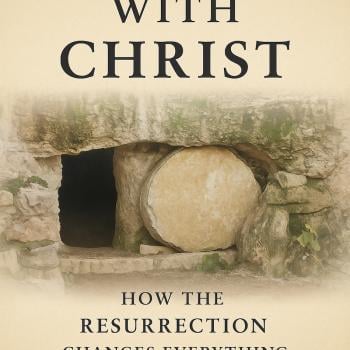
Raised With Christ: How the Resurrection Changes Everything (Crossway, 2010; 2nd edition, Amazon, 2025)
-
Why is change so difficult? What causes the resistance?
The Traitor Within: Understanding and Healing Our Deceitful Hearts (Amazon, 2026)
-
Why is change so slow? How does grace lead us over a lifetime?
Amazing Grace: How Faith Grows in the Human Heart (Amazon, 2026)
-
How do you become a Christian? Can you know if you really are one?
Hope Reborn: How to Become a Christian and Live for Jesus Co-authored with Tope Koleoso (Christian Focus, 2014)
Qualifications
I qualified with an MB BS from the University of London (equivalent to an MD in the United States), hold postgraduate qualifications in psychiatry (MRCPsych) and pharmaceutical medicine (MFFM, DipPharmMed), and took theological training courses run by Newfrontiers.
Connect With me
- Substack: adrianwarnock.substack.com (the best way to ask questions)
- Twitter/X: @adrianwarnock
- Facebook: Adrian Warnock
- Email: [email protected] (I may not be able to respond to every message)
You can read more about the author here.
Previous Post

May 2, 2024
What is the Baptism in the Holy Spirit? Receiving Assurance
Next Post

May 7, 2024 Afterlife: Disembodied Spirits or Resurrection Bodies?
Recent Comments
"Atheism is no more a single worldview than theism is a single worldview. Both however ..."
Thank God Atheists Do Not Live ..."
"Athiests believe in love, most reject God because of the God depicted in the old ..."
Thank God Atheists Do Not Live ..."
"Have a read of some history, and you will find that your views are not ..."
Thank God Atheists Do Not Live ..."
"You act like Christians invented basic human decency. Here's a news flash: Humans thrived for ..."
Thank God Atheists Do Not Live ..."
Browse Our Archives
Select a Category 1 and 2 Corinthians 1 and 2 Thessalonians 1 and 2 Timothy 1 John 300 Leaders A Life of Joy Abortion Acts of the Apostles Adrian on radio Adrian on TV Adrian's Story Albert Mohler Amazing Grace Arminocalvinist Spectrum Assurance Atonement Atonement Series Attributes of God Barnabas Best of the Blog Bible Bible Software Bible Translation Biblical Inerrancy Billy Graham Bob Roberts Books C. J. Mahaney Calvinism Cessationism Charis Warnock Charismatic Spectrum Charles Simeon Charles Spurgeon Church Leadership Colossians Complementarian - Egalitarian Spectrum Complementarianism Conferences Culture Daniel Debates Deuteronomy DGM08 DGM13 Discernment Doctrine Don Carson Ed Stetzer Eddy Leo Ephesians ESV Bible Translators Interview Evangelism in a Post-Christian World evolution Exodus Expository Preaching Ezekial Faith and Feelings Family Florida Galatians General Genesis Get Wisdom - Proverbs sermons Gifts of The Holy Spirit Gifts of the Holy Spirit 2006 Global Faith Forum Godly Attitudes Gospel Gospels Grace Greg Haslam Grudem vs Piper: The Baptism Debate Healing Heaven Hell and Rob Bell Hebrews Henry Tyler Henry Warnock Holy Spirit Holy Spirit Baptism Hope Reborn Hugh Palmer Irresistable Grace Isaiah J. I. Packer Jack Hayford Joel Joel Warnock John John Lanferman John MacArthur John Newton John Owen John Piper John Smyth Jonathan Edwards Josh Harris Justification Justin Taylor Kenneth Ulmer Leadership Leadership Lessons from 1 & 2 Samuel Lex Loizides Liam Goligher Lig Duncan Limited Atonement Lou Fellingham Mark Dever Mark Driscoll Martyn Lloyd-Jones Matt Chandler Mental Health Missionary Methods: St Paul’s or Ours? My Story N. T. Wright Nehemiah NWA08 NWA09 NWA10 Opinion OT History Books Pentateuch Personal Personal Revival Philippians PJ Smyth Podcast Politics Preaching Prophecy Proverbs Psalms Raised With Christ Reformed Charismatic Regeneration Relationships Resurrection Resurrection & Salvation Revival Rice Broocks Rich Man and Lazarus Rick Warren Rob Rufus Roland Allen Romans Sam Storms Sanctification Series Sermons Sermons on Philippians Serving Jesus at Work Sexuality Sin St Paul Steve Chalke Strange Fire Suffering T4G T4G Statement TAB09 Tamasin Warnock Teamwork Terry Virgo The Atonement Debate - Chalke book The Soulwinner The Spirit-Filled Church The Traitor Within Theologcial Spectrums Theosis Tim Challies Tim Keller Titus TOAM06 TOAM07 TOAM08 TOAM09 TOAM10 TOAM11 Todd Bentley Tope Koleoso Total Depravity Video Water Baptism Wayne Grudem Worship
Select a Month October 2026 September 2026 August 2026 July 2026 June 2026 May 2026 April 2026 March 2026 February 2026 January 2026 December 2025 November 2025 October 2025 September 2025 May 2025 April 2025 January 2025 November 2024 October 2024 August 2024 July 2024 June 2024 May 2024 April 2024 March 2024 February 2024 January 2024 December 2023 August 2023 May 2023 April 2023 February 2023 October 2022 September 2022 August 2022 July 2022 June 2022 May 2022 April 2022 March 2022 February 2022 August 2021 May 2021 April 2021 February 2021 January 2021 December 2020 October 2020 September 2020 August 2020 July 2020 June 2020 May 2020 April 2020 March 2020 February 2020 January 2020 December 2019 November 2019 October 2019 September 2019 June 2019 May 2019 April 2019 March 2019 January 2019 December 2018 October 2018 September 2018 August 2018 July 2018 June 2018 May 2018 April 2018 March 2018 February 2018 January 2018 December 2017 November 2017 October 2017 September 2017 June 2017 April 2017 March 2017 February 2017 January 2017 December 2016 November 2016 October 2016 June 2016 March 2016 February 2016 January 2016 December 2015 November 2015 September 2015 August 2015 July 2015 June 2015 May 2015 April 2015 March 2015 February 2015 January 2015 December 2014 November 2014 October 2014 September 2014 August 2014 July 2014 June 2014 May 2014 April 2014 March 2014 February 2014 January 2014 December 2013 November 2013 October 2013 September 2013 August 2013 July 2013 June 2013 May 2013 April 2013 March 2013 February 2013 January 2013 December 2012 November 2012 October 2012 September 2012 August 2012 July 2012 June 2012 May 2012 April 2012 March 2012 February 2012 January 2012 December 2011 November 2011 October 2011 September 2011 August 2011 July 2011 June 2011 May 2011 April 2011 March 2011 February 2011 January 2011 December 2010 November 2010 October 2010 September 2010 August 2010 July 2010 June 2010 May 2010 April 2010 March 2010 February 2010 January 2010 December 2009 November 2009 October 2009 September 2009 August 2009 July 2009 June 2009 May 2009 April 2009 March 2009 February 2009 January 2009 December 2008 November 2008 October 2008 September 2008 August 2008 July 2008 June 2008 May 2008 April 2008 March 2008 February 2008 January 2008 December 2007 November 2007 October 2007 September 2007 August 2007 July 2007 June 2007 May 2007 April 2007 March 2007 February 2007 January 2007 December 2006 November 2006 October 2006 September 2006 August 2006 July 2006 June 2006 May 2006 April 2006 March 2006 February 2006 January 2006 December 2005 November 2005 October 2005 September 2005 August 2005 July 2005 June 2005 May 2005 April 2005 March 2005 February 2005 January 2005 December 2004 November 2004 October 2004 September 2004 August 2004 July 2004 June 2004 May 2004 April 2004 March 2004 February 2004 January 2004 December 2003 November 2003 October 2003 September 2003 August 2003 July 2003 June 2003 May 2003 April 2003
Follow Us!
TAKE THE
Religious Wisdom Quiz
Who said, "Am I not sending you?"
Select your answer to see how you score.
Jesus Elijah Moses God
Books by This Author Books by Adrian Warnock
Related posts from Adrian Warnock

How the author of the world's best hymn...

Thank God Atheists Do Not Live By Their...
Grab this weeks Amazon Number One Best Seller...

Ten Reasons Christians Don't Know Jesus Like in...
TRENDING AT PATHEOS Evangelical

How the author of the world's best hymn...
I've been working with John Newton for a while now. This makes...

Long before this Lectio Divina, Psalm 130 - the song - started...

What About the Trees? Another Living Parable
After I finished writing the last article about falling leaves as a...

Why Classical Education Is a Conversation, Not a...
Come and Read: Joy in Classical Education When I was a little...

Falling Leaves: A Living Parable on Letting Go
I’ve spent the vast majority of my life in the southeast corner...

Cornell University has received a great deal of negative publicity and intense...
view all Evangelical blogs
What Are Your Thoughts?leave a comment
Ad-Free & Subscriber Log-In Subscription Support
- About Us
- 2026 Calendar
- Videos
- Podcasts
- Library of World Religions
- Faith In Media Tracker
- Advertise With Us
- Write for Us
- Privacy Policy
- Terms of Service
- Do Not Sell My Data
- Contact Us
- Radiant Digital
- Manage Newsletter Subscriptions
- Unsubscribe From Notifications
- Sitemap
Copyright 2008-2026, Patheos. All rights reserved.
Subscription Support Ad-Free & Subscriber Log-In
Follow Patheos