
BuddhistCatholicContemplativeEvangelicalGeneral ChristianHinduJewishLatter-day SaintMuslimNew VisionsProgressive Christian
Beliefs
- Buddhist
- Catholic
- Contemplative
- Evangelical
- General Christian
- Hindu
- Jewish
- Latter-day Saint
- More Voices
- Muslim
- New Visions
- Pagan
- Progressive Christian
Topics
- Religion News
- Food and Religion
- Sports and Religion
- Religious Art
- Religious Music and Entertainment
- Religious Events
- History and Religion
- Style and Religion
- Politics and Religion
- Women in Religion
- Recreation Outdoors and Religion
- Business Finance and Religion
- Careers Workplace and Religion
- Education and Religion
- Family Parenting and Religion
- Health Fitness and Religion
- Home and Religion
- Relationships and Religion
- Technology and Religion
- Travel and Religion
Columnists
- Buddhist Columnists
- Business Finance and Religion Columnists
- Careers Workplace and Religion Columnists
- Catholic Columnists
- Contemplative Columnists
- Education and Religion Columnists
- Evangelists Columnists
- Family Parenting and Religion Columnists
- General Christian Columnists
- Health Fitness and Religion Columnists
- Hindu Columnists
- History and Religion Columnists
- Home and Religion Columnists
- Jewish Columnists
- More Voices Columnists
- Latter Day Columnists
- Muslim Columnists
- New Visions Columnists
- Nonreligious Columnists
- Pagan Columnists
- Politics and Religion Columnists
- Progressive Columnists
- Recreation Outdoors and Religion Columnists
- Relationships and Religion Columnists
- Religion News Columnists
- Religious Art Columnists
- Religious Events Columnists
- Religious Music and Entertainment Columnists
- Sports and Religion Columnists
- Style and Religion Columnists
- Technology and Religion Columnists
- Travel and Religion Columnists
- Women in Religion Columnists
Resource Library
- 2026 Calendar
- Library of World Religions
- The 100 Most Holy Places on Earth
- Patheos Answers
- Podcasts
- Videos
- Faith Leaders Database
- Anglican Episcopalian
- Bahai
- Baptist
- Buddhism
- Christianity
- Confucianism
- Eastern Orthodoxy
- Hinduism
- Holiness and Pentecostal
- ISKCON
- Islam
- Judaism
- Lutheran
- Methodist
- The Church of Jesus Christ of Latter-day Saints
- New Age
- Paganism
- Presbytarian and Reformed
- Protestantism
- Religion Behind the Scenes
- Roman Catholic
- Scientology
- Shia Islam
- Sikhism
- Sufism
- Sunni Islam
- Taoism
- Zen
- See all religions
Research Tools
 Ad-Free & Subscriber Log-In Subscription Support
Follow Patheos 

- Trending:
- Advent
- |
- Forgiveness
- |
- Thanksgiving
- |
- Election
- |
- Seasonal Holidays
- |
- Marriage

- Home
- Evangelical
- Religious Events
- Resurrection: Rediscover the Heart of the Gospel
Resurrection: Rediscover the Heart of the Gospel
Last updated on: November 5, 2025 at 12:00 pm by Adrian Warnock
Resurrection: Rediscover the Heart of the Gospel 2025-11-05T12:00:35+00:00 Adrian Warnock
Patheos Explore the world's faith through different perspectives on religion and spirituality! Patheos has the views of the prevalent religions and spiritualities of the world.

The first chapter of Raised With Christ, How the Resurrection Changes Everything is now available free online for the first time. I offer a revised and expanded version of that chapter from my first book now it in the hope this will be a blessing to us all as we prepare our hearts for what is often the most important service of the year, Easter Sunday.
God . . . made us alive together with Christ . . . and raised us up with him. (Ephesians 2:5–6)
This chapter begins our journey to uncover the personal, historical, and theological implications of Jesus’ triumph over death. We will learn in all the following chapters how only Christ’s resurrection can offer hope, transformation, and purpose to all who will believe. We will discover why the resurrection is central to the Christian message and how it can ignite a renewed passion for sharing the gospel. We will explore the transformative power of Christ’s resurrection and its profound implications for believers today. Why is the resurrection so often overlooked when it has such a vital role in shaping Christian faith and mission?
This book is about the resurrection of Jesus and its effects on us today. If, like me, you have wondered why Christians often seem to talk more about the events of Good Friday than Easter Sunday, this book is for you. Although we talk about the death of Jesus often, for some reason we have tended to only mention the resurrection at Easter time. Christians sometimes even say Jesus died to save us without mentioning that he also rose for our salvation. It’s time to redress the balance a bit and talk more about Jesus’ death and resurrection.
For Christians all over the world, every Sunday is Resurrection Sunday. We meet each week, among other things, to celebrate the glorious, wondrous fact that Jesus rose from the dead. Jesus’ resurrection really did change everything. It changed the cross from a tragedy into a triumph, and it changed the Roman Empire into a Christian state. This was the most powerful divine event in the history of creation, and it ushered in a new age of the Holy Spirit’s activity and power in saving and transforming lives.
When considering if Christianity is true, it all boils down to whether Jesus rose from the dead. The lives of Christians today demonstrate that the resurrection is still changing people. The resurrection changes fear into love, despair into joy. It takes Jesus’ resurrection to raise the spiritually dead so they become alive to God. The resurrection wipes away guilty condemnation replacing it with a celebration of forgiveness and freedom. The resurrection can remove anxiety and replace it with a hope that goes beyond the grave. Resurrection power can change our sinful hearts so they want to follow the Lord Jesus. The power of the resurrection is relentlessly killing sin in every true Christian. Because we neglect to emphasize this truth, many Christians have a meager expectation of the extent to which we can today experience resurrection life and victory over sin. The resurrection is far from being something we only benefit from in the future!
John MacArthur[1] explained:
The Resurrection is the ground of our assurance, it is the basis for all our future hopes, and it is the source of power in our daily lives here and now. It gives us courage in the midst of persecution, comfort in the midst of trials, and hope in the midst of this world’s darkness.[2]
It is no accident that many of these things that MacArthur credits to the resurrection are elsewhere also attributed to the activity of the Holy Spirit—namely assurance (Romans 8:16–24), a source of power in our daily lives (Romans 8:4), and a comfort (John 14:16, 26). Through his resurrection Jesus became “a life-giving Spirit” (1 Corinthians 15:45), a whole new kind of human being, and enabled us to share in his new life. Also, it was only because of his resurrection and ascension that he was able to send the Holy Spirit into the world to carry out his special work in Christians (John 7:39; Acts 2:33). What the Spirit does for believers today is only possible as a result of the resurrection.
In addition to all this Paul tells us in three places that Christians have already been raised with Christ:
If then you have been raised with Christ, seek the things that are above, where Christ is, seated at the right hand of God. (Colossians 3:1)
We were buried therefore with him by baptism into death, in order that, just as Christ was raised from the dead by the glory of the Father, we too might walk in newness of life. (Romans 6:4)
God . . . made us alive together with Christ—by grace you have been saved—and raised us up with him. (Ephesians 2:5–6)
Christians have therefore already been changed by Jesus’ resurrection. Jesus really is alive today. Because of this Christians are also alive in a whole new way. The same power that raised Christ from the dead is living in every true Christian.
God wants us not just to believe in Jesus’ resurrection but to be transformed by it and to receive the power we need to live the way we know we ought. If you already follow Jesus, then this book aims to help you love him more. For all of us, the questions, did Jesus rise from the dead? and what are the implications of his resurrection? are the most important ones we will ever answer.
My hope is that you will not find this a complicated book. I write as an ordinary Christian, and not a theologian. My goal is that each of us can explore what the resurrection means and how we are affected today by what happened two thousand years ago.
As we begin, I pray that God himself will help each of us to better understand this wonderful subject and to live in light of the resurrection of Jesus Christ.
***“What! Did Jesus come back to life again?”***This was the surprised reaction when a young Englishwoman heard about the resurrection of Jesus. She was drinking coffee with other mothers, in London. It seems almost impossible to believe that she had never heard that Christians believe Jesus rose from the dead. She hadn’t rejected the gospel. No one had ever told her about it!
How many other people do you or I know who would have a similar reaction? It is much more comfortable for us to assume that our relatives, friends, neighbors, and coworkers have dismissed the gospel instead of to realize they have never heard it, and we could have told them.
Without Jesus’ resurrection there is no good news at all. John Stott[3] said,
“Christianity is in its very essence a resurrection religion. The concept of resurrection lies at its heart. If you remove it, Christianity is destroyed.”[4]
Some today would be surprised by Stott’s comment. The church often tells the gospel story without any reference to the resurrection of Jesus, but assumes it is true. In a relatively recent development, however, some in the liberal movement of the last century or so have even denied the resurrection, making them the first significant group in history to claim to be Christians without believing Jesus rose from the dead.
Reflecting on this led me to suggest the following definition of a Christian, with which almost any member of any church denomination throughout history could identify:
A Christian is someone who believes in the physical resurrection of Jesus Christ and lives in light of the implications of that event.
Historically everyone understood that you cannot be a Christian without believing in the resurrection of Jesus. Of course, there are other things necessary to be a Christian. But that they all arise as necessary deductions from the historicity of this miraculous event. Even being born again is only possible because Christ was himself born again from the dead. Christians do tend to disagree with each other on precisely what the implications of the resurrection are. The definition above will sound vague unless they are carefully identified. It is critical, therefore, that we discover precisely why the resurrection is so important, in what ways we can be changed by it, and what are its consequences in our thinking and behavior. That is the theme of this book.
My definition is supported by Paul’s description of the gospel response:
“If you confess with your mouth that Jesus is Lord and believe in your heart that God raised him from the dead, you will be saved” (Romans 10:9).
One implication of the resurrection of Jesus is his lordship and hence divinity. Since before his death he claimed to be God, we cannot consistently believe he is risen without also concluding we must worship and follow him. Certain changes in our lives must occur if our faith is genuine.
Our belief in the resurrection also changes our understanding about the meaning of the death of Jesus and what it accomplished. Since Jesus was raised from the dead, and we understand that all death is a punishment, we can deduce that he didn’t deserve to die on the cross and ask, why then did he die? His resurrection helps us understand that he died in place of us. To say Jesus rose again so he could share his life with us eternally would make little sense unless he had died on our behalf so we will not die eternally. The cross and resurrection are, in one sense, two sides of the same coin.
We may disagree with Christians from other denominations about the implications of the resurrection, but all genuine Christians agree that this event, together with the cross of Christ, defines our lives.
HOW THIS BOOK CAME TO BE WRITTEN
I was asked to preach on Easter Sunday in 2007. Usually I enjoy preaching, but I was busy, weary, and to be honest, on this occasion I was not initially thrilled at the prospect. I politely made my excuses but promised to pray about it.
Preachers don’t often talk about how they decide what to speak about. Sometimes, however, they do experience a strange compulsion to preach on a certain subject. Martyn Lloyd-Jones[5] described his own experience in this way: “One morning while dressing, quite suddenly and in an overwhelming manner, it seemed to me that the Spirit of God was urging me to preach a series of sermons on ‘spiritual depression.’”[6]
Something remarkably similar happened to me that night. Having prayed halfheartedly before bed, I woke suddenly in the night. A simple phrase was burning in my mind: “Adrian, preach about the resurrection.” I could not ignore this thought. I agreed to preach after all and began to study Jesus’ resurrection.
I realized that resurrection is not discussed in detail often today. I found, however, that all of the sermons recorded in Acts focus on the resurrection of Jesus. It might initially seem like there is one exception in Acts 7, but in fact that sermon was interrupted when the risen Jesus himself opened heaven and appeared to Stephen while he was preaching! I was deeply struck by this, and realized that I had not given Jesus’ resurrection the attention it deserved.
Later I discovered how Charles Spurgeon,[7] early in his outstanding preaching ministry, was also struck by his own neglect of the resurrection:
Reflecting the other day upon the sad state of the churches at the present moment, I was led to look back to apostolic times, and to consider wherein the preaching of the present day differed from the preaching of the apostles. . . .
I was surprised to find that I had not been copying the apostolic fashion half as nearly as I might have done. The apostles when they preached always testified concerning the resurrection of Jesus, and the consequent resurrection of the dead. . . .
[This] is a doctrine which we believe, but which we too seldom preach or care to read about. Though I have inquired of several booksellers for a book specially upon the subject of the resurrection, I have not yet been able to purchase one of any sort whatever. . . . It has been set down as a well-known truth, and therefore has never been discussed. Heresies have not risen up respecting it; it would almost have been a mercy if there had been, for whenever a truth is contested by heretics, the orthodox fight strongly for it, and the pulpit resounds with it every day. I am persuaded, however, that there is much power in this doctrine . . . which is capable of moving the hearts of men and bringing them into subjection to the gospel of our Lord and Savior Jesus Christ.[8]
I too have scoured the Christian bookshops, and although there are now several helpful books on the resurrection, there are fewer in comparison to other subjects. And many books on the resurrection do not discuss its implications fully. Why has this vital doctrine been so neglected? Are we therefore missing something doctrinally, experientially, and evangelistically? Personally, I have found that the study of the resurrection has deeply impacted me.
THE STATE OF THE CHURCH
The story I told earlier of one woman’s ignorance of the Easter story is a reflection of the condition of the church in the West. Could our neglect of the resurrection be both cause and effect of the alarming state we are in? The success of liberal theology in taking hold of many churches after the First World War led to an increase in the number of professing Christians who denied the resurrection of Jesus. This also coincided with the beginning of the decline in church attendance recorded since then. In the decades since then Christians have become increasingly marginalized by society and many feel uncertain about how to share our beliefs with others in a hostile world.
The vigor of our faith has waned, and church attendance is believed by many to be in a terminal decline. The general level of biblical knowledge among Christians is appalling. In a world where more study material is available in books, software, and online than previous generations could ever have dreamed, the Bible has never been less understood by members of the church, and, in some cases, even by our preachers. Presumably as a direct result for many who attend church today, there seems to be little observable difference from the world in terms of personal lifestyles, values, and beliefs. The old accusation that the Western church is a mile wide and an inch deep has never been more true.
Faced with this overall situation and compared to some periods in church history and the remarkable church growth seen today in other parts of the world, many of us yearn for something more. Terry Virgo[9] explains:
On the whole we . . . have grown up in a generation that has not seen the mighty acts of God as our forefathers did. We have not seen revivals during which thousands flock into the churches to get right with God. Unlike our fathers, we have not known whole towns change, with demonstrations of power and incredible manifestations of the glory of God. The majority of our generation knows nothing of these things.[10]
There is, however, still a silent majority in the general population who claim to believe in God. At the same time, there is widespread ignorance about the Christian message. For example, a supermarket chain issued an erroneous press release to promote their seasonal chocolate and embarrassed itself:
“Brits will on average be enjoying over 3.5 eggs each over the Easter weekend alone. But over a quarter don’t know why handing them out symbolizes the birth of Jesus.”[11]
The company eventually corrected and reissued the statement, but only after consulting the Church of England’s press office. We may be indignant about such ignorance, but it has always been the church’s job to share the good news, so this is largely our fault.
Many are proposing solutions for the challenges that the Western church faces today. Some lack confidence in the message of the gospel, and argue that we should speak less about our beliefs in the hope that the world will be less offended. Others go further and quietly deny core Christian values. Some look to marketing techniques, changes in worship style, or modern management strategies. An industry has arisen offering solutions to struggling pastors in the form of leadership books and programs. We should learn everything we can without compromising the Bible, but no single solution will cure the multiple ailments of the church.
Despite this general decline, there are many encouraging signs. This book is written in the hope that if we will faithfully proclaim the death and resurrection of Jesus and work out the implications of that message in vibrant, grace-filled churches, the tide will turn.
Many churches do hold firmly to the truths delivered to them. Some of those churches are growing, and a few of them are growing dramatically. It is encouraging that in at least some growing churches a gospel is preached that would have been instantly recognizable to our Christian forefathers.
One example of a pastor that adapted some methods to better fit the modern culture but understood the centrality of the Resurrection was Tim Keller[12], who’s church grew rapidly in cynical New York. He explains:
It’s very, very normal for intelligent, educated, sophisticated people in New York City to say, “The idea of resurrection is fine. It’s a wonderful idea. Renewal, springtime, circle of life, rebirth … that’s all very wonderful. But we no longer can believe in the literal doctrine of the resurrection. We can no longer believe, as was once widely believed, that Jesus was bodily raised from the dead, that he was physically raised from the dead.” Why not? “Because such legends are no longer credible, and therefore, no longer relevant to modern twentieth-century people. We’ve grown up. We’ve come of age. In those days people were rather naïve about such things, but we’ve grown up.” . . . Don’t attribute your skepticism to being modern, because skepticism was rife then, 2,000 years ago. Whatever your problems would be with the resurrection, it’s the same problem we’ve had for 2,000 years. People have railed against and sneered at the resurrection for centuries . . . in spite of the skepticism, we know the Greco-Roman world was swept by Christianity. It was swept up. People had all of these questions, they had all of this skepticism, and they threw their tests of credibility at the whole idea of the resurrection, but so many people, when they looked at the evidence, became convinced. In such a wide-scale way, so many people, who also sneered and laughed, became convinced when they looked at the evidence, that entire old world was changed. Do you know why? Because the resurrection of Jesus Christ not only can meet the tests of credibility, but it also can answer the deepest needs of the heart . . . Paul says if the resurrection is true, then Christianity is of infinite value, because you have God himself come in the flesh, opening the way to come in freely, not through effort but through reception of a gift of eternal life. But if the resurrection is not true, then Christianity is of no value at all. The one thing it can’t be is of some value.[13]
THE FUTURE OF THE CHURCH
It sounds clichéd to say that we need to look at our young people when we consider what the future holds for the church, but it is, of course, true. A group of younger people is emerging who are restless. Their upbringing has been in a culture overtly hostile to Christianity. They recognize the ineffectiveness of the church on a broad level. They acknowledge that many churches today are in serious danger of quietly sleepwalking into extinction. An aging population of Christian baby boomers has been presiding over a time bomb, since their children have now largely abandoned their congregations. In some cases, once thriving local churches have no members at all under the age of fifty. In the next few years, unless something dramatic happens, whole denominations and groups of churches will cease to exist.
Faced with this challenging situation, many of the young people who have not deserted church want to rise up and do something different. Statistics and surveys often seem to suggest that they have one chance to get it right or face the annihilation of the Western church within a generation. Unsurprisingly, they are eager to reexamine the message and methods they have been taught. A belief that Jesus willcontinue to build his church does not translate into confidence that the right strategies are currently being pursued.
Two distinct groups surfaced as a result over the last few decades. Both agree that changes in methods are essential. One group, called itself the “emerging church,” and was willing to change everything about church to better fit in with postmodern, informal, twenty-first-century culture. By some, even the message is adapted for an increased appeal.[14]
The second group, the “young, restless, and reformed,”[15] was also willing to change many aspects of church organization, worship meetings, and the style of music. However, they have been looking for, if anything, a more traditional message than their parents, passionately reviving a robust biblical theology of the past. Dr. Albert Mohler[16] elaborates:
This generation of young Christians is more committed, more theologically intense, more theologically curious, more self-aware and self-conscious as believers because they were not raised in an environment of cultural Christianity. Or if they were, as soon as they arrived on a university campus, they found themselves in a hostile environment.[17]
These young Christians, whether they went to university or not, really care about understanding the true message of the Bible. They want their Christianity to be more than an inch deep. They care about authenticity and truth. They are also reacting to the modern culture of apathy and permissiveness. This results in a firm conviction about biblical truths that will not change and are non-negotiable. Many of these young people were deeply committed to studying Scripture, applying it to their lives, and sharing it with an increasingly godless society.
At the time of writing the first edition of this book, I still had a couple of years left before I turned forty, so I could just about claim to be part of that second group! This book is about my own attempts to be sure that I personally am not missing or underemphasizing a vital element of the gospel’s message. It is about a journey that, for me, began more than thirty years ago as a child but came to a head just before Easter 2007 when I felt compelled to begin studying the resurrection afresh.
AN OVERVIEW OF THIS BOOK
This book is not written only for pastors or theologians. You will not find a new program or method here. Instead, we will take a fresh look at some old ideas from the Bible. In examining how the resurrection can change us today, we will discover some real answers to the church’s predicament.
Our journey together will begin by asking the question, was the tomb indeed empty? What exactly happened in the time between Easter Sunday and the Day of Pentecost? We will see why it is crucial for us to believe in a literal, bodily resurrection of Jesus. As Tim Keller said:
If Jesus rose from the dead you have to accept all he said, if he didn’t rise from the dead then why worry about anything he said. . . . If Jesus rose from the dead, it changes everything.[18]
We will explore some of the reasons why Jesus’ resurrection has been neglected and review the teaching about resurrection throughout the Bible. We will consider the implications of Jesus’ resurrection for our salvation, how it changes us to be more like Jesus and is a model for our own resurrection. We will discover how to become more connected with the same power that raised Christ from the dead and therefore increase our confidence that we are indeed Christians. We will conclude by considering the mission the risen Jesus gave us and how the resurrection will affect the entire universe.
I pray that we will benefit from studying the resurrection together. May an increased confidence in this wonderful truth fill us, may our eyes be opened, our hearts thrilled, and may we experience the transforming power of Christ’s resurrection at work in our lives. May God cause our faith in Christ and his message to grow. May we gain the courage we need to share this message with our friends.
I wonder how many people we know have never heard anyone share with them that they believe Jesus rose from the dead. Please join me in praying that God will raise up an army of Christians who will announce boldly the message of the gospel:
Christ has died!
Christ is risen!
Christ will come again!
REFERENCES ARE FOUND AT THE BOTTOM OF THIS PAGE
Raised With Christ would never have been possible without heavy use of Logos Bible Software. If you do not yet have this wonderful Bible Study tool or you are due an upgrade, readers of this blog get a 10% discount.
READ MORE
Chapter Two:
Chapter Three
Resurrection: Fact or Fiction? Did Jesus Rise from the Dead?
REFERENCES
[1]Radio preacher, pastor of Grace Community Church in Sun Valley, California, and the leader of Grace to You ministries; see http://gty.org.
[2]John MacArthur’s Preface, in Gerard Chrispin, The Resurrection: The Unopened Gift (Epsom, UK: Day One, 2002), 6.
[3]A leading evangelical Anglican minister who many credit alongside Martyn Lloyd-Jones with personally reinvigorating British evangelicalism in the twentieth century. See http://johnstott.org.
[4]John Stott, cited in Mark Driscoll and Gerry Breshears, Vintage Jesus (Wheaton, IL: Crossway Books, 2007), 131.
[5]Previous minister of Westminster Chapel, London, and one of the most respected preachers and authors of the twentieth century. See http://www.mlj-usa.com.
[6]D. Martyn Lloyd-Jones, Preaching & Preachers (Grand Rapids: Zondervan, 1972), 188–190.
[7]He led the first modern “megachurch” in Victorian London with some five thousand members. His published sermons number more than three thousand five hundred and remain popular today—you could read one a day for almost ten years! See http://www.spurgeon.org.
[8]C. H. Spurgeon, Sermon No. 66, “The Resurrection of the Dead,” delivered on February 17, 1856, at New Park Street Chapel, Southwark; http://www.spurgeon.org/sermons/0066.htm.
[9]Founder of Newfrontiers, a group of over a thousand Reformed charismatic churches in more than fifty nations; see http://www.terryvirgo.org/ and http://www.newfrontiers.org/.
[10]Terry Virgo, The Tide Is Turning (Chichester, UK: New Wine Press, 2006), 70.
[11]The Times, April 4, 2007, emphasis added; http://www.timesonline.co.uk/tol/comment/faith/article
1610495.ece?pgnum=4.
[12] Minister of one of America’s most influential megachurches, Redeemer Presbyterian Church in New York City; see http://redeemer.com.
[13] Keller, T. J. Sermon preached Easter 1995 , The Timothy Keller Sermon Archive. Redeemer Presbyterian Church. (Bellingham, WA: Logos Research Systems, 2013).
[14]See Kevin Young and Ted Kluck, Why We’re Not Emergent: By Two Guys Who Should Be (Chicago: Moody Publishers, 2008).
[15]See Collin Hansen, “Young, Restless, Reformed,” Christianity Today, September 2006; http://www.christianitytoday.com/ct/2006/september/42.32.html. Also see Collin Hansen, Young, Restless, Reformed: A Journalist’s Journey with the New Calvinists (Wheaton, IL: Crossway Books, 2008).
[16]President of the Southern Baptist Theological Seminary and a leading conference speaker, author, and radio show host. See http://almohler.com.
[17]Cited by Hansen, “Young, Restless, Reformed.”
[18]Tim Keller, The Reason for God (London: Hodder and Stoughton, 2008), 202.
General Christian
Religious Events
History and Religion

About Adrian Warnock
Adrian Warnock
Medical doctor · Published author · Patheos writer since 2003
I have always lived within sixty miles of London, UK where I studied, worked and worshipped for thirty years. I began writing for this Patheos blog in April 2003, making it one of the longest-running individual columns on the Christian Internet. My writing here, on Substack, and in my books is influenced by my medical training, eight years of working as a psychiatrist in the UK’s National Health Service (NHS), eighteen years working in medical research in the pharmaceutical industry, twenty-five years of serving as a pastoral leader in a growing multicultural church, and a difficult decade of lived experience with chronic illness, including blood cancer, and the unexpected losses, including early retirement, that resulted.
Together, these all shape a biopsychosocial-spiritual approach which I first wrote about on Patheos in 2013. This model offers us hope, compassion, and healing in all life’s challenges. This holistic approach is based on the idea that all truth is God’s truth.
At times, since my illness, my faith has been faint. I wondered if this was the end of my story. I was not strong enough to live for Jesus the way I wanted to. I could not change myself. And then hope reminded me: The resurrection of Jesus changes everything. Just not all at once. Healing takes time. Compassion and patience sustain us over a lifetime of change. I aim to approach suffering with hope and compassion, and address tough questions including:
-
What does Jesus’ resurrection mean for you?
Raised With Christ: How the Resurrection Changes Everything (Crossway, 2010; 2nd edition, Amazon, 2025)
-
Why is change so difficult? What causes the resistance?
The Traitor Within: Understanding and Healing Our Deceitful Hearts (Amazon, 2026)
-
Why is change so slow? How does grace lead us over a lifetime?
Amazing Grace: How Faith Grows in the Human Heart (Amazon, 2026)
-
How do you become a Christian? Can you know if you really are one?
Hope Reborn: How to Become a Christian and Live for Jesus Co-authored with Tope Koleoso (Christian Focus, 2014)
Qualifications
I qualified with an MB BS from the University of London (equivalent to an MD in the United States), hold postgraduate qualifications in psychiatry (MRCPsych) and pharmaceutical medicine (MFFM, DipPharmMed), and took theological training courses run by Newfrontiers.
Connect With me
- Substack: adrianwarnock.substack.com (the best way to ask questions)
- Twitter/X: @adrianwarnock
- Facebook: Adrian Warnock
- Email: [email protected] (I may not be able to respond to every message)
You can read more about the author here.
Previous Post

March 23, 2024
Why I’ve joined a Grace Baptist church
Next Post

March 26, 2024 The Resurrection Appearances: Historical Proof of Jesus
Recent Comments
"Gee, you're really smart! Buy you a drink?"
The begining of the end for ..."
"Read it again Rick, I said wake, not woke"
The begining of the end for ..."
"Well, let me ask you a couple of questions. 1. Do you agree that both ..."
The begining of the end for ..."
"Adrain Wornack, Christian Doctor, Author and Political Hack...who happens to be British. Please explain to ..."
The begining of the end for ..."
Browse Our Archives
Select a Category 1 and 2 Corinthians 1 and 2 Thessalonians 1 and 2 Timothy 1 John 300 Leaders A Life of Joy Abortion Acts of the Apostles Adrian on radio Adrian on TV Adrian's Story Albert Mohler Amazing Grace Arminocalvinist Spectrum Assurance Atonement Atonement Series Attributes of God Barnabas Best of the Blog Bible Bible Software Bible Translation Biblical Inerrancy Billy Graham Bob Roberts Books C. J. Mahaney Calvinism Cessationism Charis Warnock Charismatic Spectrum Charles Simeon Charles Spurgeon Church Leadership Colossians Complementarian - Egalitarian Spectrum Complementarianism Conferences Culture Daniel Debates Deuteronomy DGM08 DGM13 Discernment Doctrine Don Carson Ed Stetzer Eddy Leo Ephesians ESV Bible Translators Interview Evangelism in a Post-Christian World evolution Exodus Expository Preaching Ezekial Faith and Feelings Family Florida Galatians General Genesis Get Wisdom - Proverbs sermons Gifts of The Holy Spirit Gifts of the Holy Spirit 2006 Global Faith Forum Godly Attitudes Gospel Gospels Grace Greg Haslam Grudem vs Piper: The Baptism Debate Healing Heaven Hell and Rob Bell Hebrews Henry Tyler Henry Warnock Holy Spirit Holy Spirit Baptism Hope Reborn Hugh Palmer Irresistable Grace Isaiah J. I. Packer Jack Hayford Joel Joel Warnock John John Lanferman John MacArthur John Newton John Owen John Piper John Smyth Jonathan Edwards Josh Harris Justification Justin Taylor Kenneth Ulmer Leadership Leadership Lessons from 1 & 2 Samuel Lex Loizides Liam Goligher Lig Duncan Limited Atonement Lou Fellingham Mark Dever Mark Driscoll Martyn Lloyd-Jones Matt Chandler Mental Health Missionary Methods: St Paul’s or Ours? My Story N. T. Wright Nehemiah NWA08 NWA09 NWA10 Opinion OT History Books Pentateuch Personal Personal Revival Philippians PJ Smyth Podcast Politics Preaching Prophecy Proverbs Psalms Raised With Christ Reformed Charismatic Regeneration Relationships Resurrection Resurrection & Salvation Revival Rice Broocks Rich Man and Lazarus Rick Warren Rob Rufus Roland Allen Romans Sam Storms Sanctification Series Sermons Sermons on Philippians Serving Jesus at Work Sexuality Sin St Paul Steve Chalke Strange Fire Suffering T4G T4G Statement TAB09 Tamasin Warnock Teamwork Terry Virgo The Atonement Debate - Chalke book The Soulwinner The Spirit-Filled Church The Traitor Within Theologcial Spectrums Theosis Tim Challies Tim Keller Titus TOAM06 TOAM07 TOAM08 TOAM09 TOAM10 TOAM11 Todd Bentley Tope Koleoso Total Depravity Video Water Baptism Wayne Grudem Worship
Select a Month November 2026 October 2026 September 2026 August 2026 July 2026 June 2026 May 2026 April 2026 March 2026 February 2026 January 2026 December 2025 November 2025 October 2025 September 2025 May 2025 April 2025 January 2025 November 2024 October 2024 August 2024 July 2024 June 2024 May 2024 April 2024 March 2024 February 2024 January 2024 December 2023 August 2023 May 2023 April 2023 February 2023 October 2022 September 2022 August 2022 July 2022 June 2022 May 2022 April 2022 March 2022 February 2022 August 2021 May 2021 April 2021 February 2021 January 2021 December 2020 October 2020 September 2020 August 2020 July 2020 June 2020 May 2020 April 2020 March 2020 February 2020 January 2020 December 2019 November 2019 October 2019 September 2019 June 2019 May 2019 April 2019 March 2019 January 2019 December 2018 October 2018 September 2018 August 2018 July 2018 June 2018 May 2018 April 2018 March 2018 February 2018 January 2018 December 2017 November 2017 October 2017 September 2017 June 2017 April 2017 March 2017 February 2017 January 2017 December 2016 November 2016 October 2016 June 2016 March 2016 February 2016 January 2016 December 2015 November 2015 September 2015 August 2015 July 2015 June 2015 May 2015 April 2015 March 2015 February 2015 January 2015 December 2014 November 2014 October 2014 September 2014 August 2014 July 2014 June 2014 May 2014 April 2014 March 2014 February 2014 January 2014 December 2013 November 2013 October 2013 September 2013 August 2013 July 2013 June 2013 May 2013 April 2013 March 2013 February 2013 January 2013 December 2012 November 2012 October 2012 September 2012 August 2012 July 2012 June 2012 May 2012 April 2012 March 2012 February 2012 January 2012 December 2011 November 2011 October 2011 September 2011 August 2011 July 2011 June 2011 May 2011 April 2011 March 2011 February 2011 January 2011 December 2010 November 2010 October 2010 September 2010 August 2010 July 2010 June 2010 May 2010 April 2010 March 2010 February 2010 January 2010 December 2009 November 2009 October 2009 September 2009 August 2009 July 2009 June 2009 May 2009 April 2009 March 2009 February 2009 January 2009 December 2008 November 2008 October 2008 September 2008 August 2008 July 2008 June 2008 May 2008 April 2008 March 2008 February 2008 January 2008 December 2007 November 2007 October 2007 September 2007 August 2007 July 2007 June 2007 May 2007 April 2007 March 2007 February 2007 January 2007 December 2006 November 2006 October 2006 September 2006 August 2006 July 2006 June 2006 May 2006 April 2006 March 2006 February 2006 January 2006 December 2005 November 2005 October 2005 September 2005 August 2005 July 2005 June 2005 May 2005 April 2005 March 2005 February 2005 January 2005 December 2004 November 2004 October 2004 September 2004 August 2004 July 2004 June 2004 May 2004 April 2004 March 2004 February 2004 January 2004 December 2003 November 2003 October 2003 September 2003 August 2003 July 2003 June 2003 May 2003 April 2003
Follow Us!
TAKE THE
Religious Wisdom Quiz
What language was most of the Old Testament originally written in?
Select your answer to see how you score.
Greek Aramaic Latin Hebrew
Books by This Author Books by Adrian Warnock
Related posts from Adrian Warnock
Russell Brand's Conviction is not anti-Christian Persecution
How the author of the world's best hymn...

Thank God Atheists Do Not Live By Their...
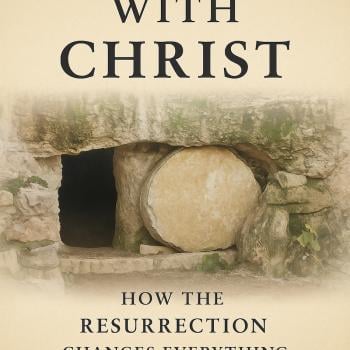
Grab this weeks Amazon Number One Best Seller...
TRENDING AT PATHEOS Evangelical

Making Stones Into Bread: Choosing the “Right” Work
I was on my online arts ministry Zoom meeting with the International...

Ukraine’s exhausted Christians face fifth winter of war
By Julian Lukins The full-scale war in Ukraine is taking “a serious...

Russell Brand's Conviction is not anti-Christian Persecution
How do we shed the reputation that the Church is OK with...

Have you ever caught yourself saying, “I’ll do it tomorrow,” or “Now...

Write Your Story: A Great Way to Find...
A few month’s back, my son was scrolling around Facebook and saw...

Throughout history, people have pursued pleasure, possessions, relationships, and success in an...
view all Evangelical blogs
What Are Your Thoughts?leave a comment
Ad-Free & Subscriber Log-In Subscription Support
- About Us
- 2026 Calendar
- Videos
- Podcasts
- Library of World Religions
- Faith In Media Tracker
- Advertise With Us
- Write for Us
- Privacy Policy
- Terms of Service
- Do Not Sell My Data
- Contact Us
- Radiant Digital
- Manage Newsletter Subscriptions
- Unsubscribe From Notifications
- Sitemap
Copyright 2008-2026, Patheos, part of the Radiant Digital network of media brands. All rights reserved.
Subscription Support Ad-Free & Subscriber Log-In
Follow Patheos