
BuddhistCatholicContemplativeEvangelicalGeneral ChristianHinduJewishLatter-day SaintMuslimNew VisionsProgressive Christian
Beliefs
- Buddhist
- Catholic
- Contemplative
- Evangelical
- General Christian
- Hindu
- Jewish
- Latter-day Saint
- More Voices
- Muslim
- New Visions
- Pagan
- Progressive Christian
Topics
- Religion News
- Food and Religion
- Sports and Religion
- Religious Art
- Religious Music and Entertainment
- Religious Events
- History and Religion
- Style and Religion
- Politics and Religion
- Women in Religion
- Recreation Outdoors and Religion
- Business Finance and Religion
- Careers Workplace and Religion
- Education and Religion
- Family Parenting and Religion
- Health Fitness and Religion
- Home and Religion
- Relationships and Religion
- Technology and Religion
- Travel and Religion
Columnists
- Buddhist Columnists
- Business Finance and Religion Columnists
- Careers Workplace and Religion Columnists
- Catholic Columnists
- Contemplative Columnists
- Education and Religion Columnists
- Evangelists Columnists
- Family Parenting and Religion Columnists
- General Christian Columnists
- Health Fitness and Religion Columnists
- Hindu Columnists
- History and Religion Columnists
- Home and Religion Columnists
- Jewish Columnists
- More Voices Columnists
- Latter Day Columnists
- Muslim Columnists
- New Visions Columnists
- Nonreligious Columnists
- Pagan Columnists
- Politics and Religion Columnists
- Progressive Columnists
- Recreation Outdoors and Religion Columnists
- Relationships and Religion Columnists
- Religion News Columnists
- Religious Art Columnists
- Religious Events Columnists
- Religious Music and Entertainment Columnists
- Sports and Religion Columnists
- Style and Religion Columnists
- Technology and Religion Columnists
- Travel and Religion Columnists
- Women in Religion Columnists
Resource Library
- 2026 Calendar
- Library of World Religions
- The 100 Most Holy Places on Earth
- Patheos Answers
- Podcasts
- Videos
- Faith Leaders Database
- Anglican Episcopalian
- Bahai
- Baptist
- Buddhism
- Christianity
- Confucianism
- Eastern Orthodoxy
- Hinduism
- Holiness and Pentecostal
- ISKCON
- Islam
- Judaism
- Lutheran
- Methodist
- The Church of Jesus Christ of Latter-day Saints
- New Age
- Paganism
- Presbytarian and Reformed
- Protestantism
- Religion Behind the Scenes
- Roman Catholic
- Scientology
- Shia Islam
- Sikhism
- Sufism
- Sunni Islam
- Taoism
- Zen
- See all religions
Research Tools
 Ad-Free & Subscriber Log-In Subscription Support
Ad-Free & Subscriber Log-In Subscription Support
Follow Patheos 

- Trending:
- Forgiveness
- |
- Marriage
- |
- Consciousness
- |
- Death Penalty
- |
- Election
- |
- Halloween

- Home
- Evangelical
- Religious Events
- Resurrection Neglected: Without it Good Friday is not Good
Resurrection Neglected: Without it Good Friday is not Good
Last updated on: November 5, 2025 at 12:00 pm by Adrian Warnock
Resurrection Neglected: Without it Good Friday is not Good 2025-11-05T12:00:32+00:00 Adrian Warnock
Patheos Explore the world's faith through different perspectives on religion and spirituality! Patheos has the views of the prevalent religions and spiritualities of the world.

Even on Good Friday, when we remember the death of Jesus we must also remind ourselves that he rose again. Why do Christians today emphasise the cross and neglect the resurrection?
In this the love of God was made manifest among us, that God sent his only Son into the world, so that we might live through him. (1 JOHN 4:9)
As a young child I asked my father a series of questions one evening as he put me to bed. This is the conversation as I remember it:
“Why is Good Friday called ‘good’?”
“Because Jesus died for us.”
“But why was it called good when someone died?”
“Because he came back to life.”
“But why is it not Bad Friday and Good Sunday then?”
I somehow instinctively knew that the cross could not be good news without the resurrection.
My dad then explained that sin led to punishment—something I understood as a child growing up in the seventies. Jesus, unlike us, did not deserve to be punished by death or hell. I could be forgiven only if I accepted the grace of God. The offer seemed almost too good to be true. In that moment, a rather one-sided deal was struck between me and God. I offered him my sinful heart and surrendered to him, and he gave me the gift of his righteousness. Because of his sustaining grace, I have never really looked back.
Frequently when I heard the gospel explained in later years, the resurrection was either omitted altogether or briefly discussed in passing. When I began to share the Christian message with others individually and while preaching, to my shame I often did so without mentioning that Jesus is alive. The resurrection had become an afterthought to the message that Jesus died for our sins.
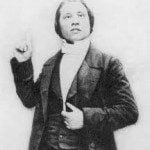
This lack of emphasis on the resurrection is not a new phenomenon. We have already seen that the young Spurgeon became concerned about this curious neglect of the resurrection. He became convinced that preaching the resurrection would lead to salvation.[1] Every time he preached he expected such results, and his words challenge us even today:
You must also believe in the power of that message to save people. You may have heard the story of one of our first students, who came to me, and said, “I have been preaching now for some months, and I do not think I have had a single conversion.” I said to him, “And do you expect that the Lord is going to bless you and save souls every time you open your mouth?” “No, sir,” he replied. “Well, then,” I said, “that is why you do not get souls saved. If you had believed, the Lord would have given the blessing.” I had caught him very nicely; but many others would have answered me in just the same way as he did. They tremblingly believe that it is possible, by some strange mysterious method, that once in a hundred sermons God might win a quarter of a soul. They have hardly enough faith to keep them standing upright in their boots; how can they expect God to bless them? I like to go to the pulpit feeling, “This is God’s Word that I am going to deliver in his name; it cannot return to him void; I have asked his blessing upon it, and he is bound to give it, and his purposes will be answered.”[2]
Were so many saved through Spurgeon’s preaching partly because Spurgeon emphasized the resurrection? In his published sermons, he mentioned resurrection a staggering 7,620 times, which averages more than twice per sermon. Spurgeon mentioned the death of Jesus even more often,12,157 times an average of just over three per sermon.[3]
Billy Graham spoke to live meetings attended by more people and was associated with more public professions of faith than any other evangelist in history. He seems to have come to a similar conclusion about the importance of the resurrection. The Billy Graham Center, located on the campus of Wheaton College, plays clips from his preaching. A paraphrased summary of what you hear is: Jesus died for you, but not just that—he was raised! He’s a living Jesus, and he’s here today, wanting to have a relationship with you. Could this emphasis help explain the power with which he preached and the millions of conversions that resulted?
In contrast, in many gospel messages I have heard, this strong emphasis on the resurrection has been absent, while the emphasis on the death of Jesus has remained. What is the reason for this difference?
WHY MIGHT THE RESURRECTION BE NEGLECTED?
1. The Resurrection Could Be Eclipsed by the Prominence of the Cross
The cross is the basis by which we can be forgiven. Our penalty was placed on Jesus; there our debt was discharged. Because the cross is literally crucial, it sometimes overshadows the resurrection. Richard Gaffin[4] explains:
As a generalization . . . Christ’s resurrection has been relatively eclipsed. In Eastern Orthodoxy . . . the accent has been on his incarnation. . . . In Western Christianity (both Roman Catholic and Protestant) . . . attention has been focused heavily and at times almost exclusively on Christ’s death and its significance. The overriding concern, especially since the Reformation, has been to keep clear that the Cross is not simply an ennobling and challenging example but a real atonement. . . . In short, the salvation accomplished by Christ and the atonement have been virtually synonymous.
My point is not to challenge the validity or even the necessity of this development, far less the conclusions reached. But in this dominating preoccupation with the death of Christ, the doctrinal . . . significance of his resurrection has been largely overlooked. Not that the Resurrection has been deemed unimportant, but all too frequently it has been considered exclusively as a stimulus and support for Christian faith (which it undoubtedly is) and in terms of its apologetic value, as the crowning evidence for Christ’s deity and the truth of Christianity in general.[5]
Books about the meaning of the cross like Pierced for Our Transgressions by Steve Jeffery, Mike Ovey, and Andrew Sach help us greatly. I am not concerned that there is too much emphasis on the cross. I am, however, anxious that as we “survey the wondrous cross” we also study the resurrection. We must remember that the cross is just as empty as the tomb, and Christ is now glorified, having completed his work. The truth is, we cannot be truly cross-centered without also being empty-grave-centered! Jesus was not just our prophet and priest—he is our reigning King.
At the cross we learn true humility, our hopeless sinfulness, and our need of God. At the empty tomb we fully appreciate what Christ has achieved for us and receive power to live for him. A deeper, fuller insight into the truth of Jesus’ resurrection will cause our lives to be radically transformed.
2. The Resurrection Has Missed out on the Beneficial Effects of Controversy and Heresy
The cross has prompted vociferous debate and hence much study. Most books about the cross of Jesus were written as a direct response to disagreements over the meaning of Jesus’ death. Recent controversy has centered on whether Jesus died in our place to take the punishment for our sin (penal substitution) and experience the full force of the wrath of God. This concept is taken from Romans, Isaiah 53, and elsewhere in Scripture. It can easily be explained to a child, yet its depths continue to puzzle the professor. A divine exchange occurred. He took our sin; we gained his righteousness. As a result, God’s attitude toward us changed, and now we are forgiven, and the guilt of our sin is washed away. God now sees us covered in the righteousness of his Son. With our debt paid, we come freely and boldly into the presence of a holy God. Paul explains this transaction as follows:
For the love of Christ controls us, because we have concluded this: that one has died for all, therefore all have died; and he died for all, that those who live might no longer live for themselves but for him who for their sake died and was raised. . . . Therefore, if anyone is in Christ, he is a new creation. The old has passed away; behold, the new has come. All this is from God, who through Christ reconciled us to himself. . . . For our sake he made him to be sin who knew no sin, so that in him we might become the righteousness of God. (2 Corinthians 5:14–21)
This idea has been attacked by some leaders in the evangelical movement. Two key books popularized that attack. Steve Chalke and Alan Mann rejected this teaching as “cosmic child abuse.”[6] Chalke, who at the time was one of the most influential figures in the UK’s evangelical movement, later reaffirmed that he had rejected the whole idea of penal substitution.[7] In addition, from the other side of the Atlantic, Joel B. Green and Mark D. Baker argued that this teaching is a form of sadomasochism.[8] Incensed by such inflammatory language, some evangelicals responded robustly, arguing that such thinking is misguided and contrary to Scripture.
This argument led directly to some positive results, including books being written and, in the UK, a significant new Christian conference, New Word Alive.[9] All this caused many Christians to come together with one accord, from a variety of denominational backgrounds, and has strengthened many churches.
Therefore, because persistent and ongoing doctrinal arguments are difficult to ignore, controversy tends to heighten our awareness of certain doctrines, while noncontroversial ones become neglected. Biblical truths seem, at least in the long term, to benefit from being attacked. Truth appears to be most visible when viewed against a backdrop of error. Many have rightly stressed that when we define true doctrine, we simultaneously define false teaching. As J. Gresham Machen said:
Every really great Christian utterance, it may almost be said, is born in controversy. It is when men have felt compelled to take a stand against error that they have risen to the really great heights in the celebration of truth.[10]
The average preacher does not directly explain heresy in his preaching; he is, however, very aware of it during his own preparation. He may deliberately engage the latest popular errors by preaching biblical truth as a specific antidote. Tim Challies[11] compared discernment to identifying fake money:
In discerning what is true from what is false it is best to focus more attention on what is genuine than what is counterfeit. It would be tempting to train people to identify what is fraudulent by focusing a great amount of time on what is false. However, because falsehood is always changing, it is more beneficial to focus on what is unchanging. Knowing and identifying what is false can be done best by knowing and understanding what is true. A person who studies and understands what is true is necessarily equipping himself to discern what is false.[12]
This same approach is also seen in the New Testament, where most of the epistles are written in response to error in the churches. Surprisingly, Paul never elaborates in any real detail on precisely what false teaching he is addressing. Instead he explains the truth in a way that contradicts the specific errors, while not providing them a platform for further attention. This reads a bit like a transcript of one side of a telephone conversation. We could strain our brains in the fruitless task of trying to infer what is being said on the other end, or we can focus instead on understanding what the apostle is communicating.
At no point in church history has there been widespread debate among Christian theologians about the resurrection of Jesus. Certainly all major groups that say they are part of the Christian church today, including Roman Catholics, Orthodox, and all the Protestant denominations, believe that Jesus was raised bodily for us and that we too will be raised. Of course, some liberals deny the physical resurrection of Jesus, but there is broad agreement that by abandoning this view they lose their right to call themselves Christians at all. Because of this relative lack of controversy, we might incorrectly assume that all church-goers believe in Jesus’ resurrection and fully understand its significance. Unfortunately, this doctrine is rarely discussed in great detail, and hence understanding about its full ramifications is often vague.
We can be passionate about the glorious truths of God’s Word, even when they are not directly under assault. The relative absence of controversy or heresy concerning the resurrection is not a sufficient excuse for us to fail to fully explore the impact of this doctrine. All of our doctrinal walls must be firmly built, not just those that currently are under attack. We cannot afford to allow any important doctrine to fall into neglect simply because no one seems to be publicly contradicting it. Too many Protestants are so busy protesting about what they are against that they forget to declare as loudly what they are in favor of.
3. Our Neglect of the Resurrection Could Be Part of a Satanic Strategy
Without becoming obsessed with the Devil, we must recognize that “we do not wrestle against flesh and blood” (Ephesians 6:12). It is quite likely that Satan has at least two different strategies that he utilizes to undermine truths that are essential to our faith. The first approach is to assault a biblical truth directly by encouraging us to doubt it or to form wrong conclusions about it. However, we have seen that attacks of this kind can often backfire and inadvertently benefit the church. Athanasius, Augustine, Luther, Calvin, Spurgeon, and countless others taught glorious truth in direct reaction to the erroneous teaching of their day.
Satan’s other strategy might well be to encourage us to neglect a doctrine by merely assuming it. Everyone, in principle, accepts it, even though few may really understand it. Perhaps this is precisely how Satan has assaulted the doctrine of Jesus’ resurrection, as well as our own future resurrection.
We could even speculate that this doctrine is so distasteful to him that he cannot bear to think about the resurrection or even formulate false teaching on it. Given that it was such a glorious victory for Jesus, I am sure that Satan does not wish to be reminded of it, though he daily feels its effects. Satan might hope, therefore, that if he does not try to promote controversy and/or false teaching concerning the resurrection, perhaps the full implications of this important doctrine will remain relatively undiscovered. Since it is the power of the resurrection that enables us to live as Christians, it is no surprise if Satan is indeed trying to stop us from applying this power to our lives.
Satan sometimes also entices Christians to believe that they are defending a righteous cause even though they are profaning God’s name by the way they are doing it. This is not dissimilar to the way many of the Pharisees of Jesus’ day behaved. For example, some bloggers seem to exist purely to root out the many and varied errors that are out there. They do so in a nasty manner and are nicknamed “watch bloggers.” We must not allow our enemy to define our agenda. We have a positive body of truth to proclaim irrespective of the latest popular theological heresy.
4. The Bible Appears to Rarely Mention Resurrection
If we measured significance by merely comparing a count of those verses in the Bible where subjects are mentioned, we could assume that very little emphasis is placed on resurrection. However, there is little sense in this approach, since hell would then be more important than heaven, and money more important than forgiveness. The virgin birth of Jesus is mentioned only rarely in Scripture, but does that make it any less central?
HAS THE RESURRECTION BEEN COMPLETELY NEGLECTED?
Absolutely not! Christians have not totally ignored the resurrection. The resurrection is, after all, precious to us and is acknowledged as a vital factor in our salvation.
“No tenet of Christianity is more central. . . . Resurrection is at once the foundation of Christian faith and the focus of Christian hope.”[13]
We must not use either the cross or the resurrection to reduce the value of the other.[14] Many evangelicals do value this doctrine, but we must look more closely at “the most important doctrine of the New Testament.”[15]
John Piper declared, “The gospel has at its center the events of the cross and the resurrection.”[16] He included these words even though the purpose of that book was to discuss how the cross is involved in saving us. Elsewhere in the same book he quotes[17] 1 Corinthians 15:3: “For I delivered to you as of first importance what I also received: that Christ died for our sins in accordance with the Scriptures.”
In the context of his defense of the importance of the cross, we can understand why Piper ends the quote where he does, thereby emphasizing his point. It is troubling, however, how frequently people omit the second half. If we do make a habit of doing this, we would appear to underemphasize “that he was buried, that he was raised on the third day in accordance with the Scriptures” (1 Corinthians 15:4).
This is a good example of how our focus on the cross can make us appear to assume the resurrection. Leading evangelical theologian Don Carson warns that “When we assume the gospel we are one generation away from denying it.”[18] We could apply this specifically to talking about the resurrection, without which there is no gospel.
Most of us are not intentionally neglecting the resurrection. We do appreciate its importance and value it highly. But the resurrection has not been explored as fully as many of the other doctrines and has not been given the attention it deserves.
Paul tells us without the resurrection Christians would not be any different than those without any faith:
If Christ has not been raised, your faith is futile and you are still in your sins. Then those also who have fallen asleep in Christ have perished. If in Christ we have hope in this life only, we are of all people most to be pitied. (1 Corinthians 15:17-19)
Without the resurrection we are lost and there is no hope! There is no salvation without a living Jesus. We need the resurrection to have its power-generating effect inside of us if we are to be born again. We really are “saved by his life” (Romans 5:10). We need a change within us that only the resurrection can produce. We must make sure that in our thinking and our speaking we give the resurrection the prominence it deserves. We must not neglect either the resurrection or the cross and focus only on the other.
We need both the cross and the resurrection, and yet many emphasize one or the other. If we solely focus on the cross we usually major on forgiveness of sin and justification. But the risk is that we neglect the mission of Jesus and the abundant life he offers here on earth. The Christian life is often seen as merely about attendance at church, absorbing teaching with a focus on heaven to come rather than making a difference to the world here and now. On the flip side, there are those who exclusively focus on the new kingdom life made possible through Jesus’ resurrection. These individuals often excel in acts of compassion, aiding the needy and spreading warmth and focusing on social justice. Yet, without an understanding of why Jesus died we are likely to fail to call for personal repentance.[19]
The degree to which we neglect the resurrection is also the degree to which we neglect to think about Jesus as he really is, now. Jesus is enthroned in heaven and is reigning inside every believer. His powers are limitless, and he is at liberty to do as he wishes. While on earth he did not fully reveal his glory and divine power. To only think of Jesus as a long-haired, gentle man in a robe and wearing sandals has devastating effects on the church. This perception has permeated the attitudes of many who perceive Jesus as a weak character but a good teacher. The world seems blind to the Bible’s description of the resurrected Jesus, full of power and authority. This description is highly offensive to the world. But to worship Jesus as the artists have portrayed him, instead of as the Son of Man in all his glory, is nothing short of idolatry.
To meditate on the reality of the risen Jesus promises to be of great benefit to us. Hope, optimism, enthusiasm, and certainty are likely to result. Angst, uncertainty, and complexity, as well as attempts to deny ourselves legitimate pleasures in an attempt to carry our own cross, might be the result if we neglect to meditate on Christ’s glorious victory over death. This kind of condemnation and legalism is widespread in the church today. In the modern world, many accuse the church of being dead. This impression will merely be confirmed if they only hear us preaching about a Jesus who was crucified for them, speaking about him and acting as though he is still dead. Colossians 2:6–4:1 contrasts the legalism of religion with the resurrection life that is ours in Christ Jesus. Without setting our minds on our living Master in heaven we will never be able to live as God intended.
Jesus is glorious and very much alive. He is the one in control of his church and his world, as uncomfortable as that might make us. As a good friend said to me in an email:
If we leave him in the tomb we can systematize his teaching and sanitize his actions. We can manage the church and keep things in order. If we leave him in the tomb, then Christianity belongs to us to make of it what we will, to reform it in our image and sell it to the highest bidder. If the tomb is empty, the implications for the church are explosive to say the least. If he is truly with us in a way not so dissimilar to how he was with his disciples, then nothing will ever be the same again.[20]
REFERENCES ARE FOUND AT THE BOTTOM OF THIS PAGE
Raised With Christ would never have been possible without heavy use of Logos Bible Software. If you do not yet have this wonderful Bible Study tool or you are due an upgrade, readers of this blog get a 10% discount.
READ MORE
References
[1]See chapter 1, pages 21–22.
[2]C. H. Spurgeon, “Qualifications for Soul-Winning: Godward,” The Soul Winner; http://www.spurgeon.org/misc/sw02.htm.
[3]There are 3,563 published sermons by Spurgeon. A Logos Bible Software search of the electronic editions was performed for the following search term: “resurrection OR (raised NEAR dead). OR (risen NEAR dead). OR (Christ NEAR raised). OR (Christ NEAR risen). OR (Jesus NEAR raised). OR (Jesus NEAR risen).” For comparison purposes the search “crucifixion OR (Jesus NEAR
death). OR (Jesus NEAR died). OR (Christ NEAR death). OR (Christ NEAR died)” was performed.
[4]Emeritus Professor of Systematics at Westminster Theological Seminary, Philadelphia.
[5]Richard B. Gaffin, “Redemption and Resurrection,” Themelios, Vol. 27.2, Spring 2002, 16–31; see www.beginningwithmoses.org/articles/redemptionresurrection.htm.
[6]Steve Chalke and Alan Mann, The Lost Message of Jesus (Grand Rapids: Zondervan, 2003), 182.
[7]Steve Chalke, in Derek Tidball et al., The Atonement Debate (Grand Rapids: Zondervan, 2008), 34–48.
[8]Joel B. Green and Mark D. Baker, Recovering the Scandal of the Cross (Downers Grove, IL: InterVarsity Press, 2000), 30.
[9]See http://newwordalive.org.
[10]J. Gresham Machen, “Christian Scholarship and the Defense of the Faith,” in J. Gresham Machen: Selected Shorter Writings, ed. D. G. Hart (Phillipsburg, NJ: P&R, 2004), 148–149.
[11]Author of one of the most widely read Christian blogs, www.challies.com.
[12]Tim Challies, The Discipline of Spiritual Discernment (Wheaton, IL: Crossway, 2007), 142.
[13]Donald K. McKim and David F. Wright, Encyclopedia of the Reformed Faith (Louisville: John Knox Press, 1992), 319.
[14]See G. C. Berkouwer, The Work of Christ (Grand Rapids: Eerdmans, 1965), 192.
[15]George Eldon Ladd, I Believe in the Resurrection of Jesus (London: Hodder and Stoughton, 1975), 10.
[16]John Piper, The Future of Justification (Wheaton, IL: Crossway, 2007), 82.
[17]Ibid., 89.
[18]Don Carson, “The Primacy of Expository Preaching, Part 1”; www.desiringgod.org/ResourceLibrary/ConferenceMessages/ByConference/23/2085_The_Primacy_of_Expository_Preaching_Part_1/.
[19] see Mark Driscoll and Gerry Breshears, Vintage Jesus (Wheaton, IL: Crossway, 2007), 125.
[20]Andrew Cottingham.
General Christian
Religious Events
History and Religion

About Adrian Warnock
Adrian Warnock
Medical doctor · Published author · Patheos writer since 2003
I have always lived within sixty miles of London, UK where I studied, worked and worshipped for thirty years. I began writing for this Patheos blog in April 2003, making it one of the longest-running individual columns on the Christian Internet. My writing here, on Substack, and in my books is influenced by my medical training, eight years of working as a psychiatrist in the UK’s National Health Service (NHS), eighteen years working in medical research in the pharmaceutical industry, twenty-five years of serving as a pastoral leader in a growing multicultural church, and a difficult decade of lived experience with chronic illness, including blood cancer, and the unexpected losses, including early retirement, that resulted.
Together, these all shape a biopsychosocial-spiritual approach which I first wrote about on Patheos in 2013. This model offers us hope, compassion, and healing in all life’s challenges. This holistic approach is based on the idea that all truth is God’s truth.
At times, since my illness, my faith has been faint. I wondered if this was the end of my story. I was not strong enough to live for Jesus the way I wanted to. I could not change myself. And then hope reminded me: The resurrection of Jesus changes everything. Just not all at once. Healing takes time. Compassion and patience sustain us over a lifetime of change. I aim to approach suffering with hope and compassion, and address tough questions including:
-
What does Jesus’ resurrection mean for you?
Raised With Christ: How the Resurrection Changes Everything (Crossway, 2010; 2nd edition, Amazon, 2025)
-
Why is change so difficult? What causes the resistance?
The Traitor Within: Understanding and Healing Our Deceitful Hearts (Amazon, 2026)
-
Why is change so slow? How does grace lead us over a lifetime?
Amazing Grace: How Faith Grows in the Human Heart (Amazon, 2026)
-
How do you become a Christian? Can you know if you really are one?
Hope Reborn: How to Become a Christian and Live for Jesus Co-authored with Tope Koleoso (Christian Focus, 2014)
Qualifications
I qualified with an MB BS from the University of London (equivalent to an MD in the United States), hold postgraduate qualifications in psychiatry (MRCPsych) and pharmaceutical medicine (MFFM, DipPharmMed), and took theological training courses run by Newfrontiers.
Connect With me
- Substack: adrianwarnock.substack.com (the best way to ask questions)
- Twitter/X: @adrianwarnock
- Facebook: Adrian Warnock
- Email: [email protected] (I may not be able to respond to every message)
You can read more about the author here.
Previous Post
March 28, 2024
Up to 60% off Commentaries this Easter: Logos Bible Software
Next Post

March 30, 2024 Disabled people: “Just die, will you!”
Recent Comments
"Atheism is no more a single worldview than theism is a single worldview. Both however ..."
Thank God Atheists Do Not Live ..."
"Athiests believe in love, most reject God because of the God depicted in the old ..."
Thank God Atheists Do Not Live ..."
"Have a read of some history, and you will find that your views are not ..."
Thank God Atheists Do Not Live ..."
"You act like Christians invented basic human decency. Here's a news flash: Humans thrived for ..."
Thank God Atheists Do Not Live ..."
Browse Our Archives
Select a Category 1 and 2 Corinthians 1 and 2 Thessalonians 1 and 2 Timothy 1 John 300 Leaders A Life of Joy Abortion Acts of the Apostles Adrian on radio Adrian on TV Adrian's Story Albert Mohler Amazing Grace Arminocalvinist Spectrum Assurance Atonement Atonement Series Attributes of God Barnabas Best of the Blog Bible Bible Software Bible Translation Biblical Inerrancy Billy Graham Bob Roberts Books C. J. Mahaney Calvinism Cessationism Charis Warnock Charismatic Spectrum Charles Simeon Charles Spurgeon Church Leadership Colossians Complementarian - Egalitarian Spectrum Complementarianism Conferences Culture Daniel Debates Deuteronomy DGM08 DGM13 Discernment Doctrine Don Carson Ed Stetzer Eddy Leo Ephesians ESV Bible Translators Interview Evangelism in a Post-Christian World evolution Exodus Expository Preaching Ezekial Faith and Feelings Family Florida Galatians General Genesis Get Wisdom - Proverbs sermons Gifts of The Holy Spirit Gifts of the Holy Spirit 2006 Global Faith Forum Godly Attitudes Gospel Gospels Grace Greg Haslam Grudem vs Piper: The Baptism Debate Healing Heaven Hell and Rob Bell Hebrews Henry Tyler Henry Warnock Holy Spirit Holy Spirit Baptism Hope Reborn Hugh Palmer Irresistable Grace Isaiah J. I. Packer Jack Hayford Joel Joel Warnock John John Lanferman John MacArthur John Newton John Owen John Piper John Smyth Jonathan Edwards Josh Harris Justification Justin Taylor Kenneth Ulmer Leadership Leadership Lessons from 1 & 2 Samuel Lex Loizides Liam Goligher Lig Duncan Limited Atonement Lou Fellingham Mark Dever Mark Driscoll Martyn Lloyd-Jones Matt Chandler Mental Health Missionary Methods: St Paul’s or Ours? My Story N. T. Wright Nehemiah NWA08 NWA09 NWA10 Opinion OT History Books Pentateuch Personal Personal Revival Philippians PJ Smyth Podcast Politics Preaching Prophecy Proverbs Psalms Raised With Christ Reformed Charismatic Regeneration Relationships Resurrection Resurrection & Salvation Revival Rice Broocks Rich Man and Lazarus Rick Warren Rob Rufus Roland Allen Romans Sam Storms Sanctification Series Sermons Sermons on Philippians Serving Jesus at Work Sexuality Sin St Paul Steve Chalke Strange Fire Suffering T4G T4G Statement TAB09 Tamasin Warnock Teamwork Terry Virgo The Atonement Debate - Chalke book The Soulwinner The Spirit-Filled Church The Traitor Within Theologcial Spectrums Theosis Tim Challies Tim Keller Titus TOAM06 TOAM07 TOAM08 TOAM09 TOAM10 TOAM11 Todd Bentley Tope Koleoso Total Depravity Video Water Baptism Wayne Grudem Worship
Select a Month October 2026 September 2026 August 2026 July 2026 June 2026 May 2026 April 2026 March 2026 February 2026 January 2026 December 2025 November 2025 October 2025 September 2025 May 2025 April 2025 January 2025 November 2024 October 2024 August 2024 July 2024 June 2024 May 2024 April 2024 March 2024 February 2024 January 2024 December 2023 August 2023 May 2023 April 2023 February 2023 October 2022 September 2022 August 2022 July 2022 June 2022 May 2022 April 2022 March 2022 February 2022 August 2021 May 2021 April 2021 February 2021 January 2021 December 2020 October 2020 September 2020 August 2020 July 2020 June 2020 May 2020 April 2020 March 2020 February 2020 January 2020 December 2019 November 2019 October 2019 September 2019 June 2019 May 2019 April 2019 March 2019 January 2019 December 2018 October 2018 September 2018 August 2018 July 2018 June 2018 May 2018 April 2018 March 2018 February 2018 January 2018 December 2017 November 2017 October 2017 September 2017 June 2017 April 2017 March 2017 February 2017 January 2017 December 2016 November 2016 October 2016 June 2016 March 2016 February 2016 January 2016 December 2015 November 2015 September 2015 August 2015 July 2015 June 2015 May 2015 April 2015 March 2015 February 2015 January 2015 December 2014 November 2014 October 2014 September 2014 August 2014 July 2014 June 2014 May 2014 April 2014 March 2014 February 2014 January 2014 December 2013 November 2013 October 2013 September 2013 August 2013 July 2013 June 2013 May 2013 April 2013 March 2013 February 2013 January 2013 December 2012 November 2012 October 2012 September 2012 August 2012 July 2012 June 2012 May 2012 April 2012 March 2012 February 2012 January 2012 December 2011 November 2011 October 2011 September 2011 August 2011 July 2011 June 2011 May 2011 April 2011 March 2011 February 2011 January 2011 December 2010 November 2010 October 2010 September 2010 August 2010 July 2010 June 2010 May 2010 April 2010 March 2010 February 2010 January 2010 December 2009 November 2009 October 2009 September 2009 August 2009 July 2009 June 2009 May 2009 April 2009 March 2009 February 2009 January 2009 December 2008 November 2008 October 2008 September 2008 August 2008 July 2008 June 2008 May 2008 April 2008 March 2008 February 2008 January 2008 December 2007 November 2007 October 2007 September 2007 August 2007 July 2007 June 2007 May 2007 April 2007 March 2007 February 2007 January 2007 December 2006 November 2006 October 2006 September 2006 August 2006 July 2006 June 2006 May 2006 April 2006 March 2006 February 2006 January 2006 December 2005 November 2005 October 2005 September 2005 August 2005 July 2005 June 2005 May 2005 April 2005 March 2005 February 2005 January 2005 December 2004 November 2004 October 2004 September 2004 August 2004 July 2004 June 2004 May 2004 April 2004 March 2004 February 2004 January 2004 December 2003 November 2003 October 2003 September 2003 August 2003 July 2003 June 2003 May 2003 April 2003
Follow Us!
TAKE THE
Religious Wisdom Quiz
How many loaves in the feeding miracle?
Select your answer to see how you score.
5 7 12 3
Books by This Author Books by Adrian Warnock
Related posts from Adrian Warnock

How the author of the world's best hymn...

Thank God Atheists Do Not Live By Their...
Grab this weeks Amazon Number One Best Seller...

Ten Reasons Christians Don't Know Jesus Like in...
TRENDING AT PATHEOS Evangelical

How the author of the world's best hymn...
I've been working with John Newton for a while now. This makes...

Long before this Lectio Divina, Psalm 130 - the song - started...

What About the Trees? Another Living Parable
After I finished writing the last article about falling leaves as a...

Why Classical Education Is a Conversation, Not a...
Come and Read: Joy in Classical Education When I was a little...

Falling Leaves: A Living Parable on Letting Go
I’ve spent the vast majority of my life in the southeast corner...

Cornell University has received a great deal of negative publicity and intense...
view all Evangelical blogs
What Are Your Thoughts?leave a comment
Ad-Free & Subscriber Log-In Subscription Support
- About Us
- 2026 Calendar
- Videos
- Podcasts
- Library of World Religions
- Faith In Media Tracker
- Advertise With Us
- Write for Us
- Privacy Policy
- Terms of Service
- Do Not Sell My Data
- Contact Us
- Radiant Digital
- Manage Newsletter Subscriptions
- Unsubscribe From Notifications
- Sitemap
Copyright 2008-2026, Patheos. All rights reserved.
Subscription Support Ad-Free & Subscriber Log-In
Follow Patheos