
BuddhistCatholicContemplativeEvangelicalGeneral ChristianHinduJewishLatter-day SaintMuslimNew VisionsProgressive Christian
Beliefs
- Buddhist
- Catholic
- Contemplative
- Evangelical
- General Christian
- Hindu
- Jewish
- Latter-day Saint
- More Voices
- Muslim
- New Visions
- Pagan
- Progressive Christian
Topics
- Religion News
- Food and Religion
- Sports and Religion
- Religious Art
- Religious Music and Entertainment
- Religious Events
- History and Religion
- Style and Religion
- Politics and Religion
- Women in Religion
- Recreation Outdoors and Religion
- Business Finance and Religion
- Careers Workplace and Religion
- Education and Religion
- Family Parenting and Religion
- Health Fitness and Religion
- Home and Religion
- Relationships and Religion
- Technology and Religion
- Travel and Religion
Columnists
- Buddhist Columnists
- Business Finance and Religion Columnists
- Careers Workplace and Religion Columnists
- Catholic Columnists
- Contemplative Columnists
- Education and Religion Columnists
- Evangelists Columnists
- Family Parenting and Religion Columnists
- General Christian Columnists
- Health Fitness and Religion Columnists
- Hindu Columnists
- History and Religion Columnists
- Home and Religion Columnists
- Jewish Columnists
- More Voices Columnists
- Latter Day Columnists
- Muslim Columnists
- New Visions Columnists
- Nonreligious Columnists
- Pagan Columnists
- Politics and Religion Columnists
- Progressive Columnists
- Recreation Outdoors and Religion Columnists
- Relationships and Religion Columnists
- Religion News Columnists
- Religious Art Columnists
- Religious Events Columnists
- Religious Music and Entertainment Columnists
- Sports and Religion Columnists
- Style and Religion Columnists
- Technology and Religion Columnists
- Travel and Religion Columnists
- Women in Religion Columnists
Resource Library
- 2026 Calendar
- Library of World Religions
- The 100 Most Holy Places on Earth
- Patheos Answers
- Podcasts
- Videos
- Faith Leaders Database
- Anglican Episcopalian
- Bahai
- Baptist
- Buddhism
- Christianity
- Confucianism
- Eastern Orthodoxy
- Hinduism
- Holiness and Pentecostal
- ISKCON
- Islam
- Judaism
- Lutheran
- Methodist
- The Church of Jesus Christ of Latter-day Saints
- New Age
- Paganism
- Presbytarian and Reformed
- Protestantism
- Religion Behind the Scenes
- Roman Catholic
- Scientology
- Shia Islam
- Sikhism
- Sufism
- Sunni Islam
- Taoism
- Zen
- See all religions
Research Tools
 Ad-Free & Subscriber Log-In Subscription Support
Ad-Free & Subscriber Log-In Subscription Support
Follow Patheos 

- Trending:
- Forgiveness
- |
- Marriage
- |
- Consciousness
- |
- Death Penalty
- |
- Election
- |
- Halloween

- Home
- Evangelical
- Trust Him and Pray
Trust Him and Pray
Last updated on: November 5, 2025 at 12:01 pm by Adrian Warnock
Trust Him and Pray 2025-11-05T12:01:12+00:00 Adrian Warnock
Patheos Explore the world's faith through different perspectives on religion and spirituality! Patheos has the views of the prevalent religions and spiritualities of the world.

Trust Him and Pray. Even when you don’t feel like it. This is the only way to survive and even thrive in the significant suffering.
In yesterdays blog post I spoke about the intersection between the series on the Commands of Jesus and the work I am doing on suffering, in particularly reviewing Tim Keller’s book backwards (see parts 1 and 2). Well today those two series completely collide.
There is an old hymn whose words I initially remembered wrong. I thought it said something like, “Trust him and pray, for there’s no other way to be happy in Jesus but to trust him and pray”
But in fact the Lyrics don’t talk directly about prayer, but rather obedience.
Trust and obey, for there’s no other way
To be happy in Jesus, but to trust and obey.Not a shadow can rise, not a cloud in the skies,
But His smile quickly drives it away;
Not a doubt or a fear, not a sigh or a tear,
Can abide while we trust and obey . . .And ‘Tis so sweet to trust in Jesus,
Just to take Him at His Word;
Just to rest upon His promise,
Just to know, “Thus saith the Lord!”
Jesus, Jesus, how I trust Him!
How I’ve proved Him o’er and o’er;
Jesus, Jesus, precious Jesus!
Oh, for grace to trust Him more!
Oh, for grace to trust You more!
You can listen to a video of this old hymn here:
But as we have seen, a large number of Jesus commands to us relate to how we should relate to him. None of the following commands can be obeyed without prayer. Even being born again is something that happens to us as we first cry out to Jesus in a genuine heartfelt cry for help:
- Be Born Again
- Repent and Believe
- “Come to me,
- Listen to My Voice
- Abide in Me
- Follow Me
- Love Me
- Worship Me
- Trust and Fear Me
- Receive the Holy Spirit
And Jesus doesn’t just tells us to obey these general commands about how we should relate to him, he gives us specific instructions about the practicalities and precisely how it is that he wants us to pray. As we pray the way Jesus tells us to, then we will find that each of the above list becomes a greater reality in our lives. So far we have looked at three of these commands of Jesus about prayer:
And there are several more similar instructions which I intend to look at. Simply put there is no way to trust him without obeying him. And there is no way to obey him without praying to him. Not least because we are utterly incapable of following his commands in the way he intends us to without his help. This should be clear even from looking at the very first one in the list. We simply cannot decide one day to be born all over again. We have to ask him to create in us a clean heart, and that simple prayer is surely one we need to pray often!
So if we want a firm foundation in our life, and if we want to cope with the suffering that is thrown at us, and still be able to thank praise and love God, well we simply have to learn to pray.
And yet when we are really sick prayer can be the hardest thing to do. God feels remote. We may even feel angry at him. We might even doubt he exists. We may find ourselves asking the age-old question “IF God is all-powerful and all-loving how can he possibly have allowed this to happen to me or the ones I love?” We might well not feel particularly like talking to the very one that we are blaming for the predicament we find ourselves in. Although God is not the author of evil, it can sure feel like that to us sometimes.
And perhaps we should reverse the order of the two verbs we are looking at today. You see we often need to pray even when we don’t feel particularly trusting towards God. And trust often grows from our prayer rather than the other way round. Prayer is often the very first step back in our journey towards Him. And whilst we may not have the energy for complicated long prayers, nobody who is still conscious is beyond praying perhaps the most simple two word prayer:
Help Me!
Keller expresses beautifully the opportunity that truly dark suffering brings us:
Source: Frank Licorice – https://www.flickr.com/photos/118175464@N04/13893171622/
“In the darkness we have a choice that is not really there in better times. We can choose to serve God just because he is God. In the darkest moments we feel we are getting absolutely nothing out of God or out of our relationship to him. But what if then—when it does not seem to be paying or benefiting you at all—you continue to obey, pray to, and seek God, as well as continue to do your duties of love to others? If we do that—we are finally learning to love God for himself, and not for his benefits.” – Tim Keller, Walking with God through Pain and Suffering
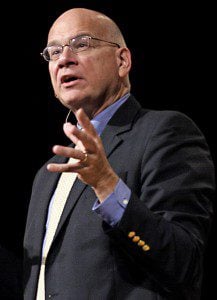
The comfort the Bible speaks of will often initially feel a million miles away. But we pray anyway. We pray because we have no one else to turn to. And we pray because it is what God has designed in order to bring us back to himself and to show us how to love him for himself.
“How can you move from loving God in a mercenary way toward loving God himself? I’m afraid the primary way is to have hardship come into your life. Suffering first helps you assess yourself and see the mercenary nature of your love for God. When your most cherished things are taken from you, you may be tempted to angrily reject him. But then suffering gives you an opportunity. Instead of giving up on God and moving away from him you could adjust and focus on him in a way you had never done before.” – Tim Keller, Walking with God through Pain and Suffering
But what are our prayers to look like? Should they be pious platitudes? Should we simply recite the Lords Prayer (which of course is not a bad thing to do in an of itself)? Actually this might surprise you but God is inviting us to talk to him. He wants to be our counsellor. He wants us to pour out to him the agony we are feeling. He can cope with all our emotions. He is ready to hear our hearts true cry. Every single human emotion is expressed towards God in the Psalms which is one of the reasons that many of us, myself included, when we don’t know how to pray at a time of suffering simply pick up the book of psalms and read till we find something to pray. These precious prayers of the saints of long ago will often surprise you, and you will suddenly realise you are not alone.
Others have walked this journey of struggling through pain and suffering with God for thousands of years. Let their prayers guide and inform yours, even when you feel at your very worst. In fact simply reading the psalms, perhaps out loud, is something you can do when you simply cannot bring yourself to form a thought into a prayer. Perhaps you are so far from God that you even hate him right now. Even then, choosing to turn towards him rather than away is the key to eventually finding the way out of the hole you have been thrown into:
“It is important to at least want to love God. So do what you can to pray to him and ponder the truth. And wait. Wait like Job waited. Many people who have done this work—this “dry meditation and prayer”—have especially used the Psalms to great profit. The Psalms are filled with teaching about God, of course, but they are also, in the main, prayers. And they are prayers that cover almost the entire range of human experience. They show us people processing their condition before God—they are “praying” their situation instead of merely thinking about it. We see psalmists praying their tears, their doubts, their fears, their griefs, their hopelessness—as well as their joys and blessings. There is no better place to wait for God than deep inside the Psalter.” – Tim Keller, Walking with God through Pain and Suffering

It is not just in the Psalms that we find this raw outburst of emotion towards God in prayer. We see it in the book of Job:
“Through it all, Job never stopped praying. Yes, he complained, but he complained to God. He doubted, but he doubted to God. He screamed and yelled, but he did it in God’s presence. No matter how much in agony he was, he continued to address God. He kept seeking him. And in the end, God said Job triumphed . . . Job’s doggedness in seeking the face and presence of God meant that the suffering did not drive him away from God but toward him. And that made all the difference. As John Newton said, if we are not getting much out of going to God in prayer, we will certainly get nothing out of staying away. . .
All of this means that even if we cannot feel God in our darkest and most dry times, he is still there. And so there is no more basic way to face suffering than this: Like Job, you must seek him, go to him. Pray even if you are dry. Read the Scriptures even if it is an agony. Eventually, you will sense him again—the darkness won’t last forever.
The strength you need for suffering comes in the doing of the responsibilities and duties God requires. Shirk no commands of God. Read, pray, study, fellowship, serve, witness, obey. Do all your duties that you physically can and the God of peace will be with you.” – Tim Keller, Walking with God through Pain and Suffering
And as we pray and think about the truths of the gospel, also focusing on what we can thank God for, then we will slowly realise that trust is returning. To a certain extent trust is a choice. You don’t always have to feel particularly trusting. You can still have lots of unanswered questions and doubts. Yet you can say “Where else can I go but to you Lord?” or “Who else could ever possibly help me?” Of course trust and hope are hugely entwined. But I would argue it is possible to choose to trust God even when you feel that all hope is lost.
As you carefully examine the small details of your life looking for things to be thankful for, even when things are at the hardest, you will gradually see it. GOD has really been at work in your situation all along. In my own case, he held back sickess until I was in a job which had an amazing sick pay policy (supported by an insurance company) that means that I am still paid a significant portion of my salary as I go through this very long and slow recovery period. If I had to get sick, becoming sick when I did and not just a few weeks earlier, was part of God’s provision for me. Of course I could choose to question why as my loving Father he didn’t heal me completely before I even knew I was unwell. Or, I can thank him for over-ruling in such a way that me and my family would be amazingly provided for. Many people are not so blessed as we have been at a time like this. Keller cites possibly the two best verses in the Bible for teaching us to trust in the Sovereignty of God in working in all the details of our lives, even the painful ones. Even the ones caused by other people:
If the brothers had not betrayed Joseph and sold him into slavery, the family (and Joseph) would not have been saved from disaster and death. It was obviously part of God’s plan. God was present at every point, and was working even in the smallest details of the daily lives and schedules and choices of everyone. So this shows that “all things work according to the counsel of his will” (Eph 1:10–11; Rom 8:28). So was it all right that they did what they did? Not at all. What they did was wrong—no one forced them to do it . . .
The Joseph story tells us that very often God does not give us exactly what we ask for. Instead he gives us what we would have asked for if we had known everything he knows….
Joseph assumes that behind everything that happened was the goodness and love of God. Even though what the brothers did was evil and wrong, God purposed to use it for good. This is the Old Testament version of Romans 8:28—“All things work together for good to them who love God.” Paul then adds a set of powerful questions and declarations and run-on sentences concluding that nothing “in all creation” can “separate us from the love of God that is in Christ Jesus our Lord” (Rom 8:31–38). Paul and Joseph are saying that, no matter how bad things get, believers can be assured that God loves them.” – Tim Keller, Walking with God through Pain and Suffering.
If you have not read it recently, I recommend reading the story of Joseph. It starts at Genesis 37 and is a story of two halves. In the first we see the fall of a precocious favourite son. Who through no fault of his own other than naivete and daring to share his dreams, underwent a series of downward steps till he finds himself not just a slave but imprisoned in Egypt. We can see signs of God at work in his story despite his severely damaged family, and we are expected to believe that throughout his suffering and disappointment this was a chosen vessel of God. See for example
2 The Lord was with Joseph so that he prospered, and he lived in the house of his Egyptian master. 3 When his master saw that the Lord was with him and that the Lord gave him success in everything he did, 4 Joseph found favor in his eyes and became his attendant (Genesis 39:2)
And yet even that positive season was shot lived. If Joseph rotting in the prison and been told that God was with him, he might well have said “Well where on earth would I be if he wasn’t with me?“ And perhaps the answer would have been somewhere even worse. But the answer would also have been not in the very place that God intended you to be in so that you could save the lives not only of yourselves but of your whole family, a whole nation, and many from the nations around during famine.

Image: Tamasin Warnock
And so we see that we CAN trust in God even when our life feels like a total mess. And looking back, we can believe that God’s hand in some mysterious way was behind everything that happened to us. Desiring and causing some things, preventing others, and with great reluctance and pain allowing some things to happen to us, but turning even the greatest evil around for good. And so we come near the end of the story to one of the greatest verses in the Bible which Keller alluded to in the quote above. Terrified Joseph would now punish them since their father had died, his brothers come and plead for mercy. He said these memorable words, knowing that without their treachery and evil acts he could never have been used in the miraculous way he was:
You intended to harm me, but God intended it for good to accomplish what is now being done, the saving of many lives. (Genesis 50:20, NIV)
Do you know God? Do you trust him? Then as you enter the fire you too can know that he is with you. If you hold onto the Gospel, you can believe that the God who gave you Jesus will surely not bring ultimate harm on you. In fact, God will make the furnace itself a place of blessing. Keller picks this point up:
“If you believe in Jesus and you rest in him, then suffering will relate to your character like fire relates to gold. Think of four things that we want. Do you want to know who you are, your strengths and weaknesses? Do you want to be a compassionate person who skillfully helps people who are hurting? Do you want to have such a profound trust in God that you are fortified against the disappointments of life? Do you want simply to be wise about how life goes?
Those are four crucial things to have—but none of them are readily achievable without suffering. There is no way to know who you really are until you are tested. There is no way to really empathize and sympathize with other suffering people unless you have suffered yourself. There is no way to really learn how to trust in God until you are drowning.” – Tim Keller, Walking with God through Pain and Suffering
Elsewhere he comes back to this notion that suffering is like a furnace:
“If you go into the furnace without the gospel, it will not be possible to find God in there. You will be sure he has done terrible wrong or you have and you will feel all alone. Going into the fire without the gospel is the most dangerous thing anyone can do. You will be mad at God, or mad at yourself, or mad at both.
But if you say to yourself when you get thrown into the furnace, “This is my furnace. I am not being punished for my sins, because Jesus was thrown into that ultimate fire for me. And so if he went through that greatest fire steadfastly for me, I can go through this smaller furnace steadfastly for him. And I also know it means that if I trust in him, this furnace will only make me better.” – Tim Keller, Walking with God through Pain and Suffering.
I think that this is perhaps the one place in the book where I would have a very slight disagreement with Keller. Perhaps you are in the middle of a season of suffering. And maybe you have never been a Christian, or your hold on the gospel has become so lose that right now you are in the first without the gospel. You are in the fire without hope. You may indeed feel mad at God, or mad at yourself or both. But, and I am sure that Keller would not disagree with this, it IS in fact possible to find God in the middle of the fire.
 You who do not know God now can turn towards him. You can be like the prodigal son coming to his senses. You can “wake up” and realise that you are cleaning out pigswill when you could be in the presence of your father. A small glimmer of hope may enter into you, and you simply start to read the Bible. The book of psalms and the gospel of John would be the two places that I point fellow sufferers to as they are the two places that I have found the most comfort from personally at such times. An old preacher used to dare his hearers to read the Gospel of John without by the end of it coming to believe in and love the amazing person of Jesus. The Jesus who understands. The Jesus who volunteered for suffering far greater than you or I could ever experience. And who did it for you. Because he wants you to be with him forever!
As you take one small step towards God, just like the Father in the story of the prodigal son, he will come running towards you. Of course the son was walking home for perhaps days or even weeks before he finally met the Father. And it may take you a long time to get close to God.
But you do have a choice. Some face suffering and turn away from God altogether. They lose their faith and yet retain an anger against the God they no longer believe in. Often an angry Atheist has a reason to be angry. But others will see suffering as an opportunity to turn towards God. To pray however falteringly. And to learn to trust in God. Prayer is literally life saving. And yet we so often struggle in it. No wonder Jesus taught us how to pray. And perhaps right now he is calling you to really pray for the first time ever in your life.
It seems that this is a good place to leave it. But since we have seen how important prayer is, I think I will pause my reverse review of Keller’s book here for now, and write some more posts about how Jesus commands us to pray. But I will return to Keller, God-willing.
Find out More
Listen to Adrian’s Podcast
Interviews, personal reflections, meditation, debates, sermons, training





Coming soon (God willing) : the rest of the series “Jesus Commands”

Jesus said that if you obey him your life will be established on a firm foundation when the storms come.
Adrian hopes to be able to return to blogging more regularly soon.
Follow the link to read all the articles, or subscribe to our newsletter to be notified as they are published.
Complete the form in the top of the right hand column, or below if you are visiting on a mobile device.
Previous Post

November 1, 2019
Thinking, thanking, and loving
Next Post

November 6, 2019 Weeping is Encouraged
Browse Our Archives
Select a Category 1 and 2 Corinthians 1 and 2 Thessalonians 1 and 2 Timothy 1 John 300 Leaders A Life of Joy Abortion Acts of the Apostles Adrian on radio Adrian on TV Adrian's Story Albert Mohler Amazing Grace Arminocalvinist Spectrum Assurance Atonement Atonement Series Attributes of God Barnabas Best of the Blog Bible Bible Software Bible Translation Biblical Inerrancy Billy Graham Bob Roberts Books C. J. Mahaney Calvinism Cessationism Charis Warnock Charismatic Spectrum Charles Simeon Charles Spurgeon Church Leadership Colossians Complementarian - Egalitarian Spectrum Complementarianism Conferences Culture Daniel Debates Deuteronomy DGM08 DGM13 Discernment Doctrine Don Carson Ed Stetzer Eddy Leo Ephesians ESV Bible Translators Interview Evangelism in a Post-Christian World evolution Exodus Expository Preaching Ezekial Faith and Feelings Family Florida Galatians General Genesis Get Wisdom - Proverbs sermons Gifts of The Holy Spirit Gifts of the Holy Spirit 2006 Global Faith Forum Godly Attitudes Gospel Gospels Grace Greg Haslam Grudem vs Piper: The Baptism Debate Healing Heaven Hell and Rob Bell Hebrews Henry Tyler Henry Warnock Holy Spirit Holy Spirit Baptism Hope Reborn Hugh Palmer Irresistable Grace Isaiah J. I. Packer Jack Hayford Joel Joel Warnock John John Lanferman John MacArthur John Newton John Owen John Piper John Smyth Jonathan Edwards Josh Harris Justification Justin Taylor Kenneth Ulmer Leadership Leadership Lessons from 1 & 2 Samuel Lex Loizides Liam Goligher Lig Duncan Limited Atonement Lou Fellingham Mark Dever Mark Driscoll Martyn Lloyd-Jones Matt Chandler Mental Health Missionary Methods: St Paul’s or Ours? My Story N. T. Wright Nehemiah NWA08 NWA09 NWA10 Opinion OT History Books Pentateuch Personal Personal Revival Philippians PJ Smyth Podcast Politics Preaching Prophecy Proverbs Psalms Raised With Christ Reformed Charismatic Regeneration Relationships Resurrection Resurrection & Salvation Revival Rice Broocks Rich Man and Lazarus Rick Warren Rob Rufus Roland Allen Romans Sam Storms Sanctification Series Sermons Sermons on Philippians Serving Jesus at Work Sexuality Sin St Paul Steve Chalke Strange Fire Suffering T4G T4G Statement TAB09 Tamasin Warnock Teamwork Terry Virgo The Atonement Debate - Chalke book The Soulwinner The Spirit-Filled Church The Traitor Within Theologcial Spectrums Theosis Tim Challies Tim Keller Titus TOAM06 TOAM07 TOAM08 TOAM09 TOAM10 TOAM11 Todd Bentley Tope Koleoso Total Depravity Video Water Baptism Wayne Grudem Worship
Select a Month October 2026 September 2026 August 2026 July 2026 June 2026 May 2026 April 2026 March 2026 February 2026 January 2026 December 2025 November 2025 October 2025 September 2025 May 2025 April 2025 January 2025 November 2024 October 2024 August 2024 July 2024 June 2024 May 2024 April 2024 March 2024 February 2024 January 2024 December 2023 August 2023 May 2023 April 2023 February 2023 October 2022 September 2022 August 2022 July 2022 June 2022 May 2022 April 2022 March 2022 February 2022 August 2021 May 2021 April 2021 February 2021 January 2021 December 2020 October 2020 September 2020 August 2020 July 2020 June 2020 May 2020 April 2020 March 2020 February 2020 January 2020 December 2019 November 2019 October 2019 September 2019 June 2019 May 2019 April 2019 March 2019 January 2019 December 2018 October 2018 September 2018 August 2018 July 2018 June 2018 May 2018 April 2018 March 2018 February 2018 January 2018 December 2017 November 2017 October 2017 September 2017 June 2017 April 2017 March 2017 February 2017 January 2017 December 2016 November 2016 October 2016 June 2016 March 2016 February 2016 January 2016 December 2015 November 2015 September 2015 August 2015 July 2015 June 2015 May 2015 April 2015 March 2015 February 2015 January 2015 December 2014 November 2014 October 2014 September 2014 August 2014 July 2014 June 2014 May 2014 April 2014 March 2014 February 2014 January 2014 December 2013 November 2013 October 2013 September 2013 August 2013 July 2013 June 2013 May 2013 April 2013 March 2013 February 2013 January 2013 December 2012 November 2012 October 2012 September 2012 August 2012 July 2012 June 2012 May 2012 April 2012 March 2012 February 2012 January 2012 December 2011 November 2011 October 2011 September 2011 August 2011 July 2011 June 2011 May 2011 April 2011 March 2011 February 2011 January 2011 December 2010 November 2010 October 2010 September 2010 August 2010 July 2010 June 2010 May 2010 April 2010 March 2010 February 2010 January 2010 December 2009 November 2009 October 2009 September 2009 August 2009 July 2009 June 2009 May 2009 April 2009 March 2009 February 2009 January 2009 December 2008 November 2008 October 2008 September 2008 August 2008 July 2008 June 2008 May 2008 April 2008 March 2008 February 2008 January 2008 December 2007 November 2007 October 2007 September 2007 August 2007 July 2007 June 2007 May 2007 April 2007 March 2007 February 2007 January 2007 December 2006 November 2006 October 2006 September 2006 August 2006 July 2006 June 2006 May 2006 April 2006 March 2006 February 2006 January 2006 December 2005 November 2005 October 2005 September 2005 August 2005 July 2005 June 2005 May 2005 April 2005 March 2005 February 2005 January 2005 December 2004 November 2004 October 2004 September 2004 August 2004 July 2004 June 2004 May 2004 April 2004 March 2004 February 2004 January 2004 December 2003 November 2003 October 2003 September 2003 August 2003 July 2003 June 2003 May 2003 April 2003
Follow Us!
TAKE THE
Religious Wisdom Quiz
What does "Rabbi" mean?
Select your answer to see how you score.
Scribe Messenger Priest Teacher
Books by This Author Books by Adrian Warnock
Related posts from Adrian Warnock
Jesus was not Manipulated by Anyone. He Knew...
Spirituality Does Belong in Healthcare: How to Truly...

Tim Challies Interview: "We trust God with that...

"As I read John Newton, he reminds me...
TRENDING AT PATHEOS Evangelical

How the author of the world's best hymn...
I've been working with John Newton for a while now. This makes...

Long before this Lectio Divina, Psalm 130 - the song - started...

What About the Trees? Another Living Parable
After I finished writing the last article about falling leaves as a...

Why Classical Education Is a Conversation, Not a...
Come and Read: Joy in Classical Education When I was a little...

Falling Leaves: A Living Parable on Letting Go
I’ve spent the vast majority of my life in the southeast corner...

Cornell University has received a great deal of negative publicity and intense...
view all Evangelical blogs
Ad-Free & Subscriber Log-In Subscription Support
- About Us
- 2026 Calendar
- Videos
- Podcasts
- Library of World Religions
- Faith In Media Tracker
- Advertise With Us
- Write for Us
- Privacy Policy
- Terms of Service
- Do Not Sell My Data
- Contact Us
- Radiant Digital
- Manage Newsletter Subscriptions
- Unsubscribe From Notifications
- Sitemap
Copyright 2008-2026, Patheos. All rights reserved.
Subscription Support Ad-Free & Subscriber Log-In
Follow Patheos