
BuddhistCatholicContemplativeEvangelicalGeneral ChristianHinduJewishLatter-day SaintMuslimNew VisionsProgressive Christian
Beliefs
- Buddhist
- Catholic
- Contemplative
- Evangelical
- General Christian
- Hindu
- Jewish
- Latter-day Saint
- More Voices
- Muslim
- New Visions
- Pagan
- Progressive Christian
Topics
- Religion News
- Food and Religion
- Sports and Religion
- Religious Art
- Religious Music and Entertainment
- Religious Events
- History and Religion
- Style and Religion
- Politics and Religion
- Women in Religion
- Recreation Outdoors and Religion
- Business Finance and Religion
- Careers Workplace and Religion
- Education and Religion
- Family Parenting and Religion
- Health Fitness and Religion
- Home and Religion
- Relationships and Religion
- Technology and Religion
- Travel and Religion
Columnists
- Buddhist Columnists
- Business Finance and Religion Columnists
- Careers Workplace and Religion Columnists
- Catholic Columnists
- Contemplative Columnists
- Education and Religion Columnists
- Evangelists Columnists
- Family Parenting and Religion Columnists
- General Christian Columnists
- Health Fitness and Religion Columnists
- Hindu Columnists
- History and Religion Columnists
- Home and Religion Columnists
- Jewish Columnists
- More Voices Columnists
- Latter Day Columnists
- Muslim Columnists
- New Visions Columnists
- Nonreligious Columnists
- Pagan Columnists
- Politics and Religion Columnists
- Progressive Columnists
- Recreation Outdoors and Religion Columnists
- Relationships and Religion Columnists
- Religion News Columnists
- Religious Art Columnists
- Religious Events Columnists
- Religious Music and Entertainment Columnists
- Sports and Religion Columnists
- Style and Religion Columnists
- Technology and Religion Columnists
- Travel and Religion Columnists
- Women in Religion Columnists
Resource Library
- 2026 Calendar
- Library of World Religions
- The 100 Most Holy Places on Earth
- Patheos Answers
- Podcasts
- Videos
- Faith Leaders Database
- Anglican Episcopalian
- Bahai
- Baptist
- Buddhism
- Christianity
- Confucianism
- Eastern Orthodoxy
- Hinduism
- Holiness and Pentecostal
- ISKCON
- Islam
- Judaism
- Lutheran
- Methodist
- The Church of Jesus Christ of Latter-day Saints
- New Age
- Paganism
- Presbytarian and Reformed
- Protestantism
- Religion Behind the Scenes
- Roman Catholic
- Scientology
- Shia Islam
- Sikhism
- Sufism
- Sunni Islam
- Taoism
- Zen
- See all religions
Research Tools
 Ad-Free & Subscriber Log-In Subscription Support
Follow Patheos 

- Trending:
- Advent
- |
- Forgiveness
- |
- Thanksgiving
- |
- Election
- |
- Seasonal Holidays
- |
- Marriage

- Home
- Evangelical
- Logos 6 Bible Software – A familiar friend continues to grow up
Logos 6 Bible Software – A familiar friend continues to grow up
Last updated on: June 27, 2018 at 11:05 pm by Adrian Warnock
Logos 6 Bible Software – A familiar friend continues to grow up 2018-06-27T23:05:05+01:00 Adrian Warnock
Patheos Explore the world's faith through different perspectives on religion and spirituality! Patheos has the views of the prevalent religions and spiritualities of the world.
 I have used Logos Bible Software now for more years than I care to remember. I have bought far more books for this software than I have physical books. It is so much part of my study routine whenever I want to dig deep into the Bible that it is hard to imagine serious Bible study without it.
I have tried some of the other software available, and there is no doubt in my mind that Logos is quite simply the best tool available to study the Scripture.
If you buy Logos by following this link you help support this blog and get a 15% discount.
Start Doing Smarter Bible Study
With some software, upgrading is a pain in the neck because everything changes and you feel lost, or like you are getting to know a stranger. Fortunately Logos 6 is not like that. The familiar features that make this software seem like a friend to me remain unchanged. If Logos is new to you, you might want to scroll down towards the second half of this post, where I will review some of the things I love most that haven’t really changed massively. But there are many new things to discover which make the upgrade well worth it.
Here’s what’s new:
Put biblical concepts in ancient cultural context
With Logos 6, you can learn a lot about biblical concepts by exploring what ancient cultures said about them. The new Ancient Literature tool reveals deep connections between the Bible and ancient texts. You can search any cultural concept in the Bible, like “anointing” and Logos pulls references to that same concept in every work of ancient literature that you own.
Cultural context also shows up when you search for a verse in the Passage Guide, and as part of this tool, the Ancient Literature shows you connections to the Apostolic Fathers, Talmud, Mishna, Judaic literature, Philo, and more. This tool helps you flesh out the Bible’s background and see the impact it had on various cultures. It is a truly awesome feature, and also finds a place in the new Factbook, which is an auto-generated summary of information about a biblical concept. For more on how to use this fantastic tool, Logos has provided a brief video:
The great thing about these new tools is it allows you to easily do your own research on original ancient texts rather than relying on the work of commentators. It is very simple and easy to use. It produces results for you in seconds that you literally could not find as a non-expert, even in weeks of studying. Amazing relevant detail that you will find fascinating is put in one place.
Compare textual variants
Not all of us have the time, training, or tools to explore the differences between biblical texts. Logos 6′s Textual Variants tool lets you examine original manuscripts alongside modern and ancient translations and commentaries. You can see verses or words that are only omitted in some translations, see how ambiguous Greek and Hebrew words have been translated over time, and see which manuscripts influenced modern translations.
Create compelling presentations
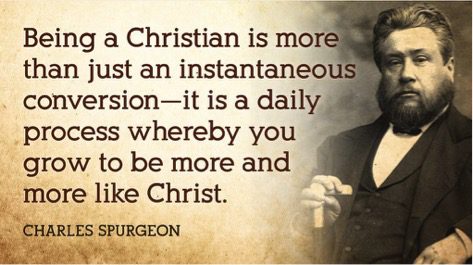
Imagine for a moment that you’re reading a sermon by Spurgeon in Logos as part of your preparation to preach (and I do recommend you do that!). While reading, if you stumble upon a perfect quote that you want to use in your sermon, in Logos 6 you can transform that quote into a PowerPoint or Keynote slide. This uses a new tool called the Visual Copy tool. Simply select the quote and right click on it (with Mac use a two-finger click). Visual Copy should appear, and it will then allow you to choose from tons of premade slides (some famous authors, like Spurgeon, even have their own custom slides). Logos automatically adjusts the quote to fit onto the slide, so you don’t have to fiddle with it at all! Here is an example:
Bring the Bible to life
For visual learners, Logos 6 has a suite of tools called Interactive Media. These resources help you find fresh perspective, develop new skills, and approach the text from different angles. For example, the Psalms Explorer lets you sort all 150 psalms by genre, topic, theme, or author, so at a glance you can see, for example, that most of the psalms David wrote are laments. You can also study the poetic structure of each psalm. Watch the Psalms Explorer go to work:
Interactive Media provides high quality visuals, perfect for teaching concepts and for studying them on your own.
Why use Logos books?
There are a lot of tools out there to help you study the Bible, and plenty of ways to read your go-to theology texts. So why use Logos?
Get more from every book
When you read any book in Logos, everything else in your library is a click away. You can certainly actually read books using this software, especially if you also download an app for your phone or tablet. But the real strength comes into play when one text refers to another. You can jump right to that book (on the exact page that was referenced) and pull up the texts in parallel panels. One moment you could be reading your favorite commentary alongside Scripture, and the next you could be delving into a Bible dictionary to understand difficult words or concepts.
The smallest Logos base package contains over 3 million links between resources (the largest Logos library has about 23 million). Thousands of notes, words, and concepts are tagged, so there’s always more for you to learn. The more books you have, the more valuable every book in your library becomes. A single text could unlock thousands of connections to the rest of your library. More connections make it easier to discover insight.
Fill your computer, not your office
If you went to seminary or you’re a pastor or professor, or are simply an avid purchaser of Christian books, the chances are you have shelves full of books lining your office walls. Some of those books you use every day. Some of them collect dust. When it comes to your office, more books isn’t always a good thing. The smallest Logos base package contains 241 total resources. The biggest base package, Collector’s Edition, gives you a bigger library than you’d ever have room for in print (5,002 total resources), but it doesn’t take up any more space in your office than Logos Starter. Your entire library lives a click away on your desk, or in your pocket.
Dig deeper with datasets
Datasets are Logos Bible Software’s secret sauce. They instantly arrange information that would otherwise take hours to find and assemble (Faithlife’s team of biblical experts have already spent those hours for you). Take the Biblical Word Senses Dataset for example. It gathers 1,500 word meanings and connects them to English, Greek, and Aramaic words. English terms are linked to relevant Greek, Hebrew, and Aramaic words, so you can search for English terms and find original language lemmas and every alternate meaning used in the Bible. You can see how often a particular word occurs in the Bible and how it relates to other words or concepts. There are dozens of datasets like this in Logos, including Ancient Literature, Timeline, Propositional Bible Outlines, and Preaching Themes. Each dataset took scholars countless hours to produce, and now they save people hours of work every day.
Let Logos work for you
This software really does turn hours of study into seconds. The more I use it, the more I discover. Right now, my readers can get a special 15% discount on Logos 6 with coupon code WARNOCK6. See how here.
“What is Bible software and why should I want it?” you might ask. In this digital age, Bible software uniquely enables you to study the Bible in depth in a way that previous generations could only dream of doing. When I first began studying to preach, I could sometimes be found in the London-based Evangelical Library with a load of bible commentaries strewn on the desk in front of me all open at the same reference. Logos soon put a stop to that!
For many years now, if I want to check out the meaning of a Bible passage, or do a word study in the original Greek, or indeed check out the latest theological thinking on a certain subject, I often turn to what I often think of as my full-time personal digital assistant. I can get the information I need in seconds.
I call my growing collection of electronic commentaries, lexicons, Bibles, interlinear Bibles, reference books, and theological journals my personal Theological Seminary in a Box.
Over the years I have found this software to be an invaluable resource in sermon preparation, and I can’t recommend it highly enough. At first glance the prices do not seem cheap, I will admit, but there are two things to remember:
- Per book, the prices are very very low. All versions of the software include so many books that they would cost thousands of dollars if you bought them in paper form individually. Divide the cost of your purchase by the number of books you are getting and you will see it is very good value, and that is without considering the benefits of all the search tools. They also offer an installment plan, very helpful if you are a pastor with a book allowance.
- It helps you decide if seminary is for you. I know some of you will have at least considered putting careers on hold and remortgaging your homes in order to pay for a theological education. You might find this software is a better investment than that, or at the least, buying it might help you decide if Bible college really is for you and thereby save a costly mistake! A few hundred dollars to save several thousand is not a bad idea. If you are not able to get at least some benefit from personal study with Logos Bible software, I very much doubt that Bible college will be helpful for you.
For me at least, I have found that this software goes a long way towards making up for my own lack of theological degrees. Certainly I have needed to learn from others in real life (and have done day release courses over the years). But with Logos, the pooled expertise of thousands of scholars is instantly at my fingertips!
Being able to search your entire library for references to that obscure Bible verse you are trying to understand is a virtual life-send when preparing a sermon. It is like being able to ask thousands of scholars what, if anything, they have written on a particular verse, and getting an instant answer from any of them who have done so.
Even if you are not a preacher, I can’t recommend this resource highly enough, and I hope you will benefit from it over many many years, as I have. A wise man or woman invests their money where it will have a return in the long-term. A copy of any of the Logos Bible Software libraries is just such an investment. Enjoy it, and enjoy the discount with my blessing, and my thanks for reading this blog.
With Logos on my computer it feels like I have not just one but an army of full-time research assistants, many of whom are world-class, at my fingertips. Want to read a lot of commentaries on a Bible verse? No need to go to a library, just type the passage into the search box on the home screen and click “go.” Want to see what top theologians think on an issue? Just type the topic into that same box and hit search. Simple!
The Passage Guide and the Topic Guide are the two features you will use the most, and work really really well. I love the way that results are ranked so that you can find the most relevant ones near the top. It is just as easy as using Google. But there is so much more under the hood, too.
We are so used to things being instant these days that I do sometimes forget that the seconds I wait while Logos searches thousands of books is quicker by thousands of percentage points than attempting to access even a fraction of the information it returns by any other way! Over the years it has become much faster, however, and I no longer feel I need to go make myself a cup of tea while the little servants working in my computer go to work to ferret out gems for me!
Logos Software is something that up until a few years ago felt more PC than Mac. But with each upgrade they improve the usability and accessibility, and this is no exception. Now, with the launch of Logos Bible Software 6 they definitely take another step forward in usability, and at the same time add some more in-depth tools. And the good news is for Mac users that the software is available at the same time and with the same feature set as for PCs. You can also download apps for your mobile devices, or read your books on the internet at Biblia.com.
One really good thing from my perspective, and this is always the elephant in the room when it comes to any technological upgrade, is (as I said earlier), it hasn’t changed too much! One of my frustrations with Microsoft is the way each time I upgrade or downgrade the version of Office I am using I cannot find my way round it. I say downgrade because sometimes I have moved jobs and found the new job used an older version than the previous one. Cue lots of frustration as you are unable to find simple features! Not so here. Within minutes of using the software I couldn’t remember how it differed from Logos 5, and that is a very good thing! No steep learning curve here if you are already a Logos user. If you are a longtime Logos user this will feel very familiar, but there are definitely some significant extra features.
Most people only use the surface functions of any software. Sophisticated software like Logos Bible Software has a real challenge because it needs to be able to satisfy both someone who just wants to dig out some Bible commentaries or search some books, and an expert theologian who wants to do a sophisticated study of the Greek or Hebrew and all kinds of things I don’t fully understand! Logos does just that. In fact it is very easy to right click (or if you are a Mac user, two-finger click) on any word in a Bible (or other book you are reading!) and do a Bible Word study which is very helpful, and can make you feel like you know your Greek better than you do. Beware of little knowledge! But at least you can do your own word study, think through what you think it means, and then check out whether the real theologians have come to similar opinions. If you think you are onto something brand new, buy yourself some more commentaries, to see if you just haven’t checked widely enough to find someone else who agrees with you. Then, if you are still “alone,” be very very cautious! The chances are very high that you are NOT the next Martin Luther!
The timeline feature is incredibly useful as you can search it for events and people, then click on the event to be taken to relevant pages in your books. Want to know why scholars now believe Jesus was born several years earlier than we traditionally thought? Follow the link from the timeline to examine the evidence that King Herod the Great, who ordered the under-two’s of Bethlehem to be killed actually died in 4BC.
I don’t think I need to say any more, perhaps I have already said too much! The long and the short of it is you can buy yourself some Bible software at a discount right now, and spend the rest of your life enjoying the benefits of efficient Bible study. Just remember to live what you learn, for knowledge without love puffs up. But knowledge rooted in true discipleship will bring many positive results. I sometimes think that owning Logos is a bit like cheating! But life is not an exam, and as long as you don’t simply copy someone else’s work and pass it off as your own there really are no drawbacks. The only real question is how big a package can you afford? Enjoy, choose the best your budget can justify, but just make sure you will still be able to afford to eat!
Logos has been kind enough at times to give me some packages, and they did donate a Logos 6 package. Over the years I have also bought a number of packages from them myself. If you purchase Logos through this site you help to support adrianwarnock.com and get a 15% discount.
Previous Post
January 4, 2015
Jesus the Evangelist: what his encounter with Nicodemus can teach us
Next Post

February 2, 2015 9 Key Trends in the UK Church
Browse Our Archives
Select a Category 1 and 2 Corinthians 1 and 2 Thessalonians 1 and 2 Timothy 1 John 300 Leaders A Life of Joy Abortion Acts of the Apostles Adrian on radio Adrian on TV Adrian's Story Albert Mohler Amazing Grace Arminocalvinist Spectrum Assurance Atonement Atonement Series Attributes of God Barnabas Best of the Blog Bible Bible Software Bible Translation Biblical Inerrancy Billy Graham Bob Roberts Books C. J. Mahaney Calvinism Cessationism Charis Warnock Charismatic Spectrum Charles Simeon Charles Spurgeon Church Leadership Colossians Complementarian - Egalitarian Spectrum Complementarianism Conferences Culture Daniel Debates Deuteronomy DGM08 DGM13 Discernment Doctrine Don Carson Ed Stetzer Eddy Leo Ephesians ESV Bible Translators Interview Evangelism in a Post-Christian World evolution Exodus Expository Preaching Ezekial Faith and Feelings Family Florida Galatians General Genesis Get Wisdom - Proverbs sermons Gifts of The Holy Spirit Gifts of the Holy Spirit 2006 Global Faith Forum Godly Attitudes Gospel Gospels Grace Greg Haslam Grudem vs Piper: The Baptism Debate Healing Heaven Hell and Rob Bell Hebrews Henry Tyler Henry Warnock Holy Spirit Holy Spirit Baptism Hope Reborn Hugh Palmer Irresistable Grace Isaiah J. I. Packer Jack Hayford Joel Joel Warnock John John Lanferman John MacArthur John Newton John Owen John Piper John Smyth Jonathan Edwards Josh Harris Justification Justin Taylor Kenneth Ulmer Leadership Leadership Lessons from 1 & 2 Samuel Lex Loizides Liam Goligher Lig Duncan Limited Atonement Lou Fellingham Mark Dever Mark Driscoll Martyn Lloyd-Jones Matt Chandler Mental Health Missionary Methods: St Paul’s or Ours? My Story N. T. Wright Nehemiah NWA08 NWA09 NWA10 Opinion OT History Books Pentateuch Personal Personal Revival Philippians PJ Smyth Podcast Politics Preaching Prophecy Proverbs Psalms Raised With Christ Reformed Charismatic Regeneration Relationships Resurrection Resurrection & Salvation Revival Rice Broocks Rich Man and Lazarus Rick Warren Rob Rufus Roland Allen Romans Sam Storms Sanctification Series Sermons Sermons on Philippians Serving Jesus at Work Sexuality Sin St Paul Steve Chalke Strange Fire Suffering T4G T4G Statement TAB09 Tamasin Warnock Teamwork Terry Virgo The Atonement Debate - Chalke book The Soulwinner The Spirit-Filled Church The Traitor Within Theologcial Spectrums Theosis Tim Challies Tim Keller Titus TOAM06 TOAM07 TOAM08 TOAM09 TOAM10 TOAM11 Todd Bentley Tope Koleoso Total Depravity Video Water Baptism Wayne Grudem Worship
Select a Month November 2026 October 2026 September 2026 August 2026 July 2026 June 2026 May 2026 April 2026 March 2026 February 2026 January 2026 December 2025 November 2025 October 2025 September 2025 May 2025 April 2025 January 2025 November 2024 October 2024 August 2024 July 2024 June 2024 May 2024 April 2024 March 2024 February 2024 January 2024 December 2023 August 2023 May 2023 April 2023 February 2023 October 2022 September 2022 August 2022 July 2022 June 2022 May 2022 April 2022 March 2022 February 2022 August 2021 May 2021 April 2021 February 2021 January 2021 December 2020 October 2020 September 2020 August 2020 July 2020 June 2020 May 2020 April 2020 March 2020 February 2020 January 2020 December 2019 November 2019 October 2019 September 2019 June 2019 May 2019 April 2019 March 2019 January 2019 December 2018 October 2018 September 2018 August 2018 July 2018 June 2018 May 2018 April 2018 March 2018 February 2018 January 2018 December 2017 November 2017 October 2017 September 2017 June 2017 April 2017 March 2017 February 2017 January 2017 December 2016 November 2016 October 2016 June 2016 March 2016 February 2016 January 2016 December 2015 November 2015 September 2015 August 2015 July 2015 June 2015 May 2015 April 2015 March 2015 February 2015 January 2015 December 2014 November 2014 October 2014 September 2014 August 2014 July 2014 June 2014 May 2014 April 2014 March 2014 February 2014 January 2014 December 2013 November 2013 October 2013 September 2013 August 2013 July 2013 June 2013 May 2013 April 2013 March 2013 February 2013 January 2013 December 2012 November 2012 October 2012 September 2012 August 2012 July 2012 June 2012 May 2012 April 2012 March 2012 February 2012 January 2012 December 2011 November 2011 October 2011 September 2011 August 2011 July 2011 June 2011 May 2011 April 2011 March 2011 February 2011 January 2011 December 2010 November 2010 October 2010 September 2010 August 2010 July 2010 June 2010 May 2010 April 2010 March 2010 February 2010 January 2010 December 2009 November 2009 October 2009 September 2009 August 2009 July 2009 June 2009 May 2009 April 2009 March 2009 February 2009 January 2009 December 2008 November 2008 October 2008 September 2008 August 2008 July 2008 June 2008 May 2008 April 2008 March 2008 February 2008 January 2008 December 2007 November 2007 October 2007 September 2007 August 2007 July 2007 June 2007 May 2007 April 2007 March 2007 February 2007 January 2007 December 2006 November 2006 October 2006 September 2006 August 2006 July 2006 June 2006 May 2006 April 2006 March 2006 February 2006 January 2006 December 2005 November 2005 October 2005 September 2005 August 2005 July 2005 June 2005 May 2005 April 2005 March 2005 February 2005 January 2005 December 2004 November 2004 October 2004 September 2004 August 2004 July 2004 June 2004 May 2004 April 2004 March 2004 February 2004 January 2004 December 2003 November 2003 October 2003 September 2003 August 2003 July 2003 June 2003 May 2003 April 2003
Follow Us!
TAKE THE
Religious Wisdom Quiz
What was the name of the disciple who doubted Jesus' resurrection?
Select your answer to see how you score.
James Thomas Peter John
Books by This Author Books by Adrian Warnock
Related posts from Adrian Warnock

"As I read John Newton, he reminds me...

How to use collections in Logos Bible Software

How to use commentaries in Logos Bible Software
Review: Logos Bible Software 2026 Libraries
TRENDING AT PATHEOS Evangelical

When you hear the word riches, what comes to mind? For most...

Don’t Miss the Parents: A Creative Christmas Meditation
As we enter the Advent Season, I see many people trying to...

Making Stones Into Bread: Choosing the “Right” Work
I was on my online arts ministry Zoom meeting with the International...

Ukraine’s exhausted Christians face fifth winter of war
By Julian Lukins The full-scale war in Ukraine is taking “a serious...

Russell Brand's Conviction is not anti-Christian Persecution
How do we shed the reputation that the Church is OK with...

Have you ever caught yourself saying, “I’ll do it tomorrow,” or “Now...
view all Evangelical blogs
Ad-Free & Subscriber Log-In Subscription Support
- About Us
- 2026 Calendar
- Videos
- Podcasts
- Library of World Religions
- Faith In Media Tracker
- Advertise With Us
- Write for Us
- Privacy Policy
- Terms of Service
- Do Not Sell My Data
- Contact Us
- Radiant Digital
- Manage Newsletter Subscriptions
- Unsubscribe From Notifications
- Sitemap
Copyright 2008-2026, Patheos, part of the Radiant Digital network of media brands. All rights reserved.
Subscription Support Ad-Free & Subscriber Log-In
Follow Patheos