
BuddhistCatholicContemplativeEvangelicalGeneral ChristianHinduJewishLatter-day SaintMuslimNew VisionsProgressive Christian
Beliefs
- Buddhist
- Catholic
- Contemplative
- Evangelical
- General Christian
- Hindu
- Jewish
- Latter-day Saint
- More Voices
- Muslim
- New Visions
- Pagan
- Progressive Christian
Topics
- Religion News
- Food and Religion
- Sports and Religion
- Religious Art
- Religious Music and Entertainment
- Religious Events
- History and Religion
- Style and Religion
- Politics and Religion
- Women in Religion
- Recreation Outdoors and Religion
- Business Finance and Religion
- Careers Workplace and Religion
- Education and Religion
- Family Parenting and Religion
- Health Fitness and Religion
- Home and Religion
- Relationships and Religion
- Technology and Religion
- Travel and Religion
Columnists
- Buddhist Columnists
- Business Finance and Religion Columnists
- Careers Workplace and Religion Columnists
- Catholic Columnists
- Contemplative Columnists
- Education and Religion Columnists
- Evangelists Columnists
- Family Parenting and Religion Columnists
- General Christian Columnists
- Health Fitness and Religion Columnists
- Hindu Columnists
- History and Religion Columnists
- Home and Religion Columnists
- Jewish Columnists
- More Voices Columnists
- Latter Day Columnists
- Muslim Columnists
- New Visions Columnists
- Nonreligious Columnists
- Pagan Columnists
- Politics and Religion Columnists
- Progressive Columnists
- Recreation Outdoors and Religion Columnists
- Relationships and Religion Columnists
- Religion News Columnists
- Religious Art Columnists
- Religious Events Columnists
- Religious Music and Entertainment Columnists
- Sports and Religion Columnists
- Style and Religion Columnists
- Technology and Religion Columnists
- Travel and Religion Columnists
- Women in Religion Columnists
Resource Library
- 2026 Calendar
- Library of World Religions
- The 100 Most Holy Places on Earth
- Patheos Answers
- Podcasts
- Videos
- Faith Leaders Database
- Anglican Episcopalian
- Bahai
- Baptist
- Buddhism
- Christianity
- Confucianism
- Eastern Orthodoxy
- Hinduism
- Holiness and Pentecostal
- ISKCON
- Islam
- Judaism
- Lutheran
- Methodist
- The Church of Jesus Christ of Latter-day Saints
- New Age
- Paganism
- Presbytarian and Reformed
- Protestantism
- Religion Behind the Scenes
- Roman Catholic
- Scientology
- Shia Islam
- Sikhism
- Sufism
- Sunni Islam
- Taoism
- Zen
- See all religions
Research Tools
 Ad-Free & Subscriber Log-In Subscription Support
Ad-Free & Subscriber Log-In Subscription Support
Follow Patheos 

- Trending:
- Forgiveness
- |
- Marriage
- |
- Consciousness
- |
- Death Penalty
- |
- Election
- |
- Halloween

- Home
- Evangelical
- GUEST POST: Paul’s curse on those who preach another gospel (Galatians 1)
GUEST POST: Paul’s curse on those who preach another gospel (Galatians 1)
Last updated on: September 16, 2017 at 6:43 pm by Adrian Warnock
GUEST POST: Paul’s curse on those who preach another gospel (Galatians 1) 2017-09-16T18:43:40+01:00 Adrian Warnock
Patheos Explore the world's faith through different perspectives on religion and spirituality! Patheos has the views of the prevalent religions and spiritualities of the world.
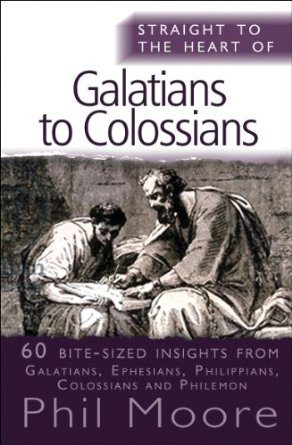 This blog is adapted from a chapter in Phil Moore’s new devotional commentary, “Straight to the Heart of Galatians to Colossians”, published this month by Monarch Books.
ONE STAPLE
“If we or an angel from heaven should preach a gospel other than the one we preached to you, let them be under God’s curse!” (Galatians 1:8)
David Nowitz had tried very hard. The Society for Family Health in Johannesburg had never had such a conscientious marketing manager. He had managed to secure government funding for a mass distribution of pamphlets throughout the city to warn people of the dangers of sexually transmitted infections. He had the pamphlets translated into Zulu, Xhosa, Sotho and Afrikaans. He had paid a distribution company to deliver the pamphlets throughout the city along with a free condom to help people to respond to his warnings. It was only when he visited a home and saw one of his pamphlets that he realised with horror what had happened: the distribution company had stapled the condom to the pamphlet, putting two holes in every single condom.
David Nowitz admitted to reporters that “We made a deal with a low-budget distribution company.” He had entrusted his message to people who thought a single staple wouldn’t make any difference, when in reality those two tiny pin pricks undermined everything. His safe-sex campaign actually increased the danger of sexually transmitted infections and unwanted pregnancies across Johannesburg.[1] If you can imagine how David Nowitz felt when he saw his stapled pamphlet for the first time, then you can imagine the horror which stirred Paul to write his letter to the Galatians at the start of 49AD.
Paul had spent part of 48AD planting churches in Pisidian Antioch, Iconium, Lystra and Derbe – the cities of Galatia, which is now in southern Turkey.[2] We are told in Acts 14:3 that he went as God’s missionary to preach “the message of his grace,” explaining that Jesus lived the perfect life which the Galatians had failed to live and that he had died the brutal death which the Galatians deserved to die. Paul’s announcement that human sin provokes God’s judgment wasn’t news to the people of Galatia (the Jews and pagans were agreed on that), but what was news was Paul’s announcement that religious rituals and good behaviour were not enough to atone for human sin. The Galatians tried to stone him to death for preaching that “Through Jesus the forgiveness of sins is proclaimed to you. Through him everyone who believes is set free from every sin, a justification you were not able to obtain under the law of Moses.”[3] The essence of Paul’s message to the Galatians was grace, which is why Acts 13:43 tells us that he “urged them to continue in the grace of God.” If they forgot this, then the Galatians were as foolish as a Johannesburg pamphlet distribution company.
Paul was very agitated when he wrote his first New Testament letter.[4] Since he does not mention the decisions which the apostles made in Jerusalem towards the end of 49AD in Acts 15, he must have written to the Galatians earlier that same year whilst he was staying in Syrian Antioch.[5] We are told in Acts 15:1 that “Certain people came down from Judea to Antioch and were teaching the believers: ‘Unless you are circumcised, according to the custom taught by Moses, you cannot be saved.’”[6] Evidently these same false teachers were making inroads into the churches which Paul had planted in Galatia, for he writes in 5:12, “As for those agitators, I wish they would go the whole way and emasculate themselves!” Circumcision, obedience to the Jewish law, and reliance on a few good works might seem like tiny pin pricks in the Gospel, but Paul could see that it undermined absolutely everything. He warns the Galatians not to be “fools.” If Jesus’ work of salvation is perfect, then adding anything to it obscures its saving power.
This background helps us understand the opening verses of Galatians. It’s why Paul begins this letter with the phrase “Grace and peace to you from God our Father and the Lord Jesus Christ.” He doesn’t use this phrase out of habit to open all of his letters, but because the Gospel is about God’s grace from start to finish. It tells us that Jesus has done everything to free us from God’s judgment because we are powerless to free ourselves. We don’t need God’s reward for our best efforts. We need God’s mercy (not punishing us as we deserve) and we need God’s grace (blessing us even though we don’t deserve it). We can never earn these things from God ourselves. We can only receive them as gifts because we believe in the perfect life which Jesus has already lived for us.
Paul wrote to the Galatians in their native Greek, and he uses three Greek words to show them just how serious these pin pricks of self-reliance are. The first word is metatithêmi, a word which was normally used for soldiers who switched sides before a battle (1:6). Paul tells the Galatians that switching to self-reliance instead of continuing in God’s grace makes them turncoats who have sided with the people who attacked him. The second word is heteros (1:6). The Greeks had two words for another: the word allos meant another of the same type (Jesus uses this word to describe the Holy Spirit as another helper like himself in John 14:16), and the word heteros meant another of a different type (this is the root of the English word heterosexual). By describing the new message which was being preached in the Galatian churches as a heteros gospel, Paul emphasises that Christian self-help is very different from the real Christian Gospel. Since the Gospel is perfect, adding to it is just as fatal as subtracting from it. These tiny pin pricks of self-reliance couldn’t be more serious.
The third word which Paul uses is anathema (1:8 and 1:9). This is the word which was used throughout the Greek Old Testament to translate the Hebrew word hêrem, or handed over to the Lord for destruction. It was the strongest curse which a first-century Jew could place on anyone, so Paul utters it twice in order to convey to his readers the seriousness of their situation.[7] By smuggling human works into the finished work of Jesus these false teachers had committed the same sin as Achan in the time of Joshua.[8] They must be cut off from God’s People or the Galatians would be cut off with them.[9]
That’s why Paul’s letter to the Galatians is the Magna Carta of the New Testament, the proclamation of God’s freedom as a gift to sinful people who believe in Jesus Christ.[10] Paul tells us that this message of freedom cannot be earned. It is all about what Jesus has done for us and not about what we can do for him in return. Reliance on religious rituals or on our own good works isn’t a different emphasis. It is an entirely different gospel.
To read more free chapters from the “Straight to the Heart” series of commentaries, please go to www.philmoorebooks.com
[1] This happened in February 1999, recounted by Stephen Pile in “The Ultimate Book of Heroic Failures” (2011).
[2] See Acts 13-14. Galatia had originally referred to the Celtic settlements to the north of these four cities, but by Paul’s day the Roman province of Galatia stretched much further south.
[3] Acts 13:38-39. Tom Wright and other writers from the ‘new perspective’ school point out that Paul’s message was about more than individual salvation. Yes, but it wasn’t about less than individual salvation.
[4] Paul’s first letter was probably the second earliest letter in the New Testament, since James wrote his letter in about 48AD. This early dating is not just based on Paul’s failure to mention the pivotal rulings recorded in Acts 15, but also on the way he chides the Galatians in 1:6 for abandoning the Gospel “so quickly.”
[5] Acts 14:26-28. Instead of appealing to decisions made in Jerusalem, Paul writes in 1:2 that his letter is endorsed by “the brothers who are with me” – the Antioch church which sent him to Galatia the previous year.
[6] James, the leader of the church in Jerusalem, is at pains to clarify in Acts 15:24 that these teachers came out of the church he led but they in no way spoke for him.
[7] The word anathema is also used in the solemn oaths in Mark 14:71, Acts 23:12&14 & 1 Corinthians 16:22.
[8] The words hêrem and anathema are used repeatedly in the Hebrew and Greek texts of Joshua 6:17-18 and 7:11-13. The Galatians understood Paul to be effectively saying “To hell with them!”
[9] Paul probably refers to an angel from heaven because the Galatians originally mistook him for Hermes, the messenger of the Greek gods (Acts 14:12), but it is also significant that Mormons and Muslims claim that their alternative gospels were given by angels to Joseph Smith and to Muhammad. See 2 Corinthians 11:14.
[10] When Paul tells us in 1:2 that Jesus is Christ (the Greek translation of the Hebrew word Messiah) and Lord (the Greek translation of the Hebrew word Yahweh), he identifies Jesus both as Saviour and as God.
Previous Post

May 5, 2014
How to tell if you are an Evangelical or a Progressive Christian

Browse Our Archives
Select a Category 1 and 2 Corinthians 1 and 2 Thessalonians 1 and 2 Timothy 1 John 300 Leaders A Life of Joy Abortion Acts of the Apostles Adrian on radio Adrian on TV Adrian's Story Albert Mohler Amazing Grace Arminocalvinist Spectrum Assurance Atonement Atonement Series Attributes of God Barnabas Best of the Blog Bible Bible Software Bible Translation Biblical Inerrancy Billy Graham Bob Roberts Books C. J. Mahaney Calvinism Cessationism Charis Warnock Charismatic Spectrum Charles Simeon Charles Spurgeon Church Leadership Colossians Complementarian - Egalitarian Spectrum Complementarianism Conferences Culture Daniel Debates Deuteronomy DGM08 DGM13 Discernment Doctrine Don Carson Ed Stetzer Eddy Leo Ephesians ESV Bible Translators Interview Evangelism in a Post-Christian World evolution Exodus Expository Preaching Ezekial Faith and Feelings Family Florida Galatians General Genesis Get Wisdom - Proverbs sermons Gifts of The Holy Spirit Gifts of the Holy Spirit 2006 Global Faith Forum Godly Attitudes Gospel Gospels Grace Greg Haslam Grudem vs Piper: The Baptism Debate Healing Heaven Hell and Rob Bell Hebrews Henry Tyler Henry Warnock Holy Spirit Holy Spirit Baptism Hope Reborn Hugh Palmer Irresistable Grace Isaiah J. I. Packer Jack Hayford Joel Joel Warnock John John Lanferman John MacArthur John Newton John Owen John Piper John Smyth Jonathan Edwards Josh Harris Justification Justin Taylor Kenneth Ulmer Leadership Leadership Lessons from 1 & 2 Samuel Lex Loizides Liam Goligher Lig Duncan Limited Atonement Lou Fellingham Mark Dever Mark Driscoll Martyn Lloyd-Jones Matt Chandler Mental Health Missionary Methods: St Paul’s or Ours? My Story N. T. Wright Nehemiah NWA08 NWA09 NWA10 Opinion OT History Books Pentateuch Personal Personal Revival Philippians PJ Smyth Podcast Politics Preaching Prophecy Proverbs Psalms Raised With Christ Reformed Charismatic Regeneration Relationships Resurrection Resurrection & Salvation Revival Rice Broocks Rich Man and Lazarus Rick Warren Rob Rufus Roland Allen Romans Sam Storms Sanctification Series Sermons Sermons on Philippians Serving Jesus at Work Sexuality Sin St Paul Steve Chalke Strange Fire Suffering T4G T4G Statement TAB09 Tamasin Warnock Teamwork Terry Virgo The Atonement Debate - Chalke book The Soulwinner The Spirit-Filled Church The Traitor Within Theologcial Spectrums Theosis Tim Challies Tim Keller Titus TOAM06 TOAM07 TOAM08 TOAM09 TOAM10 TOAM11 Todd Bentley Tope Koleoso Total Depravity Video Water Baptism Wayne Grudem Worship
Select a Month October 2026 September 2026 August 2026 July 2026 June 2026 May 2026 April 2026 March 2026 February 2026 January 2026 December 2025 November 2025 October 2025 September 2025 May 2025 April 2025 January 2025 November 2024 October 2024 August 2024 July 2024 June 2024 May 2024 April 2024 March 2024 February 2024 January 2024 December 2023 August 2023 May 2023 April 2023 February 2023 October 2022 September 2022 August 2022 July 2022 June 2022 May 2022 April 2022 March 2022 February 2022 August 2021 May 2021 April 2021 February 2021 January 2021 December 2020 October 2020 September 2020 August 2020 July 2020 June 2020 May 2020 April 2020 March 2020 February 2020 January 2020 December 2019 November 2019 October 2019 September 2019 June 2019 May 2019 April 2019 March 2019 January 2019 December 2018 October 2018 September 2018 August 2018 July 2018 June 2018 May 2018 April 2018 March 2018 February 2018 January 2018 December 2017 November 2017 October 2017 September 2017 June 2017 April 2017 March 2017 February 2017 January 2017 December 2016 November 2016 October 2016 June 2016 March 2016 February 2016 January 2016 December 2015 November 2015 September 2015 August 2015 July 2015 June 2015 May 2015 April 2015 March 2015 February 2015 January 2015 December 2014 November 2014 October 2014 September 2014 August 2014 July 2014 June 2014 May 2014 April 2014 March 2014 February 2014 January 2014 December 2013 November 2013 October 2013 September 2013 August 2013 July 2013 June 2013 May 2013 April 2013 March 2013 February 2013 January 2013 December 2012 November 2012 October 2012 September 2012 August 2012 July 2012 June 2012 May 2012 April 2012 March 2012 February 2012 January 2012 December 2011 November 2011 October 2011 September 2011 August 2011 July 2011 June 2011 May 2011 April 2011 March 2011 February 2011 January 2011 December 2010 November 2010 October 2010 September 2010 August 2010 July 2010 June 2010 May 2010 April 2010 March 2010 February 2010 January 2010 December 2009 November 2009 October 2009 September 2009 August 2009 July 2009 June 2009 May 2009 April 2009 March 2009 February 2009 January 2009 December 2008 November 2008 October 2008 September 2008 August 2008 July 2008 June 2008 May 2008 April 2008 March 2008 February 2008 January 2008 December 2007 November 2007 October 2007 September 2007 August 2007 July 2007 June 2007 May 2007 April 2007 March 2007 February 2007 January 2007 December 2006 November 2006 October 2006 September 2006 August 2006 July 2006 June 2006 May 2006 April 2006 March 2006 February 2006 January 2006 December 2005 November 2005 October 2005 September 2005 August 2005 July 2005 June 2005 May 2005 April 2005 March 2005 February 2005 January 2005 December 2004 November 2004 October 2004 September 2004 August 2004 July 2004 June 2004 May 2004 April 2004 March 2004 February 2004 January 2004 December 2003 November 2003 October 2003 September 2003 August 2003 July 2003 June 2003 May 2003 April 2003
Follow Us!
TAKE THE
Religious Wisdom Quiz
Where does the Bible say, "do to others as you would have them do to you"?
Select your answer to see how you score.
Luke Judges Revelation Leviticus
Books by This Author Books by Adrian Warnock
Related posts from Adrian Warnock

"Open" is not Biblical, "eagerly desire spiritual gifts"...

Twelve Steps to Becoming a Successful Published Author

Thank God Atheists Do Not Live By Their...
Grab this weeks Amazon Number One Best Seller...
TRENDING AT PATHEOS Evangelical

How the author of the world's best hymn...
I've been working with John Newton for a while now. This makes...

Long before this Lectio Divina, Psalm 130 - the song - started...

What About the Trees? Another Living Parable
After I finished writing the last article about falling leaves as a...

Why Classical Education Is a Conversation, Not a...
Come and Read: Joy in Classical Education When I was a little...

Falling Leaves: A Living Parable on Letting Go
I’ve spent the vast majority of my life in the southeast corner...

Cornell University has received a great deal of negative publicity and intense...
view all Evangelical blogs
Ad-Free & Subscriber Log-In Subscription Support
- About Us
- 2026 Calendar
- Videos
- Podcasts
- Library of World Religions
- Faith In Media Tracker
- Advertise With Us
- Write for Us
- Privacy Policy
- Terms of Service
- Do Not Sell My Data
- Contact Us
- Radiant Digital
- Manage Newsletter Subscriptions
- Unsubscribe From Notifications
- Sitemap
Copyright 2008-2026, Patheos. All rights reserved.
Subscription Support Ad-Free & Subscriber Log-In
Follow Patheos